




Quick answer
A 240V outlet installation adds a dedicated two-pole circuit from the panel to a receptacle matched to the appliance: NEMA 6-20 for small shop tools and mini-splits, 14-30 for dryers, 14-50 for ranges and plug-in EV chargers, 6-50 for welders. Breaker and wire size follow the appliance nameplate, garage and kitchen receptacles need GFCI protection under the 2023 NEC, and the circuit is permitted and inspected.
Most homes in Fort Bend and Harris County have exactly two 240-volt receptacles: one behind the dryer and one behind the range. The moment you add an EV, a table saw, a welder or a garage mini-split, you need a third, and a 240V outlet installation becomes a question of which receptacle, on what size circuit, and whether the panel can take it.
This guide covers the receptacle types used in houses, the wire and breaker that go with each, the GFCI rules that now apply in garages and kitchens, when to replace an old three-prong dryer outlet, and what the work looks like in Richmond, Tomball and Katy homes. Our electrical outlet service handles all of it.
Key Takeaways
- A 240-volt receptacle uses two hot legs on a two-pole breaker; its NEMA number gives the amperage and whether it carries a neutral.
- Match breaker and wire to the appliance nameplate: 20 amps on 12 AWG, 30 on 10, 40 on 8, 50 on 6 AWG copper.
- Under the 2023 NEC as adopted in Texas, 240-volt receptacles up to 50 amps in garages and kitchens need GFCI protection.
- New dryer and range circuits must be four-wire (14-30 or 14-50); an existing three-wire 10-30 may stay but should not be copied.
- Any new 240-volt circuit in Richmond, Tomball or Katy is permitted and inspected; it is not a receptacle swap.
- A warm face, buzzing, browning or a loose-fitting plug on a 240-volt outlet means turn the breaker off and have it replaced.
What is a 240V outlet and how is it different from a regular outlet?
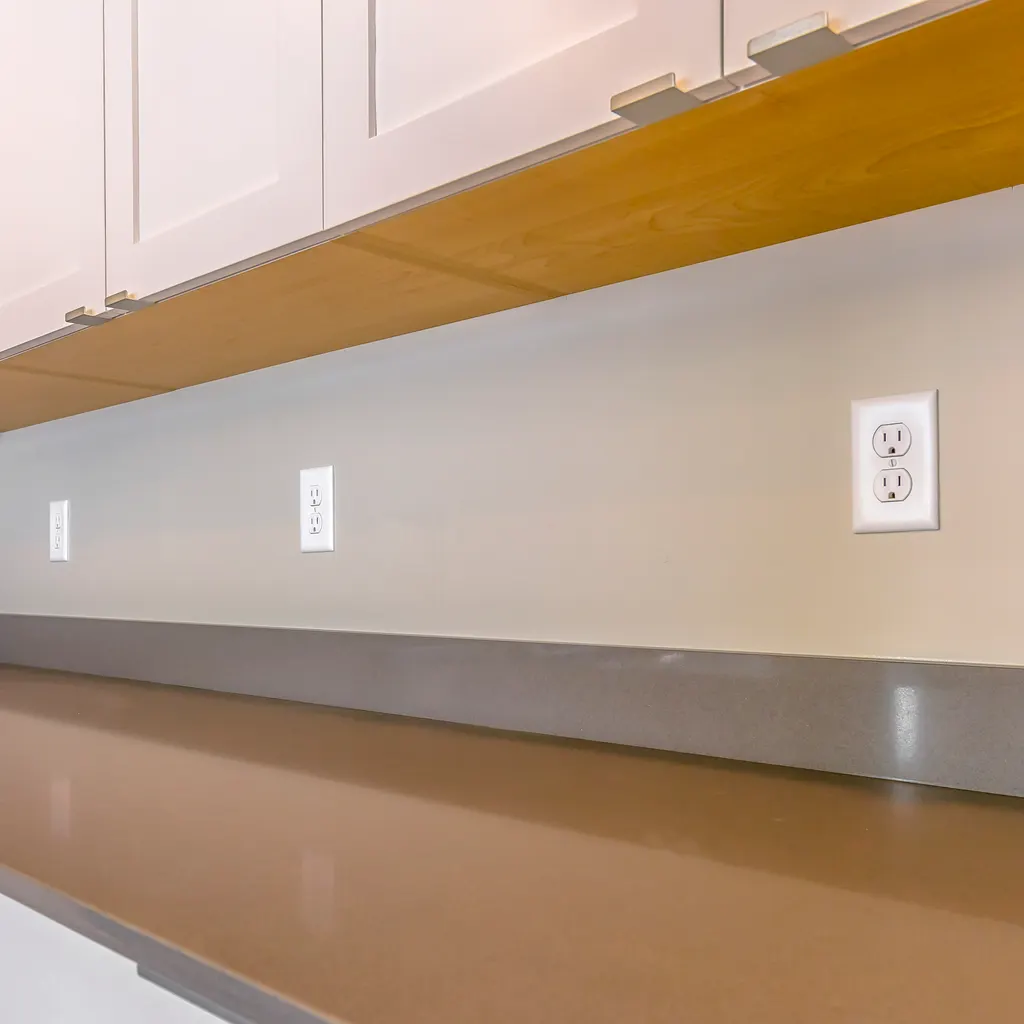
A standard wall outlet is fed by one hot conductor and a neutral and delivers 120 volts. A 240-volt outlet is fed by two hot conductors, one from each leg of the service, landed on a two-pole breaker that trips both legs together. The voltage between the two legs is 240. Some 240-volt receptacles also carry a neutral so the appliance can run 120-volt parts (a dryer's motor and timer, a range's clock and lights) from one leg; those are four-wire receptacles. Others are three-wire: two hots and a ground only.
Every 240-volt receptacle is a dedicated circuit. Nothing else shares its breaker, which is why adding one is always a new run from the panel rather than a tap off an existing wall outlet. Our post on which appliances need a dedicated circuit covers the reasoning.
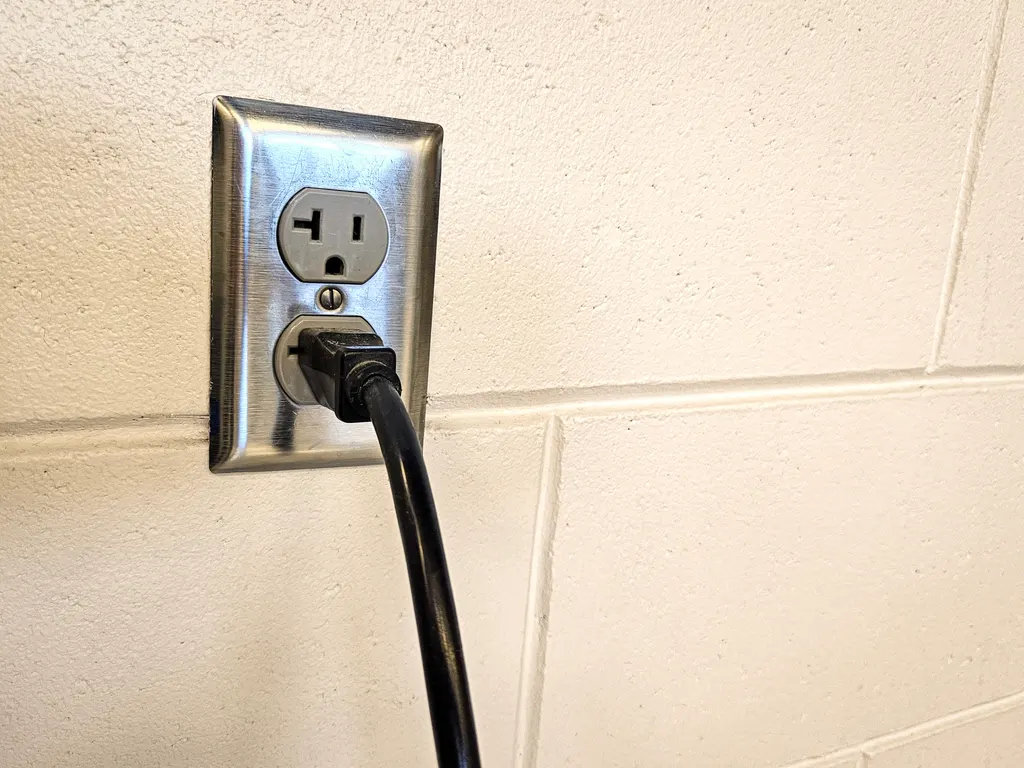
The receptacle face tells you what it is. A NEMA designation such as 14-50 means configuration 14 (two hots, neutral, ground) at 50 amps. A 6-20 is two hots and ground at 20 amps. Plugs are keyed so a 30-amp cord cannot go into a 50-amp outlet, and that keying is a safety feature, not an inconvenience to be worked around with an adapter.
Which 240V outlet types are used in homes?
These are the receptacles we install in houses, with the loads they are meant for.
- NEMA 6-15 and 6-20 (15 or 20 amps, no neutral). Window and through-wall air conditioners, garage mini-split condensers with a cord, small shop tools, some kilns. Looks like a regular outlet with one horizontal blade.
- NEMA 6-30 (30 amps, no neutral). Larger air compressors, some water heaters that are cord-connected, older shop equipment.
- NEMA 6-50 (50 amps, no neutral). Welders and plasma cutters. The standard welder outlet.
- NEMA 10-30 (30 amps, three-wire). The old dryer outlet: two hots and a neutral, no separate ground. Found in homes wired before the mid-1990s. Not installed new.
- NEMA 14-30 (30 amps, four-wire). The current dryer receptacle.
- NEMA 14-50 (50 amps, four-wire). Freestanding ranges, RV hookups and plug-in Level 2 EV chargers. For EV use it must be an industrial-grade receptacle.
- NEMA L6-30 and L14-30 (twist-lock). Generator inlets and equipment that must not vibrate loose.
What you will not find a receptacle for: wall ovens, cooktops, central air-conditioning condensers, tankless water heaters and hot tubs. Those are hardwired with a disconnect, and the code requires it. If a contractor offers to put a cooktop on a 14-50, that is the wrong answer.
What wire and breaker size does a 240V outlet installation need?
The appliance nameplate sets the circuit, not the receptacle you happen to have. Read the amperage, then size the breaker and copper conductor together:
- 20-amp breaker: 12 AWG copper (6-20 receptacle).
- 30-amp breaker: 10 AWG copper (14-30, 6-30, L6-30).
- 40-amp breaker: 8 AWG copper (a 40-amp range circuit, often still terminating on a 14-50).
- 50-amp breaker: 6 AWG copper (14-50, 6-50).
Two adjustments apply often enough to mention. Continuous loads such as EV charging and some heaters run three hours or more, so the circuit must be rated at 125 percent of the load; a 40-amp charger needs a 50-amp breaker. And attic runs in this climate see ambient temperatures far above the 86°F the ampacity tables assume, so the conductor may need to go up a size when it spends forty feet in a Katy attic in August.
Four-wire circuits (14-30, 14-50) need an insulated neutral in addition to the two hots and the ground. Three-wire circuits (6-series) do not, but the ground is never optional.
Then there is GFCI protection. The 2023 NEC as adopted in Texas requires it for receptacles up to 50 amps in garages, kitchens, outdoors and other wet or damp locations, including 240-volt ones. In practice that means a two-pole GFCI breaker for a new garage 14-50 or 6-20. Our guide to where GFCI protection is required covers the room-by-room rules.
Should you replace a three-prong 10-30 dryer outlet with a four-prong 14-30?
If your laundry room has a three-slot dryer outlet, the house was wired under an older code that let the neutral double as the ground path. The dryer's metal cabinet is bonded to that neutral, and if the neutral connection ever fails, the cabinet can become energized. That is why the NEC stopped allowing it for new work and why every new dryer circuit is four-wire.
The code does not force you to replace an existing 10-30. You may keep using it with a three-prong cord on the dryer, with the bonding strap in place. But there are three situations where upgrading to a 14-30 is the right call:
- You are already opening the wall or replacing the circuit, and running a four-conductor cable costs little extra.
- The receptacle is damaged, loose, discolored or has been through a flood.
- You want the dryer cabinet grounded independently, which is simply safer, especially in homes that also have aluminum branch wiring or an older panel.
A 14-30 upgrade on an existing 30-amp circuit is one of the smaller 240-volt jobs: new cable from the panel if the existing one has no ground, a new receptacle, and a four-prong cord on the dryer with the bonding strap removed. Do not simply install a four-slot receptacle on three-wire cable and jumper the ground to neutral; that passes a plug test and fails an inspection, and it defeats the point.
240V outlet installation in Richmond, Tomball and Katy homes
The house tells The Local Electrician most of what the job will involve before we open the panel.
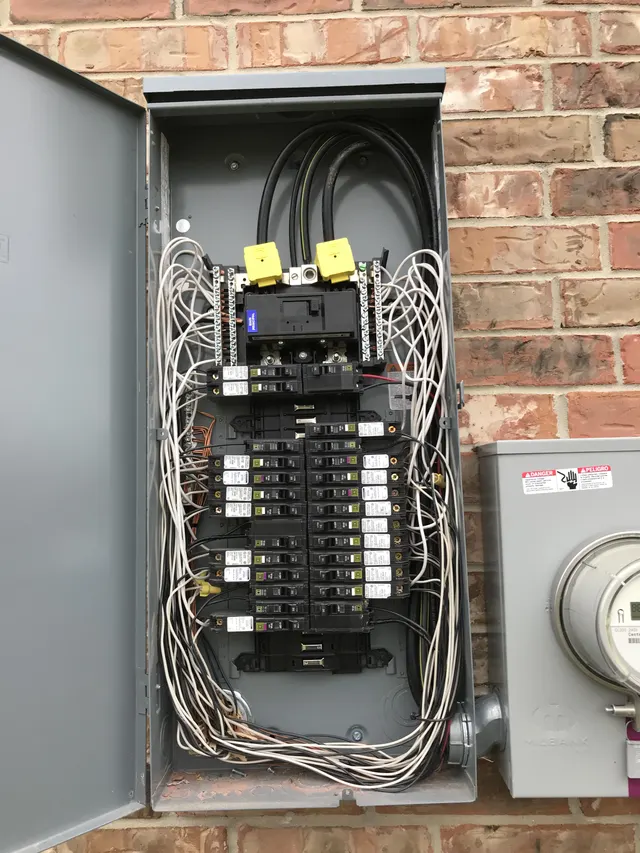
1970s and 1980s homes in older Tomball neighborhoods, Pecan Grove and the Nottingham Country and Kelliwood areas of Katy usually have a 10-30 dryer outlet, a 100 to 150-amp panel and sometimes a Federal Pacific or Zinsco panel that should be replaced before any circuit is added. They also have the longest runs to the garage, because the panel is often on the far exterior wall.
1990s and 2000s homes in First Colony, Cinco Ranch and Greatwood generally have 150 to 200-amp service, a 14-30 and 14-50 already in place, and room for one more two-pole breaker. A garage 6-20 or a 14-50 for a charger is a half-day job here.
Newer builds in Aliana, Harvest Green, Jordan Ranch and Cross Creek Ranch have 200-amp panels in the garage and short runs. The only common complication is a panel that is physically full of tandem breakers already.
Permitting is the same across our area: a new 240-volt circuit is permitted and inspected by the city building department inside Richmond, Tomball, Katy or Sugar Land city limits, and by Fort Bend or Harris County outside them. A like-for-like receptacle replacement on an existing circuit generally is not. Our Tomball and Richmond crews pull the permit under TECL #34406 and schedule the inspection. One more local note: pools are common here, and a pool pump on a 240-volt circuit has its own bonding and GFCI rules; it is not an outlet job.
What are the warning signs of a failing 240V outlet or loose connection?
A 240-volt receptacle carries enough current that a poor connection announces itself. The signs, roughly in the order they appear:
- The plug fits loosely or can be wiggled. Worn contacts. The most common cause on EV receptacles that get unplugged daily.
- The receptacle face is warm while the appliance runs. Warm is a loose termination or tired contacts starting to heat.
- Buzzing or crackling at the outlet or the breaker. Arcing. Turn the breaker off.
- Browning, melting or a hot-plastic smell around the slots or on the plug blades. The connection has already overheated. The receptacle, the plug and possibly the cable end need replacing.
- The appliance underperforms: a dryer that takes two cycles, a range element that heats slowly, a charger that derates. Often one hot leg has a poor connection, so the appliance is seeing far less than 240 volts.
- The two-pole breaker trips under load. A failing breaker, a loose lug, or a short in the appliance cord.
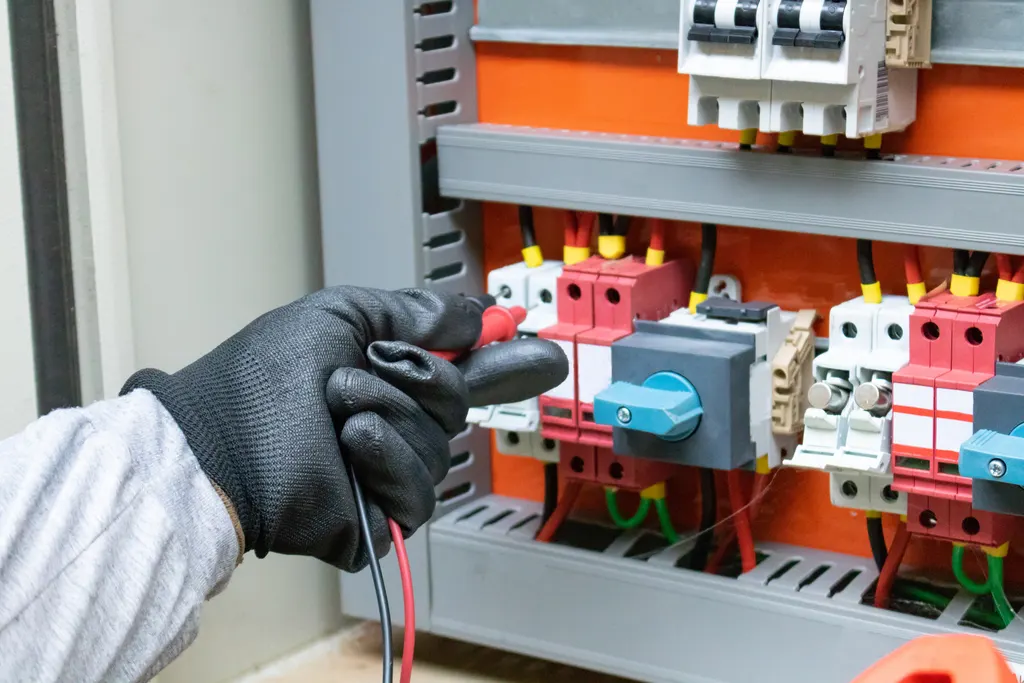
If you see any of these, switch the breaker off and leave the appliance unplugged until the outlet is checked. The Local Electrician's diagnosis is quick: voltage across the legs and leg-to-neutral under load, a look at the terminations, and a check of the breaker. A receptacle replacement is a short visit; a damaged cable end means re-terminating or replacing the run.
What affects the cost of a 240V outlet installation?
The Local Electrician quotes 240-volt work after seeing the panel and the route, because these factors move the number far more than the receptacle does:
- Amperage. A 20-amp 6-20 uses 12 AWG and a small breaker; a 50-amp 14-50 uses 6 AWG and may need a GFCI two-pole breaker, which costs several times a standard one.
- Distance and route. A receptacle on the wall behind the panel versus a run through the attic to the far side of the garage, or conduit along an exterior wall.
- Three-wire versus four-wire. Four-conductor cable costs more per foot.
- Panel space. An open two-pole slot is free; freeing one with tandem breakers is minor; adding a subpanel is a separate line item.
- Panel condition. If the panel is a known hazard brand or at capacity, that has to be addressed first.
- Location. Outdoor and damp-location receptacles need weatherproof boxes and in-use covers.
- Permit and inspection fee, set by the city or county.
Replacing a worn receptacle on an existing circuit is the least expensive version of this work. Adding a 14-50 for a charger sits in the middle; see our home EV charger installation guide for that specific job. If a panel upgrade is part of the picture, financing is available. Estimates on new installations are free; call 832-271-1167 with the appliance nameplate amperage and a photo of your panel.
Frequently Asked Questions
When do I need a 240V outlet installation for kitchen or garage equipment?
When the appliance nameplate says 240 volts (or 208 to 240) and it comes with a cord. Freestanding ranges, dryers, welders, large compressors, window and portable mini-split air conditioners and plug-in EV chargers all need one. Wall ovens, cooktops, tankless water heaters and hot tubs are hardwired instead. If the nameplate is 120 volts, you need a dedicated 20-amp circuit, not a 240-volt outlet.
What wiring and breaker size does a 240V outlet need?
Size both to the nameplate: 12 AWG copper on a 20-amp two-pole breaker, 10 AWG on 30, 8 AWG on 40, 6 AWG on 50. Continuous loads like EV charging need a breaker rated 125 percent of the load. Four-wire receptacles (14-30, 14-50) need an insulated neutral. Long attic runs in Houston heat may need the next size up, and garage or kitchen receptacles need GFCI protection.
Can I plug an EV charger into my dryer outlet?
Not as a permanent solution. A dryer outlet is a 30-amp circuit shared with the dryer, often a three-wire 10-30 with no separate ground, and usually in the wrong room. Some portable chargers include a 14-30 adapter for occasional use at 24 amps, but daily charging belongs on its own 40 to 60-amp circuit with a 14-50 receptacle or a hardwired unit in the garage.
Do permits and inspections apply to a 240V outlet installation?
Yes for any new circuit. In Richmond, Tomball, Katy and Sugar Land the city building department issues the permit inside city limits and Fort Bend or Harris County issues it outside; the inspector checks breaker size, conductor size, GFCI protection and workmanship. Replacing a worn receptacle on an existing circuit with the same type generally does not need a permit. The licensed contractor pulls it.
Why does my dryer outlet have three prongs and the new dryer has four?
The three-slot NEMA 10-30 was the dryer standard until the mid-1990s and uses the neutral as the ground path. New dryers ship with four-prong 14-30 cords because current code requires a separate ground. You can legally fit a three-prong cord with the bonding strap in place, or have the circuit upgraded to a four-wire 14-30, which is safer and required if the circuit is replaced.
What signs indicate a failing 240V outlet or loose connection?
A loose-fitting plug, a receptacle face that is warm while the appliance runs, buzzing or crackling, browning or melting around the slots, a hot-plastic smell, a dryer or range that underperforms because one leg has a poor connection, and a two-pole breaker that trips under load. Turn the breaker off and have The Local Electrician test the circuit before using the appliance again.
How will an electrician diagnose a stressed 240V circuit?
By measuring voltage between the two hot legs and from each leg to neutral with the appliance running, looking for a drop that points to a loose termination; inspecting the receptacle contacts and the breaker lugs; checking conductor size against the breaker; and verifying the ground and, where required, GFCI function. Readings and photos go in the report for your records and any permit.