






Quick answer
GFCI outlet installation is required by the NEC wherever water and electricity meet: bathrooms, kitchens, garages, laundry areas, outdoors, crawl spaces, unfinished basements and within 6 feet of any sink. A GFCI compares current leaving on the hot wire with current returning on the neutral and trips in a fraction of a second when about 5 milliamps goes missing, which is the signature of current passing through a person.
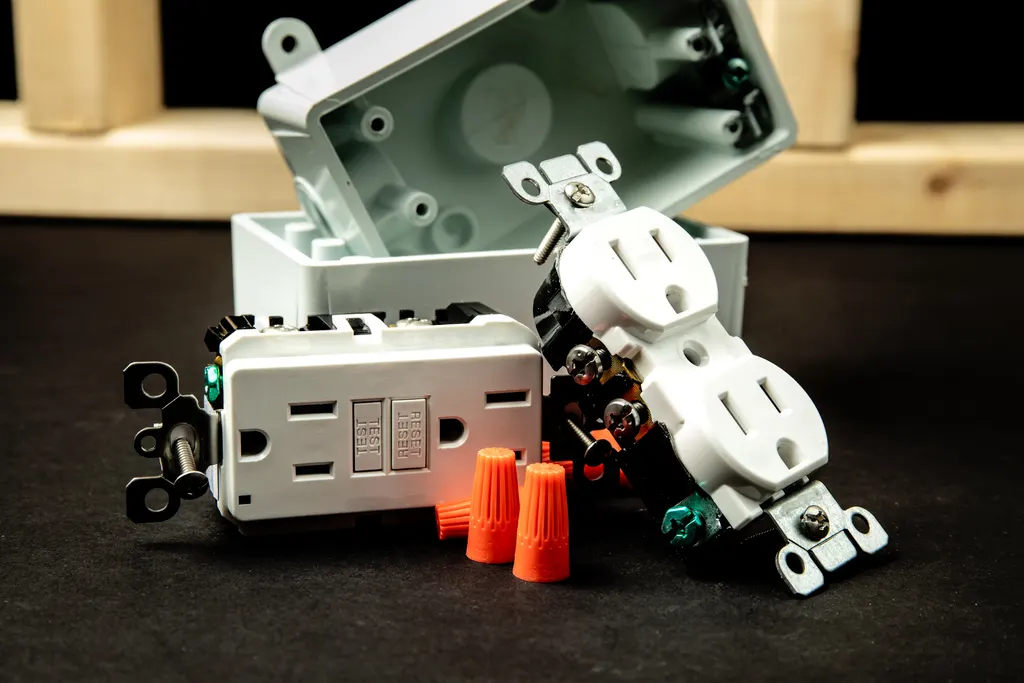
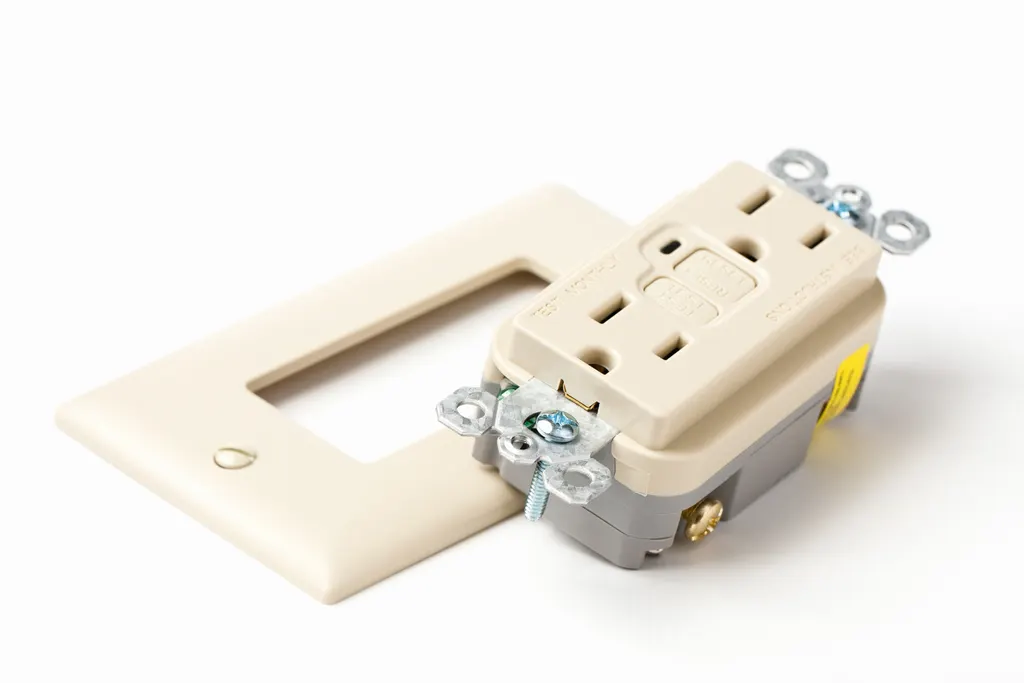
A ground-fault circuit interrupter is the single most effective shock-prevention device in a house, and GFCI outlet installation is one of the most common jobs we do in Katy, TX, Richmond and Pearland. It is also one of the most commonly botched, because a GFCI looks like an ordinary receptacle but has a line side and a load side, and wiring them backwards leaves the outlet live with no protection.
This guide covers the locations the 2023 NEC as adopted in Texas requires, the difference between a GFCI receptacle and a GFCI breaker, how a correct installation is done, how to test a GFCI every month, why GFCIs trip in the rain, and the outdoor cover that stops it. If you would rather have us handle it, our outlet installation service includes GFCI upgrades.
Key Takeaways
- A GFCI trips when about 5 milliamps leaks from the circuit, fast enough to prevent a fatal shock, and works without a ground wire.
- The NEC requires GFCI protection for receptacles in bathrooms, kitchens, garages, laundry areas, outdoors, crawl spaces, basements and within 6 feet of sinks.
- A GFCI receptacle protects its own outlets plus everything wired to its LOAD terminals; a GFCI breaker protects the entire circuit at the panel.
- Test every GFCI monthly with the TEST button and replace any unit that will not trip or will not reset.
- Outdoor GFCIs that trip in the rain usually need a weather-resistant receptacle and an in-use cover, not a new GFCI.
What is a GFCI outlet and how does it work?
A ground-fault circuit interrupter is a receptacle or breaker that measures the current flowing out on the hot conductor and back on the neutral. In a healthy circuit those two numbers are identical. When some current finds another path, through a wet hand, a damaged cord or a cracked appliance case, the return current drops. A Class A GFCI, the residential type, opens the circuit when the imbalance reaches roughly 4 to 6 milliamps, far below the level that stops a heart, in a small fraction of a second.
Three things follow from that design, and they clear up most of the confusion we hear:
- A GFCI is not a circuit breaker. It does nothing about overloads or short circuits. The breaker in the panel still handles those. Pairing both is normal.
- A GFCI does not need a ground wire. It compares hot and neutral only, which is why the NEC allows GFCI receptacles as the approved replacement for ungrounded two-prong outlets in older homes, labeled No Equipment Ground.
- A GFCI is not an AFCI. Arc-fault devices look for the electrical signature of sparking in wiring and exist to prevent fires; our AFCI guide explains the difference. Dual-function devices combine both.
Since 2015, GFCI receptacles sold in the United States have been self-testing: they run an internal check periodically and lock out or signal if protection has failed. Older units can fail silently while still passing power, the main reason to replace any GFCI from before that era.
Where does the NEC require GFCI outlet installation?
NEC 210.8(A) lists the dwelling locations where every 125-volt through 250-volt receptacle needs ground-fault protection. Under the 2023 edition as adopted in Texas, the list for a house is:
- Bathrooms, every receptacle
- Garages and accessory buildings
- Outdoors, including patios, porches and pool decks
- Crawl spaces and unfinished basements
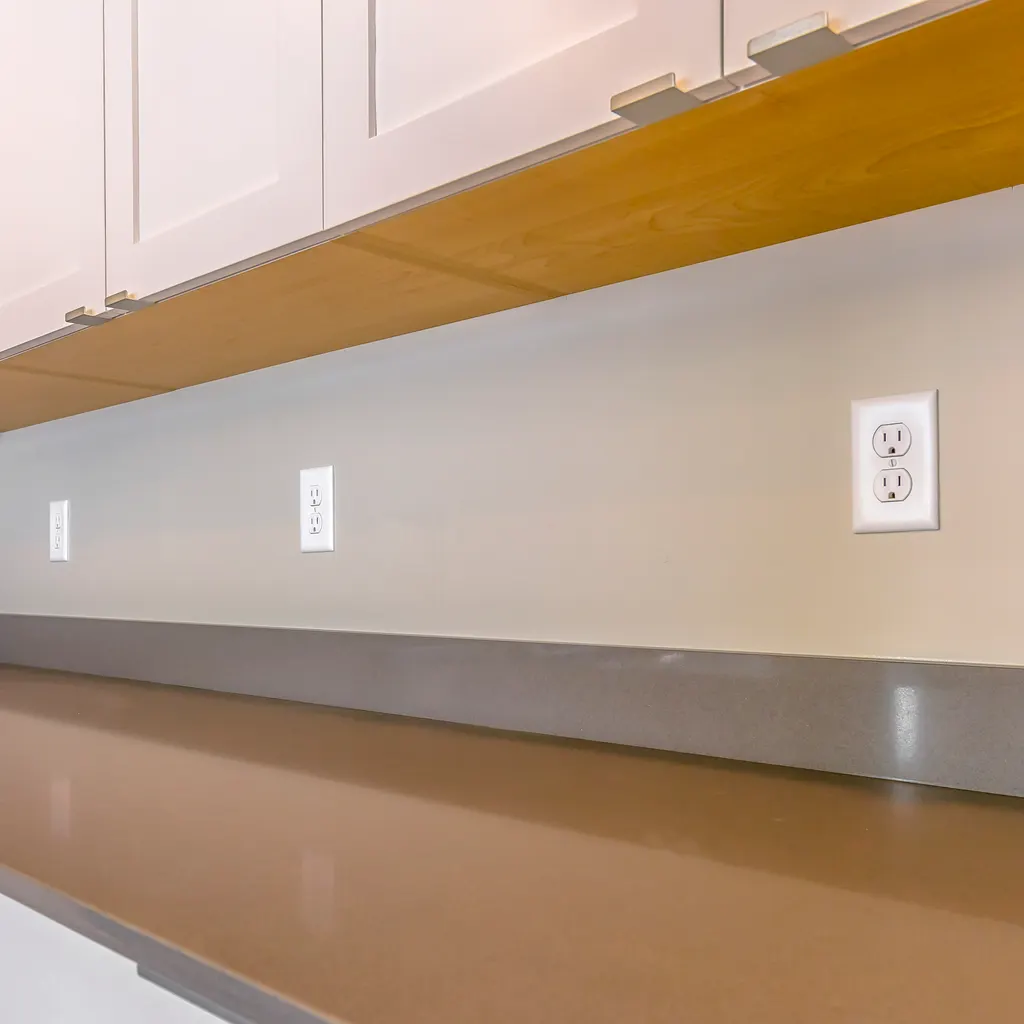
- Kitchens, every receptacle, not only those serving countertops
- Within 6 feet of the edge of any sink, including wet bars and utility sinks
- Within 6 feet of a bathtub or shower stall
- Laundry areas
- Indoor damp or wet locations
A second list in 210.8(D) covers specific appliances regardless of location. Dishwashers have required GFCI protection for years, and the 2023 edition extended it to several other kitchen and laundry appliances, so a kitchen remodel today involves more GFCI breakers than it did five years ago. Pools, spas and their pumps fall under Article 680; see our pool and spa wiring guide.
For existing homes, the rule that matters is 406.4(D)(3): when a receptacle is replaced in any location the current code says needs GFCI protection, the replacement must be GFCI protected. Swapping a worn garage outlet in a 1979 Richmond home therefore means installing a GFCI. Receptacles that are never touched remain grandfathered.
GFCI outlet or GFCI breaker: which should you install?
Both provide identical protection. The choice is about where the protection sits and what has to be reset when it trips.
GFCI receptacle
Installed at the point of use. Its own two outlets are protected, and anything wired to the LOAD terminals downstream is protected too, so one GFCI at the first outlet in a bathroom circuit can cover the receptacles in two or three bathrooms. The reset button is right there, which homeowners prefer. The device needs a box with enough depth and volume.
GFCI breaker
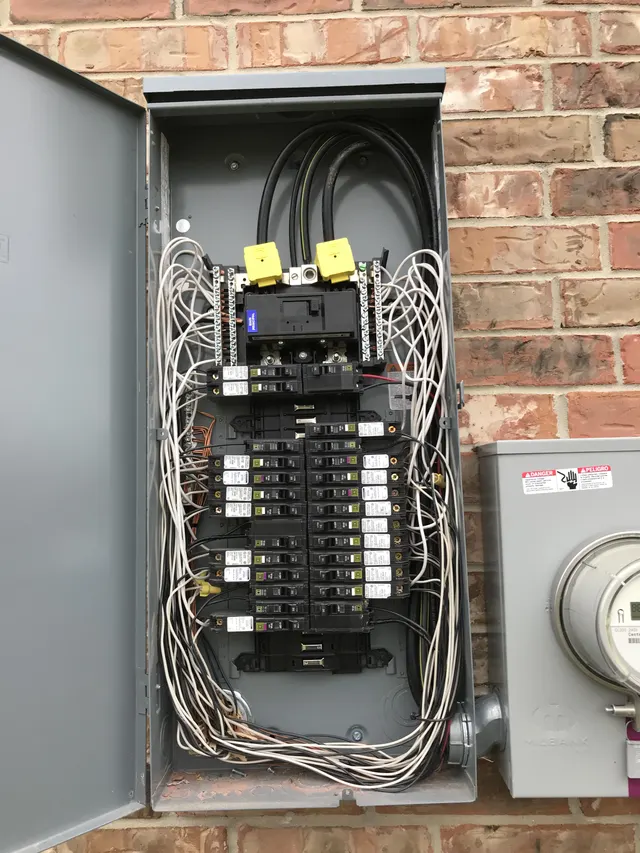
Installed in the panel, protecting every outlet, light and hardwired load on that circuit. This is the right choice for hardwired equipment with no receptacle to protect it, including dishwashers, pool pumps, spa packs and well pumps, and for circuits where a receptacle would be hard to reach, such as behind a refrigerator or above a garage door. Breakers must match the panel brand; a compatible breaker for a Federal Pacific or Zinsco panel generally does not exist, which becomes an argument for replacing the panel.
For a typical home we use receptacles in bathrooms, kitchens and garages, where a reset should be convenient, and breakers for long outdoor runs, pool equipment and hardwired appliances. Dual-function AFCI/GFCI breakers cover kitchens and laundry rooms, where the code now wants both protections on the same circuit.
How is a GFCI outlet installed correctly?
The wiring itself is simple; the mistakes are in identification. Here is the sequence a licensed electrician follows:
- Turn off the breaker and verify. A non-contact tester first, then a meter across every pair of conductors in the box. Other circuits can share a box.
- Identify line and load. With the breaker briefly back on and the old device removed, the cable that reads 120 volts is the line from the panel. Any other cable continues to downstream outlets. The breaker goes back off before anything is touched.
- Connect the line. Hot to the brass LINE terminal, neutral to the silver LINE terminal, ground to the green screw. Reversing line and load is the classic error: the GFCI passes power and may even reset, but the outlets are unprotected.
- Connect the load, or leave it taped. Downstream cables go on the LOAD terminals only if those outlets should be protected. Otherwise they are pigtailed to the line side and the LOAD terminals keep their factory tape.
- Fit the device. GFCIs are deep; conductors are folded to avoid pinching, and the device is screwed to the box.
- Restore power and test. Press TEST, confirm the outlets go dead, press RESET, then verify with a plug-in tester. Downstream outlets get the GFCI Protected sticker, and ungrounded installations get the No Equipment Ground sticker.
Replacing a device on an existing circuit does not require a permit. Adding a GFCI circuit for a new bathroom, workshop or outdoor kitchen does, and the inspector will check the labels and test the device.
How do you test a GFCI outlet, and how often?
Manufacturers and safety organizations such as ESFI recommend testing every GFCI once a month, and after any lightning storm or outage, because the electronics inside can be damaged by surges without any visible sign. The test takes thirty seconds:
- Plug a lamp or a plug-in tester into the GFCI, or into an outlet it protects, and confirm it is on.
- Press TEST. The RESET button should pop out with a click and the lamp should go off. If it stays lit, the device has failed and must be replaced.
- Press RESET. The lamp should come back on. If the button will not stay in, there is either a wiring fault downstream, a lost line voltage, or a worn device.
A plug-in tester with a GFCI button simulates a real leakage current rather than using the device's internal test circuit, a better check of a suspect unit. It also flags open grounds and reversed polarity.
Self-test GFCIs add their own monitoring, but they do not test the wiring downstream, so the monthly button press still matters. Signs of end of life: a RESET button that will not latch, tripping with nothing plugged in, a warm, discolored or cracked face, and no trip on TEST. GFCIs are inexpensive to replace and we swap any that fail during a home electrical inspection.
Why does my GFCI keep tripping?
A GFCI that trips repeatedly is usually doing its job. Finding the cause follows the same logic every time: unplug everything on the protected outlets, reset, then plug loads back one at a time.
- A failing appliance. Refrigerators, chest freezers, sump pumps, pool pumps and anything with a motor or heating element develop insulation leakage as they age. If the GFCI holds until one specific appliance is plugged in, that appliance is the fault.
- Moisture in a box. Rain, sprinkler spray or condensation inside an outdoor or garage box creates a leakage path. This is the most common cause around Houston; see the next section.
- Long underground or outdoor runs. Every foot of buried cable leaks a tiny current to earth; a long run to a shed, gate opener or landscape lighting transformer can accumulate enough to trip a 5-milliamp device after heavy rain.
- A shared neutral. If a downstream neutral is tied to another circuit's neutral, or to ground, the GFCI sees an imbalance immediately and will not reset. That is a wiring fault that needs tracing.
- Damaged cords and tools. Pressure washers, nicked extension cords and old power tools trip GFCIs for good reason.
- Surge damage or age. After a lightning strike or grid switching surge, a GFCI may trip at random or refuse to reset. Replace it, and consider whole-home surge protection if it keeps happening.
If the device trips with nothing plugged in and the downstream outlets disconnected, the fault is in the wiring, not the GFCI, and it is time to call a licensed electrician.
Outdoor GFCI outlets, rain and in-use covers
Houston-area homeowners ask us about outdoor outlets that trip every time it rains more than any other GFCI problem. The GFCI is almost never the issue. Water reaching the receptacle face or the back of the box creates a path to ground, and the GFCI responds as designed. The fix is to keep the water out.
The NEC addresses this with two requirements in 406.9. Receptacles in damp or wet locations must be weather-resistant (WR) devices, with corrosion-resistant contacts and faces that tolerate UV and humidity. Receptacles in wet locations, which includes any outdoor outlet exposed to rain or sprinklers, must have an in-use cover, the deep hinged type often called a bubble cover, that keeps the outlet protected while a cord is plugged in. The flat flap cover on many 1980s and 1990s homes only protects the outlet when nothing is plugged in, which is why holiday lights trip the GFCI the first wet night of December.
When we replace an outdoor outlet we also check what the cover cannot fix: a box not sealed to the brick or siding, a missing gasket behind the plate, cable entries open to the weather, and a receptacle mounted face-up. Where an outdoor outlet is fed through a GFCI inside the garage, we label it so the homeowner knows where the reset is. For patios, outdoor kitchens and pool decks, we generally put the GFCI at the panel and use WR receptacles with in-use covers at every outdoor point.
GFCI protection in Katy, Richmond and Pearland homes
The GFCI upgrades we do in Fort Bend and Harris County follow the age of the house closely. Subdivisions built before the mid-1970s predate GFCI requirements entirely, and homes from the late 1970s through the 1990s usually have a GFCI in the bathrooms and perhaps one in the kitchen, with garages, outdoor outlets, laundry areas and the outlets by the kitchen sink left unprotected. Many of those early GFCIs are the originals and no longer trip on test. In Pearland and the older sections of Katy and Richmond, a typical visit replaces three to six devices and adds protection to the garage and exterior.
Local conditions make the outdoor and garage work especially important. Humidity sits near saturation for months, afternoon storms arrive sideways, and many garages double as laundry rooms and workshops with a chest freezer in the corner. After Hurricane Beryl and the May 2024 derecho we also found GFCIs damaged by surges during restoration that still passed power but no longer protected. Testing every GFCI after an outage is a good habit here.
Newer homes in Cinco Ranch, Shadow Creek Ranch and Aliana have full GFCI coverage from the builder, but pools, outdoor kitchens and garage workshops added later sometimes do not. Those additions involve new circuits, permitted and inspected by the city inside Katy, Richmond or Pearland limits and by the county elsewhere. The Local Electrician handles the permit as part of the job.
What affects GFCI outlet installation cost, and should you DIY it?
A GFCI receptacle is an inexpensive device, so the cost of GFCI outlet installation is mostly labor and depends on a few things:
- Number of locations. Several replacements in one visit cost less per device than one at a time.
- Receptacle or breaker. GFCI breakers cost more than receptacles and require panel work; dual-function AFCI/GFCI breakers more still.
- What the box reveals. Ungrounded wiring, aluminum conductors, shallow boxes and prior miswiring add correction time.
- Outdoor work. Weather-resistant devices, in-use covers and resealing a box take longer than an interior swap.
- New circuits. A new GFCI-protected circuit for a workshop or outdoor kitchen includes the run, the breaker and the permit.
We quote upfront after seeing the job, and financing is available for larger projects such as a whole-home outlet and GFCI upgrade.
Can you install a GFCI yourself? Replacing a single GFCI on a grounded circuit, with the breaker off and line and load identified with a meter, is a manageable job. Leave multi-cable boxes, ungrounded or aluminum wiring, anything that will not reset, GFCI breakers and any new circuit to The Local Electrician. If a GFCI is buzzing, hot or scorched, switch off its breaker and call 832-271-1167.
Frequently Asked Questions
What is GFCI outlet installation?
It is the installation of a ground-fault circuit interrupter receptacle or breaker on a circuit in a location where shock risk is elevated. The device compares outgoing and returning current and cuts power within a fraction of a second when about 5 milliamps leaks to ground. Installation includes identifying line and load conductors, wiring the device, labeling protected outlets and testing.
Why is GFCI outlet installation important in my home?
A ground fault through a person can be fatal at currents far below what trips a standard breaker. GFCIs detect that leakage and disconnect power before injury occurs. They are the only practical protection for outlets near water, and they are the code-approved way to make ungrounded two-prong outlets in older homes safer without rewiring.
Can I install GFCI outlets myself?
A single replacement on a grounded copper circuit is within reach of a careful homeowner who turns off the breaker, verifies the box is dead, and uses a meter to identify the line cable. Reversing line and load leaves the outlet unprotected while still working. Multi-cable boxes, ungrounded wiring, aluminum wiring, GFCI breakers and new circuits should go to a licensed electrician.
Where should GFCI outlets be installed in my home?
Every receptacle in bathrooms, kitchens, garages, laundry areas, outdoors, crawl spaces and unfinished basements, plus any receptacle within 6 feet of a sink, tub or shower. Dishwashers and several other kitchen and laundry appliances require GFCI protection under the 2023 NEC as adopted in Texas, and pool and spa equipment is covered separately by Article 680.
How often should GFCI outlets be tested and maintained?
Press the TEST button on every GFCI once a month and after any lightning storm or power outage. The RESET should pop out and the protected outlets should go dead; if not, replace the device. GFCIs that will not reset, trip with nothing plugged in, or feel warm are at end of life. There is no other maintenance.
How much does GFCI outlet installation cost?
The device is inexpensive, so cost depends on labor: how many locations, whether a receptacle or a panel breaker is used, whether the box has grounding, aluminum or wiring problems to correct, and whether a new circuit and permit are involved. The Local Electrician provides upfront pricing after seeing the job, and financing is available for larger upgrades.
Why does my outdoor GFCI trip when it rains?
Water is reaching the receptacle or the inside of the box and creating a leakage path, which the GFCI correctly detects. The fix is usually a weather-resistant receptacle, an in-use bubble cover that protects the outlet while a cord is plugged in, a sealed box and gasket, and sometimes moving the GFCI itself indoors or to the panel.