




Quick answer
A partial power outage is when some circuits, rooms or appliances in a house lose power while others keep working. The usual causes are a tripped breaker or GFCI, a loose connection, a failing panel, or a lost leg or open neutral on the utility service. If lights brighten and dim or 240-volt appliances are weak, turn off the main breaker and call for help immediately.
A partial power outage is confusing because the house is not fully dark. The kitchen works, the bedrooms do not, and nobody can tell whether to call CenterPoint Energy or an electrician. This guide is for homeowners across Houston, TX and its suburbs who want to know what is happening behind the walls and what to do in the next ten minutes.
Most partial outages come down to one of two things: a protective device inside your home did its job, or one of the two 120-volt legs feeding the house has failed between the transformer and your panel. The second case can be dangerous. If you are not sure which you have, our electrical repair team answers around the clock at 832-271-1167.
Key Takeaways
- A partial power outage means some circuits in a home are dead while others work; it is rarely a grid-wide outage.
- A single tripped breaker or GFCI kills one circuit; losing a utility leg kills roughly half the house and disables 240-volt appliances.
- Lights that brighten and dim, bulbs burning out, or readings near 90 and 150 volts point to an open neutral, which is an emergency.
- Problems at the service drop, meter or whole street belong to CenterPoint Energy; wiring from the meter base inward is the electrician's job.
- Turn off the main breaker when you see brightening lights, smell burning or hear buzzing at the panel, then call a licensed electrician.
- Whole-home surge protection and a service inspection reduce the chance of a repeat after Houston-area storms.
What Is a Partial Power Outage?
A partial power outage is any situation where electricity reaches part of a house but not all of it. Nothing goes obviously dark, so the first clue is usually a dead outlet, a room with no lights, or an appliance behaving strangely. Common ways it shows up:
- One room or one wall of outlets is dead while the room next door works.
- Half the house is out in no obvious pattern, and the central air conditioner, dryer, electric range or water heater is weak or dead.
- Lights flicker, dim or brighten when a large appliance turns on, or bulbs burn out in clusters.
The pattern matters more than the symptom. A single dead circuit almost always points to a breaker, GFCI or bad connection on that circuit. Half the house out points to the service feeding the panel. Lights that get brighter rather than dimmer point to a neutral problem, and that one you treat as an emergency.
Tripped Breaker or Lost Leg? How to Tell in Two Minutes
Nearly every Houston-area home has split-phase 120/240-volt service: CenterPoint Energy delivers two 120-volt hot legs and a neutral. Each ordinary circuit uses one leg; the air conditioner, electric range, dryer and water heater use both legs together for 240 volts.
Signs it is a tripped breaker or GFCI
- One circuit is out: a room, a wall, the bathroom outlets, or the garage and patio outlets together.
- A breaker handle sits in the middle position, or a GFCI outlet has popped its reset button.
- Every 240-volt appliance works normally.
Signs you have lost a leg
- Roughly half the house is dead, scattered across several rooms rather than grouped by area.
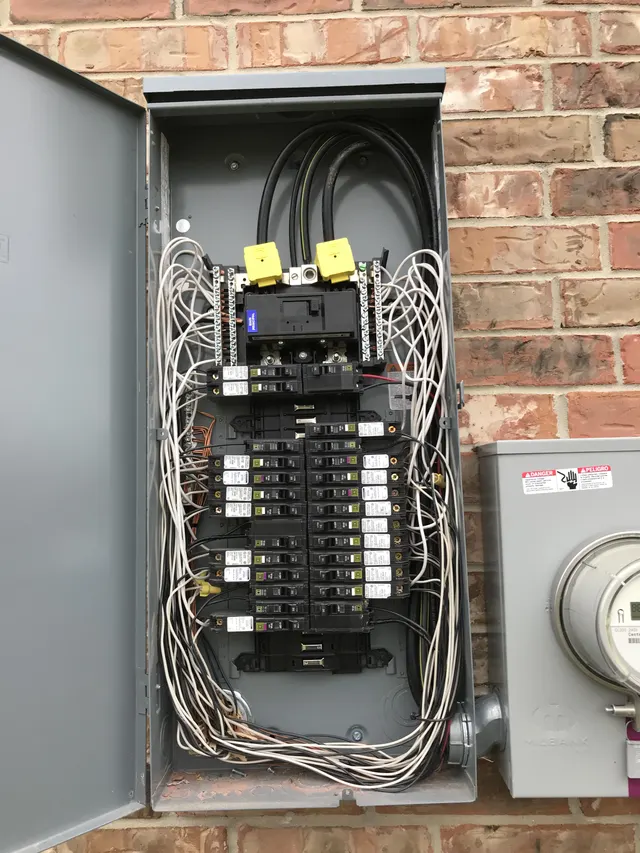
- Breakers in alternating positions down the panel are dead even though none have tripped.
- The air conditioner hums or will not start, the dryer tumbles but does not heat, or the range top is dead while its clock still lights.
A lost leg can originate inside the panel, at the meter base, at the service drop or at the transformer. Our guide to why a breaker keeps tripping covers the first case; the rest of this article covers the second.
What Causes a Partial Power Outage Inside the House?
Most partial power outages start inside the home, and most of those are the system working as designed.
- Tripped circuit breaker. An overload, short or ground fault opens the breaker and one circuit goes dead. Switch the handle fully off, then firmly on. If it trips again, leave it off.
- Tripped GFCI or AFCI. A GFCI outlet protects everything wired downstream of it, so a tripped GFCI in the garage can kill every outdoor outlet. AFCI breakers trip on arcing and reset at the panel.
- Blown fuse. One blown plug fuse drops a circuit; one blown main cartridge fuse drops an entire leg.
- Loose or failed connection. Outlets are often daisy-chained with push-in backstab connections that loosen after years of heat cycling. When one lets go, every outlet after it dies.
- Failing panel or breaker. A breaker that no longer grips the bus, a burned bus stab or a loose main lug can drop one circuit or a whole leg. Federal Pacific, Zinsco and early Challenger panels are known for this, as our post on causes of electrical panel failures explains.
- Water damage. Water in a panel, outdoor box or attic junction corrodes connections and causes intermittent loss on those circuits.
What Causes a Partial Power Outage on the Utility Side?
Between the transformer on the pole and the lugs in your panel there are several places where one leg or the neutral can fail. Most belong to CenterPoint Energy; some belong to you.
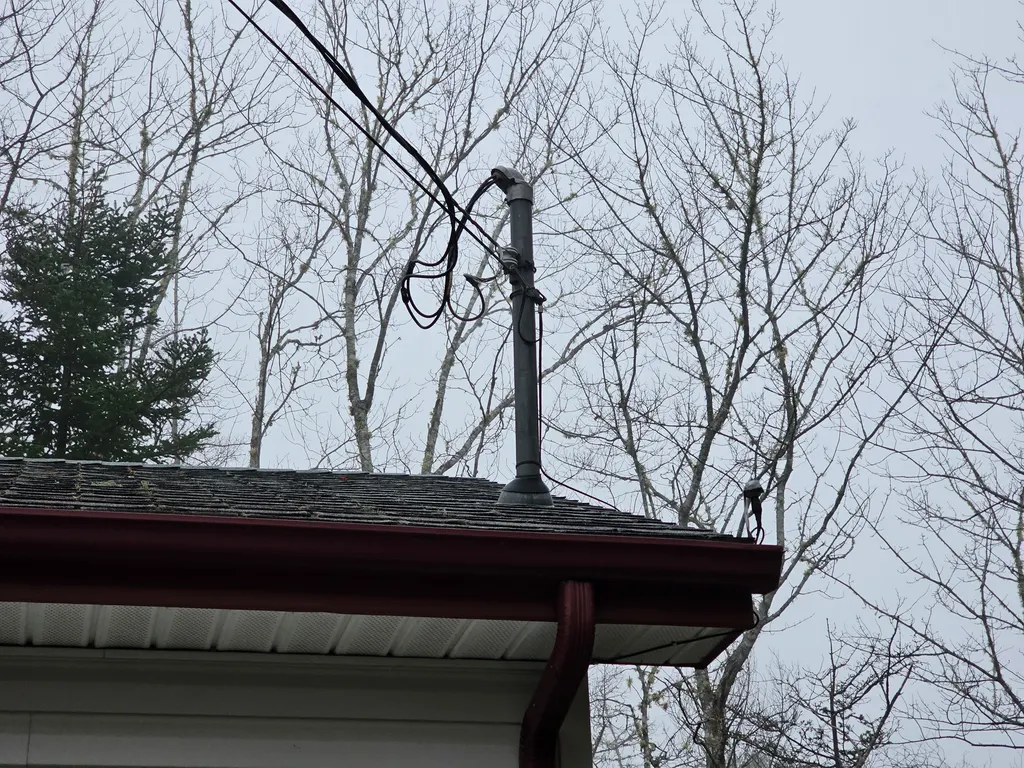
- Service drop damage. Tree limbs, wind and vehicles can break one conductor of an overhead drop while the other two keep working. CenterPoint owns the drop and the splices at the weatherhead.
- Meter socket problems. The jaws that grip the meter blades can overheat and lose contact on one leg. CenterPoint owns the meter; the homeowner owns the meter base it sits in, so this repair often involves both.
- Transformer faults. A failing transformer can deliver low voltage or drop a leg to several homes at once.
- Open neutral. A broken or corroded neutral at the drop, meter or panel is the most dangerous partial outage of all, covered next.
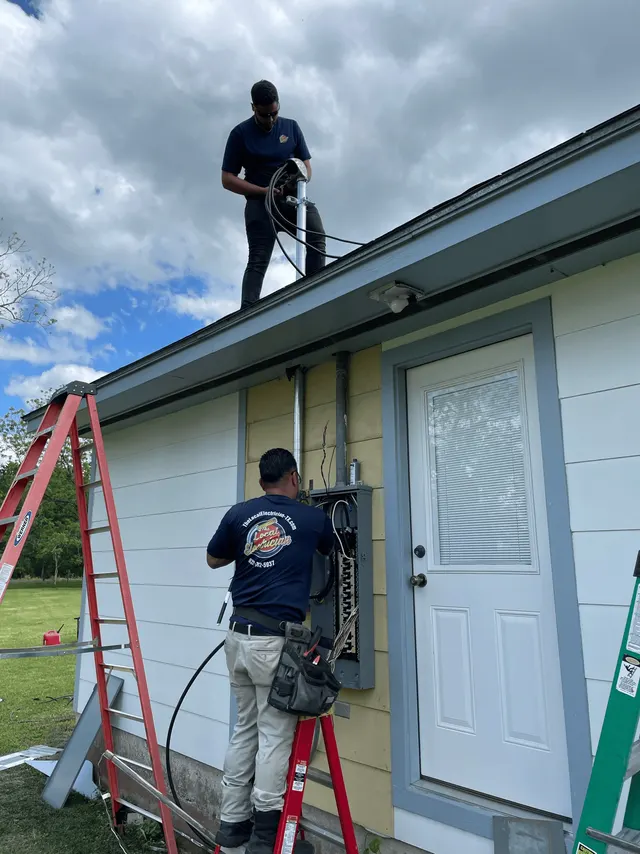
Before you call anyone, look outside. A drop sagging low, a weatherhead pulled off the house or a scorched meter base means the problem is at the service: report it to CenterPoint first. If the mast or meter base is damaged, a licensed electrician must repair it before the utility will reconnect, which our post on service mast repair after storm damage walks through.
Is a Partial Power Outage Dangerous? The Open Neutral Problem
A tripped breaker is not dangerous. An open neutral is. The service neutral is what holds each of your two legs at 120 volts. When it opens, the two halves of the house become a series circuit across 240 volts, and the voltage splits according to how much load is running on each side.
The lightly loaded side can rise to 140 or 150 volts while the heavily loaded side sags to 80 or 90 volts, shifting every time a large appliance cycles. That is why an open neutral produces these specific symptoms:
- Lights that get brighter in one room when something turns on in another.
- Bulbs burning out, electronics rebooting, appliances running hot and humming.
- A tingle or shock from a faucet, gas line or metal appliance, because neutral current is now returning through plumbing and ground rods.
If you see brightening lights, stop troubleshooting. Turn off the main breaker if you can reach it without standing in water, unplug electronics, and call. An open neutral at the drop or meter is CenterPoint's repair; one at the panel is ours. Either way the home stays de-energized until it is found, because a few minutes at 150 volts can destroy every circuit board in the house. Our article on tracing neutral faults explains how the location is pinned down.
What Should You Do First if You Suspect a Partial Outage?
Work through these steps in order and stop at the first one that applies.
- Check for danger signs. Burning smell, smoke, buzzing from the panel, sparking, a warm panel cover or brightening lights. Any of these means main breaker off and a call to 832-271-1167. Do not open the panel.
- Note the pattern. One area dead, or half the house? Are the 240-volt appliances working? That observation tells an electrician or CenterPoint where to look.
- Reset GFCIs. Press reset on every GFCI you can find: garage, bathrooms, kitchen and outdoors. Many dead patio and bathroom outlets are solved here.
- Check the panel. Push any handle in the middle position fully off, then on. Reset it once; a second trip is a fault, not a fluke.
- Look outside. A damaged drop, leaning mast, scorched meter base or neighbors with the same problem point to the utility.
- Call the right party. Drop, meter and whole-street problems go to CenterPoint Energy. Anything from the meter base inward is a licensed electrician.
Beyond that there is nothing safe for a homeowner to do. Removing a panel cover exposes live bus bars even with the main off.
Partial Power Outages in Houston and Bellaire Homes
We see a few local partial power outage patterns again and again. Bellaire, TX mixes 1950s and 1960s houses on original service equipment with new construction on 200-amp panels. The older homes are where we find fuse boxes with one blown main cartridge, cloth-insulated service conductors and Federal Pacific panels with burned bus stabs. Houston, TX subdivisions from the 1970s and 1980s add aluminum branch wiring and decades of backstabbed outlets, both of which drop a run of receptacles when a connection fails.
Climate does the rest. Attic wiring here sits above 130°F every summer, and heat cycling works connections loose. Most of the area is fed by overhead drops through mature trees, so the May 2024 derecho and Hurricane Beryl in July 2024 left many homes with one leg down or a mast torn off the wall. The February 2021 freeze did it differently, with restoration surges that damaged meter sockets and electronics.
Repairing a meter base, mast or panel is permitted and inspected by the city inside Houston or Bellaire and by the county elsewhere, and CenterPoint will not reconnect until that inspection clears. The Local Electrician dispatches from Richmond and handles the permit, repair and utility coordination for Houston and Bellaire homeowners.
How an Electrician Diagnoses and Repairs a Partial Power Outage
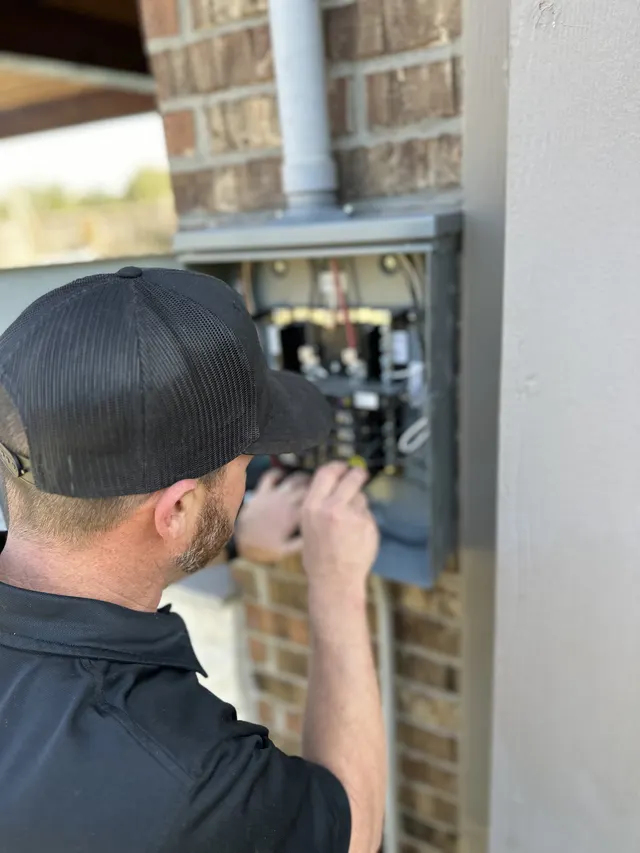
A partial outage diagnosis is a voltage hunt from the service inward. Our electrician starts at the meter base and main lugs, measuring each leg to neutral and leg to leg. Two legs near 120 volts with 240 between them means the utility side is fine. One leg missing, or more than a volt or two from neutral to ground under load, tells us where to go next.
From there we check the main breaker, bus bars and each branch breaker under load, then trace the dead circuit from the panel to the first dead device, opening boxes to find the loose backstab, failed splice or corroded terminal. Repairs range from re-terminating a few outlets to replacing a breaker, main lug, meter base or the panel itself.
Cost follows the scope, not the symptom: how many connections need repair, whether a breaker or panel must be replaced, whether a permit and utility disconnect are involved, and whether the call is an emergency. The Local Electrician quotes the repair upfront, and larger jobs such as a panel or service replacement qualify for financing.
How Do You Prevent Partial Power Outages?
You cannot stop a tree limb from hitting a service drop, but most inside-the-house partial outages are preventable.
- Replace known-hazard panels. Federal Pacific, Zinsco and early Challenger panels drop circuits and legs as their bus connections degrade. A modern panel ends that pattern.
- Retire backstab connections. When outlets are replaced, we land the wires on the screw terminals so the circuit does not die at the next loose push-in.
- Add whole-home surge protection. Lightning and grid-switching surges weaken breakers and connections before they fail outright. A whole-house surge protector at the panel absorbs those events and shields the appliances a bad neutral would otherwise cook.
- Inspect the service every few years. A look at the mast, weatherhead, meter base and main connections catches corrosion and heat damage early.
If you are dealing with a partial power outage right now, The Local Electrician answers at 832-271-1167 day or night, with upfront pricing on every repair.
Frequently Asked Questions
What is a partial power outage?
A partial power outage is when some circuits, rooms or appliances in a house lose power while the rest keep working. It is different from a grid outage, where everything goes dark. The pattern tells you the cause: one dead area usually means a tripped breaker or GFCI, while half the house out with weak 240-volt appliances means a lost utility leg.
What causes a partial power outage in a home?
Inside the home, the common causes are a tripped breaker, GFCI or AFCI, a blown fuse, a loose backstab or splice connection, or a failing breaker or panel. On the utility side, a damaged service drop, overheated meter socket, failing transformer or open neutral can drop one of the two 120-volt legs that feed the house.
Is a partial power outage dangerous?
It can be. A tripped breaker is harmless, but an open neutral or a lost leg caused by a burning connection is a fire and shock hazard. Lights that brighten, bulbs that burn out, a shock from a faucet, or a burning smell at the panel mean you should turn off the main breaker and call a licensed electrician or CenterPoint immediately.
Can a partial power outage damage appliances?
Yes. With an open neutral, one side of the house can see 140 to 150 volts, which destroys electronics, LED drivers and appliance control boards within minutes. A lost leg leaves 240-volt motors trying to start on half voltage, which overheats air conditioner compressors and well pumps. Unplug sensitive devices and switch off the air conditioner until the cause is fixed.
What should I do first if I suspect a partial outage?
Check for danger signs first: burning smell, buzzing, a warm panel or brightening lights mean main breaker off and a phone call. If none are present, note whether one area or half the house is out, reset every GFCI, reset any tripped breaker once, and look outside at the service drop and meter. Then call CenterPoint for utility damage or an electrician for anything inside.
Is it safe to troubleshoot a partial power outage myself?
Resetting breakers and GFCIs and unplugging equipment is safe. Removing the panel cover, opening the meter base, touching the service drop or testing inside boxes is not. The bus bars and service conductors stay live even with the main breaker off. If a breaker trips a second time or you see any heat damage, stop and call a licensed electrician.
Will my insurance cover damage from a partial outage?
Policies vary, so check with your insurer. Many homeowner policies cover sudden damage such as a storm tearing a mast off the house or a surge destroying appliances, but exclude losses from wear, neglect or unpermitted work. A written diagnosis and photos from a licensed electrician support a claim, and a permitted repair with a passed inspection helps with later questions.
How quickly can The Local Electrician respond to a partial power outage?
The Local Electrician offers 24/7 emergency service across Houston, Bellaire, Richmond, Katy, Sugar Land and the surrounding suburbs, with same-day service when available. Crews dispatch from the Richmond office. If you describe the pattern when you call 832-271-1167, such as half the house out or brightening lights, we can prioritize the call and arrive prepared for the likely repair.
Do you work on older homes with outdated electrical systems?
Yes. Much of our partial-outage work is in 1950s to 1980s homes with fuse boxes, Federal Pacific or Zinsco panels, aluminum branch wiring and cloth-insulated service conductors. We can repair the immediate fault, and where the equipment is a known hazard we explain the options for a panel or service replacement, which is permitted and inspected by the local authority.
Can a surge protector help prevent partial power outages?
A whole-home surge protector will not stop a tree from taking down a service drop, but it does prevent the damage that follows. Lightning and grid-switching surges weaken breakers, GFCIs and appliance electronics, and those weakened parts are what fail later. Surge protection at the panel also limits the appliance losses when an open neutral sends high voltage through the house.