




Quick answer
In disaster recovery, electricians make damaged homes safe, assess flooded or storm-damaged equipment, repair the service mast, weatherhead, meter base and panel that the homeowner owns, obtain the permit and inspection the city or county requires, and coordinate reconnection with CenterPoint Energy, which owns the drop and the meter. They also set up safe temporary power and install the surge protection and generators that make the next storm easier.
After Hurricane Beryl in July 2024, the May 2024 derecho and the February 2021 freeze, thousands of Houston-area homeowners learned the same lesson: when the utility crew drives past your house, it is often because the damage is on your side of the meter, and only a licensed electrician can fix it. This guide explains the role of an electrician in disaster recovery, from the first make-safe visit to the moment CenterPoint Energy reconnects, with the sequence and the ownership rules that decide how fast a home in Katy, TX or Richmond gets its power back.
Our 24/7 emergency electricians dispatch from Richmond throughout storm recovery and can be reached at 832-271-1167.
Key Takeaways
- CenterPoint Energy owns the service drop and the meter; the homeowner owns the mast, weatherhead, meter base and everything inside the house.
- After storm damage to the mast or meter base, a licensed electrician must repair it and pass inspection before CenterPoint will reconnect.
- Breakers, panels, outlets and wiring that were submerged in floodwater are replaced, not dried out and reused.
- Never restore the main breaker to a flooded home, and never plug a generator into a wall outlet; backfeed can kill a line worker.
- Electricians in disaster recovery work in a fixed order: make safe, assess, repair service equipment, permit and inspect, reconnect, then restore circuits.
- Whole-home surge protection and a permitted generator with a transfer switch are the two upgrades that most shorten the next recovery.
What Do Electricians Actually Do in Disaster Recovery?
Utility crews restore the grid. Electricians restore the house. That is the division of labor in disaster recovery, and in practice the electrician's work falls into six stages, in this order:
- Make safe. Isolate a home with a damaged service, exposed conductors or a wet panel so nobody is shocked and nothing catches fire when power returns to the street.
- Assess. Determine what was submerged, what was struck, what overheated during restoration surges, and what can be reused. This is documented in writing for the insurer.
- Repair the service equipment. Replace or reset the mast, weatherhead, service conductors and meter base, and replace a panel that was flooded or burned. This is the step that gates everything else.
- Permit and inspect. Service and panel work is permitted and inspected by the city building department inside Katy or Richmond and by Fort Bend or Harris County outside city limits. The inspection result is what releases the home to the utility.
- Reconnect. Coordinate with CenterPoint Energy to re-energize the drop and reset the meter, then bring the house up one circuit at a time.
- Restore and harden. Replace damaged branch circuits, outlets and fixtures, then add the surge protection, generator connection and GFCI coverage that reduce the damage next time.
Alongside this, electricians set up safe temporary power, correct dangerous generator hookups, and help emergency crews de-energize structures.
What Happens to a Home's Electrical System in a Hurricane, Flood or Freeze?
Each type of disaster damages a different part of the system, which is why the recovery looks different after each.
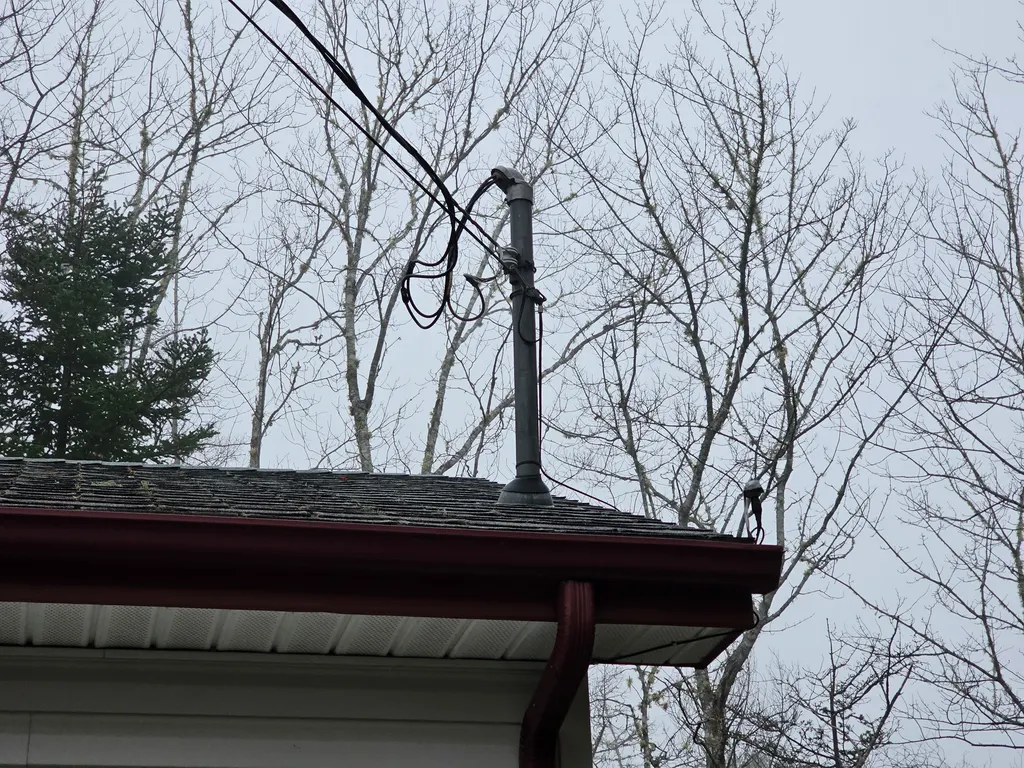
- Wind. Falling limbs and the drop itself pull the mast away from the wall, tear the weatherhead loose, and sometimes rip the meter base off the house. Tree contact can also break one conductor and leave the house with a lost leg or an open neutral.
- Flooding. Water enters outlets, junction boxes and the panel from below. Breakers, GFCIs, receptacles and the bus bars corrode within days, and the paper filler in non-metallic cable wicks water well above the visible line. Silt and contaminants stay inside equipment after it dries.
- Restoration surges. When the grid comes back after days off, switching transients destroy electronics, LED drivers, HVAC control boards and GFCI devices across whole neighborhoods. Many appliance losses blamed on a storm actually happen at reconnection.
- Freeze. The February 2021 event brought burst pipes above panels and attic junction boxes, space heaters overloading bedroom circuits for a week, and generators run indoors or backfed through dryer outlets.
Who Repairs What? The Reconnect Sequence After Storm Damage
The single most important thing to understand in storm recovery is the ownership line. CenterPoint Energy owns the service drop from the pole to the splice at your weatherhead, and it owns the meter itself. You own the mast, the weatherhead, the service entrance conductors inside the mast, the meter base the meter plugs into, and every wire and device inside the house.
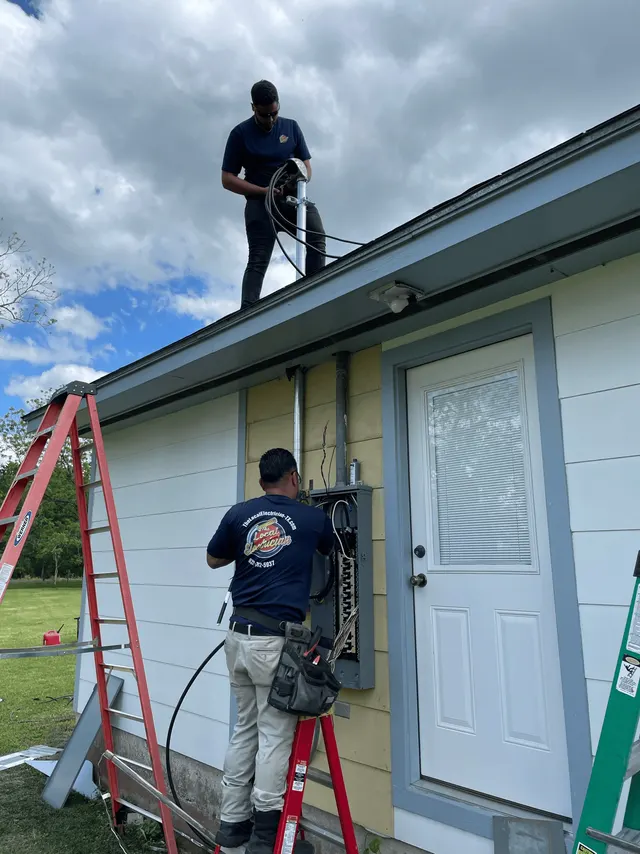
That line sets the sequence. If the drop is down but your mast is intact, CenterPoint restrings the drop and you are back on with the rest of the street. If the mast is bent, pulled loose or the meter base is damaged, CenterPoint will not reconnect until the equipment is repaired by a licensed electrician, inspected and released.
The sequence looks like this:
- Electrician repairs or replaces the mast, weatherhead, conductors and meter base, and the panel if required.
- Electrician files the permit with the city or county.
- The inspector approves the work and notifies the utility, or the electrician submits the release.
- CenterPoint energizes the drop and sets the meter.
- Electrician brings the house up circuit by circuit, checking for damage that only shows under load.
Our guide to service mast repair after storm damage covers the first step in detail. Call an electrician as soon as you can see mast or meter base damage, not after the utility has passed you by.
What Should Homeowners Do Before the Electrician Arrives?
The first hours after a storm are when most of the injuries happen. A short list of rules covers them.
- Treat every downed line as live, including the one lying across your own yard, and stay well away from anything touching it.
- Do not enter standing water in a garage, utility room or any area with outlets or appliances until the main breaker has been turned off by someone who can reach it dry.
- Do not restore the main breaker to a home that flooded, even after the water is gone. Flooded equipment must be assessed first.
- Never plug a portable generator into a wall or dryer outlet. Backfeed energizes the drop and can kill a line worker working on a line they believe is dead, and it destroys the generator when grid power returns.
- Run generators outdoors, at least 20 feet from the house with the exhaust pointed away, and use working carbon monoxide alarms.
- Unplug sensitive electronics before power is restored so restoration surges do not take them.
- Photograph damage to the mast, meter base, panel and any flooded areas before cleanup, for the insurer and for the electrician.
Our post on what to do during a Houston-area power outage covers the hours before and during the storm.
How Do Electricians Assess Flood-Damaged Electrical Equipment?
The rule we follow is simple: equipment that was under water is replaced. That applies to breakers, panels, meter bases, receptacles, switches, GFCIs, AFCIs, dimmers, smoke alarms, ceiling fan motors, HVAC disconnects and any cable whose ends or splices were submerged. Drying a breaker does not remove silt from its contacts, and a breaker that has been wet may fail to trip when it is finally needed.
The assessment visit works from the waterline up:
- Confirm the high-water mark inside the house, which is often higher than the mark outside.
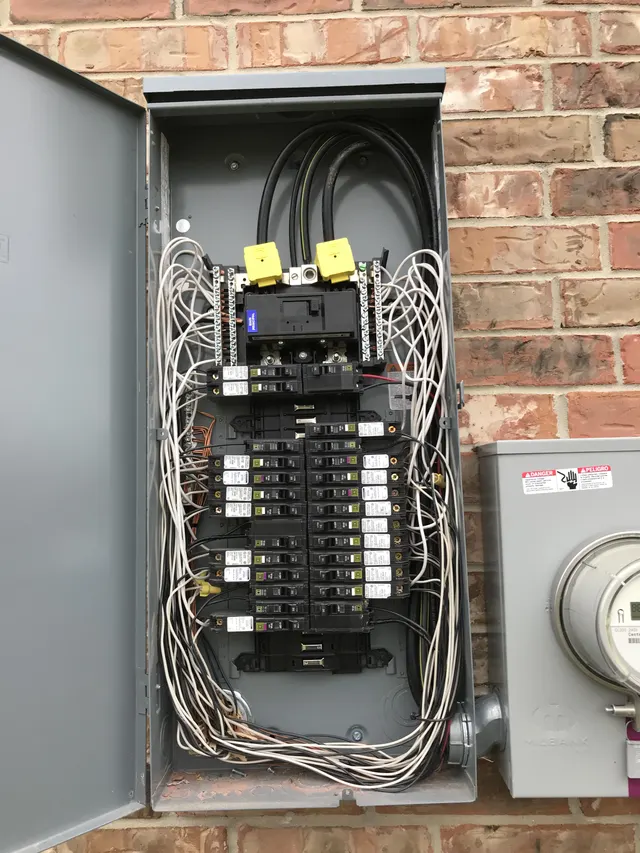
- Check the panel. If the water reached the bottom of the enclosure, the panel and every breaker are replaced. If it reached only the conduit below, the entry is dried, inspected and resealed.
- Open every outlet, switch and junction box below and near the line. Devices are replaced; cable is cut back to dry copper and re-spliced in a new box, or replaced to the next box up.
- Test cable runs above the waterline with an insulation resistance tester to catch water that wicked up inside the sheath.
- Inspect the grounding electrode system, water pipe bond and any pool or spa bonding that was disturbed.
The written findings list what must be replaced, what is salvageable, and what is permit-required. Panel and service replacement always is. That document and the first-day photos are what support the insurance claim.
How Should Temporary Power and Generators Be Handled During Recovery?
Disaster recovery can take days for the grid and weeks for a flooded house, and a generator is what makes the house livable in between. Electricians make that safe in two ways.
For a portable generator, the correct connection is a manual transfer switch or an interlock kit with an outdoor inlet, so the generator feeds selected circuits through the panel and can never backfeed the utility. That is a permitted installation and takes a few hours. Without one, the generator should power only cord-connected loads through heavy-gauge extension cords, with the refrigerator, a window unit and a few lights as priorities.
For homes that want to sit out the next recovery, a permanently installed standby generator with an automatic transfer switch starts itself within seconds of an outage and runs on natural gas. Demand for standby generators across the Houston area rose sharply after Beryl and the 2021 freeze, and installations are permitted and inspected like any other service work. In either case, the dangers an electrician looks for during recovery are the same: backfeed through a dryer plug, a generator in a garage, cords run through standing water, and a neutral bonded in two places.
Disaster Recovery for Katy and Richmond Homes
The Local Electrician dispatches from Richmond, TX, and Katy, TX and Fort Bend County are where we spend most of our disaster recovery days. Beryl in July 2024 was a mast and weatherhead storm: miles of overhead drops through mature trees in older Katy neighborhoods and in Richmond near downtown came down, and the homes that waited longest were the ones whose mast was bent or whose meter base had been torn from the wall. The May 2024 derecho did the same with straight-line wind, concentrated on homes with trees close to the drop. The February 2021 freeze was an indoor event, with burst pipes over panels and a week of overloaded heater circuits.
Housing stock matters as much as weather. Cinco Ranch, Grand Lakes and the newer sections of Katy have underground service and 200-amp panels, so their recovery is mostly surge damage and flooded garage outlets. Richmond's older streets and the 1970s subdivisions off Mason Road in Katy have overhead service, original meter bases and panels that were marginal before the storm, and those are the full mast-and-panel replacements. Every one of those repairs is permitted and inspected by the city or by Fort Bend County, and we handle both the permit and the CenterPoint release. Our Katy and Richmond pages list the neighborhoods we cover.
How Do You Prepare Your Home's Electrical System for the Next Storm?
Most of what makes a recovery slow or expensive can be addressed before the season starts.
- Have the service inspected. A rusted mast base, a cracked weatherhead, a corroded meter base or a drop rubbing a tree limb is a storm away from failure. CenterPoint trims trees near its lines on request; the mast and base are yours to maintain.
- Install whole-home surge protection. A panel-mounted surge protector absorbs restoration transients and nearby lightning, which cause more appliance losses than the storm itself.
- Add a generator connection now. An inlet with an interlock, or a standby unit, installed in spring rather than during a backlog in July.
- Replace known-hazard panels before they are stressed by a week of switching events.
- Confirm GFCI protection on every garage, outdoor and below-grade outlet, and photograph the panel, meter base and mast on a normal day for insurance.
When choosing an electrician for recovery work, look for a Texas electrical contractor license you can verify with TDLR, insurance, experience with the permit and utility release process, and upfront pricing. The Local Electrician is family-owned, licensed under TECL #34406 and insured. What a recovery repair costs depends on whether it is a mast reset or a full service replacement, whether the panel was flooded, the permit required, and how much branch wiring was under water; we quote the work upfront, and larger repairs qualify for financing.
Frequently Asked Questions
What qualifications should an electrician have for disaster recovery work?
A Texas electrical contractor license issued through TDLR, insurance that covers work in your home, and direct experience with the permit, inspection and utility release process that follows storm damage. Ask whether they will pull the permit and coordinate with CenterPoint Energy themselves. The Local Electrician holds TECL #34406 and has handled recovery work after Beryl, the 2024 derecho and the 2021 freeze.
How quickly can electricians respond after a disaster?
Immediately for safety hazards, but with the honest caveat that every electrician in the region is working through a backlog after a major storm. Calling as soon as you see mast or meter base damage, and describing it clearly, moves your repair earlier because the permit and utility release take days of lead time. Crews from The Local Electrician dispatch from Richmond and prioritize homes with exposed conductors or flooded panels.
What are the costs associated with electrical disaster recovery?
They depend on the scope: resetting a bent mast costs far less than replacing the mast, weatherhead, meter base and panel, and a flooded house may also need every outlet and switch below the waterline replaced. Permit fees are set by the city or county. Homeowner insurance often covers sudden storm damage, and a written assessment with photos supports the claim. Financing is available for larger repairs.
How can I prepare my home's electrical system for a disaster?
Have the mast, weatherhead and meter base inspected before hurricane season, install whole-home surge protection at the panel, add a generator inlet with an interlock or a standby generator with a transfer switch, replace Federal Pacific or Zinsco panels, make sure garage and outdoor outlets are GFCI protected, and photograph your service equipment on a normal day for insurance.
Can I perform any electrical repairs myself after a disaster?
You can switch off the main breaker if you can reach it dry, unplug electronics before power returns, and run a generator outdoors on extension cords. You should not repair a mast or meter base, reset power to a flooded home, replace breakers or outlets that were submerged, or connect a generator to the house wiring. Those are licensed, permit-required repairs, and mistakes there can injure utility workers as well as your family.
Why do my neighbors have power after a storm when I do not?
Usually because the damage is on your side of the meter. CenterPoint restores the drop and the meter, but if your mast is bent, your weatherhead torn loose or your meter base damaged, the utility cannot legally reconnect until a licensed electrician repairs the equipment and it passes inspection. Calling an electrician as soon as you see that damage is the fastest route back to power.