





Quick answer
The best ceiling fans for Texas homes move a lot of air efficiently: a blade span matched to the room, a high CFM rating on high speed, a DC motor for quiet low-speed running during long summers, and a damp or wet listing for patios and humid rooms. An Energy Star label confirms high airflow per watt. Fan type and ratings matter far more than brand.
Choosing the best ceiling fans for Texas is not about a brand list; it is about matching airflow, motor type and weather rating to rooms that face five months of heat and humidity. A fan that is perfect in a Dallas bedroom may droop and rust on a Richmond patio, and a 42-inch fan that looked fine in the store does nothing in a 400-square-foot game room with a 12-foot ceiling.
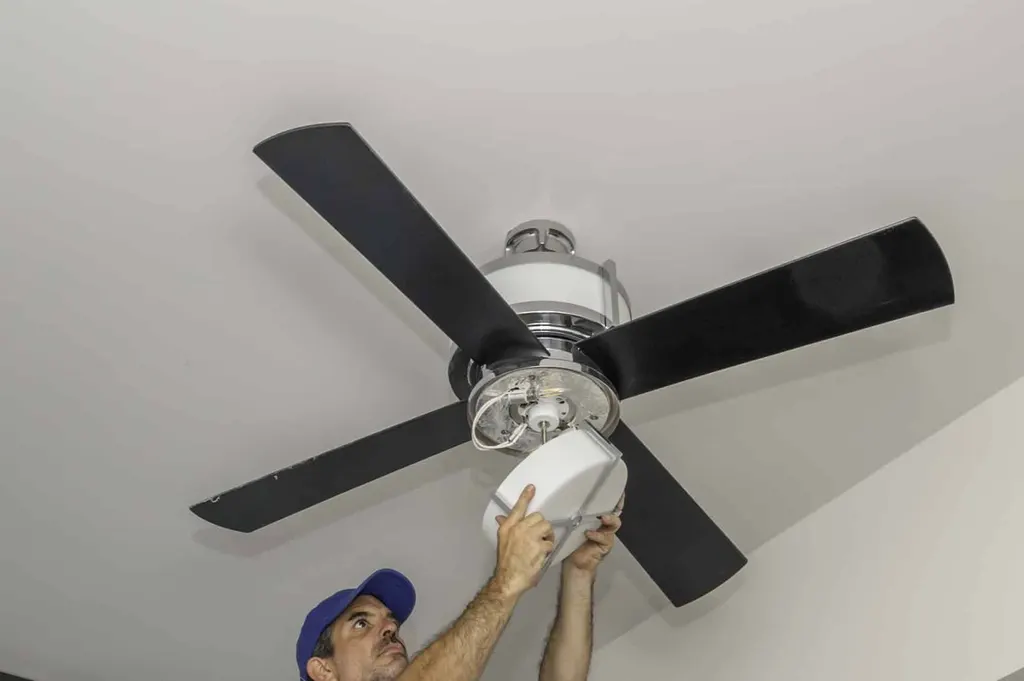
This guide explains how a fan actually cools you, how to size by CFM and blade span, when a DC motor is worth the money, which ratings survive a Gulf Coast porch, and the features that matter. When you have chosen, our ceiling fan installation service gets it hung on a fan-rated box at the right height.
Key Takeaways
- Ceiling fans cool people through wind chill, not rooms; turn them off in empty rooms and raise the thermostat while they run.
- Size by floor area and CFM: about 4,000 CFM for a bedroom, 5,000 to 6,000 or more for living rooms and game rooms.
- DC-motor fans use a fraction of the power of AC fans at low speed, run quieter and offer more speeds; they cost more up front.
- Covered patios need a damp-listed fan; anywhere rain or sprinklers reach needs a wet listing with sealed motor and plastic blades.
- Energy Star fans are tested for CFM per watt, which is the number that reflects real efficiency.
- Blade span, downrod length and mounting height matter more than blade count or style for airflow.
How Does a Ceiling Fan Actually Cool a Texas Room?
A ceiling fan does not lower the temperature of a room by a single degree. It moves air across your skin, which speeds evaporation and carries heat away, the same wind-chill effect you feel on a breezy day. The U.S. Department of Energy's guidance is that a fan lets most people raise the thermostat about 4°F with no loss of comfort, and in a Houston summer that thermostat change is where the savings come from.
Two consequences follow:
- A fan in an empty room is wasted electricity. There is no skin for the breeze to cool. Smart controls with occupancy sensing, or simply turning it off on the way out, matter more than the fan's own efficiency.
- Airflow at the body is what counts. A fan mounted too high on a vaulted ceiling, or one too small for the room, produces a breeze you cannot feel at couch height.
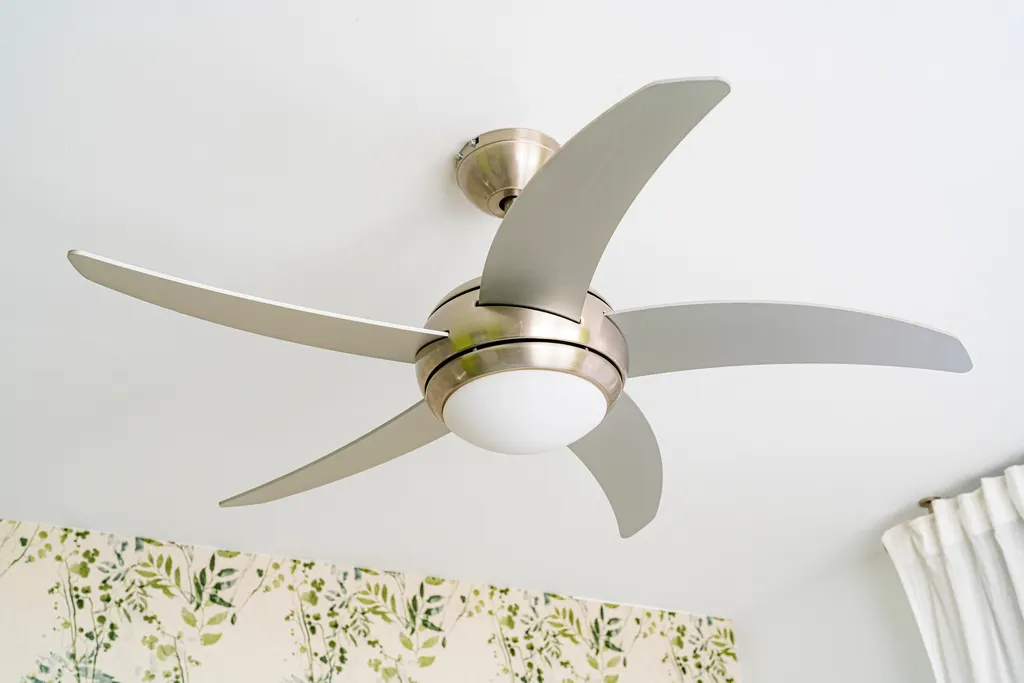
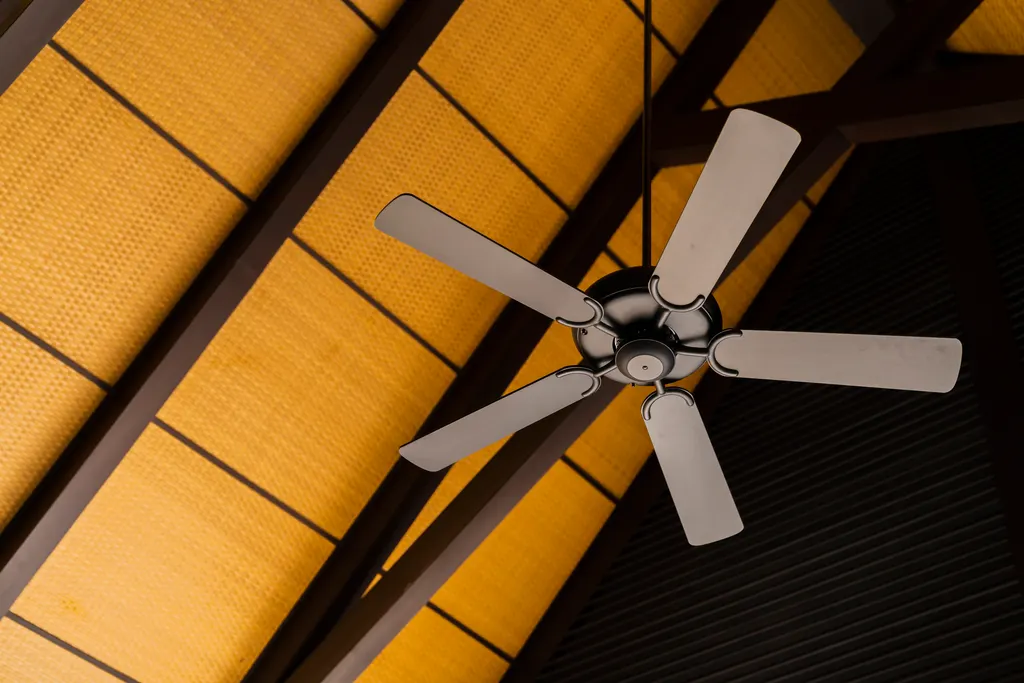
Airflow is measured in cubic feet per minute (CFM) on high speed, and it depends on blade span, blade pitch (12 to 15 degrees is the useful range), motor power and RPM. Blade count is mostly cosmetic; three wide blades at a good pitch often outperform five narrow ones. In winter, the reverse setting runs the fan clockwise at low speed to push warm ceiling air down the walls without a draft, which matters more in the February 2021 freeze kind of week than most Texans expect.
What Size and CFM Do the Best Ceiling Fans for Texas Rooms Need?
Start with floor area, then confirm with CFM, then check the ceiling height.
- Nursery, office, small bedroom (up to about 144 sq ft): 36 to 44 inch span, 2,500 to 4,000 CFM.
- Standard bedroom (144 to 225 sq ft): 44 to 52 inch span, 4,000 to 5,000 CFM. Quiet low-speed running is the priority here, which favors a DC motor.
- Living room, primary bedroom (225 to 400 sq ft): 52 to 60 inch span, 5,000 to 7,000 CFM.
- Game room, great room, open kitchen-living space (over 400 sq ft): 60 to 72 inch span and 7,000 CFM or more, or two 52 to 60 inch fans spaced so each covers its own seating area. Long rooms almost always do better with two fans than one giant one.
- Covered patio: size as a large room, since there are no walls to contain the air, and lean toward the higher CFM end.
Height rules apply to every room: blades 8 to 9 feet off the floor for full effect, never under 7 feet, and tips at least 18 inches from walls. In the 10-foot-ceiling living rooms common in Fort Bend subdivisions, that means a 12-inch downrod; on an 8-foot ceiling in an older Houston home it means a hugger or low-profile fan. Our ceiling fan installation guide has the full downrod table.
DC Motor vs AC Motor: Is the Upgrade Worth It in a Texas Home?
Nearly every fan sold today is one of two types.
AC induction motor fans
The traditional design: a shaded-pole or capacitor-start motor running directly on 120 volts, with three speeds from a pull chain or a fan-rated wall control. They are inexpensive, proven and easy to repair. They hum slightly on low speed with some controls, draw their highest current at start, and lose efficiency at low speed.
DC motor fans
A brushless DC motor fed by an electronic driver in the fan housing. The driver converts 120 volts AC to DC and controls the motor precisely, which gives six or more speeds, near-silent running, instant reverse from the remote, and power consumption that drops sharply at low speed. Since Texas fans spend most of their life on low or medium overnight, that low-speed efficiency is where DC pays off. These fans are almost always remote- or app-controlled and generally should not be put on a wall speed control.
The trade-offs are price, a dependence on the remote or hub, and a driver board that is a surge-sensitive piece of electronics. In a lightning-heavy area, a whole-home surge protector is cheap insurance for a house full of DC fans. For a bedroom that runs all night, a DC fan is worth the upgrade; for a garage or laundry room that runs an hour a day, a quality AC fan is the sensible choice.
Best Ceiling Fans for Texas Patios and Humid Rooms
Humidity is the quiet killer of fans in this part of the state. Fans carry a UL location rating, and it is the first thing to check for anything outside the air-conditioned envelope:
- Dry rated. Indoor rooms only. Blades are usually MDF or plywood with a veneer; on a porch they absorb moisture, sag, and throw the fan out of balance within one summer.
- Damp rated. For covered patios, screened porches, carports and bathrooms where moisture is in the air but water does not land on the fan. Blades are ABS plastic or sealed composite, and the motor housing resists corrosion.
- Wet rated. For pergolas, open porches and anywhere sprinklers, blowing rain or a pressure washer can reach. Sealed motor, stainless or coated hardware, all-weather blades and a weatherproof light kit if any.
Near the bay, in League City, Clear Lake and Friendswood, salt air accelerates corrosion, and we recommend wet-rated fans with stainless hardware even under cover. Garages benefit from a high-CFM industrial-style fan, and bathrooms need at least a damp rating with the fan outside the shower zone.
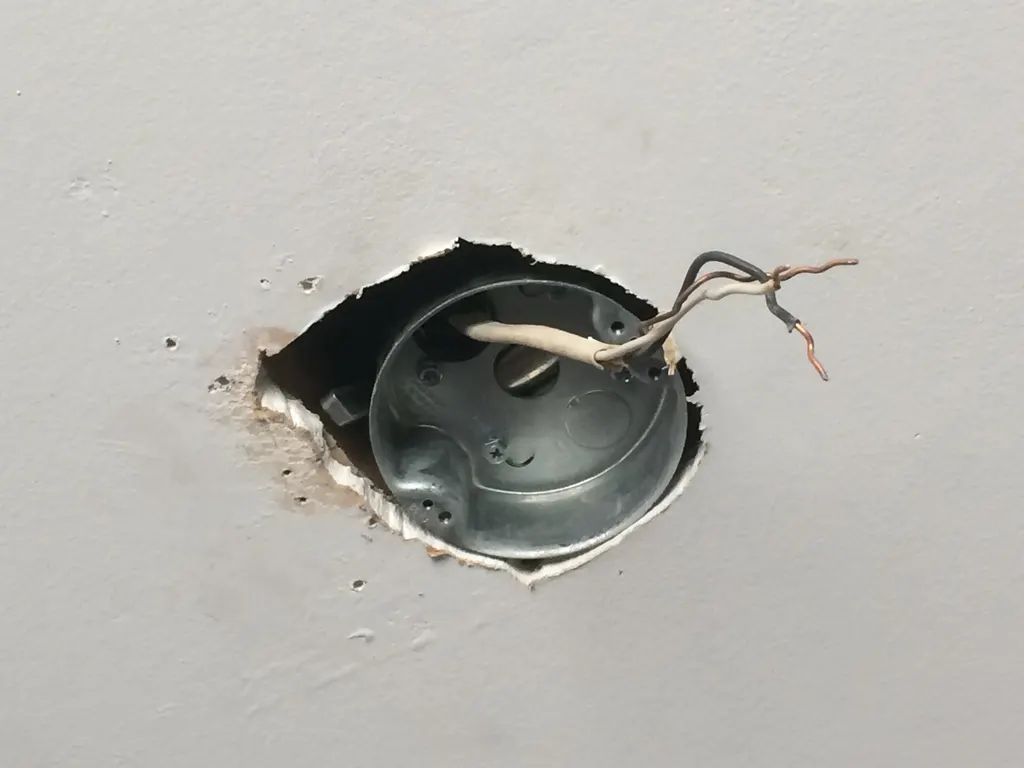
Outdoor fans also need a weatherproof fan-rated box and, in most cases, a GFCI-protected circuit. If a porch fan has never had a switch or box, that is new wiring the outdoor outlet and circuit rules apply to, and it is permitted and inspected work in Fort Bend and Harris County.
Which Ceiling Fan Features Are Worth Paying For?
Fan catalogs are long on styling words. These are the features that change daily life:
- Energy Star listing. The label means the fan was tested for airflow efficiency in CFM per watt, with a minimum at each speed, and any included light kit meets efficiency rules too. It is the simplest way to compare fans across brands.
- Integrated LED light kit. Look for a stated lumen output, a color temperature you like (2,700 to 3,000 K for living spaces) and dimming compatibility. Replaceable LED modules are better than sealed ones.
- Reverse from the remote. A switch on the motor housing of a fan 11 feet up is a switch nobody flips.
- Smart control. Wi-Fi or hub-connected fans add schedules, voice control and occupancy automation. Wall-mounted smart controls need a neutral in the switch box; canopy receivers do not, which is why they suit older homes. Our post on smart lighting controls and switches covers the wiring side.
- Sloped-ceiling capability. Many fans handle up to a 15-degree slope out of the box; steeper vaults need an adapter.
- Low-profile mounting. Essential for 8-foot ceilings; avoid it on anything higher, because it starves the blades of air from above.
- Large-diameter, low-speed fans. 72 to 84 inch fans at slow RPM move huge volumes quietly in great rooms and covered outdoor kitchens.
Features that rarely justify the price: extra blades, exotic blade materials for indoor fans, and built-in heaters in a climate that needs heat for three weeks a year.
Choosing Ceiling Fans for Richmond and Katy Homes
The fans we install most in Richmond, Katy, Sugar Land and the master-planned communities between them fall into three groups, driven by the houses themselves.
Newer two-story homes in Aliana, Harvest Green, Cross Creek Ranch and Jordan Ranch come with 10-foot first-floor ceilings, a two-story family room and a covered back patio roughed in for a fan. The family room wants a 60 to 72 inch DC fan on a long downrod, the bedrooms want quiet 52-inch DC fans, and the patio wants a damp- or wet-rated 60-inch fan with ABS blades. Many of these homes have a neutral at every switch, so wall-mounted smart controls are an option.
1980s and 1990s single-story homes across Pecan Grove, Quail Valley and older Katy neighborhoods have 8 and 9 foot ceilings, switch loops without neutrals, and builder-grade fans on boxes that were never fan-rated. A low-profile or short-downrod AC or DC fan with a canopy receiver fits, and the box gets upgraded while we are there.
Houston's inner neighborhoods, from the Heights to Bellaire and West University, mix 8-foot mid-century ceilings with vaulted additions, which calls for huggers in the original rooms and sloped-ceiling fans in the new ones. Across all three groups the climate is the same: fans run from May through October, patios see afternoon storms, and The Local Electrician recommends surge protection for any home standardizing on DC fans.
How Much Do Ceiling Fans Save, and What Affects the Cost?
A ceiling fan on high draws tens of watts; a central air conditioner draws thousands. The savings do not come from the fan replacing the air conditioner, which it cannot, but from letting you set the thermostat a few degrees higher while rooms are occupied. Over a CenterPoint-delivered summer bill that is a meaningful share, provided the fans are off when rooms are empty. A DC fan saves a little more on its own consumption; the thermostat habit saves far more. Our guide to lowering your electric bill puts fans in context with the other measures.
What drives the cost of a fan project:
- Fan class. Basic AC fans, mid-range DC fans with LED kits, and large-diameter or wet-rated fans sit in very different price bands.
- Controls. Remote included, wall speed control, or smart integration with a hub.
- Installation complexity. A swap on an existing fan-rated box is quick; a new brace box, a 12-foot ceiling, a sloped ceiling or a patio circuit adds labor and sometimes a permit.
- Quantity. Replacing every fan in a house in one visit costs much less per fan than one at a time.
The Local Electrician quotes fan installation up front, including any box or wiring upgrades, and whole-house fan and lighting projects qualify for our financing options. Call 832-271-1167 to schedule in Richmond, Katy, Sugar Land or anywhere in our Houston-area service territory.
Frequently Asked Questions
How do I choose the right size fan for a room?
Use floor area first: 36 to 44 inches for rooms up to about 144 square feet, 44 to 52 inches up to 225 square feet, 52 to 60 inches up to 400 square feet, and 60 inches or more, or two fans, beyond that. Then check the CFM rating and make sure blades will sit 8 to 9 feet above the floor and 18 inches from walls with the right downrod.
Can ceiling fans help reduce air conditioning costs in Texas?
Yes, indirectly. A fan makes you feel about 4°F cooler through wind chill, so you can raise the thermostat that much while rooms are occupied, and the air conditioner runs less. The fan itself uses very little power. The savings disappear if fans run in empty rooms, because they cool people rather than air. Turn them off when you leave.
What is the ideal CFM for a ceiling fan in Texas?
For a bedroom, 4,000 to 5,000 CFM on high speed is comfortable; for living rooms and primary bedrooms 5,000 to 7,000; for game rooms, great rooms and covered patios 7,000 or more, or two fans. CFM is measured on high speed, so a fan you intend to run on low all night should have plenty of headroom. Energy Star listings also report CFM per watt.
How often should I clean my ceiling fan?
Wipe the blades every month or two during the summer running season, because dust builds unevenly and unbalances the fan. Use a damp cloth, not a spray, on wood or composite blades. At the same time, glance at the blade screws and canopy for anything loose. Outdoor fans need cleaning more often, since pollen and humidity cake on the blades quickly.
Is it necessary to hire a professional for ceiling fan installation?
For a swap into an existing fan-rated box on a standard ceiling, a careful homeowner can do it. For a box that is not fan-rated, a ceiling over 10 feet, a sloped ceiling, a patio or bathroom location, or any new wiring, a licensed electrician is the right call, and new circuits are permitted work. The Local Electrician handles the full job, including the box and controls.
What is the difference between damp-rated and wet-rated ceiling fans?
A damp-rated fan tolerates humid air but not direct water, which suits covered patios, screened porches and bathrooms. A wet-rated fan has a sealed motor, corrosion-resistant hardware and all-weather blades, and can take blowing rain and sprinkler spray on an open porch or pergola. Near the coast, choose wet-rated with stainless hardware even under cover because of salt air.
Are DC ceiling fans worth the extra cost?
For bedrooms and living areas that run all evening and overnight, yes: a DC fan is quieter, offers more speeds, reverses from the remote and uses far less power at low speed. For a garage, laundry room or rarely used space, a quality AC fan is better value. Because DC fans contain electronic driver boards, pair them with whole-home surge protection in lightning-prone areas.