





Quick answer
Pool equipment bonding connects every metal part in and around a pool or spa, including the pump motor, heater, ladder, handrails, light shells, rebar in the shell and deck, and the water itself, with solid copper wire no smaller than 8 AWG, so everything sits at the same electrical potential and no voltage gradient can pass through a swimmer. NEC Article 680 requires it alongside GFCI protection.
Pool equipment bonding is the part of a pool's electrical system nobody sees and almost nobody checks, and it is the part that keeps a swimmer from becoming the path between a faulty pump and the water. Around Katy, TX, Fulshear and Friendswood, where a backyard pool or spa is common in almost every subdivision built since the 1990s, we find bonding that was never completed, bonding broken by a deck replacement, and new variable-speed pumps installed with no bonding lug connected.
This guide explains what bonding is and how it differs from grounding, what NEC Article 680 requires to be bonded, the GFCI, receptacle, lighting and disconnect rules, how a hot tub circuit is wired, and how to tell when bonding has failed. For the work itself, our dedicated circuit service covers pool and spa feeds.
Key Takeaways
- Bonding ties all metal parts and the pool water to one potential so no voltage difference can exist across a swimmer.
- NEC 680.26 requires an 8 AWG solid copper bonding conductor to the pump, heater, metal fittings, ladders, rails, light shells, shell rebar and deck.
- The pool water itself must be bonded through at least 9 square inches of conductive surface in contact with it.
- Pump motors, underwater lights and every receptacle within 20 feet of the water need GFCI protection; no receptacle may be closer than 6 feet.
- A spa or hot tub needs a dedicated GFCI-protected circuit and a disconnect within sight, at least 5 feet from the water.
What is pool equipment bonding, and how is it different from grounding?
The two words get used interchangeably and describe different jobs. Grounding connects equipment to the service ground so that if a hot conductor touches a metal case, enough current flows to trip the breaker. Bonding connects all the metal around a pool together, and to the water, so that even when something is leaking voltage, every surface a swimmer can touch at once is at the same potential. A person in the water with one hand on a ladder cannot be shocked if the ladder, the water and the deck are all at the same voltage, whatever that voltage happens to be.
That matters because the dangerous pool shock is rarely a full fault. It is a few volts of stray potential: a pump motor with degraded insulation, a corroded light niche, a neighbor's faulty service putting current on the earth, or a utility neutral problem. A GFCI may not see it and a breaker certainly will not. Only the equipotential bond makes it harmless.
The NEC treats pools, spas, hot tubs and fountains in Article 680, which adds bonding, GFCI, clearance and disconnect rules to the ordinary wiring code. Our grounding and bonding guide covers the house side; this article is about the water.
What must be bonded under NEC Article 680?
NEC 680.26 lists what joins the equipotential bonding grid. The bonding conductor is solid copper, no smaller than 8 AWG, connected with listed lugs and clamps, and it does not have to run back to the panel; its job is to tie these parts to each other:
- The pool shell. The steel rebar in a gunite pool, or a copper grid for a fiberglass or vinyl pool.
- Perimeter surfaces. The deck within 3 feet of the water's edge, bonded through its rebar or a copper conductor in the concrete, so a wet foot on the deck is at the same potential as the water.
- Metal fittings in or attached to the shell: ladders, handrails, diving board stands, slide anchors.
- Underwater light forming shells and metal conduit to them.
- Electrical equipment. The pump motor, heater, chlorinator and automation panel, each through its bonding lug.
- Fixed metal within 5 feet horizontally and 12 feet vertically: fences, gates, pergola posts, metal door frames.
- The water. NEC 680.26(C) requires at least 9 square inches of corrosion-resistant conductive surface in contact with the water, bonded to the grid. On an older pool that was a metal ladder; on a modern pool with plastic fittings it is a dedicated water bond fitting in the plumbing, and it is the item most often missing.
A grid is only as good as its weakest connection. One corroded lug on a pump, or a conductor cut during a deck replacement, leaves that part floating at a different potential from everything else.
What are the GFCI, receptacle and lighting rules around a pool?
Bonding handles stray voltage; the rest of Article 680 keeps electricity away from the water in the first place.
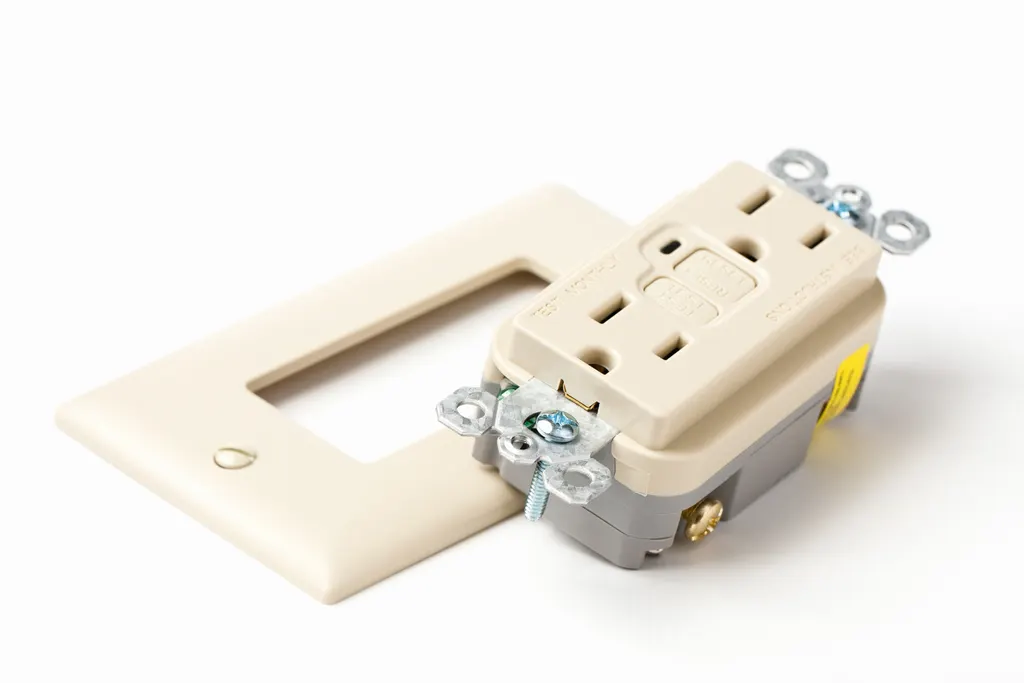
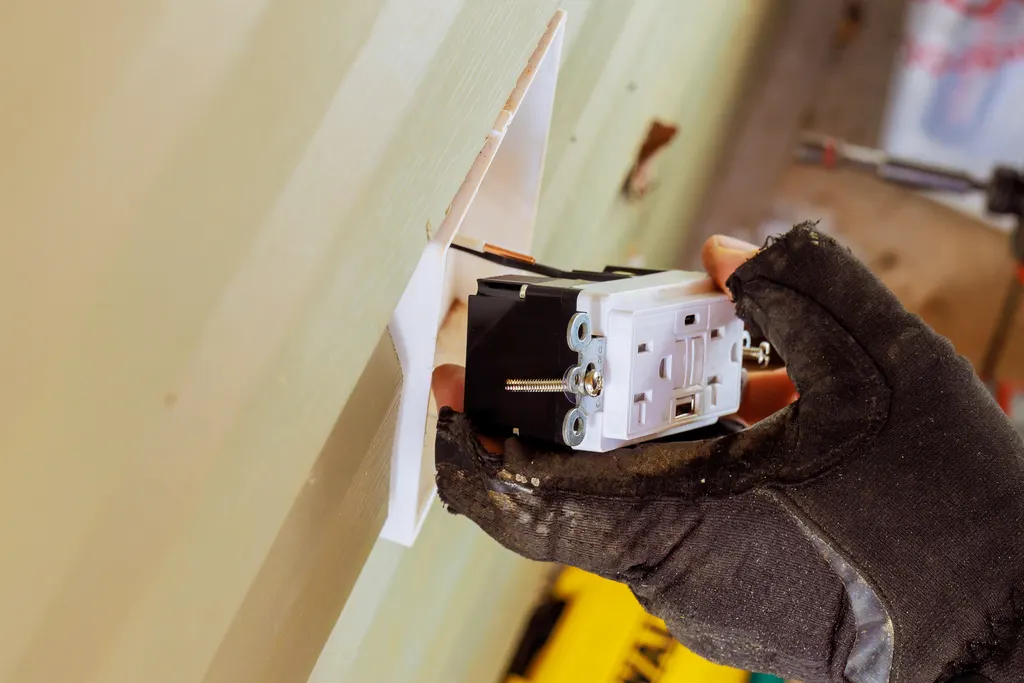
- Receptacles. At least one receptacle must be installed between 6 and 20 feet from the water's edge for the pump and maintenance equipment. No general receptacle may be closer than 6 feet, and every receptacle within 20 feet must be GFCI protected, weather-resistant and under an in-use cover. Our GFCI guide covers the covers that stop rain trips.
- Pump motors. Pool pump motors, whether cord-connected or hardwired, require GFCI protection. Most pool pumps around Houston are on a 240-volt circuit with a GFCI breaker in the equipment subpanel.
- Underwater lights. Line-voltage pool lights must be GFCI protected and the forming shell bonded; low-voltage LED lights run from a listed pool transformer, not a landscape lighting transformer.
- Overhead lines and fixtures. Utility lines, including CenterPoint's service drop, must clear the water by the distances in 680.9. Light fixtures and ceiling fans over the water or within 5 feet of it must be at least 12 feet above the water line unless GFCI protected and listed for the location.
- Switches. At least 5 feet horizontally from the water unless separated by a barrier.
- Disconnect. A maintenance disconnect for the equipment must be within sight of it, at least 5 feet from the water, and readily accessible.
- Wiring methods. Equipment circuits run in conduit, typically PVC underground and liquidtight at the equipment, with an insulated ground. NM cable has no place at a pool pad.
How is a spa or hot tub circuit wired?
A spa packs a heater, a pump and sometimes a blower into one shell, so it needs its own circuit sized to the manufacturer's label, for most hardwired residential units a 240-volt, 50-amp or 60-amp dedicated circuit. The layout we install for a permitted spa in Fort Bend or Harris County:
- A dedicated two-pole GFCI breaker at the panel, or a standard breaker feeding a spa disconnect with a built-in GFCI.
- Conduit from the panel to the disconnect, with copper conductors sized to the breaker and an insulated ground, buried at code depth underground.
- The disconnect, within sight of the spa, at least 5 feet from the water, where the user can reach it from outside the tub.
- Liquidtight flexible conduit from the disconnect to the spa control pack.
- Bonding. The spa shell's lug, the pump motor, the heater and any metal within 5 feet, tied together with 8 AWG solid copper. A spa on a concrete pad gets the pad bonded like a pool deck.
Portable plug-in spas on a 120-volt circuit come with a GFCI built into the cord; the receptacle still has to sit at the required distance, under an in-use cover, on a circuit that serves nothing else.
The spa mistakes we correct most are a standard breaker with no GFCI anywhere, a disconnect mounted within reach of the water, aluminum conductors on a spa pack rated for copper only, and a bonding lug left empty. Each fails inspection, and the last three injure people.
How do you know if pool equipment bonding is failing?
Bonding does not announce its failure with a tripped breaker. The signs are subtler, and some are reported by swimmers first:
- A tingle in the water. Anyone who feels a tingling or mild shock touching a ladder, handrail, light niche or the deck while in the pool should get out and keep the pool closed until it is tested. This is stray voltage with a broken bond.
- Corroded or missing lugs. A green or white crust on the bonding lug of the pump, heater or chlorinator, a broken conductor, or an empty lug after a pump replacement.
- Pitting on metal fittings. Rapid corrosion of ladders, rails and light rings, especially on saltwater pools, where an incomplete bond accelerates galvanic attack.
- Work done since the last inspection. A deck replacement, resurfacing, a new pump or heater, a fence or pergola added within 5 feet, or a plumbing change that removed the water bond fitting.
- Flood damage. Equipment pads that went under water during Hurricane Beryl or the May 2024 derecho often have corroded lugs and conduit full of silt.
- A GFCI that keeps tripping. It is reporting leakage from a motor, a light or a wet box. Replacing it with a standard breaker is the one mistake that turns a bonding problem into an injury.
Testing bonding takes a low-resistance ohmmeter: every bonded part is checked for continuity to the grid, and the water is checked for voltage against the deck and rails. We recommend the test whenever equipment is replaced and as part of a periodic electrical inspection.
Pool and spa electrical in Katy, Fulshear and Friendswood
Pools are everywhere in the subdivisions we serve, from the 1990s sections of Cinco Ranch and Grand Lakes in Katy to Cross Creek Ranch and Jordan Ranch in Fulshear and the newer neighborhoods of Friendswood. The pools built with those homes were permitted and inspected to the code of their year; the bonding problems arrive later, with the second pump, the resurfacing job and the outdoor kitchen built against the fence.
Local conditions work against bonding connections. Humidity and salt air corrode lugs, and the saltwater chlorine generators that most pools here now use make galvanic corrosion of any unbonded metal fast and visible. Afternoon storms flood equipment pads set too low, and the heat shortens the life of pump motor insulation, which is where stray voltage starts. We see more water-bond fittings missing on pools re-plumbed in the last ten years than on original installations.
Permitting is strict and consistent. Any new pool or spa circuit, equipment subpanel or replacement feeder is permitted and inspected by the city building department inside Katy, Fulshear or Friendswood city limits and by Fort Bend, Harris or Galveston County outside them, and the inspector will check the bonding and the disconnect distance before signing off. The Local Electrician pulls the permit, coordinates with the pool builder, and tests the grid before the first swim.
Can you bond pool equipment yourself? DIY limits and cost factors
Pool and spa electrical work is not a homeowner project in Texas. New circuits, subpanels and equipment feeds are permitted work for a licensed electrical contractor, inspected, and bonding is tested, not eyeballed. What a pool owner can safely do is look: check that every piece of equipment on the pad has a bare copper conductor on its bonding lug, confirm the GFCI tests and resets, keep extension cords away from the water, and call when anything has been replaced or anyone has felt a tingle.
What affects the cost of pool and spa electrical work:
- Scope. Bonding a new pump is a short visit; a new spa circuit with a subpanel and disconnect is a day; a full bonding repair on an older pool with a replaced deck is more.
- Distance from the panel and whether the run is trenched, bored under a patio or routed through the attic.
- Panel capacity. Spa and pool circuits are large; a full panel may need a subpanel or an upgrade.
- Equipment. GFCI breakers, disconnects, weather-resistant devices and in-use covers cost more than indoor equivalents.
- Repairs found on inspection. Corroded lugs, a missing water bond, non-rated conduit and unbonded fences, quoted before work starts.
The Local Electrician provides upfront pricing, free estimates on installations, and financing for larger projects such as a spa circuit with a panel upgrade. If anyone has felt a shock in or around your pool, keep everyone out of the water, switch off the pool equipment breakers, and call 832-271-1167; we offer 24/7 emergency service.
Frequently Asked Questions
What is pool equipment bonding?
It is the connection of every metal part in and around a pool or spa, and the water itself, with a solid copper conductor of at least 8 AWG so all of them sit at the same electrical potential. Required by NEC Article 680, it includes the pump motor, heater, ladders, rails, light shells, the shell rebar and the deck within 3 feet of the water.
How does bonding improve pool safety?
A shock in a pool happens when a swimmer bridges two surfaces at different voltages, such as the water and a ladder. Bonding keeps those surfaces at the same potential, so even a few volts of stray current from a failing pump or a utility neutral problem cannot pass through a person. GFCI protection handles larger faults; bonding handles the gradients GFCIs cannot see.
Can I bond pool equipment myself?
No. Pool and spa electrical work, including bonding, new circuits and equipment feeds, is permitted and inspected in Fort Bend and Harris County and must be done by a licensed electrical contractor. Bonding also has to be tested with a low-resistance meter rather than checked visually. A homeowner can look for empty bonding lugs and report them; The Local Electrician does the rest.
What tools are needed for pool equipment bonding?
An electrician uses 8 AWG solid bare copper, listed bronze or copper bonding lugs and clamps rated for direct burial, a torque screwdriver for the lugs, a low-resistance ohmmeter to verify continuity across the grid, a voltmeter to check the water against the deck and rails, and a water bond fitting where the plumbing has no metal in contact with the water.
When should pool equipment bonding be inspected?
Whenever equipment is replaced, after any deck, resurfacing, plumbing or fence work near the pool, after flooding of the equipment pad, immediately if anyone feels a tingle in the water, and periodically on any pool more than a few years old. Saltwater pools deserve more frequent checks because corrosion of unbonded metal progresses faster.
What size breaker and wire does a hot tub need?
Most hardwired residential spas call for a dedicated 240-volt circuit of 50 or 60 amps, with copper conductors sized to the breaker, an insulated ground, a GFCI breaker or GFCI disconnect, and a disconnect within sight at least 5 feet from the water. The spa's label and manual set the exact requirement, and the circuit is permitted and inspected.
Do I need a permit for pool or spa electrical work in Katy?
Yes. A new pool or spa circuit, an equipment subpanel, a replacement feeder and bonding of new equipment are permitted and inspected by the city building department inside Katy city limits and by the county outside them. The inspector verifies the bonding grid, GFCI protection, receptacle distances and the disconnect location before the pool or spa is approved for use.