





Quick answer
Electrical outlet installation covers four jobs: replacing a worn or two-prong receptacle, adding a new outlet to an existing circuit, upgrading to a protective device such as GFCI, AFCI, tamper-resistant or USB, and running a new 240-volt circuit for a dryer, range or EV charger. The right device depends on the room, the circuit's amperage and whether the location needs shock or arc-fault protection.
Almost every electrical outlet installation starts with the same question from the homeowner: which outlet do I actually need? Walk into a hardware store in Katy, TX or Houston and the wall holds a dozen kinds of receptacle that look nearly identical, yet several of them are illegal in certain rooms and one of them, the 20-amp T-slot device, is unsafe on the wrong circuit.
This guide sorts the options the way an electrician does: by what the circuit can supply, what the location requires under the 2023 NEC as adopted in Texas, and what the outlet will be used for. It folds in the two questions we get most, whether tamper-resistant outlets are mandatory and whether built-in USB outlets are worth it. When you are ready for the work, our outlet installation service covers all of it.
Key Takeaways
- Match the receptacle to the circuit: 15-amp receptacles go on 15-amp or 20-amp circuits, but a 20-amp T-slot receptacle needs a 20-amp circuit.
- The NEC requires tamper-resistant receptacles for nearly all 15-amp and 20-amp outlets in a home, in both new work and replacements.
- GFCI protection is required in kitchens, bathrooms, garages, laundry areas, outdoors and within 6 feet of any sink.
- A two-prong outlet can only be replaced with a three-prong device if it is grounded or protected by a GFCI labeled No Equipment Ground.
- Adding a circuit or a 240-volt outlet is permitted and inspected work in Fort Bend and Harris County; swapping a device is not.
What does electrical outlet installation actually involve?
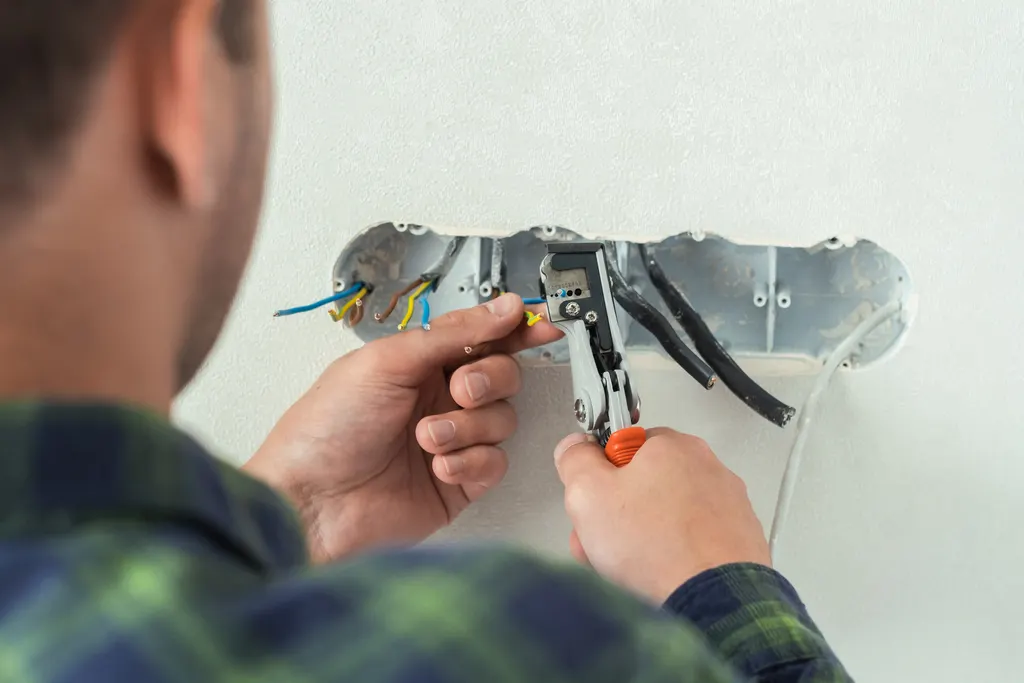
An outlet is the end of a branch circuit, so installing one is really a decision about the circuit behind it. Before any device goes in the wall, an electrician checks the breaker size and wire gauge feeding the location, the type and condition of the wiring (copper, aluminum, grounded or not), the box size and support, and the protection the location needs under the code.
From there, the job falls into one of four categories:
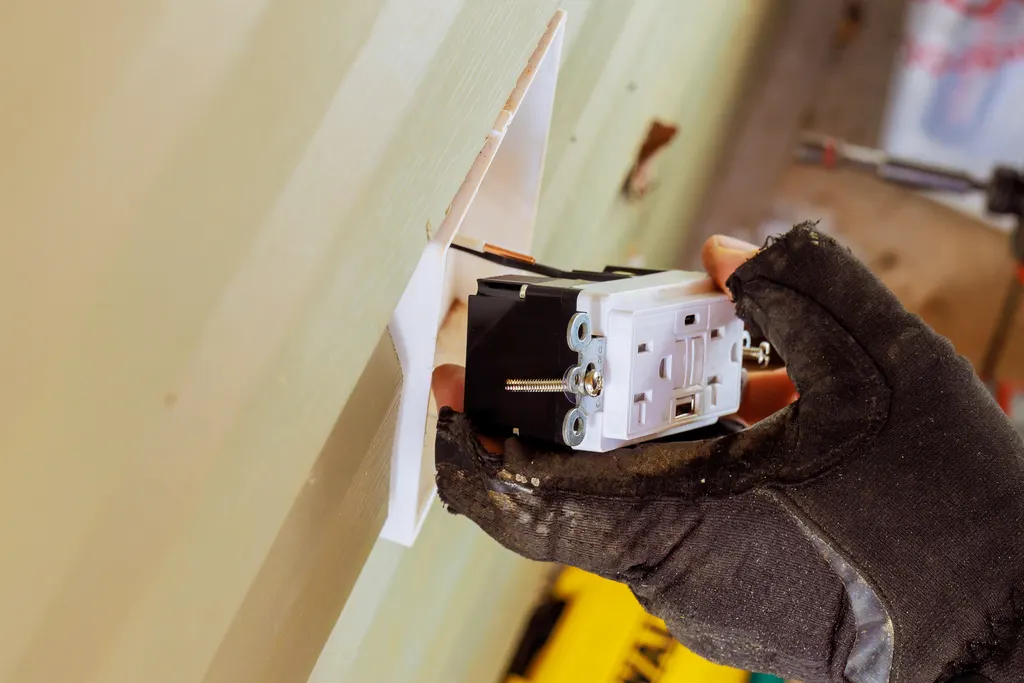
- Replacement. A cracked, loose, scorched or two-prong receptacle is swapped on the existing circuit. Quick, but the replacement must meet current rules for GFCI, AFCI and tamper resistance in that location.
- Addition. A new receptacle is tapped off an existing circuit, fished through the attic and down the wall. The circuit's existing load decides whether this is possible.
- Upgrade. A standard receptacle becomes a GFCI, USB, smart or 20-amp device, which may require a deeper box or a different circuit.
- New circuit. A dedicated 120-volt or 240-volt run from the panel for a window unit, workshop, dryer or EV charger. This is permitted and inspected work.
Spacing rules, covered in our NEC outlet spacing guide, decide where the additions go; this article is about what goes in each spot.
Which type of outlet should you install in each room?
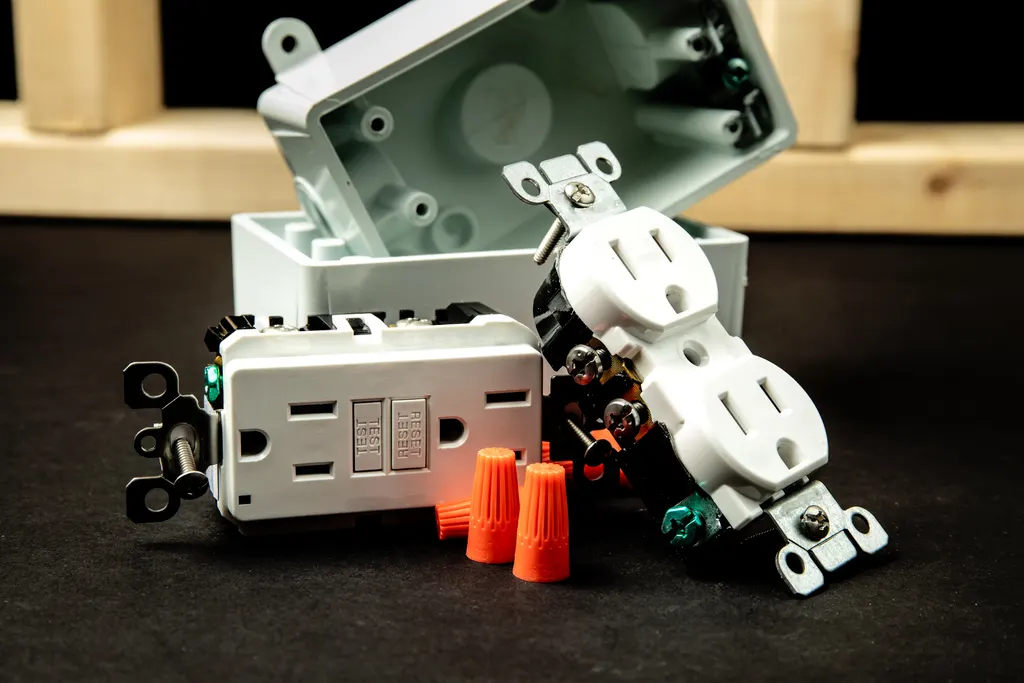
These are the receptacle types that cover nearly every residential job, with the rule that governs each:
- 15-amp standard (NEMA 5-15R). The ordinary duplex receptacle. Allowed on both 15-amp and 20-amp circuits, which is why most homes use it everywhere.
- 20-amp (NEMA 5-20R). Identified by the T-shaped neutral slot. Required only where a single receptacle sits on a 20-amp circuit, and never permitted on a 15-amp circuit, because a 20-amp appliance could overload 14-gauge wire.
- Tamper-resistant (TR). Internal shutters block anything inserted into one slot alone. Required in nearly all dwelling locations.
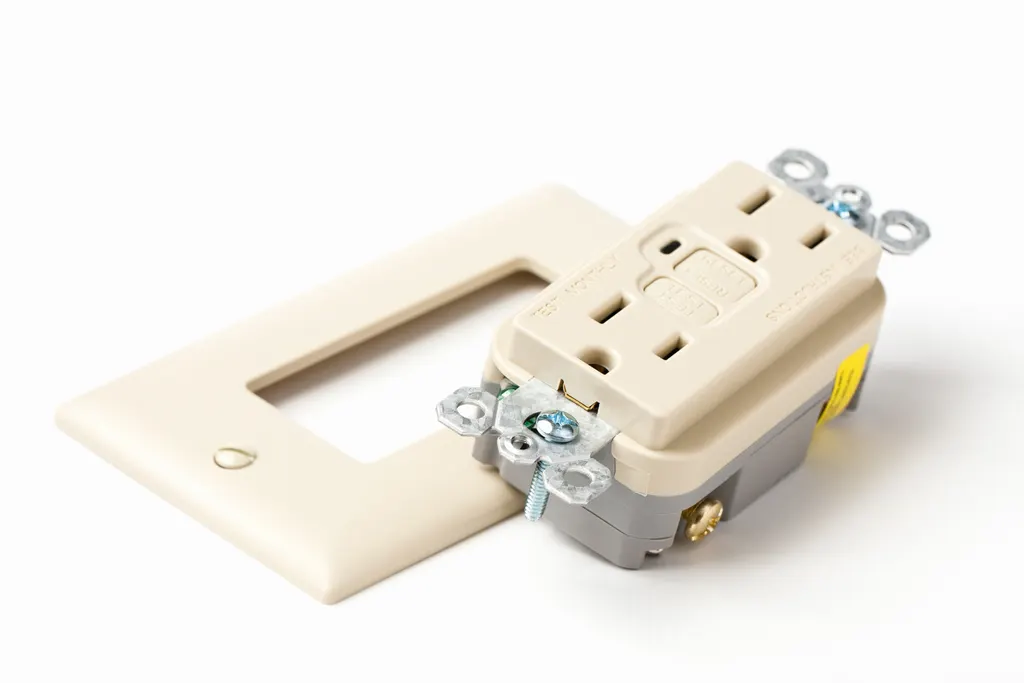
- GFCI. Trips on a ground fault of roughly 5 milliamps. Required in wet and damp areas; details in our GFCI installation guide.
- AFCI. Detects arcing in the circuit. Breakers are the usual form; receptacle versions exist for specific retrofits.
- Weather-resistant (WR). Corrosion-resistant contacts and UV-stable faces for outdoor and damp locations, paired with an in-use cover.
- USB-A / USB-C. A receptacle with built-in charging ports.
- 240-volt (NEMA 6-20, 14-30, 14-50). For window units, dryers, ranges and EV charging. Each needs its own two-pole breaker and wire sized to the load; our 240V outlet guide compares them.
Are tamper-resistant outlets required in Texas homes?
Yes, and they have been for every code cycle since 2008. NEC 406.12 requires tamper-resistant receptacles for 15-amp and 20-amp, 125-volt outlets in dwelling units, with a short list of exceptions: receptacles more than 5.5 feet above the floor, those behind a fixed appliance that cannot be moved easily, single receptacles for a dedicated appliance, and non-grounding replacements. The replacement rule in 406.4(D) carries the requirement into existing homes, so when a receptacle is swapped in a 1980s Katy house, the new one must be TR.
A TR receptacle works with a pair of spring-loaded shutters behind the face. Both shutters open only when two blades push on them at the same time with equal pressure, which is what a plug does and a hairpin, key or paper clip does not. There is no sensor and nothing to wear out faster than a regular device. Homeowners sometimes notice that a plug needs a firmer, straighter push, which is the shutters doing their job.
Compared with the older alternatives, TR devices win on every count. Plastic safety caps are removable by the children they are meant to stop, become a choking hazard once removed, and are routinely left off after someone vacuums. Sliding-plate covers leave the receptacle unprotected when open. Because TR receptacles cost only slightly more than standard devices, we install them for every residential replacement, including in homes without children, since the code requires it regardless.
Are USB outlets worth installing?
For a kitchen counter, nightstand wall, home office or entry table, usually yes. A USB receptacle replaces the plug-in charging brick, keeps both 120-volt outlets free, and removes the warm, loose adapters that get knocked half out of the wall. Three practical points decide whether it is a good fit:
- Port type and output. Newer devices charge fastest from USB-C ports that support Power Delivery; USB-A ports charge phones but are slow for tablets and laptops. A receptacle with two ports usually shares its total output between them. Match the port to what you own now.
- Box depth. The charging electronics sit behind the face, so USB receptacles are noticeably deeper than standard ones. In a shallow box crowded with conductors there may not be room; we check box fill before promising a USB device in an existing opening.
- Heat and listing. Buy only UL-listed devices from established manufacturers. The transformer inside generates some heat; an unlisted unit in a sealed box is a fire risk, and a listed one is not.
USB receptacles follow the same circuit rules as any other 15-amp or 20-amp device and come in tamper-resistant and GFCI versions, so they can go in a kitchen or bathroom. The main compromise is lifespan: the charging standard will move on before the receptacle wears out, so install USB devices where you charge daily and plain TR devices everywhere else.
What are the most common outlet installation mistakes?
Most of the outlet failures we open up were installed by someone who knew enough to get the lights on. The faults are predictable:
- Back-stabbed connections. Pushing conductors into the spring holes on the back of a device is fast and legal, but the small contact area loosens with heat cycling. A loose back-stab is the most common cause of a dead outlet and of warm cover plates. We use the screw or clamp-plate terminals.
- Reversed polarity. Hot on the silver screw, neutral on the brass. The outlet works, but lamp sockets stay energized when switched off.
- Three-prong device on an ungrounded box. The code allows this only with GFCI protection and a No Equipment Ground label, or with a ground conductor run back to the panel.
- Bootleg ground. A jumper from neutral to the ground screw fools a plug-in tester and can energize appliance cases if the neutral opens.
- 20-amp receptacle on 14-gauge wire. Invites an overload the breaker will not catch.
- Overfilled or unsupported boxes. Both lead to chafed insulation.
- Skipping GFCI, AFCI or TR where the location requires it on replacement.
- Aluminum wiring terminated on a standard device. Only CO/ALR devices or a copper pigtail with a listed connector are acceptable.
Outlet installation in Katy, Houston, Richmond and Fulshear homes
The outlet work we do around Fort Bend County splits along the age of the house. In Houston neighborhoods built from the 1950s through the 1970s, and in the first-generation subdivisions of Katy and Richmond, we still find ungrounded two-prong receptacles, aluminum branch wiring from the late 1960s and early 1970s, and kitchens running on a pair of 15-amp circuits. Those homes need replacement devices chosen carefully: GFCI protection where there is no ground, CO/ALR devices or listed pigtails on aluminum, and often a new 20-amp circuit before the counter receptacles can be upgraded.
Newer master-planned communities, including Cinco Ranch, Cross Creek Ranch in Fulshear, Aliana and Harvest Green, arrive with grounded copper wiring, tamper-resistant devices and 150-amp to 200-amp service. The requests there are different: USB receptacles at the kitchen island and nightstands, a 240-volt outlet in the garage for an EV, a dedicated circuit for a garage freezer, and weather-resistant GFCI receptacles for patio kitchens and pool decks.
Two local factors apply everywhere. Homes sit on slab foundations, so new runs go through the attic, where summer temperatures past 130°F mean every splice goes in a proper box with cable rated for the heat. And permitting is local: adding a circuit inside Katy, Richmond, Sugar Land or Fulshear city limits goes through that city's building department, while unincorporated Fort Bend County addresses go through the county. The Local Electrician pulls those permits and meets the inspector.
DIY outlet installation or a licensed electrician?
Texas does not prohibit a homeowner from replacing a receptacle in their own home. The safe boundary is narrower than most online guides suggest. Swapping a like-for-like device on a grounded copper circuit, with the breaker off and the box verified dead with a non-contact tester and then a meter, is within reach of a careful homeowner. Past that point, we recommend calling us:
- The existing receptacle has only two slots, or a tester shows an open ground or reversed polarity.
- The wires are silver rather than copper, or the cable jacket in the attic reads AL.
- The box has more than one cable entering it, or any conductor you cannot identify.
- You want a receptacle where there is none, a 20-amp device, or any 240-volt outlet. New circuits are permitted and inspected.
- The breaker trips, the device is warm, or there is any sign of scorching.
We dispatch from Richmond, TX under TECL #34406, with upfront pricing before any work starts and free estimates on installations. For the inspections that often precede outlet work in older homes, see our electrical inspection service. If you have an outlet that is sparking, smoking or hot to the touch, turn off its breaker and call 832-271-1167; we offer 24/7 emergency service for exactly that.
What affects the cost of electrical outlet installation?
Receptacle work is priced per job, and the device itself is rarely the expensive part. What moves the number:
- Replacement versus new run. A device swap takes minutes. A new receptacle fished from the attic takes longer, and a new circuit adds panel work and a permit.
- Device type. Standard TR devices are least expensive. GFCI, USB-C, smart and 240-volt receptacles cost more, and some need larger boxes.
- What we find in the box. Aluminum wiring, missing grounds, damaged boxes and old splices add corrective work that we quote before touching anything.
- Panel condition. New circuits need breaker space. A full panel, or a Federal Pacific or Zinsco panel, changes the scope.
- Access and finish. Brick exteriors, two-story walls and tiled backsplashes slow the fishing and patching.
- Quantity. Several outlets in one visit cost less per outlet than separate trips.
The Local Electrician gives a written price after seeing the job, and for larger projects such as a whole-home outlet upgrade or a kitchen circuit rebuild, financing is available.
Frequently Asked Questions
What tools are needed for electrical outlet installation?
A non-contact voltage tester and a multimeter to confirm the circuit is dead, a flat and a Phillips screwdriver, wire strippers, needle-nose pliers, a plug-in receptacle tester for checking the result, and the correct receptacle, cover plate and box. For new runs, add a fish tape, a drywall saw, an old-work box and cable rated for the circuit.
How do I choose the right outlet type?
Start with the circuit: 15-amp receptacles suit most circuits, while 20-amp T-slot devices belong only on 20-amp circuits. Then apply the location rules, GFCI in kitchens, baths, garages and outdoors, weather-resistant outside, tamper-resistant almost everywhere. Finally match the use: USB where you charge daily, a dedicated or 240-volt receptacle for heavy appliances.
What are common mistakes in electrical outlet installation?
Back-stabbed connections that loosen over time, reversed hot and neutral, three-prong devices installed on ungrounded wiring without GFCI protection, bootleg neutral-to-ground jumpers, 20-amp receptacles on 15-amp circuits, overfilled boxes, and standard devices terminated on aluminum wire. Skipping required GFCI, AFCI or tamper-resistant protection on a replacement is also a code violation.
How can I ensure my electrical outlet installation is safe?
Turn off the breaker, verify the box is dead with a tester, use the screw or clamp terminals rather than push-in holes, connect hot to brass, neutral to silver and ground to green, and check the finished outlet with a plug-in tester. Use GFCI, weather-resistant and tamper-resistant devices where the code requires them, and stop if you find aluminum wire or no ground.
When should I call a professional for electrical outlet installation?
Call a licensed electrician for any new circuit or 240-volt outlet, which is permitted work, for two-prong or ungrounded outlets, for aluminum wiring, for outlets that are warm, scorched or tripping a breaker, and for kitchen or bathroom upgrades that need 20-amp circuits. The Local Electrician handles all of these across Fort Bend and Harris County.
Can I replace a two-prong outlet with a three-prong outlet?
Only if a ground is available in the box, or if the replacement is a GFCI receptacle or is protected by a GFCI upstream and labeled No Equipment Ground. A plain three-prong device on an ungrounded circuit is a code violation and gives appliances no ground path. Running a new grounded circuit is the permanent fix.