





Quick answer
A voltage regulator for a home is an automatic transformer that holds output near 120/240 volts when utility voltage sags or rises. Most Houston-area homes on CenterPoint service do not need one, because utility voltage normally stays within 114 to 126 volts. A regulator earns its place when measured voltage is chronically out of range, on long rural service runs, on generator power, or in front of sensitive equipment.
Searches for a voltage regulator for the home spike every summer, usually after lights dim when the air conditioner starts or a piece of equipment dies during a storm. The honest answer from an electrician is that a regulator fixes one specific problem, out-of-range voltage that persists, and that most of the symptoms people blame on voltage have other causes that are cheaper to correct.
This guide covers how to measure the voltage at your outlets safely, what the numbers mean, which regulator and conditioner types exist, where they genuinely help in Richmond, Katy and Fort Bend County homes, and how they differ from the whole house surge protection that every home here should have first.
Key Takeaways
- Utility voltage in the Houston area should measure 114 to 126 volts at an outlet; readings outside that range, repeatedly, justify action.
- A home voltage regulator corrects slow sags and swells; it does not stop microsecond surges, which need a surge protective device.
- Dimming when the air conditioner starts is usually voltage drop on your own wiring or a loose connection, not a utility problem.
- Whole-house automatic voltage regulators make sense on long rural services, generator-fed homes and in front of medical or lab equipment.
- Power conditioners add noise filtering and sometimes isolation for audio, video and network gear; they are point-of-use, not whole-house.
- Report chronic utility voltage problems to CenterPoint Energy before buying equipment; the fix on their side is free.
What Does a Voltage Regulator for a Home Do?
Your retail electric provider sells you electricity, but CenterPoint Energy's wires deliver it, nominally at 120 volts line-to-neutral and 240 volts line-to-line. The national standard that utilities work to, ANSI C84.1, allows a normal service range of roughly 114 to 126 volts at the meter. Appliances are designed to tolerate at least that much.
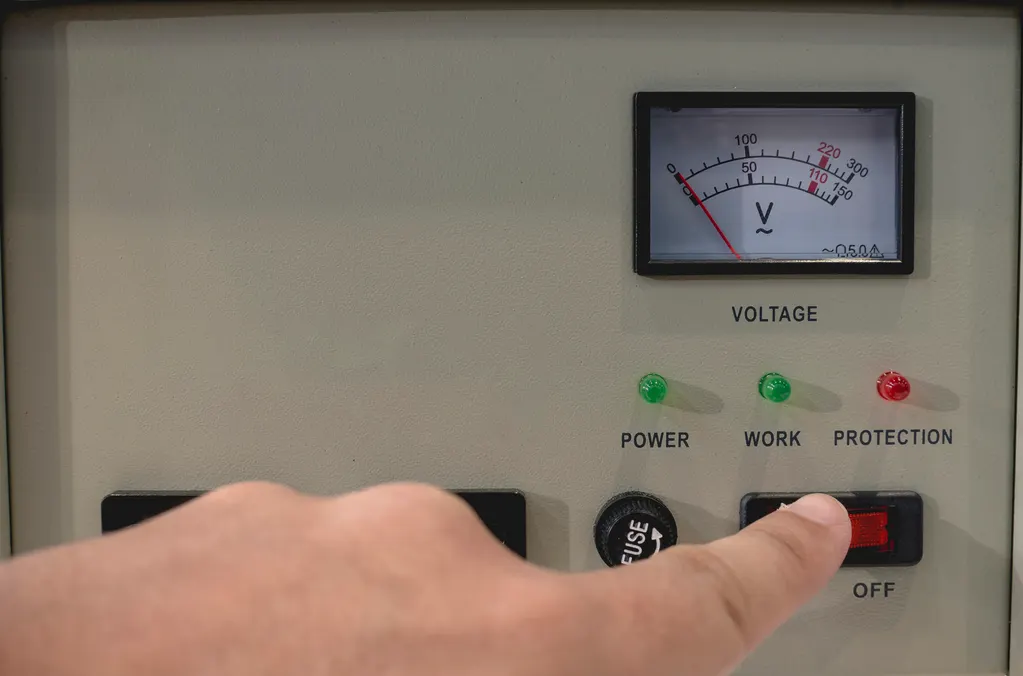
A whole-house automatic voltage regulator (AVR) sits between the meter and the panel, or between a generator and the transfer switch, and holds its output inside a tight band even when its input wanders. Residential units are autotransformers with multiple taps and a control board that switches taps as the input changes, or a motorized brush that sweeps a winding for finer, slower correction. Either way, the device adds or subtracts a few volts; it does not create power.
What a regulator does not do matters just as much:
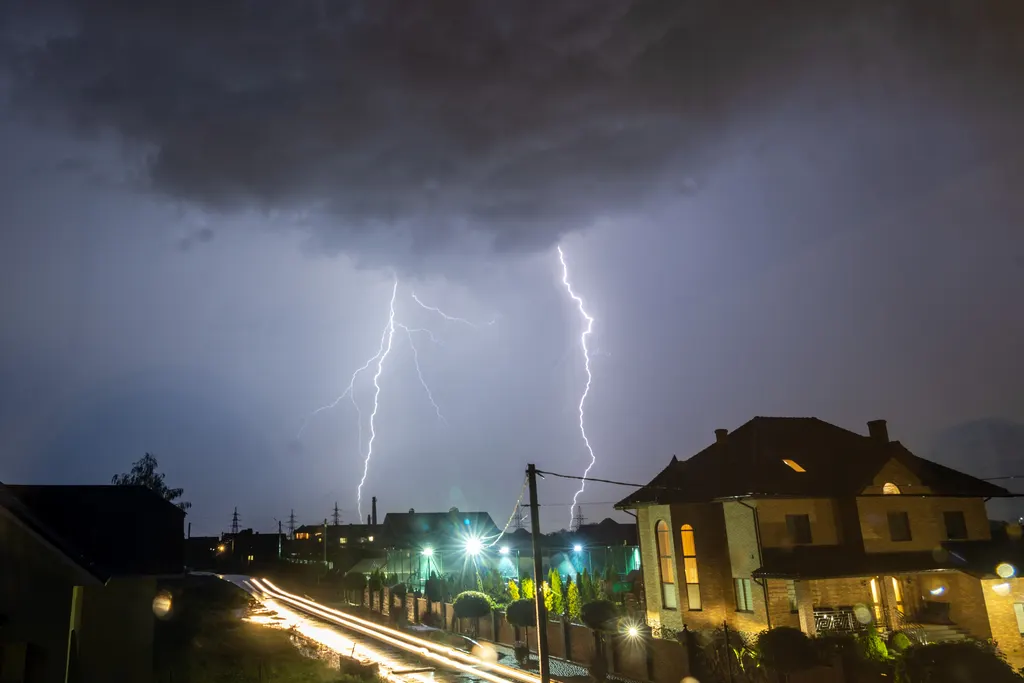
- It does not stop transients. A lightning spike passes through a transformer winding in microseconds, long before any tap can change. That job belongs to a whole-home surge protector.
- It does not fix voltage drop caused by your own undersized or loose wiring downstream of it.
- It does not ride through an outage. A battery system or standby generator does that.
The linear and switching regulators you may read about are chips inside every electronic device; they are not something you install in a house.
How Do You Test the Voltage in Your Home Safely?
Before anyone sells you a regulator, measure. The right tool depends on what you need to know:
- Non-contact voltage tester. The pen-style tester beeps near an energized wire. It tells you whether something is live, never how many volts. Use it to confirm a circuit is off before touching anything.
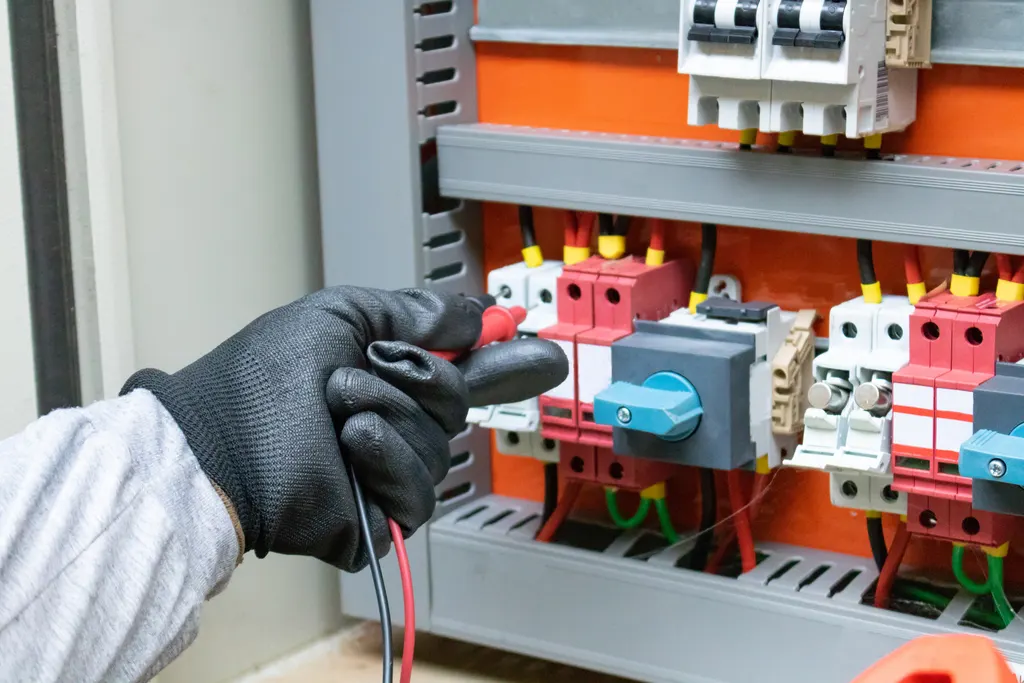
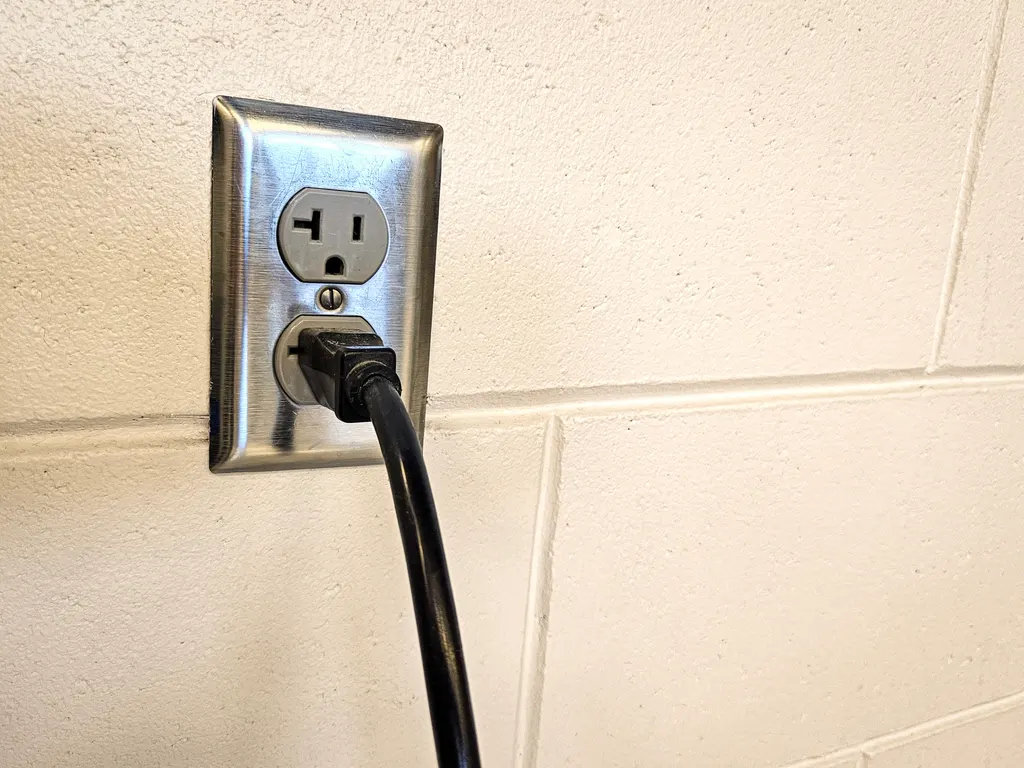
- Plug-in outlet tester with a display. Plugs into any receptacle and reads line voltage, and the better ones also flag open ground or reversed polarity. This is the safest way for a homeowner to log voltage.
- Digital multimeter. More precise, but the probes go into the receptacle slots. Set it to AC volts, hold the probes by the insulated grips only, and never probe inside the panel.
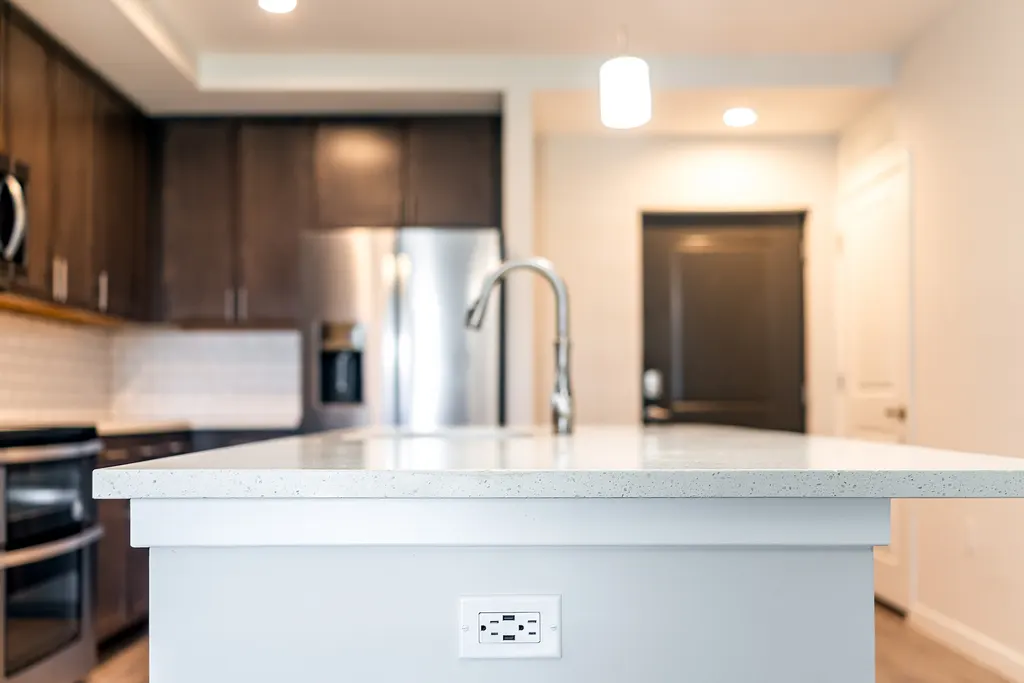
Take readings at a bedroom outlet, the kitchen counter and the garage, three times a day for a week, including a hot afternoon with the air conditioner running. What the readings mean:
- 114 to 126 V steady, brief dip of a few volts on compressor start: normal. Look elsewhere for your symptom.
- Dip of 8 volts or more on start, recovering in a second: voltage drop on your side; see our guide to flicker and voltage drop.
- Consistently under 114 or over 126 V at all outlets: a utility or service-entrance issue; call CenterPoint and have an electrician check the connections.
- One leg high while the other is low, changing as loads switch: turn off the main breaker and call us. That is an open neutral, and it destroys appliances.
What Are the Types of Home Voltage Regulators and Power Conditioners?
The equipment falls into three families, and the names get mixed up constantly.
Whole-house automatic voltage regulators
Hard-wired, sized in kVA for the whole service or a subpanel, with tap-switching or servo correction. Used where input voltage is chronically off. Installation is a permitted service modification.
Point-of-use regulators and UPS units
A line-interactive UPS includes a small AVR plus a battery, and is the practical choice for a home office, network closet or medical device. An online double-conversion UPS rebuilds the sine wave from DC and gives the cleanest power available, at a higher price and some heat. A ferroresonant constant-voltage transformer regulates and isolates with no electronics, still favored for lab and industrial controls.
Power conditioners
A conditioner is a filter first and a regulator second, if at all. It combines a surge stage, EMI/RFI noise filtering and sometimes an isolation transformer that breaks the galvanic connection between the utility and the equipment. Audio, video, recording and ham-radio users buy them to remove hum and noise; in a home theater installation a conditioner with a sequenced power-on protects amplifiers from inrush as well.
Choose by symptom: wrong voltage needs a regulator, noise needs a conditioner, outages need a UPS or generator, spikes need an SPD. Buying one to solve a different problem is the most common mistake we see.
When Does a Home Voltage Regulator Make Sense?
In our experience across Fort Bend and Harris County, these are the situations where a regulator or conditioner is the right spend:
- Long service runs. Acreage homes outside Fulshear, Rosenberg and Needville sometimes sit at the end of a long single-phase line and a long customer-owned run from the pole. Voltage at the house can sag on summer evenings as every neighbor's compressor runs. If CenterPoint's readings at the meter are in range but the house is low, the fix is conductor size, not a regulator; if the meter itself is low, the utility fixes it, and a regulator is the backup if they cannot.
- Generator-fed homes. Standby generators have their own AVR, but portable units often do not regulate well under changing load. A regulator or line-interactive UPS protects electronics running on generator power during a long outage like Beryl.
- Sensitive equipment. Home dialysis and oxygen equipment, lab instruments, 3D printers, CNC machines and high-end audio justify point-of-use regulation or conditioning regardless of utility quality.
- Well pumps and motors. A motor run on low voltage draws more current, runs hot and dies young. Where low voltage is chronic and unfixable, a regulator sized for the motor's starting current protects it.
Where a regulator is not the answer: lights flickering on one circuit, a breaker that trips, buzzing LED dimmers, or electronics that died in a storm. Each has a specific cause and a cheaper repair.
Voltage Problems in Richmond, Katy and Fort Bend County Homes
Most of the voltage complaints we investigate in Richmond, Katy, Sugar Land and the surrounding master-planned communities trace back to the house, not the grid. In newer subdivisions such as Aliana, Harvest Green and Jordan Ranch the pattern is a long 14-gauge run from the panel to a second-floor game room and an LED load that makes every small dip visible. The pattern in the 1970s and 1980s streets of Pecan Grove, Quail Valley and Stafford is loose connections: back-stabbed receptacles, a neutral loosening in a sun-baked panel, or aluminum branch wiring that has crept at the terminals through fifty summers of expansion and contraction.
Genuine utility voltage issues do exist here. We see them most on the fringes of the service area, on streets that grew faster than their distribution transformer, and briefly after major restorations when CenterPoint is rebalancing feeders. After the May 2024 derecho and Hurricane Beryl, several homeowners in Katy logged voltages outside the normal range for days while the grid was being reassembled. We documented the readings, the homeowner reported them, and CenterPoint corrected the transformer tap.
Attic heat is the local wildcard. Wiring that runs through a 130°F attic has higher resistance than the same wire at room temperature, so voltage drop on long runs is worst exactly when the air conditioner is working hardest. The Local Electrician measures voltage at the panel and at the far end of the circuit under load, which separates a wiring problem from a supply problem in a single visit.
What to Fix Before Buying a Voltage Regulator for Your Home
Equipment should be the last step, not the first. The order we follow on a voltage complaint:
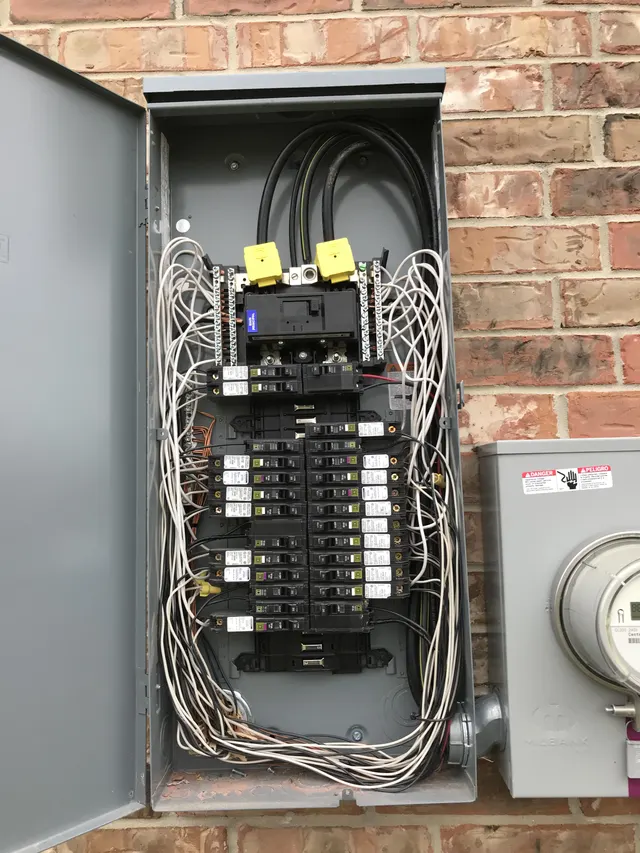
- Tighten and inspect the service. The meter base lugs, the main breaker terminals and the neutral bar are checked with a torque screwdriver and, where we suspect heating, a thermal camera. A loose neutral mimics every regulation problem in the book.
- Verify grounding and bonding. A high-resistance ground makes voltage unstable and defeats the surge protector you already own.
- Check for voltage drop under load. Compare panel voltage to far-outlet voltage with the circuit loaded. More than about 3 percent on a branch circuit, or 5 percent from the meter to the outlet, is the NEC's recommended limit and the point where we discuss larger conductors or a dedicated circuit for the offending appliance.
- Separate the sensitive loads. Moving a home office or AV rack to its own circuit often eliminates the dips that were coming from the refrigerator or a window unit sharing the line.
- Report utility readings. If the meter is out of range, CenterPoint adjusts or replaces the transformer at no cost to you.
- Then size the equipment. A whole-house AVR is sized in kVA to the service or subpanel it feeds, with motor starting current included; a point-of-use UPS is sized in VA to the connected load with headroom.
What Affects the Cost of a Home Voltage Regulator or Power Conditioner?
Because the right product ranges from a plug-in conditioner to a hard-wired whole-house transformer, the cost spread is wide. The factors that decide where your project lands:
- Scope. Point-of-use units protect a single rack or room and need no electrician. Whole-house regulators are a permitted service modification with a disconnect, an enclosure, conductors and inspection.
- Capacity. kVA rating drives transformer size and price; a unit for a 200-amp service is a substantial piece of equipment that needs a mounting location out of the weather.
- Correction type. Tap-switching units cost less than servo or double-conversion designs and are fine for slow utility drift; sensitive electronics may justify the tighter band of the more expensive types.
- Repairs found first. Loose service connections, grounding corrections or a larger feeder often resolve the problem on their own and change the recommendation entirely.
- Generator integration. Regulating generator output means coordinating with the transfer switch and the generator's own controls.
We give an upfront quote after the voltage survey, and hard-wired installations can be combined with other service work under our financing options. Call The Local Electrician at 832-271-1167 to schedule a voltage survey in Richmond, Katy, Sugar Land or anywhere in our service area.
Frequently Asked Questions
What is a voltage regulator, and why do electronics need stable voltage?
A voltage regulator is an automatic transformer that holds its output near 120 or 240 volts when the input sags or rises. Electronic power supplies tolerate the normal utility range, but chronic low voltage makes motors overheat and chronic high voltage shortens the life of LED drivers and capacitors. Most electronics already contain small internal regulators; a whole-house unit only matters when supply voltage is persistently out of range.
Do I need a voltage regulator in Katy, TX?
Probably not. CenterPoint Energy delivers within the normal 114 to 126 volt range to the vast majority of Katy homes, and the dimming and flicker people notice usually comes from voltage drop or loose connections inside the house. Log outlet voltage for a week first. A regulator is justified only if readings are consistently out of range and the utility cannot correct them.
Can one voltage regulator work for all devices in the house?
A whole-house automatic voltage regulator sized for the service corrects voltage for every circuit behind it, but it is a large, hard-wired transformer and overkill for most homes. A more common approach is a point-of-use regulator or line-interactive UPS at the equipment that is actually sensitive, with a panel-mounted surge protective device handling spikes for the whole house.
How can I tell if my home needs a voltage regulator?
Measure with a plug-in voltage display at several outlets, morning, afternoon and evening, for a week. Normal is 114 to 126 volts with a small dip when the air conditioner starts. Readings persistently below 114 or above 126 at every outlet point to a supply problem worth reporting to CenterPoint. Readings that differ by room or dip heavily under load point to wiring, which a regulator will not fix.
Why should I hire an electrician to install a voltage regulator?
A whole-house regulator is wired between the meter and the panel or at a subpanel, which means working on the service conductors, adding a disconnect and pulling a permit for inspection. The electrician also confirms that the symptom is really supply voltage and not a loose neutral or voltage drop, so you do not buy equipment that cannot solve the problem. The Local Electrician does both in one visit.
What is the difference between a power conditioner and a surge protector?
A surge protector diverts microsecond spikes to ground and does nothing about noise or steady voltage. A power conditioner filters electrical noise from the line, often includes a surge stage, and may isolate or lightly regulate voltage for audio, video and computer equipment. You still want a panel-mounted surge protective device behind any conditioner, because the conditioner's own surge stage is small.