






Quick answer
Power factor is the ratio of real power (watts) to apparent power (volt-amps) in an AC circuit, from 0 to 1. Motors and electronic loads pull it below 1. For a home it is mostly a non-issue: residential customers are billed in kilowatt-hours, and correction devices do not lower that bill. Power factor does matter for sizing generators, inverters and UPS units, and for motor health.
Power factor at home is one of the most misunderstood topics in residential electricity, mostly because devices that promise to fix it are sold hard to people who do not need them. The concept itself is simple and worth understanding, because it does affect how large a standby generator you need, why a tired air-conditioner capacitor makes a compressor struggle, and how much current a motor really pulls through your wiring.
This post explains power factor in plain terms, shows where it matters in a Richmond or Katy home and where it does not, and draws the line between homeowner knowledge and the work our licensed electricians do on standby generator and motor circuits.
Key Takeaways
- Power factor is real power divided by apparent power; a value of 1.0 means current and voltage are perfectly in step.
- Residential electric bills in Texas are based on kilowatt-hours, so a low power factor does not raise what a homeowner pays.
- Plug-in power saver boxes with a capacitor inside cannot reduce a residential bill and are not worth buying.
- Motors such as air-conditioner compressors and pool pumps have lagging power factor; electronics with rectifiers add distortion.
- Generators, inverters and UPS units are rated in kVA or VA, so power factor decides how much real load they can carry.
- Power factor correction is a commercial and industrial tool; at home the useful work is sizing equipment and replacing failing motor capacitors.
What Is Power Factor, in Plain Terms?
In an AC circuit, voltage and current each swing back and forth 60 times a second. When a load is purely resistive, such as a heating element or an old incandescent bulb, the current rises and falls exactly in step with the voltage, and every bit of the current does useful work. That load has a power factor of 1.0, called unity.
Motors and transformers contain coils, and coils store energy in a magnetic field each half-cycle and return it the next. That stored-and-returned energy makes the current lag behind the voltage. The lagging portion, called reactive power and measured in volt-amps reactive (VAR), does no work but still flows through the wires. The result is three quantities:
- Real power in watts (W): what actually heats, lights or turns something.
- Reactive power in VAR: energy sloshing back and forth to maintain magnetic fields.
- Apparent power in volt-amps (VA): the total the wires and the source must carry.
Power factor is real power divided by apparent power. A pool pump drawing 1,000 watts at a power factor of 0.8 pulls 1,250 VA, which on 240 volts is about 5.2 amps instead of the 4.2 amps a perfect load would draw. Capacitive loads do the opposite and produce a leading power factor; electronic loads with rectifiers create a third kind, distortion power factor, from the harmonics they draw.
Does Power Factor Affect a Home Electric Bill?
No, and this is the part worth saying clearly. Residential meters in CenterPoint Energy territory measure kilowatt-hours, which is real power over time. Your retail electric provider bills you for those kWh, and CenterPoint's delivery charges that appear on the same bill are also based on kWh. Reactive power never shows up on a residential statement, so nothing you do to power factor changes the number.
That is why the plug-in "power saver" or "energy saver" boxes sold online cannot work as advertised. Inside each is a capacitor that slightly offsets the lagging current of a motor on the same circuit. Even if it did that well, which it rarely does because the capacitor is fixed while your motors cycle on and off, the meter is not counting the current it offsets. We have taken dozens of these out of panels and outlets in Fort Bend County and none of them reduced a bill.
Commercial customers are a different story. Large businesses often have demand meters that record kVA or are charged a penalty when power factor drops below a threshold such as 0.9 or 0.95. For those customers, capacitor banks and active correction are real money, and a Sugar Land machine shop or cold-storage facility can see the savings on the next statement. If you want to lower a residential bill, our electrician-approved tips for lowering your electric bill list the things that work.
Which Home Loads Have Low Power Factor?
Walk through a typical house and most of the big loads are motors or electronics:
- Air-conditioner compressor and blower. The largest motors in the house. Single-speed units run with a lagging power factor that improves as they load up; the run capacitor wired across the motor is there partly to correct it.
- Pool and spa pumps. Single-speed pumps behave like the compressor. Variable-speed pumps use an electronic drive with active power factor correction built in and typically run close to unity.
- Refrigerators, freezers, washers and dryers. Small induction motors, lagging, intermittent.
- Ceiling fans and bathroom fans. Tiny motors, lagging, but the current is so small it is irrelevant.
- Well pumps. Often the one motor that justifies attention, because it may be large and far from the panel.
- LED lighting, televisions, computers, chargers. Rectifier inputs draw current in pulses. Cheap LED drivers can run at a power factor of 0.5 or worse; Energy Star fixtures and quality power supplies are required to do better.
- EV chargers. The onboard charger in the car has active correction and runs near unity.
Purely resistive loads, such as the water heater, oven, range, dryer heating element and incandescent bulbs, run at unity and are not part of the conversation.
When Does Power Factor Matter in a Home?
Four situations, in order of how often they come up on our service calls.
Sizing a standby generator, inverter or UPS
These sources are rated in kVA or VA, not watts, because they must supply the apparent power. A generator labeled 22 kW typically assumes a 0.8 power factor and is really a 27.5 kVA machine; the air conditioner it must start adds a large reactive and inrush load on top. Getting this wrong is the main reason a generator trips when the compressor kicks on. Our standby generator sizing guide walks through the arithmetic.
Motor starting and capacitor health
The run capacitor on a compressor, blower or pump motor improves power factor and torque. As it ages it loses capacitance, the motor draws more current, runs hotter and hums or struggles to start. A hard-starting compressor or a condenser fan that spins slowly is often a failed capacitor rather than a failed motor.
Current on long runs
Because low power factor means more amps for the same watts, it raises voltage drop and heating on the conductors. A pool pump or well pump at the end of a long run is affected most, which ties directly to the voltage drop math in our power quality problems guide.
Harmonics from electronics
Distortion power factor from a house full of cheap LED drivers shows up as buzz, interference and warm neutrals, not as a bill. The fix is better drivers, not capacitors.
Should You Install Power Factor Correction at Home?
For almost every single-family home, the answer is no. Correction capacitors are an engineering tool for facilities with large, steady inductive loads and a tariff that charges for reactive power. In a house, the loads cycle constantly, the tariff ignores reactive power, and a fixed capacitor creates new problems:
- When the motor it was sized for switches off, the capacitor is now over-correcting, pushing the circuit to a leading power factor and slightly raising voltage on that circuit.
- A capacitor across a motor that is larger than the manufacturer specifies can cause self-excitation when the motor coasts down, producing overvoltage that damages the windings.
- Capacitors cannot correct distortion power factor from electronics; adding them near harmonic-rich loads can set up resonance that amplifies the harmonics.
The home situations where correction has a place are narrow: a large well pump or shop motor on a long run where the goal is reducing current and voltage drop, and a residential property that is actually on a commercial rate with demand charges. In both cases the capacitor is sized to the specific motor from its nameplate, switched with the motor, and installed as permitted electrical work.
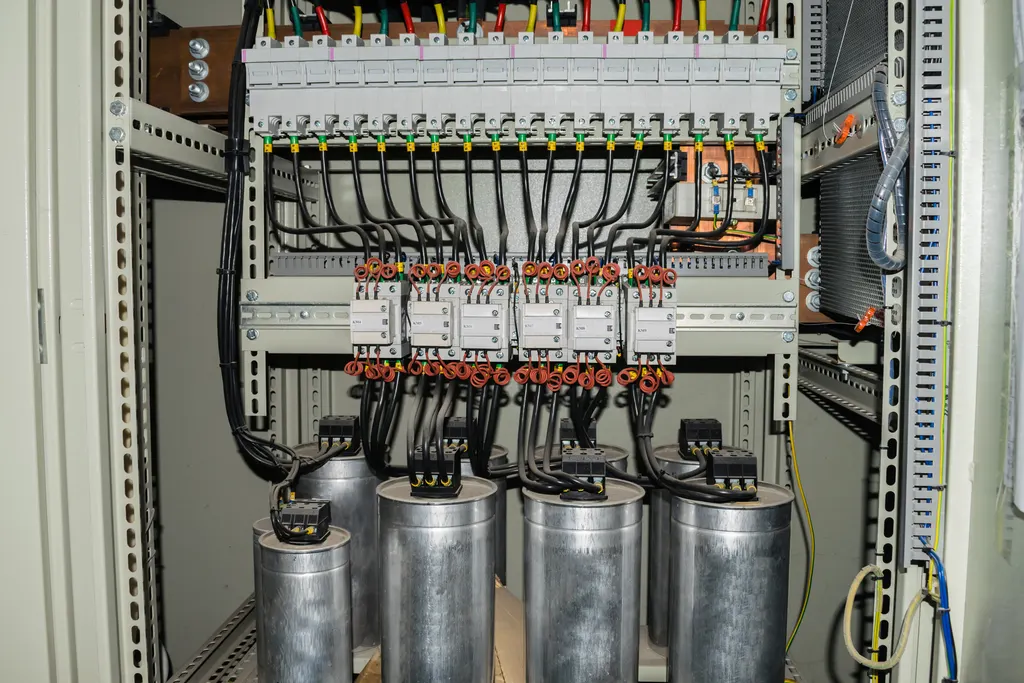
Small commercial customers in our area, from strip-center restaurants to warehouse shops, are where The Local Electrician does real correction work: measuring kVA and power factor at the service over a billing cycle, then installing switched capacitor banks or specifying active correction where drives and harmonics are present.
Power Factor Questions We Hear in Richmond and Katy Homes
The homes west of Houston are motor-heavy. Nearly every house in Pecan Grove, Aliana, Cinco Ranch and Grand Mission has a pool or spa pump, one or two air-conditioning systems, and in newer sections a variable-speed system with an electronic drive. After Hurricane Beryl in July 2024, the question that brought most Richmond homeowners to the subject was generator sizing: a unit chosen on watts alone could not start the compressor, and the fix was understanding kVA, power factor and locked-rotor current before buying.
The second local question comes from Katy pool owners switching to variable-speed pumps. The new pump draws far fewer watts at low speed, and its drive runs near unity power factor, so the current drop on that circuit is dramatic. The savings are real, but they come from the lower speed and the better motor, not from power factor. The same homeowners sometimes ask whether a capacitor box would do the same for their single-speed unit; it would not.
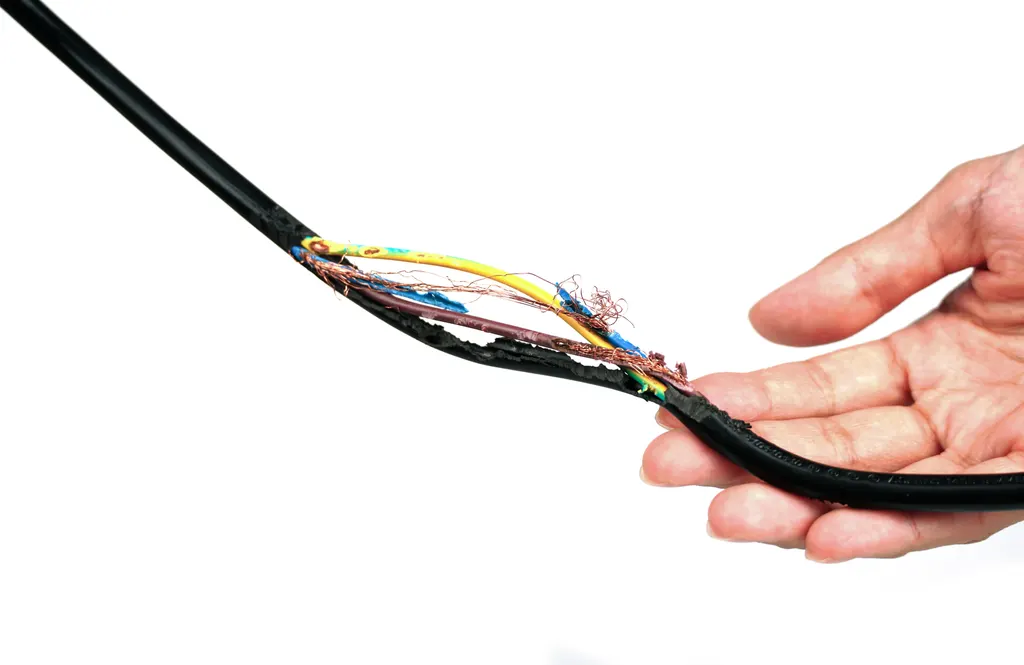
The third is the one that worries us: the power saver box plugged into a kitchen outlet or hard-wired into a panel by a previous owner. In the 1980s and 1990s neighborhoods of Stafford, Missouri City and Sugar Land we find them during inspections, often with failed or bulging capacitors inside. A capacitor that fails shorted on a 20-amp circuit is a fire hazard, and we remove them.
How Is Power Factor Measured, and What Does Correction Cost?
A homeowner can see power factor without touching the panel. Many whole-house home energy monitors display it per circuit in their app, and a plug-in watt meter shows watts, VA and power factor for a single appliance. If you are curious what your pool pump or refrigerator is doing, that is the safe way to look.
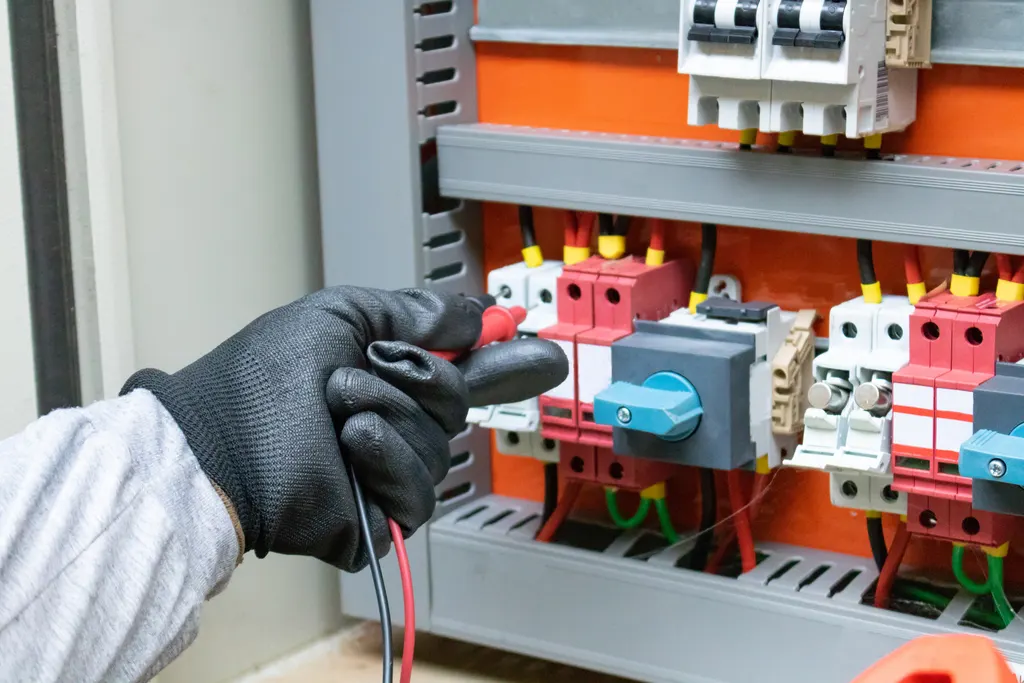
An electrician measures it at the service or at a motor with a clamp meter that reads true power and VA, or with a recording power quality analyzer over a day or a billing cycle for commercial work. The same visit reads motor current against the nameplate, which is how we spot a weak run capacitor before it strands you on a July afternoon.
Where correction or related work is actually justified, the cost depends on:
- Type of correction. A single motor-switched capacitor is a small job; a switched bank at a commercial service, or active correction for a facility with drives, is an engineered project.
- Measurement period. Commercial correction is sized from logged data, so the analyzer time is part of the scope.
- Permits and inspection. Hard-wired capacitors and service modifications are permitted work in Fort Bend and Harris County.
- Related repairs. A failed run capacitor, a hard-start kit or a larger conductor on a long motor run is often the real fix.
Capacitors hold a charge after power is removed and are not a homeowner repair. Call The Local Electrician at 832-271-1167 for motor-circuit, generator-sizing or commercial power factor work; larger projects can use our financing options.
Frequently Asked Questions
What is power factor, and why does it matter?
Power factor is the ratio of real power in watts to apparent power in volt-amps on an AC circuit, from 0 to 1. Motors and electronic loads pull it below 1, which means more current flows than the useful work requires. At home it matters for sizing generators and UPS units in kVA, for motor health and for voltage drop on long motor circuits, not for the electric bill.
How does a bad power factor affect my home energy use?
It does not change the kilowatt-hours your meter records, so it does not change what you pay. It does raise the current flowing through the wiring to motors, which slightly increases heating and voltage drop, and it reduces how much real load a generator or inverter of a given kVA rating can carry. A failing motor run capacitor lowers power factor and makes the motor run hot.
Do power saver boxes that plug into an outlet really cut your bill?
No. They contain a capacitor that offsets some reactive current from motors, but residential meters bill real energy in kilowatt-hours and never counted that reactive current in the first place. Independent testing and our own experience removing them from Houston-area homes agree: no savings, and a failed capacitor inside one is a fire risk. Spend the money on LED lighting or air sealing instead.
Can I find local pros in Richmond, TX, to check power factor and motor circuits?
Yes. The Local Electrician, based in Richmond, measures power factor, motor current and run-capacitor condition on air-conditioner, pool and well-pump circuits, sizes standby generators by kVA and starting load, and performs commercial power factor correction for businesses with demand charges. Call 832-271-1167 for an appointment anywhere in Fort Bend or Harris County.
What are the solutions for fixing a low power factor?
For motors, a correctly sized capacitor switched with the motor, or simply replacing a weak run capacitor. For facilities with many motors, a switched capacitor bank at the service. For loads with electronic drives or many rectifiers, active power factor correction or better-quality power supplies, since capacitors cannot fix distortion. For a home, the only solution usually needed is proper sizing of generators and inverters.
Is improving power factor beneficial for the environment?
On a utility scale, yes: lower reactive current means less loss in transmission lines and transformers, which is why utilities require large customers to maintain a high power factor. For an individual home the effect is tiny. The environmental wins at home come from reducing real energy use, such as a variable-speed pool pump, efficient air conditioning, LED lighting and a well-sealed attic.