






Quick answer
A subpanel installation adds a second breaker panel fed from the main panel through a feeder breaker and a four-wire feeder. It solves a full main panel, a detached garage or workshop, a long run to an addition or pool, or the need to group circuits, but it does not add capacity: the home's service rating still sets the ceiling. It is permitted, inspected, licensed work.
Homeowners usually ask about subpanel installation for one of three reasons: the main panel has no open slots, a workshop or pool house needs power across the yard, or an electrician mentioned it during an EV charger estimate. A subpanel is the right answer to some of those problems and the wrong answer to others, and the difference comes down to one question: does the existing service have capacity to spare?
This guide covers what a subpanel does, how it is wired and grounded, where it can be mounted, the local permitting and housing-stock details that matter in Katy, TX, Fulshear and Richmond, what drives the cost, and why the wiring mistakes we find in homeowner-installed subpanels are the dangerous kind rather than the cosmetic kind.
Key Takeaways
- A subpanel distributes power from the main panel; it never increases the amperage the home can draw from CenterPoint Energy.
- Every subpanel is fed by a four-wire feeder: two hots, a neutral and a separate equipment ground, with the neutral unbonded in the subpanel.
- A subpanel in a detached garage or workshop needs its own disconnect and its own ground rods at that building.
- Subpanels cannot be mounted in bathrooms or clothes closets and need clear working space in front of them.
- If the main service is already at its calculated limit, the fix is a service upgrade, not a subpanel.
- Subpanel installation in Texas is permitted, inspected work for a licensed electrical contractor.
What is a subpanel and when does a home need one?
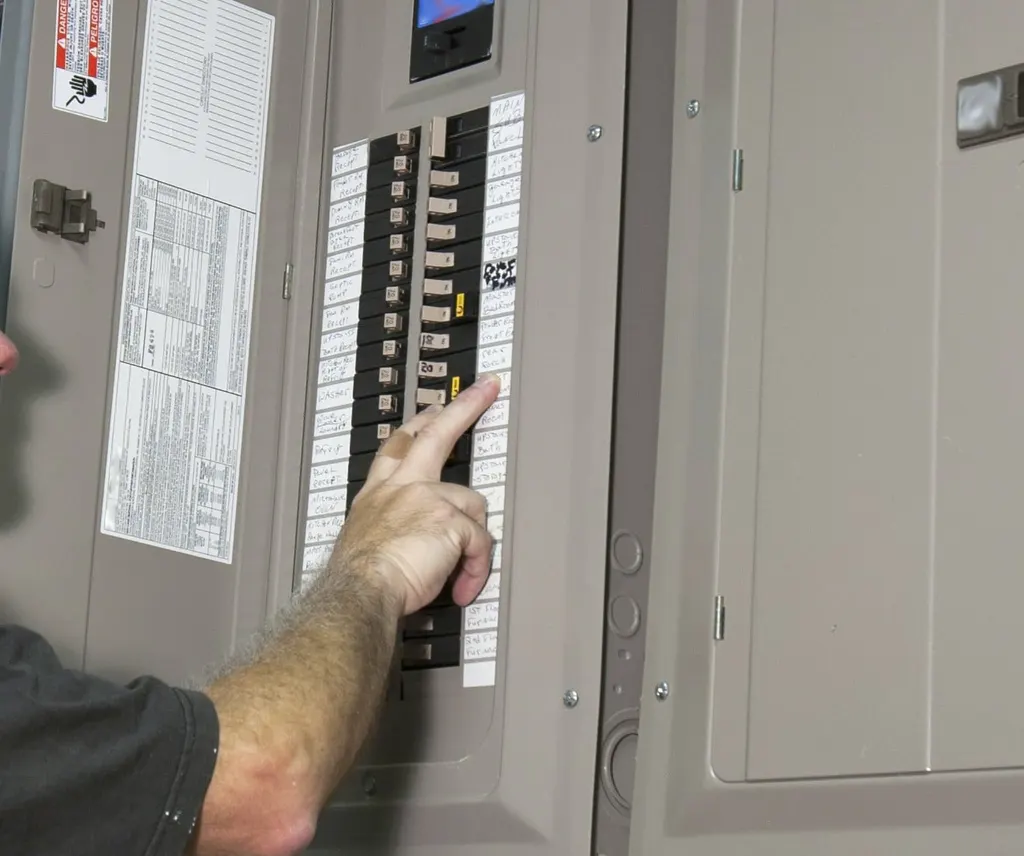
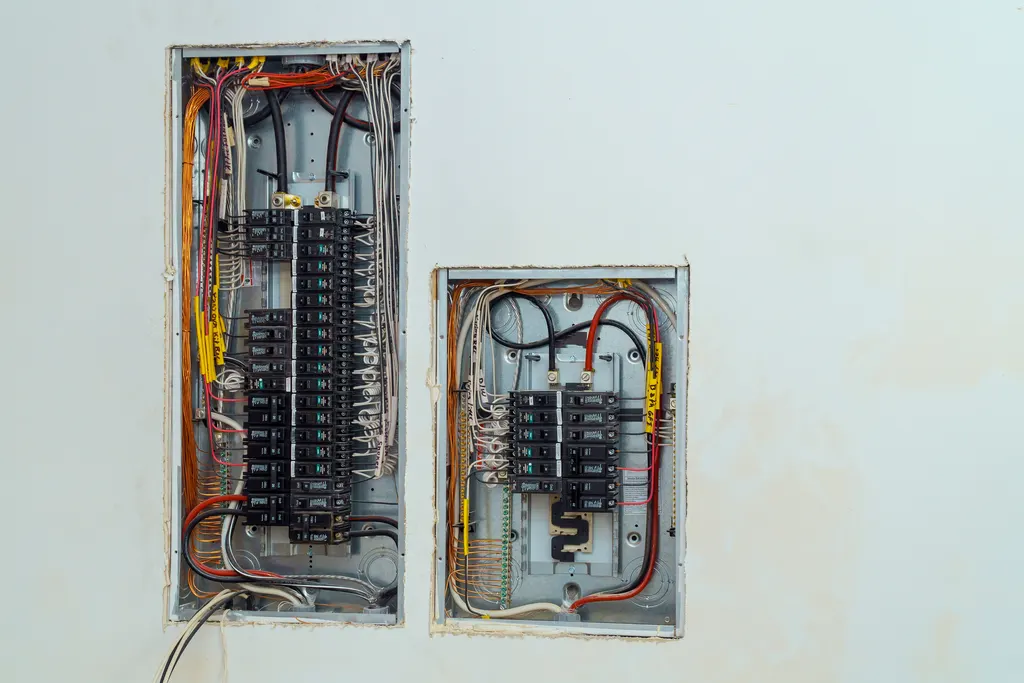
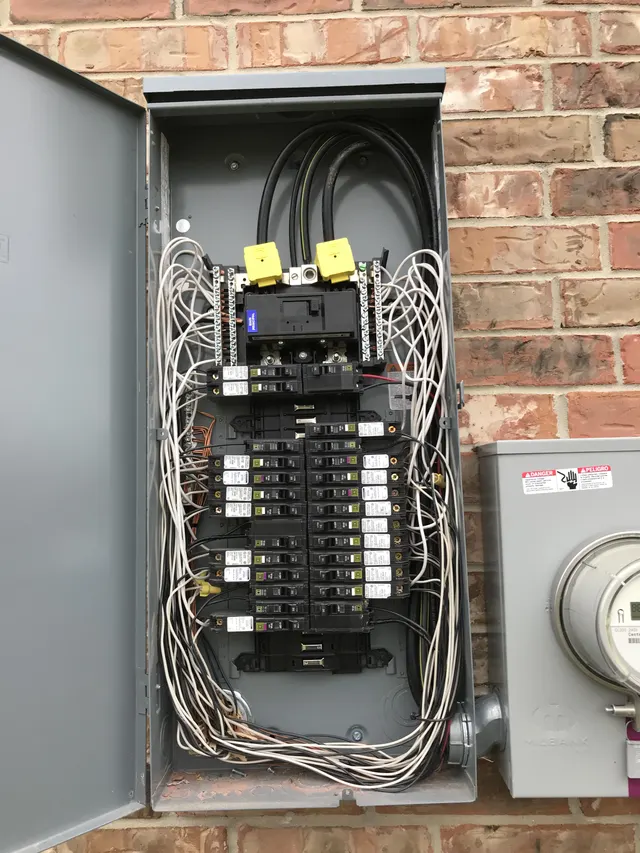
A subpanel is a second load center fed from the main panel rather than from the utility. A two-pole feeder breaker in the main panel sends power through a feeder cable or conduit to the subpanel, where it is split into branch circuits by the subpanel's own breakers. Electrically it is a branch of the tree, not a second trunk.
Situations where a subpanel is the right tool:
- The main panel is physically full but the service has spare capacity. Rather than filling the panel with tandem breakers, a subpanel adds slots.
- A detached garage, workshop, barn or pool house needs several circuits. One feeder across the yard is cheaper and cleaner than four or five separate runs.
- An addition or second-floor conversion sits far from the main panel. A subpanel near the new rooms shortens every branch circuit and reduces voltage drop.
- Pool and spa equipment benefits from its own panel at the equipment pad with its own GFCI and bonding arrangements.
- Separating loads, such as putting a home office, a workshop or a generator-backed set of circuits on their own panel so they can be managed, metered or switched as a group.
Situations where it is the wrong tool: the main panel is a Federal Pacific or Zinsco, the service is 100 amps and already near its calculated load, or the goal is to run an EV charger and a second air conditioner that the service cannot support. Those call for the work described in signs you need an electrical panel upgrade.
Does a subpanel add capacity to the house?
No, and this is the misunderstanding behind most bad subpanel decisions. The service rating, typically 100, 150 or 200 amps in Houston-area homes, is set by the service conductors, the meter base and the main breaker. A subpanel is downstream of all three, so the total the house can draw does not change. If a 100-amp home is already tripping its main in August, a 60-amp subpanel in the garage adds breakers, not amps.
What a subpanel does change is distribution. It moves circuits closer to loads, it gives you room for more branch circuits, and it lets a group of loads be fed through one feeder breaker. Whether that helps depends on a load calculation under the 2023 NEC as adopted in Texas, which compares the home's demand to the service rating. The method is explained in load balancing and load calculations for home circuits.
A worked example from the kind of home we see in Aliana: 200-amp service, a calculated load around 120 amps, and a main panel with no open spaces after years of additions. A 100-amp garage subpanel gives twenty or more new slots with capacity to spare. The same subpanel in a 1980s Katy home on 100-amp service with an electric range, electric dryer and two air handlers would be a mistake, because the feeder breaker would simply be another thing that trips.
How is a subpanel wired and grounded correctly?
Subpanel wiring has one rule that separates it from a main panel: neutral and equipment ground are kept apart. They are bonded together once, at the service. In a subpanel the bonding screw is removed, the neutral bar floats on insulators, and a separate ground bar bonded to the enclosure carries the equipment grounds. That is why every subpanel feeder has four conductors.
The feeder
Two hot conductors, one neutral and one equipment grounding conductor, sized to the feeder breaker. A 60-amp feeder typically uses 6 AWG copper or 4 AWG aluminum; a 100-amp feeder typically uses 3 AWG copper or 1 AWG aluminum, checked against termination ratings and run length. Long runs to a detached building are often upsized to limit voltage drop.
The feeder breaker
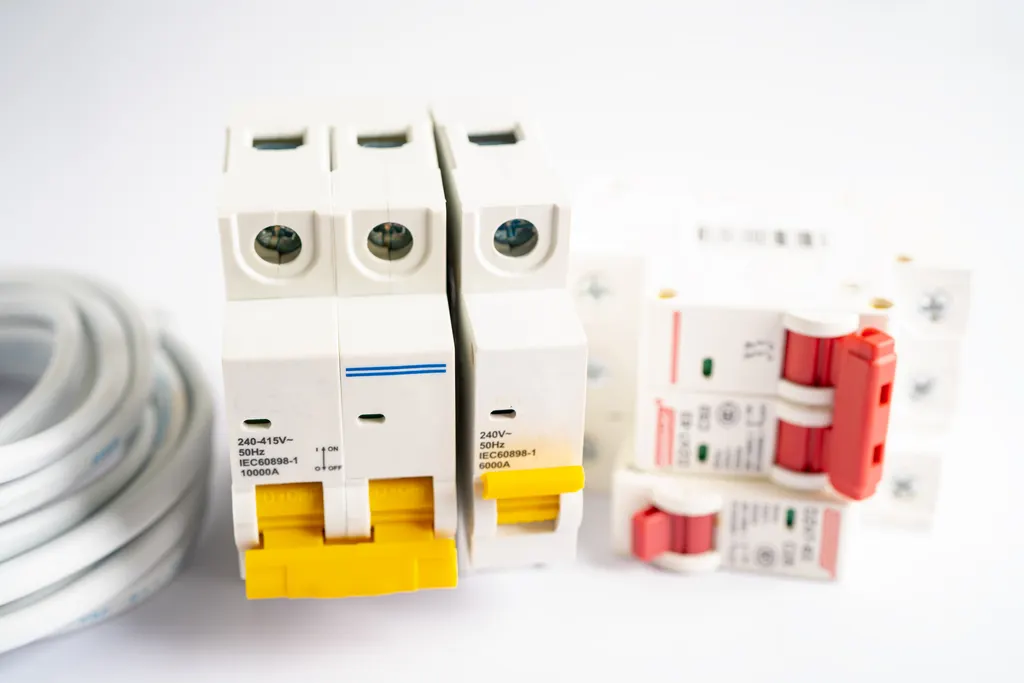
A two-pole breaker in the main panel, listed for that panel, rated for the feeder conductors. The subpanel may be main-lug only, with the feeder breaker as its disconnect, or main-breaker type when a local disconnect is required.
Detached buildings
A subpanel in a detached garage, shop or pool house needs a disconnect at that building and its own grounding electrode system, usually two ground rods, bonded to the subpanel's ground bar. The feeder runs in conduit or as direct-burial cable at the required depth, and underground runs are inspected before the trench is closed. The grounding logic is laid out in electrical grounding and bonding: a homeowner guide.
Branch circuits in the subpanel follow the same AFCI and GFCI rules as the rest of the home.
Where can a subpanel be mounted?
The NEC's working-space rules apply to subpanels exactly as they do to main panels, and inspectors in Fort Bend County enforce them. A subpanel needs a clear space in front of it about 30 inches wide, 36 inches deep and with roughly six and a half feet of headroom, and it must be readily accessible without moving storage or climbing over anything.
Locations that work well:
- An attached garage wall, the most common choice in Houston-area homes and the easiest to reach from the main panel.
- A utility or laundry room wall, as long as the washer or water heater does not sit in the working space.
- The exterior wall of a detached building, in a NEMA 3R enclosure, or inside the building near the door.
- The pool equipment pad, in a weatherproof enclosure, for pool and spa loads.
Locations that are not allowed or are poor practice:
- Bathrooms and clothes closets, which the code prohibits for overcurrent devices.
- Above or on a stair where the working space would be on the steps.
- Behind a door that cannot open fully, or inside a cabinet.
- Attics, which are technically possible but miserable to service in a Houston summer and rarely accessible enough to pass.
Height matters too: the top breaker handle may not be higher than about six feet seven inches above the floor. For a detached building, settle the subpanel location before the trench is dug.
Subpanel Installation in Katy, Fulshear and Richmond Homes
Western Fort Bend County's housing stock makes subpanels more common than in most of Houston. In Fulshear, TX and the unincorporated areas around it, larger lots in Cross Creek Ranch, Jordan Ranch and the older acreage neighborhoods mean detached workshops, barns, well pumps and outdoor kitchens a long way from the house, nearly all fed by a subpanel with a buried feeder, a disconnect at the building and its own ground rods.
In Katy and Richmond, the typical job is a 2000s home in Cinco Ranch, Pecan Grove or Harvest Green with 200-amp service and a crowded main panel, where the homeowner wants a Level 2 EV charger, a pool, or a garage workshop. A 100-amp garage subpanel usually solves all three; the EV circuit specifics are in home EV charger installation: what to expect. Older 1980s Katy homes on 100-amp service get a load calculation first, and the answer is often a service upgrade with the subpanel added afterward.
Local conditions we plan around:
- Heat. Feeder conductors run through attics are sized for Houston attic temperatures.
- Water. After Hurricane Beryl and the flooding in parts of Richmond and Fulshear, we mount subpanels higher where the layout allows and seal every conduit entry.
- Lightning. A subpanel feeding a detached building is a good place for a second surge protector.
A subpanel is a new feeder plus new circuits, so it is permitted and inspected everywhere we work: by the city inside Katy, Fulshear or Richmond city limits and by Fort Bend County outside them.
What affects the cost of a subpanel installation?
Subpanel jobs range from a short feeder to a garage wall to a long trench to a workshop with its own grounding system, and these factors decide where a given project lands:
- Feeder amperage and length. A 100-amp feeder uses heavier conductors than a 60-amp feeder, and every foot of run adds wire and labor. Copper costs more than aluminum; aluminum is common and correct for feeders when terminated properly.
- Attached or detached. A detached building adds trenching, conduit, a disconnect, ground rods and an extra inspection.
- Space in the main panel. If there is no room for the two-pole feeder breaker, circuits may need consolidating first.
- Subpanel size and type. A main-breaker subpanel with many spaces costs more than a small main-lug panel.
- Number of new circuits. The subpanel is the start; the branch circuits, AFCI and GFCI breakers, boxes and devices are often most of the job.
- Outdoor rating and mounting. NEMA 3R enclosures and weatherproof fittings for pool or exterior installations.
- Permit and inspection fees, which differ between the cities and the county.
A subpanel is usually less expensive than a service upgrade, which is why it is tempting when the real problem is capacity. The Local Electrician runs the load calculation before quoting so the price reflects the right fix, and financing is available for larger panel and feeder projects.
Can you install a subpanel yourself?
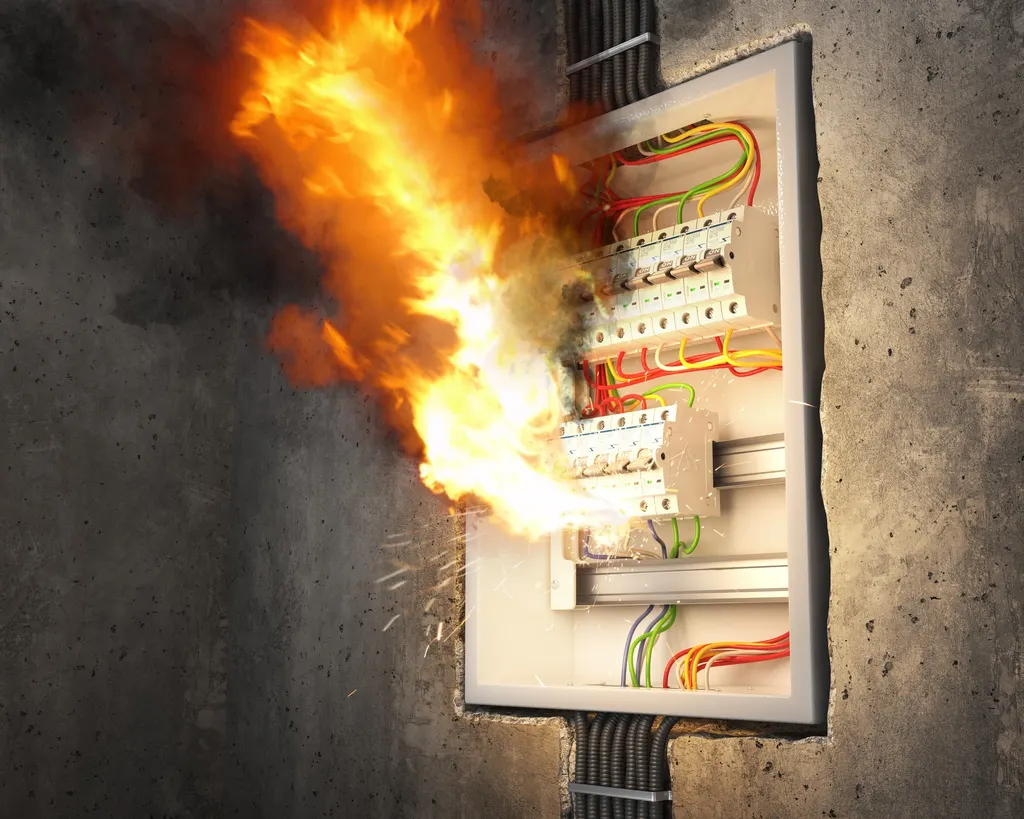
In Texas, subpanel installation requires a licensed electrical contractor and a permit, and unpermitted subpanels are among the first things a home inspector flags at resale. The safety reasons are concrete. The mistakes we correct most often in Katy and Richmond garages are not cosmetic; each one defeats the protection the system is supposed to provide:
- Neutral bonded in the subpanel. The bonding screw was left in, so normal neutral current flows on the equipment ground and on metal conduit, water pipes and appliance frames.
- Three-wire feeder. No separate equipment ground, usually with the neutral doing both jobs, which makes every metal enclosure downstream a shock hazard when a connection loosens.
- No ground rods at a detached building, or rods that were never bonded to the subpanel.
- Feeder breaker larger than the feeder conductors, so the cable across the yard is unprotected.
- Grounds and neutrals mixed on one bar, a direct consequence of treating the subpanel like a main panel.
- Underground cable at the wrong depth or without conduit where it emerges, cut by the next landscaper.
A licensed electrician sizes the feeder, pulls the permit, schedules the underground and final inspections, torques every termination and labels the directory. The Local Electrician handles subpanel installation across Fort Bend County and west Houston as part of our electrical panel and circuit breaker service, with upfront pricing and free estimates on installations; The Local Electrician can be reached at 832-271-1167.
Frequently Asked Questions
What is a subpanel?
A subpanel is a second breaker panel fed from the main panel through a two-pole feeder breaker and a four-wire feeder. It splits that feed into its own branch circuits. Subpanels are used when the main panel is full, when a detached garage or workshop needs several circuits, when an addition sits far from the main panel, or when pool or generator-backed loads are grouped together.
Does a subpanel increase my home's electrical capacity?
No. The service conductors, meter base and main breaker set the maximum the home can draw, and a subpanel sits downstream of all three. It adds breaker spaces and moves circuits closer to the loads. If a load calculation shows the service is already near its limit, the right fix is a service upgrade; a subpanel can be added afterward if more slots are needed.
How do you choose the right subpanel size?
Add up the loads the subpanel will serve using the NEC load calculation, then choose a feeder breaker and feeder conductors that cover that demand with room to grow, as long as the main service can support it. For a garage with an EV charger and a workshop, a 100-amp subpanel is common; for a few lighting and receptacle circuits in a shed, 60 amps or less. Pick a panel with spare spaces.
Do I need a permit for a subpanel in Fulshear or Katy, TX?
Yes. A subpanel is a new feeder and new circuits, which is permitted and inspected everywhere in the Houston area: by the city building department inside Fulshear, Katy or Richmond city limits and by Fort Bend County in unincorporated areas. Underground feeders to detached buildings are inspected before the trench is backfilled. The Local Electrician pulls the permit and meets the inspector as part of the job.
Why are the neutral and ground separated in a subpanel?
Neutral and ground are bonded together exactly once, at the main service disconnect. If they are also bonded in a subpanel, normal neutral current returns on the equipment grounding conductor and on anything bonded to it, including metal conduit, water pipes and appliance frames. Keeping them separate in the subpanel, with a four-wire feeder, ensures the ground carries current only during a fault.
When should you upgrade a subpanel instead of adding circuits?
When the subpanel is a known-hazard brand, when its feeder is a three-wire cable with no separate ground, when the bus or breakers show heat damage or corrosion, when it has no open spaces and the feeder has capacity for more, or when the loads it serves have grown past its feeder rating. An electrician confirms the feeder size, the main service capacity and the condition of the panel before recommending either.