





Quick answer
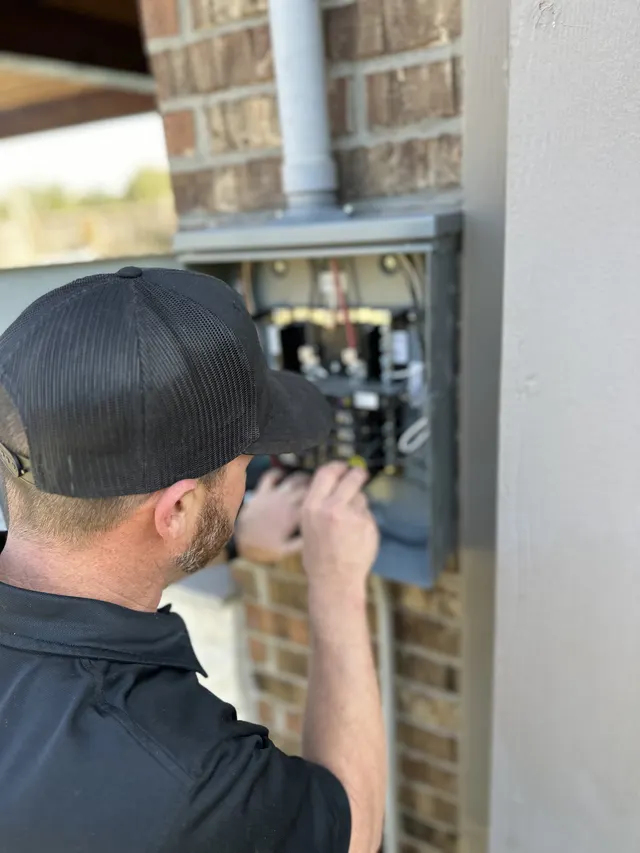
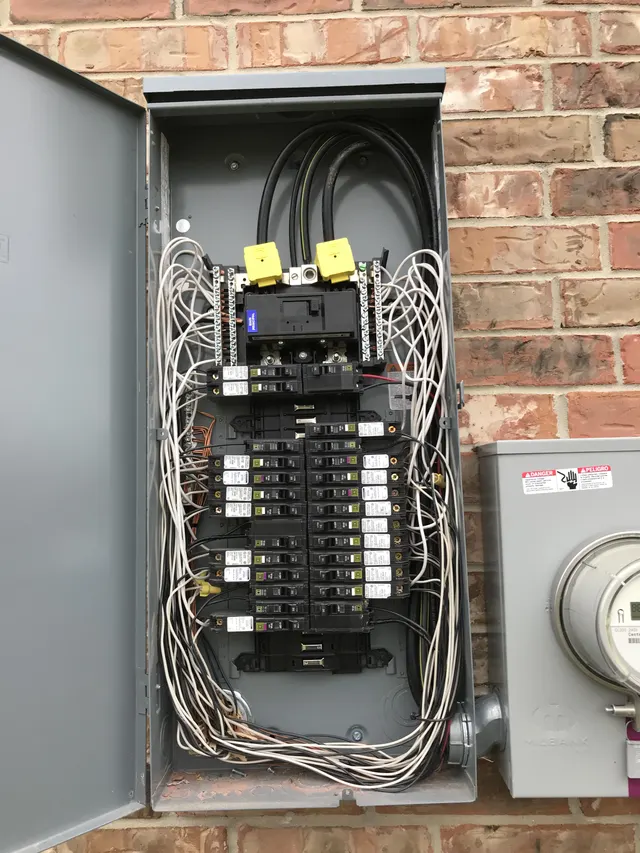
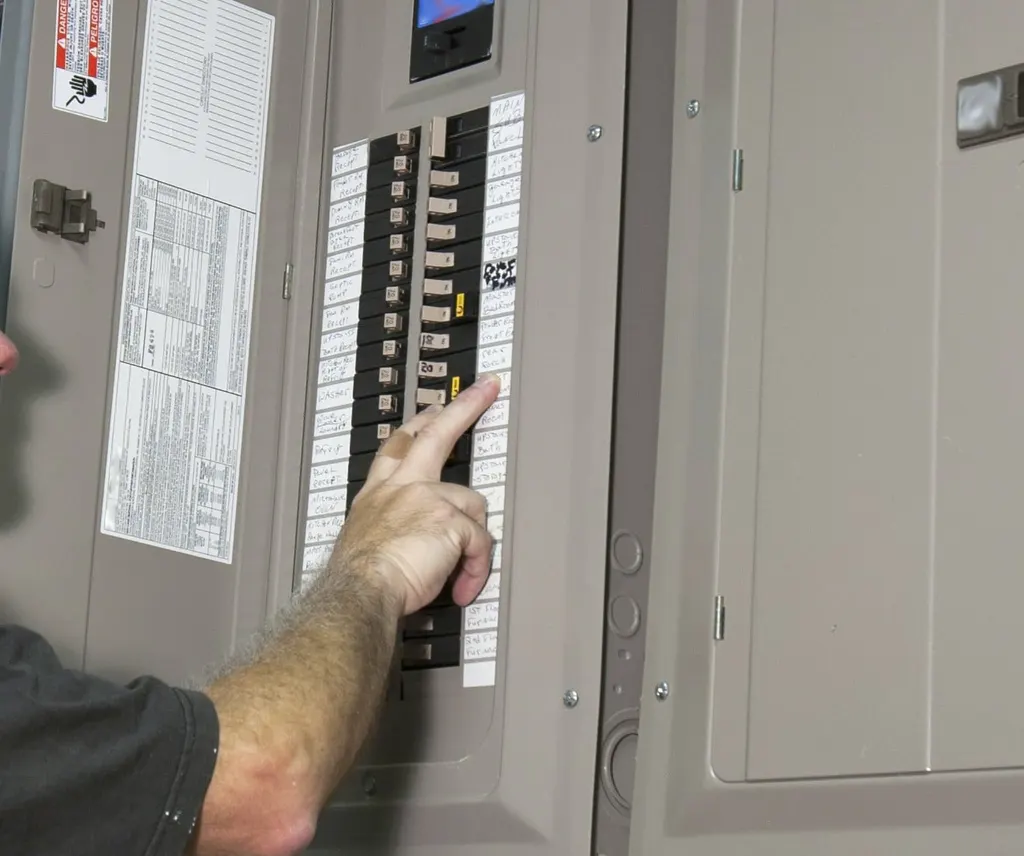
Correct breaker panel labeling starts with mapping: photograph the panel, number each breaker as the factory numbered the bus, switch off one breaker at a time while a helper checks every light, outlet and appliance, and record what went dead. Then write each label by room and load, such as Kitchen counter outlets or Upstairs hall lights, print a directory card for the door and keep a digital copy.
Breaker panel labeling is the one electrical job almost any homeowner can do safely, and it pays off the first time a bathroom outlet dies at night or a contractor asks which breaker feeds the dishwasher. It also matters more than most people realize: the National Electrical Code requires every panel to have a legible circuit directory that identifies each breaker's purpose, and inspectors in Katy, TX, Sugar Land and Pearland check it on every panel they sign off.
This guide gives you the full process, from tools to the wording that makes sense at two in the morning, plus the mistakes we correct most often in Houston-area garages and the handful of findings that mean you should stop and call a licensed electrician.
Key Takeaways
- The NEC requires a legible circuit directory on every panel; labels must describe the load clearly and not depend on who lives in a room.
- Mapping a panel is a two-person job: one at the breakers, one walking the house with a plug-in tester and a phone.
- Test every receptacle and fixture, including outdoor, garage, attic, pool and HVAC loads; two-pole breakers feed 240-volt equipment.
- Write labels by location and load, such as Kitchen counter outlets east wall, and print them so they survive garage heat.
- Unlabeled breakers that control nothing, double-tapped breakers or a breaker feeding two unrelated areas are reasons to call a licensed electrician.
- Keep a photo and a typed copy of the directory; update both after any remodel or new circuit.
Why does breaker panel labeling matter?
Breaker panel labeling does three jobs. It lets anyone in the house kill power to the right circuit quickly in an emergency, it lets an electrician or inspector understand the system without tracing every wire, and it is a code requirement. The 2023 NEC as adopted in Texas calls for every circuit to be legibly identified by its specific purpose, with the identification on the breaker or on a directory at the panel. Wording that depends on a changeable condition, such as a family member's name, does not meet that rule.
The practical value shows up in situations like these:
- A GFCI receptacle in the garage trips and takes the refrigerator in the garage with it. The label tells you which breaker to check before you lose a freezer full of food.
- A ceiling fan needs replacing and the installer needs the circuit dead. A correct label means one breaker goes off, not the whole house.
- Water is leaking near an outlet. You can shut off that circuit from the garage without touching anything wet.
- A generator interlock is installed and you need to shed the air conditioner and range before switching over.
Clear labeling also becomes the first step in planning upgrades. When the directory is accurate, a load calculation, a dedicated circuit for a new appliance or a full panel replacement starts from facts instead of a tracing job.
What do you need before you start?
Mapping goes faster and more accurately with the right setup. Gather these before you open the panel door:
- A helper. One person switches breakers while the other walks the house. Phones on speaker work well in a two-story home.
- A plug-in receptacle tester or a small lamp. The tester also flags open grounds and reversed polarity while you are at it.
- A non-contact voltage tester for hard-wired loads such as the water heater, air handler and disposal, where there is no outlet to plug into.
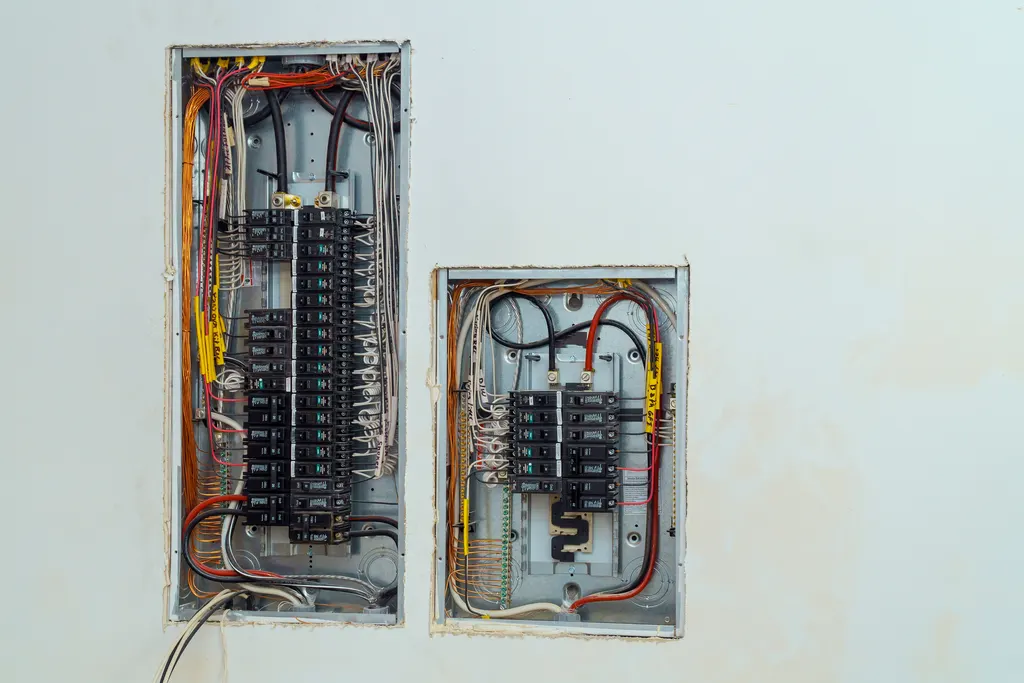
- Your phone camera. Photograph the panel before you touch anything, with the door open and every breaker position visible.
- Painter's tape and a marker for temporary notes on the panel face during mapping.
- A label maker with laminated tape, or a printed directory card. Handwritten ballpoint fades in a Houston garage within a few summers.
- A notepad or spreadsheet with one row per breaker number.
Two things to settle before you begin. Unplug or shut down computers, and give anyone working from home a heads-up, because every circuit will go dark for a minute. And note the time: an electric water heater, HVAC system or pool pump cycles, so you may need to turn a load on deliberately to confirm which breaker feeds it. A dedicated breaker finder, which plugs into an outlet and signals at the panel, is helpful but not required for a typical home.
How do you map every circuit, step by step?
Work from the top of the panel down, one breaker at a time, and resist the urge to flip several at once.
- Number the breakers the way the panel does. Most residential panels number the left column odd (1, 3, 5) and the right column even (2, 4, 6), top to bottom. Use the factory numbers so your directory matches what an electrician expects.
- Start with the two-pole breakers. The wide, double-handle breakers feed 240-volt equipment: the air-conditioning condenser, air handler or furnace, electric range, oven, dryer, water heater, pool pump and any EV charger. Confirm each by switching it off and checking that the equipment is dead.
- Switch off one single-pole breaker. Your helper walks every room and reports each light, switch and outlet that is dead, including outlets behind furniture and both halves of any split receptacle.
- Check the easy-to-miss loads. Outdoor receptacles, porch lights, garage door opener, attic light, doorbell transformer, sprinkler controller, bath exhaust fans, under-cabinet lights, disposal, dishwasher, microwave, smoke detectors and the refrigerator.
- Record it immediately, then switch the breaker back on before moving to the next one.
- Repeat for every breaker, including any marked spare. A spare that kills something is mislabeled.
- Walk the house once more with everything on, and reset clocks and any GFCI receptacles that tripped.
Expect a 40-space panel in a two-story home to take an hour or two. One GFCI receptacle in a bathroom or garage often protects outlets in other rooms and outdoors, so a dead outlet may be a tripped GFCI rather than a breaker.
How should you word labels so they pass inspection and make sense in an emergency?
A good label answers two questions for someone who has never seen the house: where, and what. The code asks for the specific purpose, and an inspector in Pearland or Sugar Land will reject a directory of entries that simply say lights or plugs.
- Lead with the location, then the load. Kitchen counter outlets north wall. Primary bath lights and fan. Garage door opener and ceiling outlets.
- Use permanent room names, not people. Front bedroom and upstairs office survive a move; a child's name does not, and the NEC specifically disallows it.
- Name the appliance for dedicated circuits. Dishwasher, Disposal, Microwave, Refrigerator, Water heater, AC condenser, Air handler, Dryer, Range, Pool pump.
- Mark voltage and protection where useful. Adding 240V on two-pole breakers and GFCI or AFCI on protected circuits helps the next electrician immediately.
- Keep each entry short enough to read at a glance. Two or three words per line on the directory card, with a longer typed master list stored separately.
- Identify the feed to any subpanel and label the subpanel's own directory the same way.
Laminated label-maker tape beside each breaker, or a typed card in the sleeve inside the door, both hold up. Do not put labels on breaker handles, and do not cover the manufacturer's label inside the door, which carries the torque values and the list of breakers the panel is listed to accept. Finish by photographing the directory and saving a typed copy to your phone so it survives a faded card.
What are the most common breaker panel labeling mistakes?
We open several hundred panels a year across Fort Bend and Harris County, and the same directory problems show up again and again.
- Builder labels that were never updated. Bedroom 2 and Bedroom 3 made sense on the plans; twenty years and two remodels later, nobody knows which is which.
- Labels that follow a person. Grandma's room, the nursery, Mike's office. These fail the code and confuse anyone else.
- Spare written on a live breaker. Usually the circuit was added later and the label was never changed. Every breaker gets tested.
- Assuming a room is one circuit. Lighting and receptacles are often on different breakers, and a kitchen can have five or six circuits.
- Missing the multiwire branch circuit. Two single-pole breakers sharing one neutral, often tied together with a handle tie, feed different loads but must be labeled as a pair.
- Ignoring the subpanel. The main panel says Garage subpanel and the subpanel itself is blank.
- Ballpoint on masking tape in a garage. Heat and humidity turn it into a smudge within a few summers.
- Labeling the tandem breaker as one circuit. A tandem has two handles and two circuits in one slot; each needs its own entry.
One more: guessing from where a breaker sits in the panel. Panels in 1980s Katy homes and older sections of Pearland have been modified many times, and breaker order rarely matches the layout of the house.
Breaker Panel Labeling in Katy, Sugar Land and Pearland Homes
Local housing stock and climate shape both the mapping and the labels. In the 1970s and 1980s subdivisions of Katy, TX and the older neighborhoods of Pearland, panels have usually been expanded several times, so expect tandem breakers, a circuit or two that controls something unexpected, and the occasional breaker that controls nothing because the load was removed in a remodel. In the master-planned communities of Sugar Land, TX built from the 1990s onward, such as First Colony and Telfair, the directory is often the builder's original and generic, but the circuits themselves are usually tidy and the panel has spare space.
Nearly every panel here sits in an attached garage or on an exterior wall, so labels face months of heat and humidity. Use laminated labels, keep the typed master copy inside the house, and recheck the card after each summer.
Two local loads deserve their own entries. Pools and spas are common, and the pump, heater, lights and outdoor outlets near the water are often spread across several breakers. And after Hurricane Beryl in July 2024, many homeowners added a generator interlock; a correctly labeled panel is what lets you shed the air conditioner, range and dryer before starting the generator, as described in transfer switches vs interlock kits.
Labeling itself needs no permit. Any change you decide on while mapping, such as adding a circuit or replacing a breaker, is permitted and inspected work in every city and county we serve.
When should you stop and call a licensed electrician?
Breaker panel labeling is safe as long as you only operate breaker handles and never remove the dead-front cover. The bus bars behind that cover are live, and the main lugs stay live even with the main breaker off. Some of what you learn while labeling, though, is a reason to bring in a professional.
- A breaker that controls nothing. It may feed an abandoned circuit, or it may feed a junction box someone buried in a wall or attic. Either way an electrician should trace it.
- A breaker that feeds two unrelated areas, such as the garage and an upstairs bedroom, which often means an improper extension.
- Two wires under one breaker terminal. A double tap is a common inspection failure and a loose-connection risk.
- A warm breaker, a buzz, scorch marks or rust seen through the open door. Stop mapping and call.
- No spare spaces and tandem breakers everywhere, which usually means the panel is at its limit and worth evaluating against signs you need an electrical panel upgrade.
- A Federal Pacific, Zinsco or Challenger label inside the door.
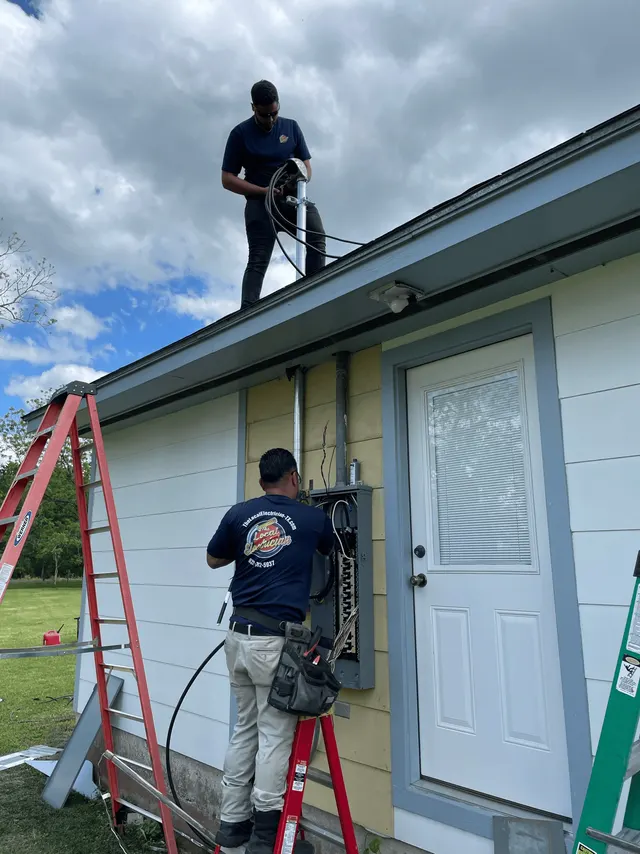
The Local Electrician labels every circuit as part of any panel replacement, breaker replacement or new-circuit job, and we map existing panels as part of an electrical inspection when a homeowner is planning an EV charger, generator or remodel. Our electrical panel and circuit breaker service covers all of it; call The Local Electrician at 832-271-1167 for a panel evaluation anywhere in Fort Bend County and the west Houston suburbs.
Frequently Asked Questions
What is breaker panel labeling?
Breaker panel labeling is identifying each circuit breaker with the location and load it controls, such as Kitchen counter outlets or AC condenser, so anyone can shut off the right circuit quickly. The National Electrical Code requires a legible circuit directory on every panel, and inspectors check it. A proper directory comes from mapping every circuit, not from copying the builder's generic labels.
How do I find out which breaker controls which outlet?
Switch off one breaker at a time while a helper tests every outlet and light with a plug-in tester or lamp and reports what went dead. Record the result before turning the breaker back on and moving to the next. A plug-in breaker finder speeds up a single outlet, but a full map still requires testing every receptacle, fixture and hard-wired appliance in the house.
Why is breaker panel labeling important?
It lets you kill power to a leaking, sparking or failed circuit in seconds, lets electricians and inspectors work safely without tracing wires, and satisfies the code requirement for a circuit directory. It is also the starting point for a load calculation, a generator interlock plan or a panel upgrade. The Local Electrician labels every circuit as part of any panel work.
Can labels prevent electrical accidents?
They reduce the chance of working on a live circuit because the wrong breaker was switched off, which is how many shocks happen during simple repairs. They also let a family member or first responder shut off a specific circuit or the main quickly. Labels do not replace testing: always confirm a circuit is dead with a tester before touching wiring, and never remove the panel cover.
What tools do I need to label a breaker panel?
A helper, a plug-in receptacle tester or lamp, a non-contact voltage tester for hard-wired loads, your phone camera, painter's tape and a marker for temporary notes, a notepad or spreadsheet, and a label maker with laminated tape or a printed directory card. Handwritten ballpoint fades quickly in a Houston garage, so print or laminate the final labels and save a digital copy.
Do I need a permit to label my electrical panel in Katy or Sugar Land?
No. Labeling is documentation, not electrical work, and needs no permit. Any change you decide to make while mapping, such as adding a circuit, replacing a breaker, correcting a double tap or installing a generator interlock, is permitted and inspected by the city inside city limits or the county outside them, and must be done by a licensed electrical contractor.