





Quick answer
You need an electrical panel upgrade when breakers trip under normal use, lights dim as the air conditioner starts, the panel cover feels warm or smells hot, the panel is a Federal Pacific, Zinsco or early Challenger model, you still have fuses, or your 100-amp service cannot carry a new EV charger, HVAC system or pool. Most homes move to a 200-amp panel with AFCI and GFCI breakers.
An electrical panel upgrade replaces the breaker box that splits incoming power into the circuits that run your home. In Fort Bend County and the west Houston suburbs, the question usually comes up in one of two ways: something in the panel is misbehaving, or a new load such as an EV charger or a second air conditioner needs more amperage than the house was built with.
This guide walks through the warning signs a licensed electrician looks for, the panel brands that should be replaced on sight, how a load calculation decides between 100-amp and 200-amp service, what the upgrade day looks like, and what moves the price. It is written for homeowners in Katy, TX, Richmond, Pasadena and Pearland, where 1970s and 1980s subdivisions sit next to brand-new master-planned communities.
Key Takeaways
- Breakers that trip under ordinary use, flickering when the AC compressor starts, and warm or discolored panel covers are the three most common upgrade signs.
- Federal Pacific Stab-Lok, Zinsco and early Challenger panels should be replaced even when they seem to work, because their breakers can fail to trip.
- A 100-amp service rarely has room for an EV charger, a tankless water heater or a second HVAC system; most upgrades move to 200 amps.
- A panel change in Texas is permitted and inspected, and CenterPoint Energy must pull and reset the meter, so plan for a scheduled outage.
- Most straightforward 200-amp panel upgrades are finished in one working day, with power off for several hours.
- Never open the cover of a hot, buzzing or sparking panel; shut off the main breaker if you safely can and call a licensed electrician.
What does an electrical panel upgrade actually involve?
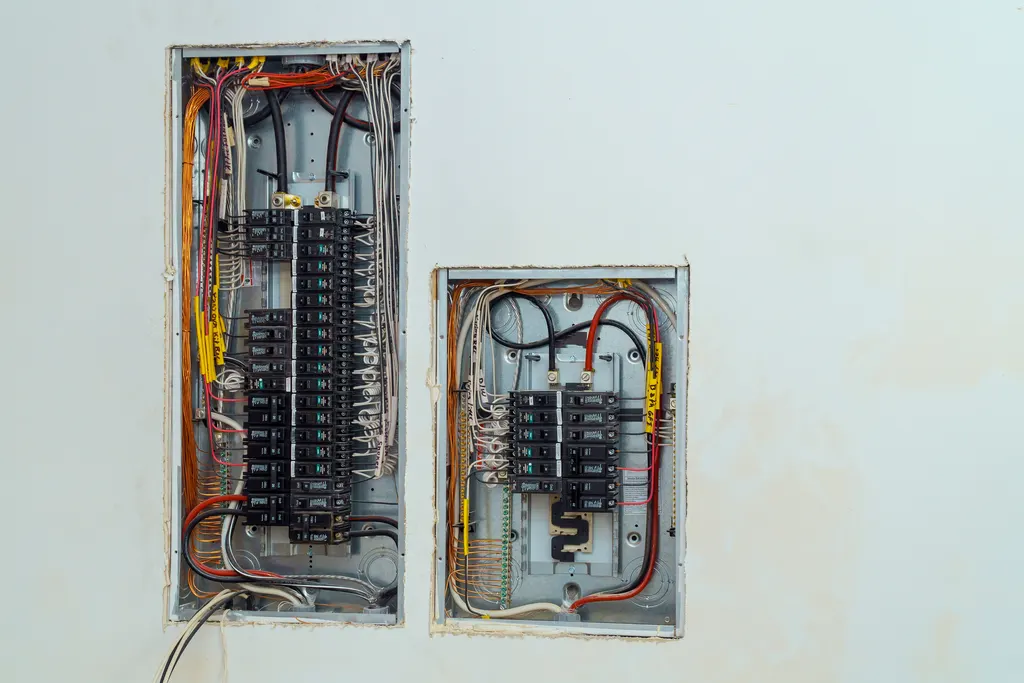
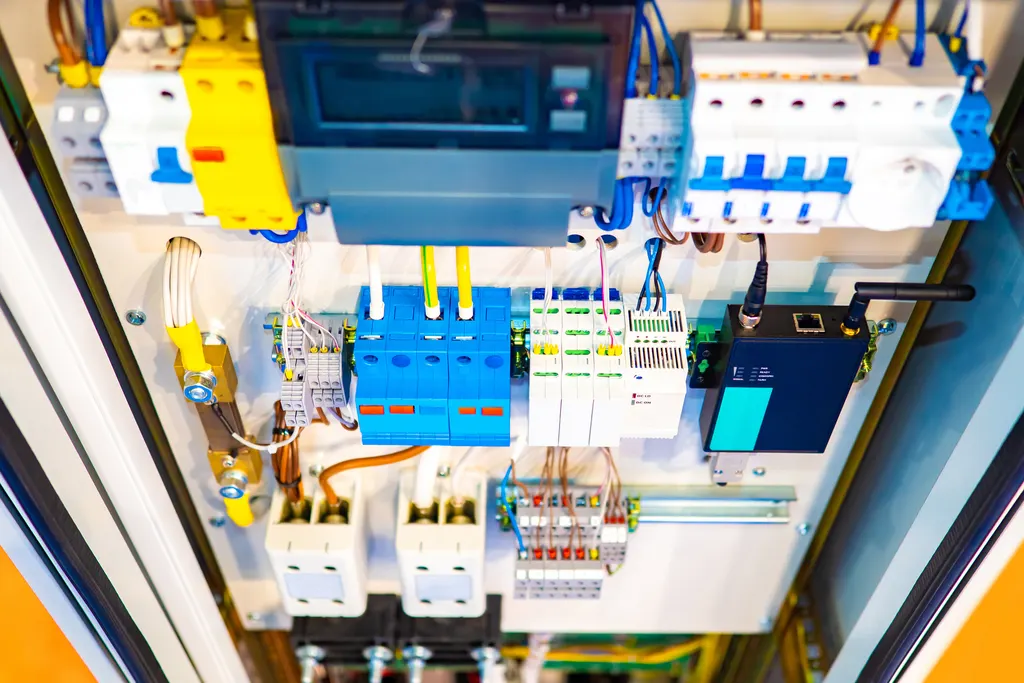
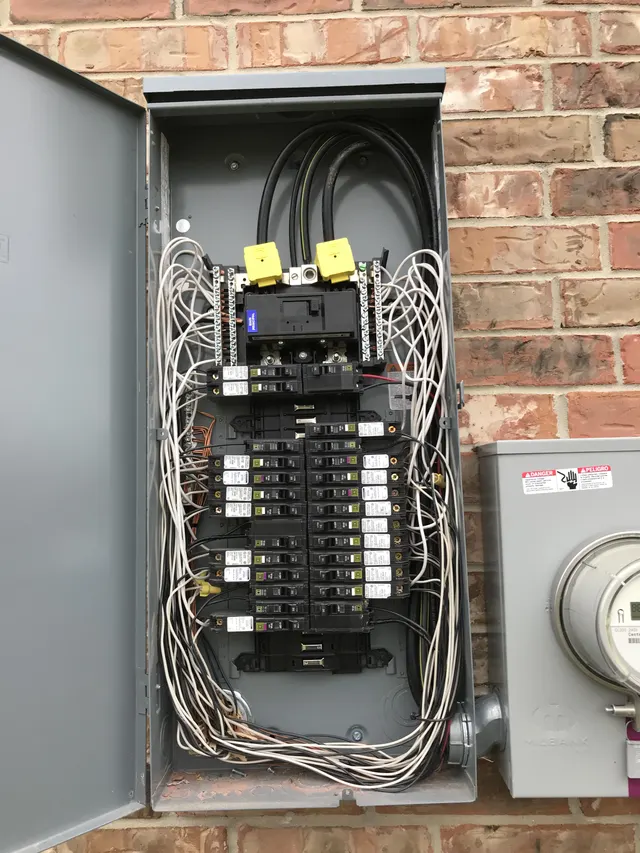
An electrical panel upgrade is the replacement of the load center, the main breaker and usually the branch-circuit breakers with a new, listed panel sized for the home's calculated load. In many older homes it also means new service-entrance conductors, a new meter base and a new grounding electrode system, because the parts feeding the panel are as old as the panel itself.
It is worth separating three jobs that homeowners often lump together:
- Panel replacement swaps the box and breakers but keeps the existing 100-amp or 150-amp service.
- Service upgrade increases the amperage coming into the house, which involves the meter base, mast, service conductors and CenterPoint Energy. We cover that side of the job in service entrance and meter base upgrades explained.
- Subpanel addition leaves the main panel alone and adds a second panel for a garage, workshop or addition. That only works when the main service has spare capacity.
A licensed electrician decides which of these you need by running a load calculation under the 2023 NEC as adopted in Texas, inspecting the existing equipment and looking at what you plan to add over the next ten years. Panel work of any of these kinds is permitted and inspected by the city inside city limits or by the county outside them.
What are the warning signs you need an electrical panel upgrade?
Some signs are electrical, some are physical, and some are about age and capacity. The more of these you recognize, the sooner the panel should be evaluated.
- Breakers trip during normal use. One breaker that trips when the microwave and toaster run together is an overloaded circuit. Several breakers tripping across the house, or the main tripping, points to the panel or the service.
- Lights dim or flicker when the air conditioner starts. On a healthy 200-amp service the compressor's inrush dip is barely visible; on a tired 100-amp service with loose lugs it is obvious.
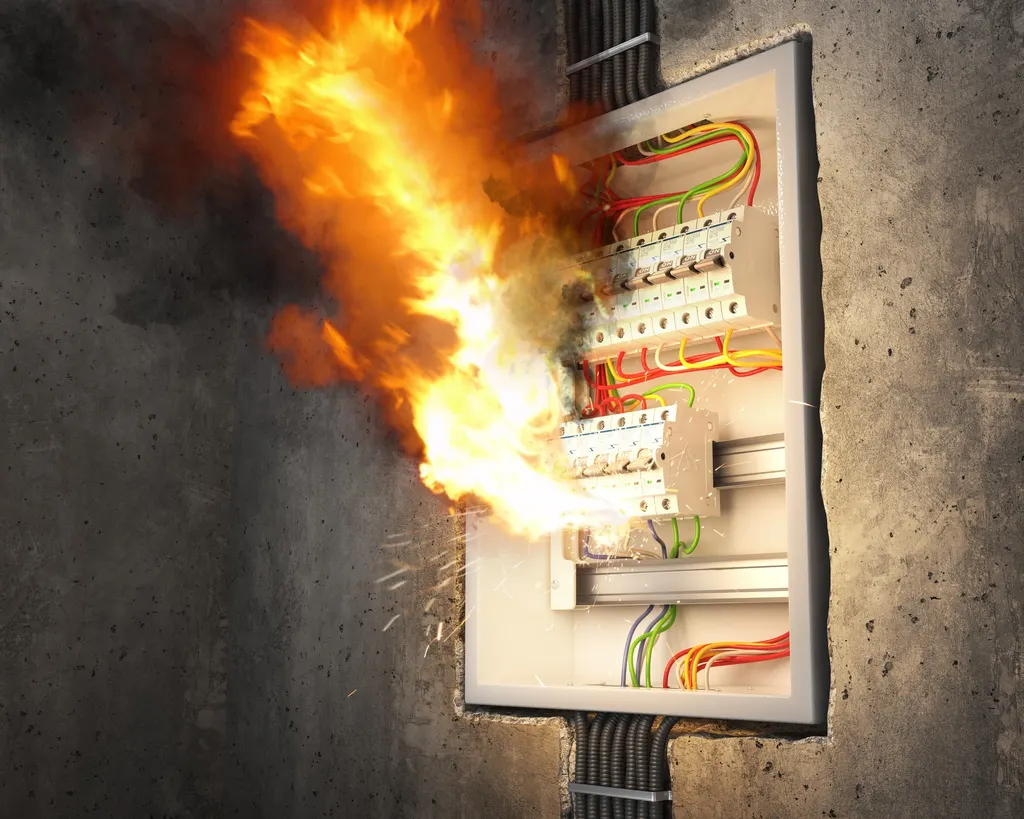
- The panel cover is warm, buzzes or smells like hot plastic. A loose connection, a failing breaker or an overloaded bus. This is a call-today condition.
- Scorch marks, melted breaker faces or rust inside the panel. Arcing leaves black streaks; moisture leaves orange corrosion on the bus and breaker clips.
- Breakers that will not reset, or feel loose on the bus. A breaker that never trips can be worse than one that trips too often.
- No open slots and tandem breakers everywhere. A sign the system was expanded piecemeal.
- A fuse box, a 60-amp main, or a split-bus panel with no single main breaker. These predate modern loads and modern protection.
- No GFCI or AFCI protection anywhere. The panel may work, but it cannot host the protective breakers newer rooms require.
If you see heat, smoke or sparks, do not open the cover. Switch off the main breaker if you can reach it safely and call for emergency electrical repair.
Which panel brands should be replaced even if nothing seems wrong?
Three panel families are well known in the trade for breakers that can fail to trip on an overload or short circuit. Houston-area subdivisions built from the 1960s into the early 1990s are full of them.
Federal Pacific Electric (Stab-Lok)
Look for the red breaker handles and the FPE or Stab-Lok name on the door label. The listing concerns date back decades, and the practical problem is that a breaker that does not open under fault lets the wiring heat until something else gives way. We recommend replacement, not repair.
Zinsco and GTE-Sylvania Zinsco
Zinsco breakers clip onto an aluminum bus that corrodes and arcs where the breaker contacts it. Breakers can weld to the bus and stay closed. Colored breaker handles and the Zinsco or Sylvania name identify them.
Early Challenger and some rebranded panels
Certain Challenger-era breakers and bus assemblies were recalled or are known to overheat at the bus connection. Not every Challenger panel is defective, but an electrician should inspect any you find.
Beyond brand, any panel with a damaged bus, a missing main breaker, double-tapped breakers or signs of water intrusion is a replacement candidate. The patterns behind those failures are covered in common causes of electrical panel failures.
Has your home's power demand outgrown the panel?
A panel can be in perfect condition and still be the wrong size. The way an electrician decides is a load calculation, which adds general lighting and receptacle load by square footage, the small-appliance and laundry circuits, fixed appliances at nameplate, and the larger of heating or cooling, then applies the demand factors the NEC allows. The result is compared with the service rating.
The loads that most often push a Houston-area home past 100 amps:
- A Level 2 EV charger, which is a continuous load and typically needs a 40-amp to 60-amp circuit. See home EV charger installation: what to expect.
- A second or larger air-conditioning system, or a heat pump with electric backup strips.
- An electric tankless water heater, which can draw more current than everything else in the house combined.
- A pool or spa with a pump, heater and lighting.
- An all-electric kitchen with an induction range, double ovens and a large microwave.
- A home office, workshop or garage gym added to a house built for a television and a refrigerator.
Most 2000s and newer homes in communities such as Cinco Ranch, Aliana or Shadow Creek Ranch already have 150-amp or 200-amp service and a panel with open slots, so they often need circuits rather than a new panel. Homes built before the mid-1990s on 100-amp service usually need the full upgrade. Smart load centers with circuit-level monitoring and EV load management are an option when you want data on where the power goes, but they do not replace a correct load calculation.
Electrical Panel Upgrades in Katy, Richmond and Pasadena Homes
Local conditions change what we find inside a panel. In the Houston area, most panels sit in an attached garage or on an exterior wall, so they live with summer heat, high humidity and wind-driven rain. Garage panels in 1970s and 1980s neighborhoods such as Nottingham Country and Kelliwood in Katy, TX, Pecan Grove near Richmond, and the older blocks of Pasadena often show the same pattern: oxidized aluminum service conductors, breakers that have cycled thousands of times in the heat, and a bus bar double-tapped as the family added circuits.
Attic-run branch wiring sees attic temperatures above 130°F in July and August. That heat ages the insulation, so we also look at how the branch circuits enter the box and whether any late-1960s or 1970s aluminum branch wiring needs proper connectors.
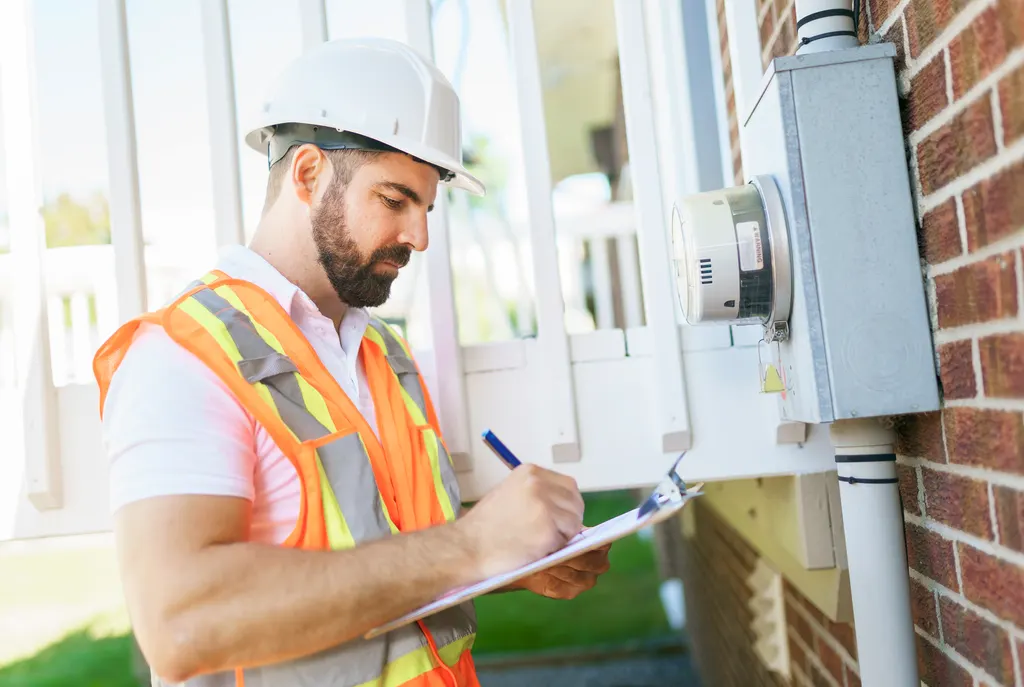
Two local facts shape the schedule. CenterPoint Energy owns the meter and the service drop, so an upgrade that touches the service requires a utility disconnect and reconnect, which we coordinate. Every panel change inside Katy, Richmond, Sugar Land or Houston city limits goes through that city's building department; homes in unincorporated Fort Bend County go through the county. The inspector checks the main disconnect, grounding, bonding, the circuit directory and the required AFCI and GFCI protection.
After Hurricane Beryl in July 2024 and the May 2024 derecho, we replaced panels that had been flooded or surged, and many homeowners in Pasadena, TX and Richmond, TX paired the new panel with a whole-home surge protector and a generator interlock while the panel was open.
What happens on the day of a panel upgrade?
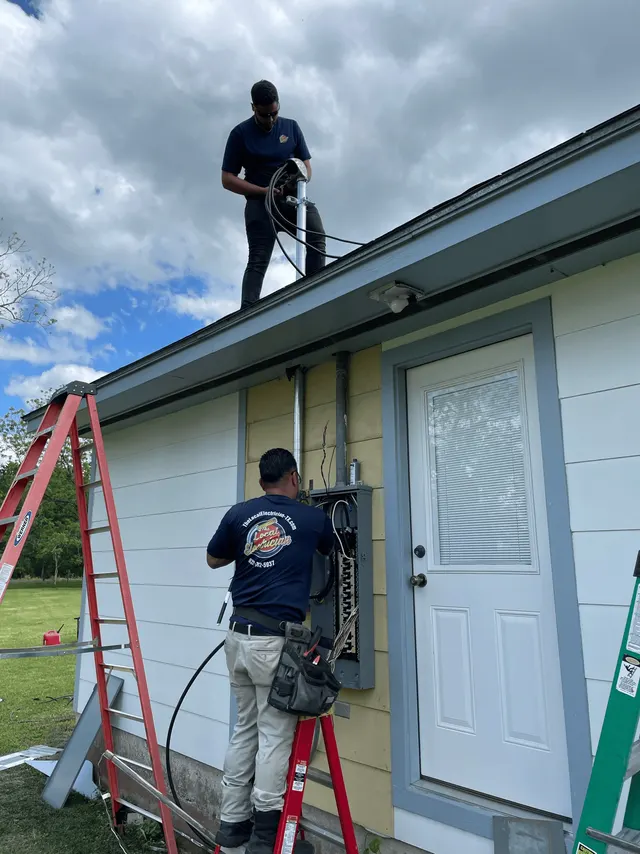
Most single-panel upgrades at a 200-amp service are a one-working-day job. Here is the sequence The Local Electrician follows:
- Load calculation, permit and utility scheduling. The permit is pulled before any work starts. When the meter must come out, CenterPoint Energy's disconnect is scheduled for the morning of the job.
- Power off and photograph. Every circuit is traced and labeled before the old panel comes out, so nothing is guessed at later.
- Remove the old panel and inspect the service. If the meter base, mast or service conductors are undersized or corroded, they are replaced as part of the same job.
- Mount the new panel and main breaker. The new load center is sized with spare slots for future circuits. If the service is new, an exterior emergency disconnect is installed as the 2023 NEC requires.
- Grounding and bonding. Ground rods, the water-pipe bond and the intersystem bonding termination are verified or added. The neutral is bonded only at the service disconnect.
- Land the circuits on new breakers. Bedroom and living-area circuits get AFCI protection; kitchen, bath, garage, laundry and outdoor circuits get GFCI protection where the code requires it. Every lug is torqued to the manufacturer's value with a calibrated tool.
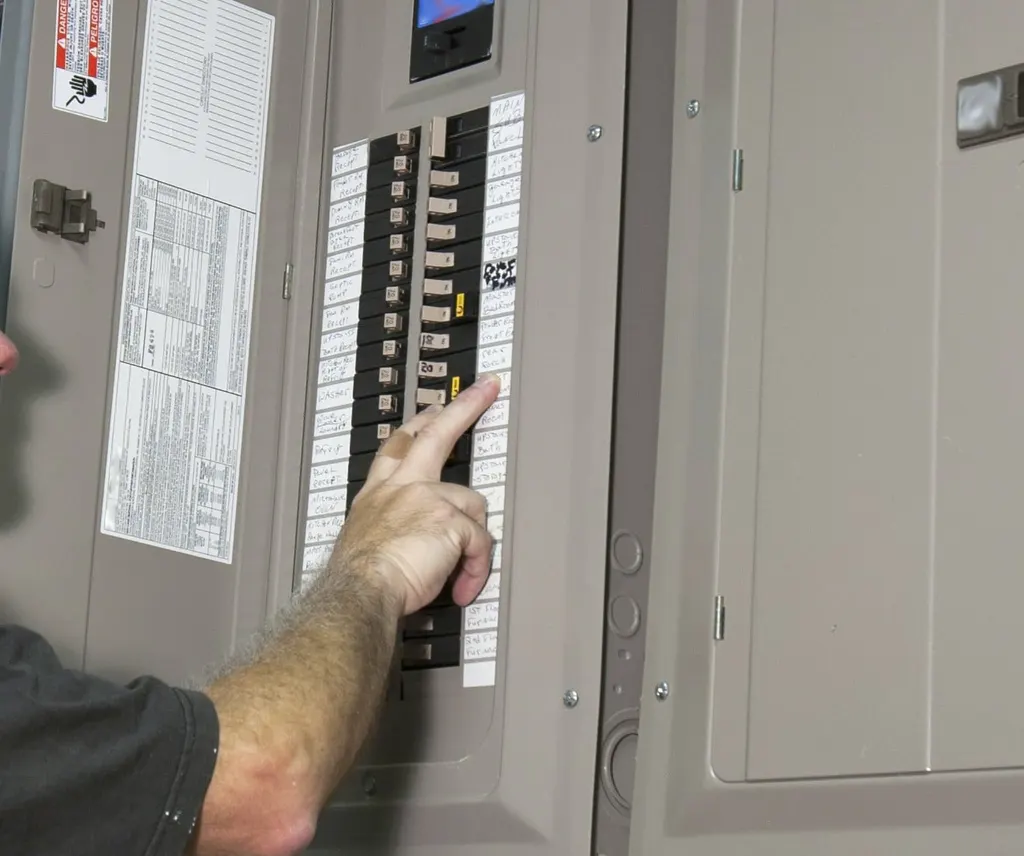
- Directory, test and inspection. Each breaker is labeled by room and load, every circuit is energized and tested, and the city or county inspector signs off.
Expect several hours without power. Refrigerators stay cold if the door stays shut; medical equipment and aquariums should be planned for in advance.
What affects the cost of an electrical panel upgrade?
Two homes on the same street can have very different panel-upgrade quotes. The factors that matter most:
- Panel only versus full service upgrade. Replacing the meter base, mast and service conductors adds material, labor and utility coordination.
- Amperage and panel size. A 200-amp, 40-space panel costs more than a 100-amp, 20-space panel, but it is usually the better value because it rarely needs replacing again.
- Breaker types. AFCI, GFCI and dual-function breakers cost several times what a standard breaker does, and newer code requires more of them.
- Relocating the panel. Moving a panel out of a bathroom, closet or behind a water heater to meet working-space rules means extending every circuit.
- Condition of the existing wiring. Aluminum branch wiring, undersized conductors or crowded junctions found during the job add scope.
- Grounding corrections. Missing ground rods, an unbonded water pipe or no intersystem bonding are common in older homes.
- Add-ons done while the panel is open. A surge protector, generator interlock or EV circuit costs the least to install at the same time.
- Permit and inspection fees, which vary by city and county.
The Local Electrician quotes the whole scope up front after a site visit, and financing is available for larger panel and service projects so a safety upgrade does not have to wait for a budget cycle.
Does a new panel help when you sell, insure or add solar?
Three situations make a panel upgrade worth doing before a problem forces it.
Selling the home
Home inspectors in the Houston market flag Federal Pacific and Zinsco panels, double-tapped breakers, missing GFCI protection and open knockouts almost every time. A panel upgrade with a permit and inspection on file removes the most common electrical objection from a buyer's repair list.
Insurance
Some insurers ask about panel brand and service size when writing or renewing a policy on an older home. We do not promise premium changes, but a documented upgrade answers the question cleanly.
Solar and battery storage
A grid-tied solar inverter backfeeds the panel through a breaker, and the NEC limits how much backfeed a bus bar can accept relative to its rating and the main breaker. A 100-amp panel with a 100-amp main often cannot accept a meaningful solar array without a main-breaker downsize or a new panel. A 200-amp panel with a 225-amp-rated bus gives the installer room to work, and the same applies to a future battery.
If you plan solar, an EV charger or a generator within a few years, tell the electrician at the estimate stage so the panel, main breaker and spare spaces are specified once.
When should you call a licensed electrician instead of waiting?
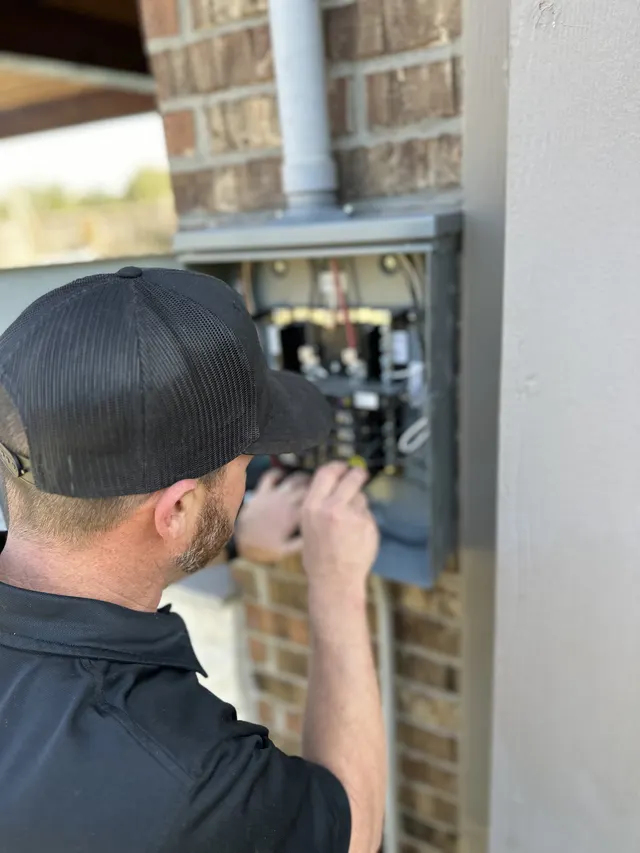
Resetting a tripped breaker is a homeowner task. Everything past the cover is not. Panel work exposes the always-live service conductors on the line side of the main breaker, and in Texas it legally requires a licensed electrical contractor and a permit. We see the results of unpermitted panel swaps in Katy and Richmond fairly often: neutrals and grounds mixed in a subpanel, no torque on the main lugs, and breakers from one brand pushed into another brand's bus.
Call the same day if:
- The panel is warm, smells hot, buzzes, crackles or shows any scorching.
- A breaker trips repeatedly and resetting it makes it trip faster.
- The main breaker trips, or the whole house loses power while the neighbors still have it.
- You find water inside the panel, or the panel was under floodwater at any point.
Schedule an evaluation within the month if the panel is a known-hazard brand, is a fuse box or 60-amp service, has no empty slots, or you are about to add an EV charger, HVAC system, pool or addition. An inspection gives you the load calculation and a written scope so you can decide with real numbers. For the panel work itself, our electrical panel and circuit breaker service covers the permit, the CenterPoint coordination and the inspection, and The Local Electrician answers 832-271-1167 around the clock.
Frequently Asked Questions
How do I know if my electrical panel needs an upgrade?
Look for breakers that trip during ordinary use, lights that dim when the air conditioner starts, a cover that feels warm or smells hot, rust or scorch marks inside, no empty breaker slots, or a Federal Pacific, Zinsco or Challenger label. A 100-amp service that is about to get an EV charger or new HVAC system also usually needs upgrading. A licensed electrician confirms it with a load calculation.
Can an outdated electrical panel be a fire hazard?
Yes. The job of a breaker is to open before the wiring overheats. Known-hazard panels such as Federal Pacific Stab-Lok and Zinsco have breakers that can stay closed under fault, and any aging panel can develop loose lugs, corroded bus bars and overheated connections. Heat, discoloration, buzzing or a burning smell at the panel means shut off the main and call a licensed electrician.
How long does an electrical panel upgrade take?
Most 200-amp panel replacements are completed in one working day, with the power off for several hours while the old panel is removed and the new one is wired, torqued and labeled. A full service upgrade that includes the meter base, mast and CenterPoint Energy disconnect can run longer. The permit and inspection are scheduled around the work, and the final inspection may land on a later day.
Do I need a permit to replace my electrical panel in Katy or Richmond, TX?
Yes. Panel replacements and service upgrades are permitted and inspected everywhere in the Houston area. Inside Katy, Richmond, Sugar Land or Houston city limits the permit comes from the city's building department; in unincorporated Fort Bend or Harris County it comes from the county. The Local Electrician pulls the permit, coordinates the utility and meets the inspector as part of the job.
Will upgrading my electrical panel increase my home's value?
It removes one of the most common objections in a home inspection report and gives buyers documented proof that the service is modern, permitted and sized for EV charging and new HVAC. We cannot promise a specific resale figure, but a Federal Pacific or Zinsco panel, double-tapped breakers and missing GFCI protection are items buyers routinely ask sellers to fix before closing.
Should I upgrade to 200 amps or is 100 amps enough?
A load calculation decides. Many smaller homes with gas appliances run fine on 100 amps today, but an EV charger, electric tankless water heater, second air conditioner or pool usually pushes the calculated load past that. Because the labor to replace a panel is similar at either size, most homeowners choose 200 amps so the panel does not have to be touched again.
What is the difference between a panel upgrade and a service upgrade?
A panel upgrade replaces the breaker box and breakers but keeps the same amperage coming from the utility. A service upgrade raises that amperage, which means new service conductors, a new meter base and often a new mast, plus coordination with CenterPoint Energy. Many older homes need both at once; newer homes on 200-amp service often need only breakers or a subpanel.