






Quick answer
Choosing circuit breakers correctly means matching five things: the breaker must be listed for your specific panel, its amperage must match the wire size (15 amps for 14 AWG copper, 20 for 12 AWG, 30 for 10 AWG), its type must provide the AFCI or GFCI protection the room requires, its interrupting rating must exceed the available fault current, and its trip characteristics must suit the load.
A circuit breaker is the only thing standing between a fault and a fire, so choosing circuit breakers is not a shopping decision based on price or brand familiarity. The breaker has to fit the panel it clips into, protect the wire it feeds, provide the protection the 2023 NEC as adopted in Texas requires for that room, and clear a short circuit without failing itself.
This guide lays out the five checks a licensed electrician runs before any breaker goes into a panel in Katy, Richmond, Rosenberg or Pearland, with the local wrinkles that matter in Houston-area homes: hot garage panels, aluminum branch wiring from the 1970s, storm surges, and the Federal Pacific and Zinsco panels that still turn up in older subdivisions. For replacement or new-circuit work, see our electrical panel and circuit breaker service.
Key Takeaways
- A breaker must be listed or classified for the exact panel it goes in; a different brand that fits the bus is not safe.
- Breaker amperage is set by the wire size, never the appliance: 15 amps for 14 AWG copper, 20 for 12 AWG, 30 for 10 AWG.
- Under the 2023 NEC, most living-area circuits need AFCI protection and kitchen, bath, garage, laundry and outdoor circuits need GFCI protection.
- Every breaker carries an interrupting rating, usually 10,000 amps for homes; it must exceed the fault current available at the panel.
- Breakers are calibrated at 40°C, so a garage panel in Houston heat trips at lower current and nuisance trips rise in summer.
- Replacing or adding breakers in Texas is licensed, permitted work; a homeowner should only operate the handles.
What does a circuit breaker actually do?
A residential circuit breaker is a thermal-magnetic switch. The thermal part is a bimetal strip that bends as current heats it; a sustained overload, such as a space heater and a hair dryer sharing a 15-amp circuit, bends it far enough to trip in seconds to minutes. The magnetic part is an electromagnet that reacts to the very high current of a short circuit or ground fault and trips in a fraction of a cycle. Together they protect the wire from overheating, which is the breaker's real job. The breaker does not protect the appliance; it protects the conductor behind the wall.
Every breaker carries a few ratings worth reading on its face:
- Amperage, the current it carries continuously before the thermal element trips.
- Voltage, 120/240 volts for single-pole and two-pole residential breakers.
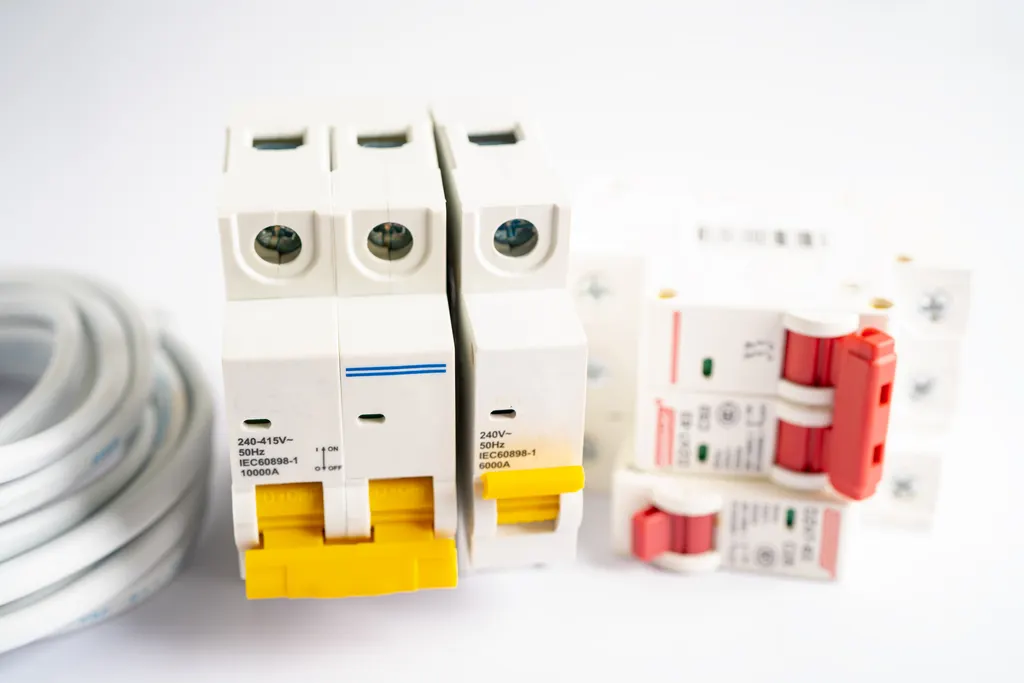
- Interrupting rating, the maximum fault current it can safely open, typically 10,000 amps (10 kA) for homes.
- Type, such as standard, GFCI, AFCI or dual-function, plus any HACR marking for air-conditioning equipment.
Breakers are also mechanical devices with a finite life. One that has tripped many times under fault, or spent twenty summers in a garage, may trip early or, worse, not trip at all. If a breaker trips and you are not sure why, read why does my breaker keep tripping before replacing anything.
Check 1: Is the breaker listed for your panel?
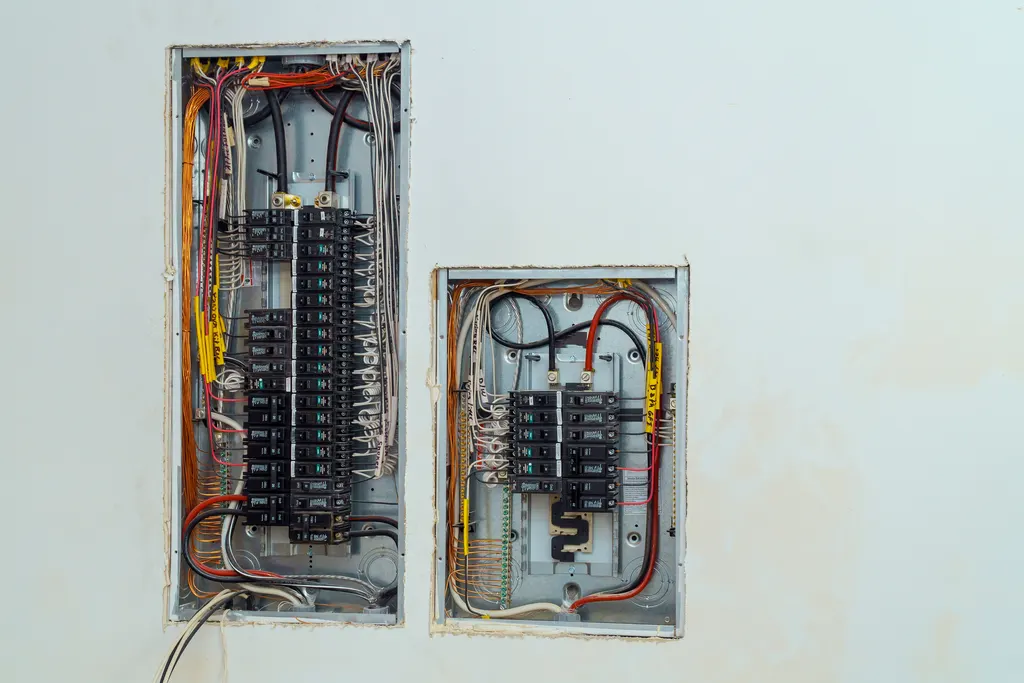
The first rule of choosing circuit breakers is that the panel decides. Every load center is tested and listed with specific breaker families, and the manufacturer's label inside the door lists the catalog numbers the panel accepts. The NEC requires equipment to be installed according to its listing, so a breaker from another brand that happens to snap onto the bus is a code violation and a fire risk: the clip tension, the bus-bar plating and the physical alignment were never tested together.
Three situations come up constantly in Houston-area homes:
- Classified breakers. Some manufacturers sell breakers tested and marked for use in other brands' panels. These are legitimate when the label on the breaker names your panel, and they are the usual answer for discontinued panels.
- Tandem and half-size breakers. Many panels accept them only in certain positions, and some panels are not listed for them at all. Stuffing a full panel with tandems to avoid a subpanel is a common finding at inspection.
- Federal Pacific, Zinsco and Challenger panels. Replacement breakers exist, but the known failure is in the bus and the breaker design itself. Spending money on new breakers for these panels is usually wasted; the right move is the one described in signs you need an electrical panel upgrade.
Before buying anything, photograph the label inside the panel door. It tells an electrician the panel series, its bus rating, the torque values for every terminal and exactly which breakers belong in it.
Check 2: Does the amperage match the wire, not the appliance?
The most dangerous mistake a homeowner can make with a breaker is upsizing it to stop trips. A 20-amp breaker on 14 AWG wire removes the trips and lets the wire run above its rating until the insulation fails inside a wall. The breaker rating is fixed by the smallest conductor on the circuit:
- 14 AWG copper: 15-amp breaker
- 12 AWG copper: 20-amp breaker
- 10 AWG copper: 30-amp breaker
- 12 AWG aluminum, found in late-1960s and 1970s homes: 15-amp breaker
- 10 AWG aluminum: 25-amp breaker
Larger circuits for ranges, dryers, air conditioners, water heaters and EV chargers are sized from the conductor's ampacity table and the termination temperature rating, with the equipment's nameplate as a second check. Air-conditioning condensers are the one case where the nameplate can call for a breaker larger than the wire's normal rating, because the maximum overcurrent protection on the nameplate accounts for motor inrush; an HACR-marked breaker at that value is correct.
Two refinements matter for loads that run for hours. A continuous load, such as an EV charger, water heater or a long-running pool pump, may only load a breaker to 80 percent of its rating, which is why a 40-amp EV charger needs a 50-amp circuit. And attic-run cable in the Houston area is derated for ambient temperature when several cables are bundled, which can push a long 20-amp run to 10 AWG. If you have aluminum branch wiring, breaker choice is only part of the fix; see is aluminum wiring safe.
Check 3: Which protection type does the room require?
Modern breakers do more than overcurrent protection, and the 2023 NEC as adopted in Texas decides which type a circuit needs based on where it goes. The four residential types:
Standard
Overload and short-circuit protection only. Still correct for many dedicated appliance circuits, HVAC equipment and existing circuits that are not being extended.
GFCI (ground-fault circuit interrupter)
Trips on a small current imbalance between hot and neutral, which is what flows through a person during a shock. Required for receptacles in bathrooms, kitchens, garages, laundry areas, outdoors, within six feet of any sink, for dishwashers, and for most receptacle-connected EV chargers. A GFCI breaker protects the whole circuit; a GFCI receptacle protects itself and the outlets downstream. We compare the two in GFCI outlets: where required, installation, testing.
AFCI (arc-fault circuit interrupter)
Detects the signature of an arcing fault, such as a damaged cord or a loose connection behind a wall, and trips before it ignites. Required for nearly every 120-volt circuit in living areas: bedrooms, living and family rooms, kitchens, dining rooms, hallways, closets, laundry rooms and similar spaces. Details are in AFCI protection: arc fault breakers and outlets.
Dual-function
Combines AFCI and GFCI in one breaker. The usual choice for kitchen and laundry circuits, which need both.
When a panel is replaced or a circuit is extended, the new work must meet current requirements, which is why a panel change in an older home ends up with far more AFCI and GFCI breakers than the old panel had.
Check 4: Can the breaker interrupt the available fault current?
A breaker's interrupting rating is the largest short-circuit current it can open without being destroyed. Most residential breakers are rated 10,000 amps, some 22,000 amps. The current available at your panel during a dead short depends on the utility transformer's size and impedance and on the size and length of the service conductors between that transformer and your main breaker. A home a few feet from a large pad-mounted transformer, fed by short, heavy conductors, can have more fault current available than a 10 kA breaker is rated to clear.
The NEC requires overcurrent devices to have an interrupting rating at least equal to the available fault current at their line terminals. When that is in doubt, a licensed electrician performs a fault current calculation:
- Obtain the transformer kVA rating and impedance, or the available fault current, from CenterPoint Energy.
- Measure the service conductor size, material and length from the transformer or service point to the main.
- Apply the point-to-point method to find the fault current at the main and at each downstream panel.
- Compare the result with the interrupting rating of the main breaker and every branch breaker, including any series-rated combinations the manufacturer lists.
For most homes in Katy and Richmond on a shared transformer with a long service lateral, standard 10 kA breakers are adequate. The homes we check carefully have a very close transformer, a short large-conductor service, or a 400-amp service feeding two panels. A breaker that cannot clear the fault can fail violently, so this is checked once at the panel level.
Check 5: Will the breakers coordinate and avoid nuisance trips?
In a well-designed panel, a fault on a branch circuit trips that branch breaker and nothing else. When the main also opens, the whole house goes dark for a bedroom outlet fault. Full selective coordination is an engineered requirement for hospitals rather than homes, but the same thinking prevents the cascading trips homeowners complain about.
- Keep sensible ratios between main and branch. A 200-amp main and 15- to 50-amp branches coordinate well for overloads. Very large faults can still open both, since both have instantaneous magnetic trips, which is one reason the fault current check matters.
- Use the right trip characteristic for motor loads. Air conditioners and pool pumps draw several times their running current at start. HACR-rated breakers and correct nameplate sizing prevent trips on inrush.
- Expect some learning curve with AFCI breakers. Older treadmills, vacuums and some LED drivers can trip them. The fix is a different device or a real wiring fault found by testing, not removing the protection.
- Watch leakage on GFCI circuits. Long outdoor and pool runs accumulate small leakage currents; several outdoor loads on one GFCI breaker may need splitting.
- Replace tired breakers. A breaker that trips below its rating after years of garage heat is a replacement, not a reason to upsize.
Where a home has recurring trips with no identifiable overload, an electrician checks the breakers under load with a clamp meter, verifies torque at every terminal and looks for multiwire branch circuits missing handle ties. Those are the usual root causes behind a breaker that seems untrustworthy.
Choosing Circuit Breakers in Katy, Richmond and Rosenberg Homes
Breakers are calibrated to carry their rated current at 40°C, about 104°F. A panel in an attached garage in Rosenberg, TX or a sun-facing exterior panel in Katy, TX regularly exceeds that in July and August, so breakers trip below their nameplate current. The symptom is a kitchen or air-conditioning breaker that trips only on summer afternoons. The fix is to confirm the load with a clamp meter, verify the terminations and, where the circuit is at its limit, add a circuit rather than upsize the breaker.
Houston-area housing stock adds three more considerations:
- Aluminum branch wiring in late-1960s and 1970s neighborhoods, including parts of older Richmond and Rosenberg, limits a 12 AWG circuit to 15 amps and needs listed connectors at every device.
- Storm surges. Lightning and the grid switching after the May 2024 derecho and Hurricane Beryl damaged the electronics in many AFCI and GFCI breakers. A breaker that will not reset after a storm is often surge-damaged; a whole-home surge protector protects the replacements.
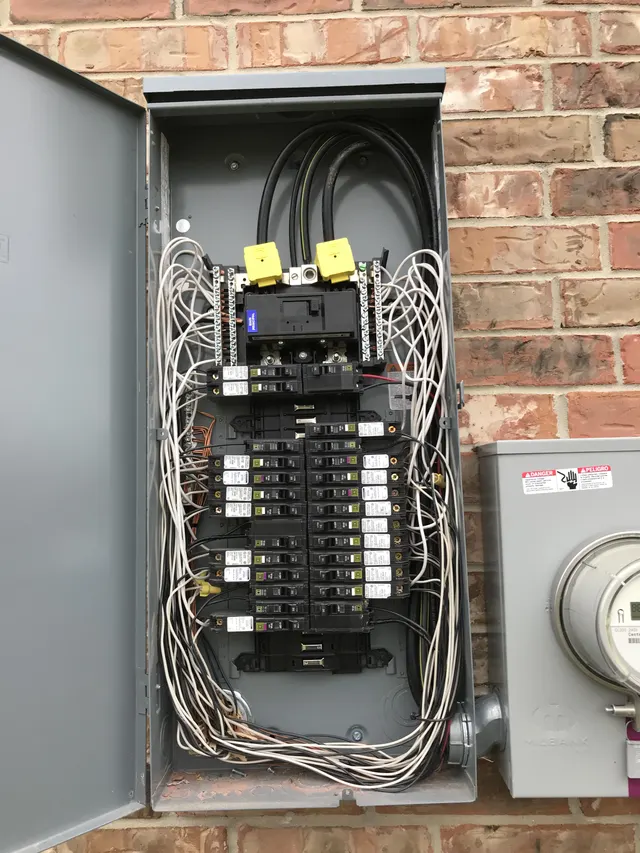
- Outdoor meter-main combination enclosures are common here, with the main breaker at the meter and a lug-only panel inside. The main's interrupting rating and its series rating with the inside breakers both need checking.
Replacing a breaker like for like is generally a repair, but adding circuits, changing breaker types to extend a circuit or replacing the main is permitted and inspected work in every city and county around Houston. The Local Electrician pulls the permit when required and uses only breakers listed for the panel in front of us.
Choosing circuit breakers yourself: is it safe, and what affects the cost?
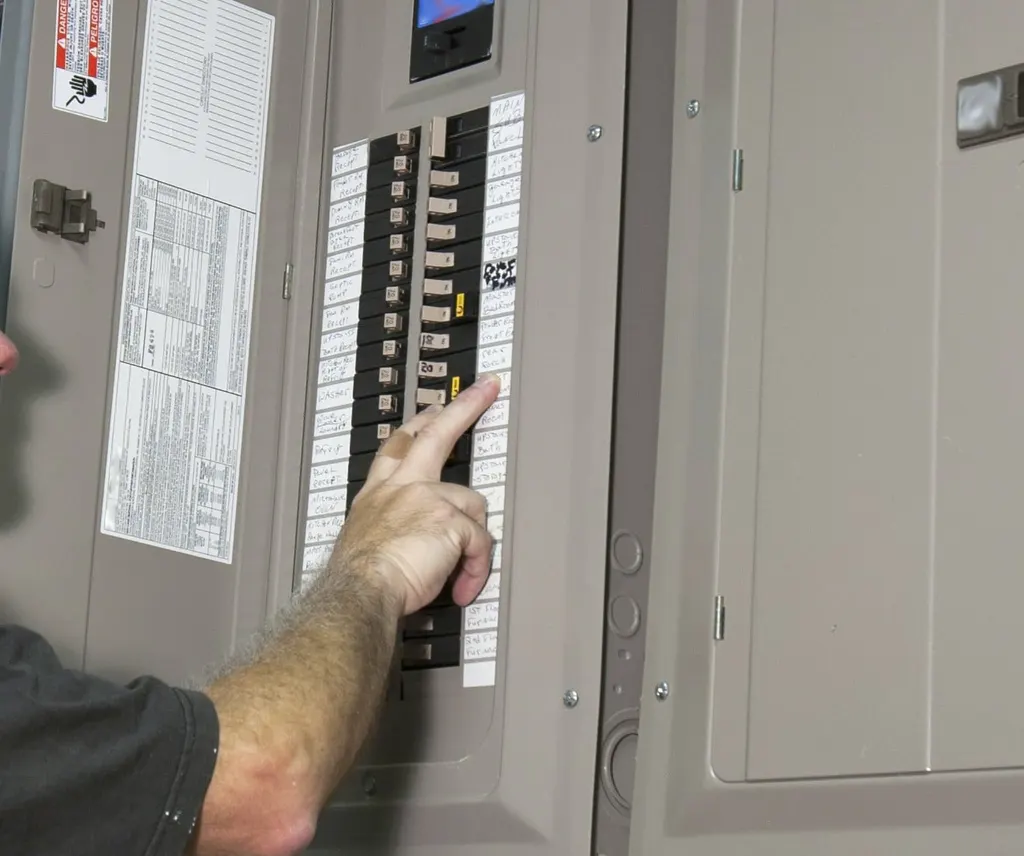
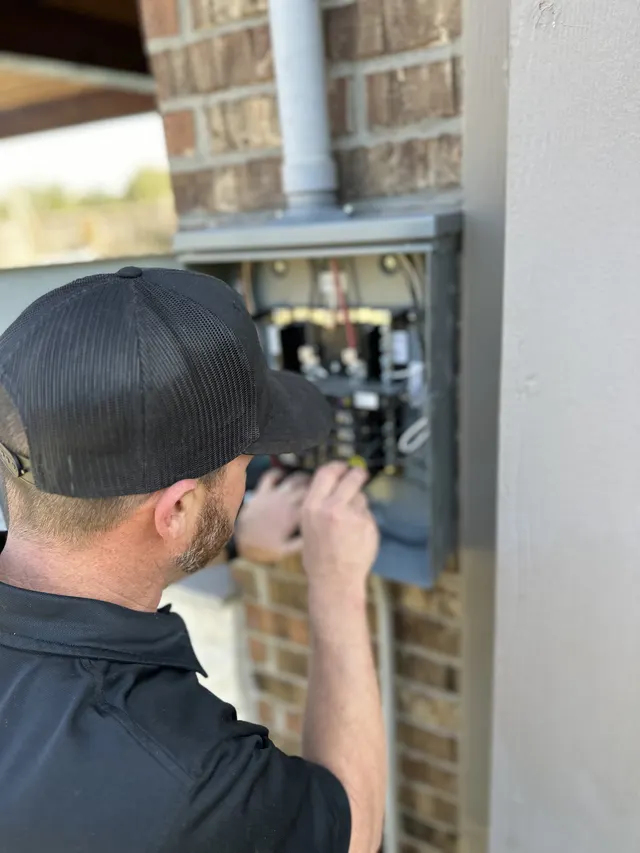
Operating breaker handles and pressing the test button on GFCI and AFCI breakers is homeowner territory. Replacing a breaker is not. The bus bars and the main lugs are live the moment the dead-front cover comes off, and the main lugs stay live with the main breaker off. In Texas, breaker replacement is electrical work that requires a licensed electrical contractor, and an incorrectly chosen breaker is one of the leading things home inspectors flag at resale.
Call a licensed electrician when:
- A breaker trips repeatedly and the cause is not an obvious overload.
- A breaker is warm, discolored, buzzing or will not reset.
- You need AFCI or GFCI protection added for a remodel, new circuit or inspection finding.
- You are adding an EV charger, pool equipment, a generator or a tankless water heater.
- The panel is Federal Pacific, Zinsco or Challenger, or breakers for it are hard to find.
What moves the price is mostly the type and the panel. Standard single-pole breakers are inexpensive; AFCI, GFCI and dual-function breakers cost several times more, and two-pole GFCI breakers for spas and EV chargers more still. Discontinued panels need classified breakers that cost more and may justify replacing the panel. A new circuit adds the wire run, box and device, and a panel with no safe space or a damaged bus turns a breaker job into a panel job. The Local Electrician prices the work up front, offers financing for panel-level jobs, and answers 832-271-1167 day and night for breaker evaluations across Fort Bend County and west Houston.
Frequently Asked Questions
What do circuit breakers do?
A circuit breaker protects the wiring in a circuit from overheating. Its thermal element trips on a sustained overload and its magnetic element trips almost instantly on a short circuit or ground fault. GFCI breakers add protection against shock by sensing current leaking to ground, and AFCI breakers detect arcing from damaged wiring or loose connections. The breaker protects the wire, not the appliance plugged into it.
Can I replace a defective breaker myself in Katy, TX?
It is not recommended and is not permitted for an unlicensed person under Texas law. The bus bars and main lugs are live as soon as the panel cover is removed, even with the main breaker off, and the replacement must be listed for the specific panel and sized to the wire. The Local Electrician replaces breakers with the correct listed part and checks the torque and condition of the terminal at the same time.
What are the signs of a bad circuit breaker?
A breaker that trips below its rating with no overload, trips sooner after each reset, will not reset or feels loose on the bus, has a discolored or melted face, is warm at the handle, buzzes under load, or fails to trip when its test button is pressed. After a lightning storm, an AFCI or GFCI breaker that will not hold is often surge-damaged. Any heat or smell at the panel is an emergency.
Do circuit breakers need regular replacement?
Not on a schedule, but they do wear. Breakers that have cleared several faults, spent decades in a hot garage, or show heat damage should be replaced. GFCI and AFCI breakers have electronics that can be degraded by surges and should be tested monthly with the test button. Breakers in Federal Pacific, Zinsco and Challenger panels should be addressed by replacing the panel rather than the breakers.
How often should you check circuit breakers?
Press the test button on every GFCI and AFCI breaker monthly and after any major storm; the breaker should trip and reset cleanly. Once a season, open the panel door, not the cover, and look for rust, discoloration or insects and listen for buzzing. A licensed electrician should inspect the panel, check torque and thermally image the connections every few years, and before any large load is added.
Can I put a bigger breaker in to stop it tripping?
No. The breaker rating is set by the wire size, and a larger breaker lets the wire carry more current than it can safely dissipate, which overheats insulation inside walls and attics. If a circuit trips under normal use, the correct fixes are moving loads to another circuit, adding a dedicated circuit, or finding and repairing the fault that is causing the trip.
What is the difference between a GFCI breaker and a GFCI outlet?
Both sense current leaking to ground and trip quickly to prevent shock. A GFCI breaker in the panel protects the entire circuit, including the wiring, and resets at the panel. A GFCI receptacle protects itself and the outlets wired downstream from it and resets at the outlet. Breakers suit circuits with many protected outlets or hard-wired equipment; receptacles are often simpler for a single location.