




Quick answer
Outdoor security lighting works by removing hiding places and making a house look occupied, not by being as bright as possible. The effective options are dusk-to-dawn fixtures at entries and the garage, motion-activated floodlights at side yards and the rear, camera floodlights where you want recording, and smart controls for schedules. Mount fixtures 8 to 12 feet high, aimed down, in 3000K to 4000K light, on a GFCI-protected circuit.
Outdoor security lighting is the one category of exterior lighting where more is usually worse. A single 4,000-lumen flood at the garage leaves deep shadows on either side of its beam, blinds anyone looking toward it, including your camera, and annoys the street. A handful of moderate fixtures placed to cover every approach does the job quietly.
This guide is for homeowners in Bellaire, West University and across the Houston area who want to choose between the options on the shelf, place them correctly, and understand the wiring behind them. It complements our security lighting installation service, which handles the circuits, fixtures and controls described here.
Key Takeaways
- Security lighting deters by eliminating dark approaches and signaling occupancy; uniform moderate light beats one blinding flood.
- Combine always-on dusk-to-dawn fixtures at entries with motion-activated floods at sides, rear and gates.
- Mount security fixtures 8 to 12 feet high, aimed down, so they cover the ground without glare into cameras or windows.
- Use 3000K to 4000K light at 700 to 2,500 lumens per fixture depending on the role; 5000K is rarely needed.
- Light the scene in front of a camera, never behind it, or the recording shows silhouettes.
- Exterior lighting circuits need GFCI protection and weatherproof boxes; new circuits are permitted and inspected.
What Is Outdoor Security Lighting and How Does It Deter?
Outdoor security lighting is exterior lighting whose primary job is to make an approach to the house visible: to you, to neighbors, to a camera and to anyone deciding whether to walk up. It overlaps with ordinary porch and landscape lighting, but the design goal is different. Decorative lighting draws the eye to a feature; security lighting removes the places where a person can stand unseen.
It deters in three ways:
- Visibility. A lit side yard or back door means someone there can be seen from a window or a neighbor's yard. Most opportunistic entry happens where it is dark.
- Occupancy signal. Lights that respond to movement, or that switch on and off on a schedule, tell a passerby that the house is attended.
- Camera support. Cameras need light to record a face. Infrared night mode shows a gray figure; visible light shows clothing, a vehicle color and a plate.
What it does not do is work better by being brighter. Glare from an unshielded flood makes the area around the beam look darker by contrast and hides whatever stands just outside it. Uniform, moderate light across the whole approach is the goal. Think of lighting the ground and the doors, not the sky and the street.
What Are the Main Outdoor Security Lighting Options?
Five types cover nearly every residential need. Most homes use two or three together.
Dusk-to-dawn fixtures
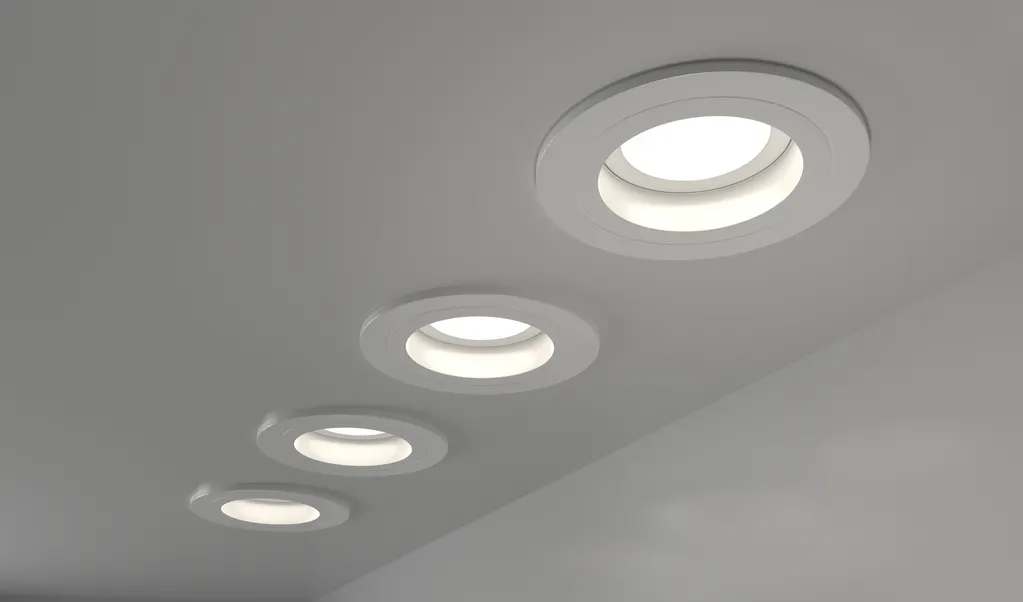
Wall lanterns, eave-mounted downlights or soffit recessed lights on a photocell or astronomic timer. They light the front entry, garage doors and any door you use after dark, all night, at modest output. Always-on light at the entry is more welcoming and just as protective as a motion light there.
Motion-activated floodlights
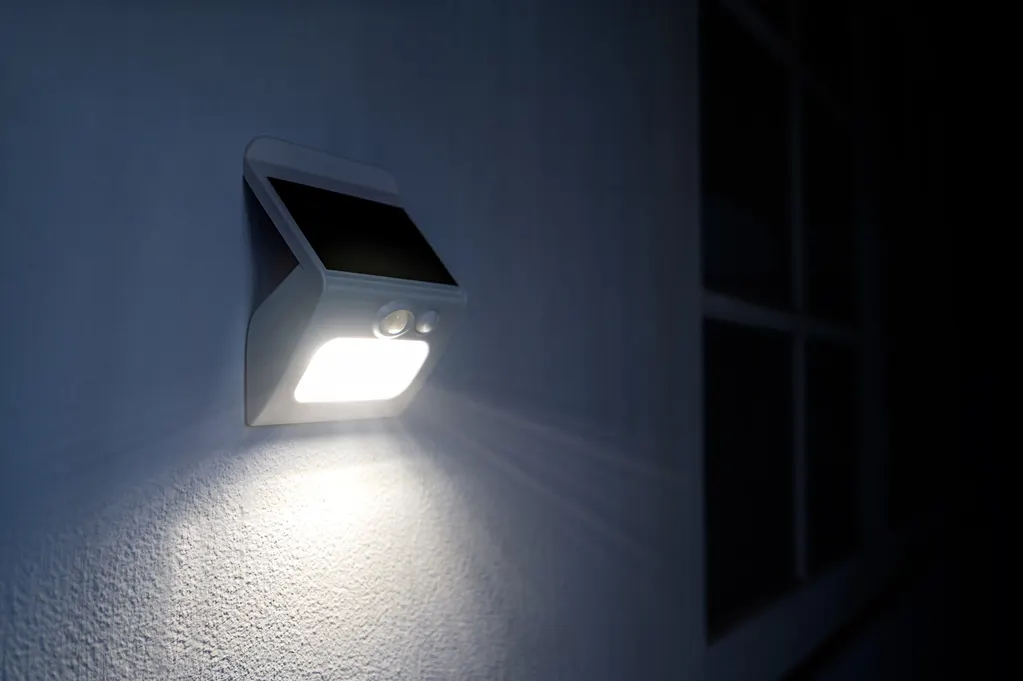
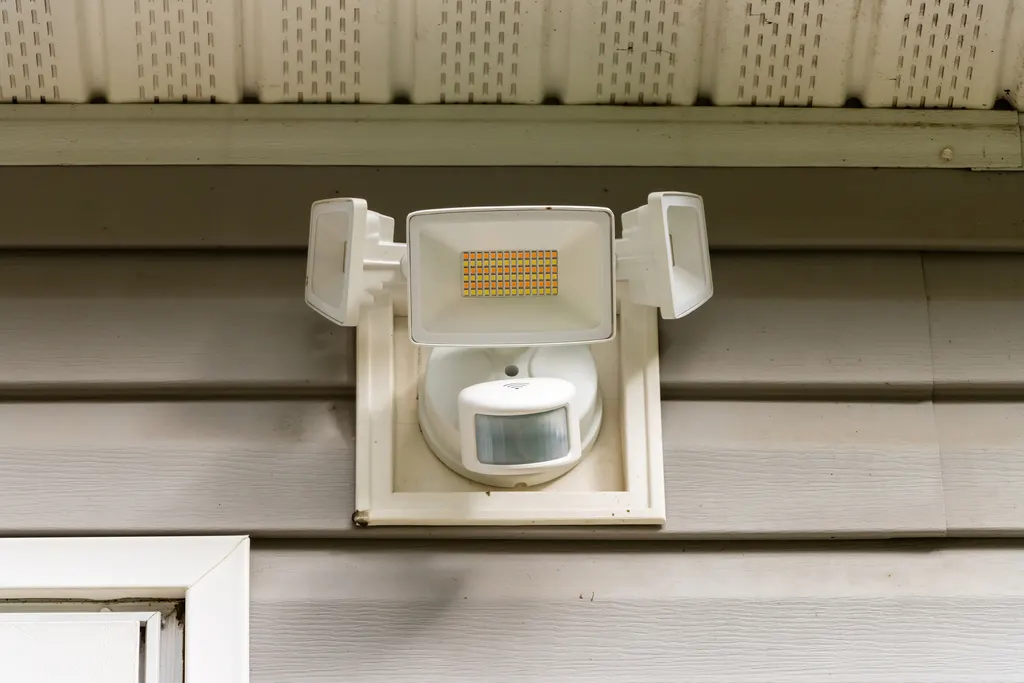
A PIR sensor switches a flood on for a set time when it detects body heat moving across its view. Right for side yards, rear corners, gates and the driveway apron, where a sudden light is a deterrent and nobody needs constant illumination. Placement and sensitivity are covered in our post on motion sensor lights.
Camera floodlights
A flood with a built-in camera, two-way audio and phone alerts. Useful at the driveway and back door. They need strong Wi-Fi and a wet-rated box with constant power; battery versions miss events and drain fast in heat.
Smart-controlled lighting
Standard fixtures on smart switches or a lighting controller, giving schedules, vacation randomization, all-on from a phone, and links to an alarm system. The fixtures stay ordinary; the intelligence lives in the switch box.
Solar fixtures
Useful at a back fence or shed where there is no power. Output is low and batteries fade after a couple of Houston summers, so treat them as supplemental, not primary.
Where Should Security Lights Be Placed?
Walk the property after dark and note every door, gate, window at ground level and path a person could take from the street to the back yard. Each one needs coverage, and the coverage should overlap slightly so there are no gaps.
- Front entry. Dusk-to-dawn lanterns or soffit lights, bright enough to see a face at the door.
- Garage and driveway. A dusk-to-dawn fixture over the garage doors plus a motion flood or camera flood covering the apron and the walk to the front door.
- Side yards. The most neglected spots. One motion flood at each side, mounted on the house wall near the rear corner and aimed toward the front, covers the gate and the run along the fence.
- Rear. A motion flood at each back corner aimed across the yard, plus a dusk-to-dawn light at the back door and patio.
- Detached structures and pool equipment. A motion fixture on the structure facing the house.
Mounting height matters. Eight to twelve feet is the range: high enough to cover a wide area and be out of easy reach, low enough that a PIR sensor still sees a person rather than the top of a head. Aim floods down at roughly 45 degrees or steeper; a flood aimed at the horizon lights your neighbor's bedroom and your own camera lens.
Keep fixtures away from large shrubs and tree limbs that will sway in wind and trigger sensors, and position them so the light falls on the approach, not toward the house.
How Bright and What Color Should Security Lighting Be?
Match output to the role rather than buying the brightest fixture on the shelf.
- Entry and garage dusk-to-dawn fixtures: roughly 700 to 1,200 lumens each. Two lanterns at 800 lumens light a door well.
- Motion floods: 1,500 to 2,500 lumens is plenty for a side yard or driveway; above that you are creating glare, not security.
- Camera floodlights: follow the manufacturer's guidance, but the same 1,500 to 2,500 range works and avoids washing out the image.
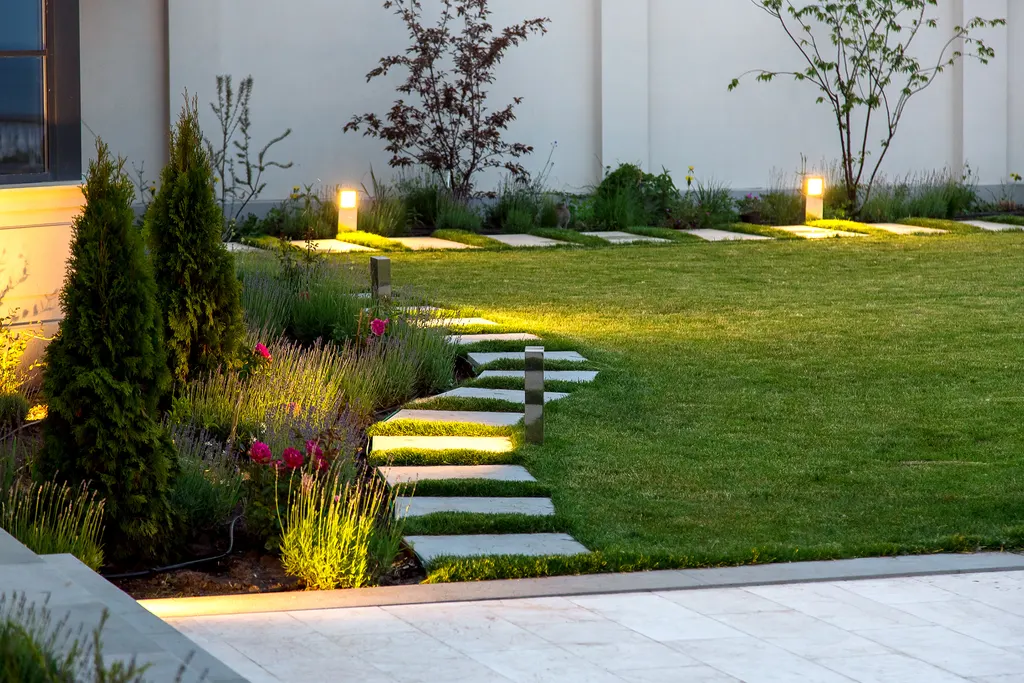
- Path and patio lighting that doubles as security: 100 to 400 lumens per fixture, spaced for even coverage.
Color temperature should serve the camera and the neighbors. 3000K is warm and fits a residential street; 4000K is a neutral white that renders clothing and vehicle colors accurately on camera without the blue cast of 5000K. Most Fort Bend and Harris County deed restrictions limit exterior lighting to the warmer end, and 5000K floods are the fixtures most often cited. Choose 80 CRI or better so colors in a recording are useful.
Uniformity is the number nobody prints on the box. Several moderate fixtures that overlap produce a scene a camera and an eye can read edge to edge. One powerful flood produces a bright circle surrounded by blackness, and the blackness is where someone stands. If you are also lighting the landscape for appearance, our guide to outdoor lighting best practices covers keeping the two systems consistent in color.
How Do Security Lights Work With Cameras, Alarms and Smart Home Systems?
Lighting and cameras are designed together or they fight each other. Light the scene the camera looks at, from beside or behind the camera, never from in front of it. A flood mounted in front of a camera turns every visitor into a silhouette and blooms the image. Mount the light above or beside the camera, aimed the same direction, or use a separate fixture farther out that lights the approach from the side.
Camera night vision uses infrared, which gives a gray image with no color. Visible light at 3000K to 4000K keeps the camera in color mode, which is what identifies a jacket or a vehicle. A dusk-to-dawn light at the driveway often does more for recording quality than a motion flood that arrives a second late.
Integration options, from simplest to most involved:
- Smart switches on existing fixtures for schedules and phone control. They need a neutral in the switch box.
- Camera floodlights that alert your phone and record on motion.
- Alarm-linked lighting, where an alarm event turns on every exterior light at once through a controller or relay.
- Whole-home automation that ties lighting, cameras, locks and the alarm together with scenes such as away, home and night.
All of these depend on reliable power at the fixture and reliable Wi-Fi at the garage and back corners, which is why we check both before recommending a camera product. Our post on smart home automation and the electrical upgrades behind it covers the wiring side, and our smart home device installation service handles the setup.
Outdoor Security Lighting for Bellaire and West University Homes
Bellaire, TX and neighboring West University Place have a mix we see nowhere else in our service area: 1950s and 1960s ranch homes on large lots, mid-century houses expanded twice, and new two-story construction, all under mature live oaks and pecans. That mix changes how security lighting is done.
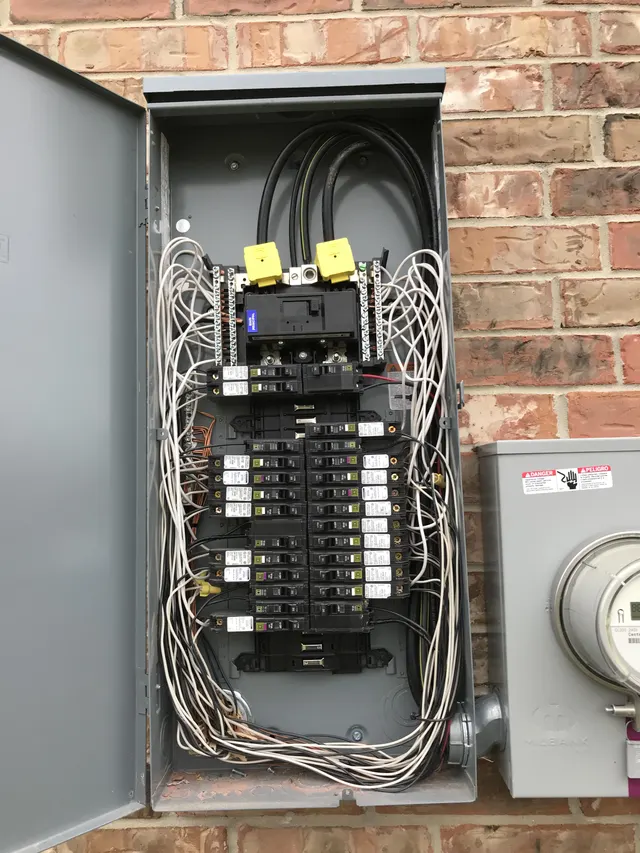
In the older homes, exterior circuits often predate GFCI requirements, boxes have rusted, and the original fixtures are incandescent lanterns on a single switch inside the door. Adding security lighting here usually begins with GFCI protection and new weatherproof boxes, then a photocell or astronomic timer so entry lights stop depending on someone remembering a switch. We check the panel for spare capacity first, since several of these homes still carry 100-amp service.
The tree canopy is the second factor. Dense shade makes side yards dark even at dusk, so dusk-to-dawn fixtures run longer, and motion sensors need placing where swaying branches do not trigger them. Soffit downlights under the eaves, which light the walls and ground without competing with the trees, suit these lots.
Newer builds in both cities have neutrals at the switches, GFCI-protected outdoor receptacles and sometimes pre-wired camera locations; the work there is choosing warm, shielded fixtures that fit a residential street. Both cities require permits for new exterior circuits, which we pull and have inspected. CenterPoint Energy handles the service drop and meter; the lighting circuits are the homeowner's. Local details are on our Bellaire electrician and West University electrician pages.
Wiring, Safety, DIY vs Licensed Electrician and What Affects the Cost
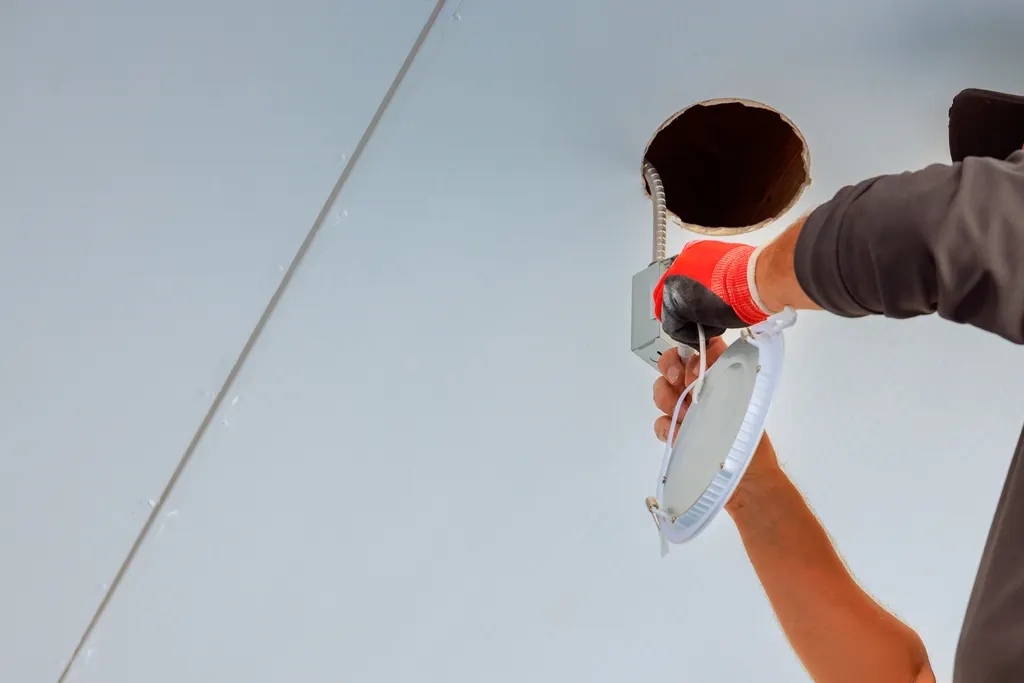
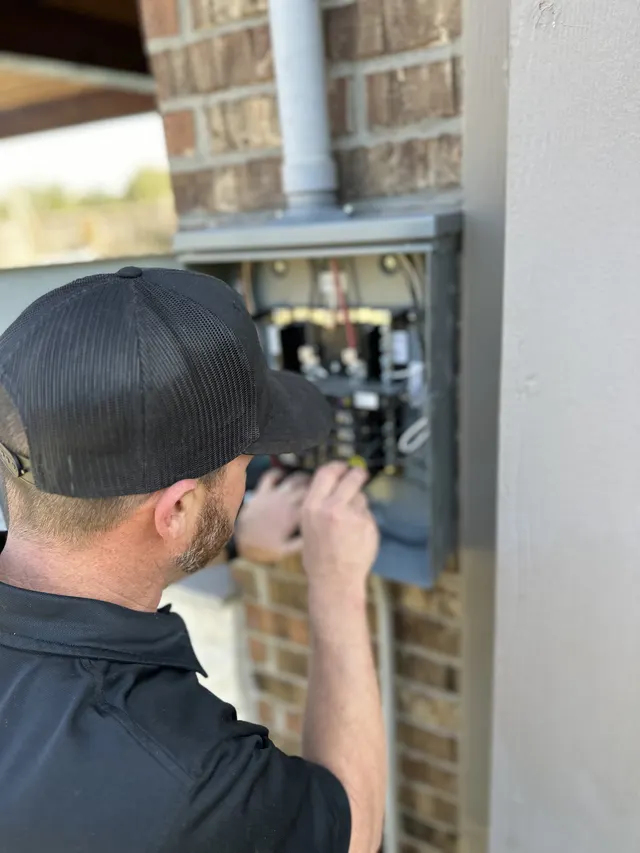
Security fixtures are line-voltage, so the wiring rules are the same as any exterior circuit: a weatherproof box, a wet-location fixture, GFCI protection where the 2023 NEC as adopted in Texas requires it, cable rated for the location, and a permit and inspection for any new circuit. Motion floods and camera floodlights also want a constant-hot feed; a switch someone turns off at bedtime defeats the point, so we wire them hot with the switch kept for maintenance or move control to a smart switch.
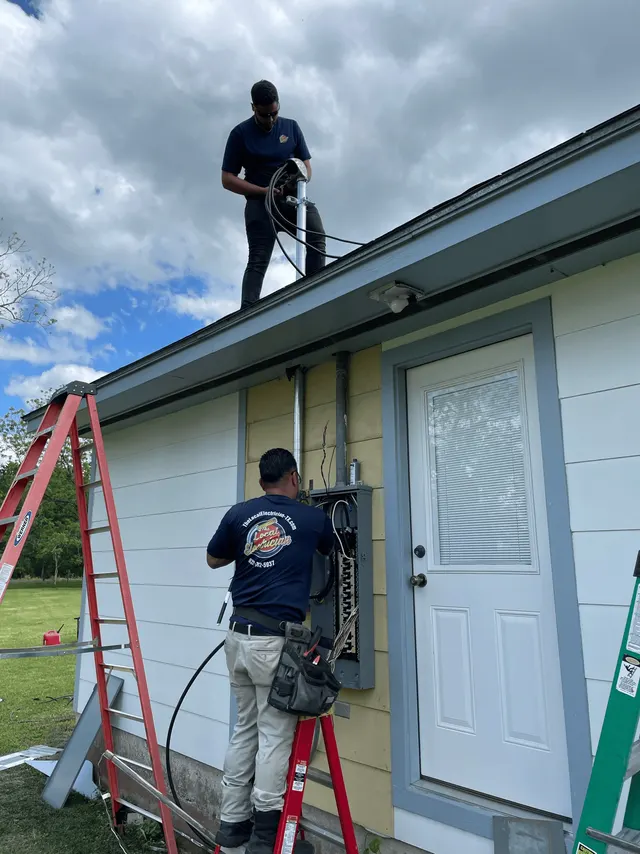
A homeowner can replace a flood on an existing box with the breaker off and a tester confirming the wires are dead, install plug-in or solar fixtures, and set up a camera floodlight on an existing wet-rated box. Leave new circuits, soffit fixtures, rusted or wet boxes, circuits without GFCI protection and alarm-panel ties to a licensed electrician. The Local Electrician, licensed under TECL #34406, installs security lighting with the sensor coverage checked at night before we leave, and prices every job upfront.
Cost factors for an outdoor security lighting project:
- Number of locations and whether each has an existing box.
- New circuits, including trenching to a detached garage or fence line, and the permit.
- Fixture type. Camera floodlights and integrated smart fixtures cost more than plain floods; brass and marine-grade stainless cost more than aluminum.
- Controls. Astronomic timers, smart switches and alarm integration.
- Existing conditions. Missing GFCI protection, rusted boxes, or a panel with no spare space.
Installation estimates are free, and a whole-property plan can use our financing options.
Frequently Asked Questions
What is outdoor security lighting?
Exterior lighting designed to make every approach to a house visible: dusk-to-dawn fixtures at entries and the garage, motion-activated floods at side yards and the rear, camera floodlights where recording matters, and smart controls for schedules. The aim is uniform, moderate light that removes hiding spots and supports cameras, not a single bright flood.
How does lighting deter burglars?
By removing the dark approaches where someone can work unseen, by signaling that a house is occupied through motion response and schedules, and by giving neighbors and cameras enough light to identify a person. Lighting is one layer alongside locks, cameras and an alarm; it is most effective when it covers every side of the house evenly.
What are the best features for outdoor security lighting?
Wet-location rating, a photocell or astronomic timer on always-on fixtures, an adjustable PIR sensor with sensitivity and time settings on motion fixtures, 3000K to 4000K color, full-cutoff or shielded design to limit glare, and corrosion-resistant housings. For camera floodlights, add reliable Wi-Fi, constant power and local or cloud recording.
Can outdoor security lighting save energy?
Yes. LED fixtures draw a fraction of what halogen floods did, motion floods run only minutes a night, and photocells or astronomic timers stop entry lights from burning all day. Putting accent and landscape lighting on a late-evening off time while leaving only the security fixtures on overnight cuts usage further without reducing coverage.
What security lighting styles are available for Bellaire homes?
Traditional lanterns and modern cylinder sconces for entries, eave-mounted downlights and soffit recessed fixtures that disappear under the roofline, discreet motion floods in bronze or black at side yards, and camera floodlights at the driveway. Warm, shielded fixtures suit Bellaire's residential streets and tree canopy; The Local Electrician can match fixtures to the house style and the city's permit requirements.
Should security lights be on all night or on a motion sensor?
Both, in different places. Entries, the garage and any door you use after dark should have dusk-to-dawn light, which is welcoming, supports cameras in color mode and never arrives late. Side yards, rear corners and gates suit motion floods, which startle, signal occupancy and use little energy. Avoid motion-only lighting at the front door.
Do security lights need their own circuit?
Usually not; a few LED floods and lanterns add little load to an existing exterior lighting circuit. A new circuit is needed when the existing one lacks GFCI protection, when fixtures go to a detached structure or fence line, or when camera floodlights and controllers need constant power separate from a switched circuit. New circuits are permitted and inspected.