




Quick answer
Motion sensor lights use a passive infrared (PIR) sensor to detect body heat moving across its field of view and switch a fixture on for a set time. Mount them 8 to 10 feet high, aimed so people cross the detection zone rather than walk straight at it, with sensitivity and time delay set for the spot. Running minutes a night instead of hours, they cut lighting energy sharply.
Motion sensor lights are the most misunderstood fixture on a house. Homeowners in Katy and Pearland tell us theirs trips every time a car passes, never catches someone at the gate, or stays on all night. Nearly every one of those complaints comes down to how the sensor works, where it was mounted and how its three adjustment dials were set, not to the fixture being faulty.
This guide explains the sensor technology in plain terms, gives placement rules for each spot around and inside the house, walks through the settings that stop false triggers, and is honest about the energy savings. For the wider deterrence picture, see our security lighting installation service and the related posts linked below.
Key Takeaways
- PIR sensors detect heat moving across zones, so mount them so people walk across the field of view, not toward it.
- Mount outdoor motion sensor lights 8 to 10 feet high, aimed down, away from air-conditioning units, pools and the street.
- Three adjustments matter: sensitivity, time delay and the dusk (lux) threshold; set all three for each location.
- Dual-technology sensors (PIR plus microwave) cut false triggers from foliage and passing cars.
- Motion sensor lights save energy because a flood runs minutes a night instead of all night, and LEDs tolerate the cycling.
- Sensors that need a neutral, constant-hot feeds and new exterior circuits are electrician work; new circuits are inspected.
How Do Motion Sensor Lights Work?
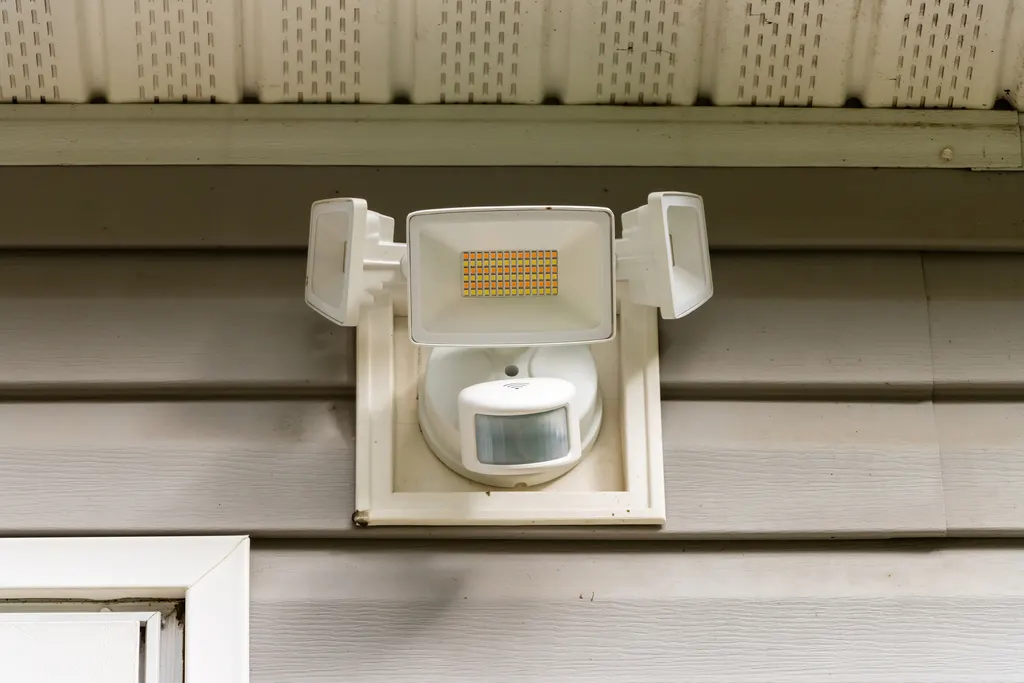
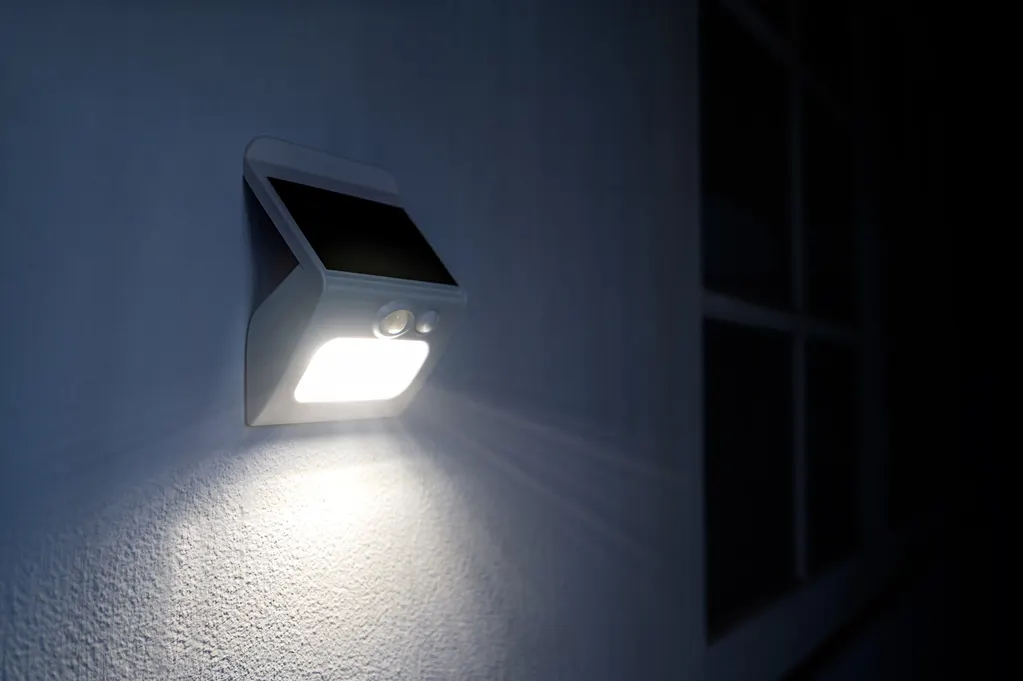
Almost every residential motion sensor light uses a passive infrared (PIR) sensor. It does not send anything out. Behind the faceted plastic lens is a sensor that reads infrared heat from the scene, and the lens divides the view into dozens of narrow zones. When a warm object, a person, a car engine, a dog, moves from one zone to the next, the sensor sees a sudden change and triggers the light. After the time delay runs out with no new movement, it switches off.
Two consequences follow from that design:
- PIR is far more sensitive to movement across its field of view than to movement straight toward it, because crossing zones is what it detects.
- PIR responds to heat contrast. On a 95°F Houston evening when the air is near body temperature, detection range shrinks; on a cold January night it stretches.
Other sensor types fill gaps:
- Dual-technology sensors pair PIR with a microwave sensor and trigger only when both agree. They ignore swaying branches and heat shimmer and are the answer for a sensor near a busy street.
- Microwave-only sensors see through thin walls and glass, which makes them useful in some garages and a nuisance outdoors.
- Ultrasonic sensors, common in indoor occupancy switches, detect movement around corners and in L-shaped rooms.
Most outdoor fixtures also include a photocell so the sensor only arms after dark, and a lux adjustment to set how dark that is.
What Are the Benefits of Motion Sensor Lights?
Four, in the order homeowners care about them.
Security. A light that snaps on when someone enters the side yard does two things: it removes the darkness they were counting on, and it signals that the house noticed. Paired with a camera, it also puts the recording into color mode at the moment that matters. Our post on outdoor security lighting options covers how motion fixtures fit with always-on lighting.
Convenience. Walking from the car to the back door with groceries, finding the trash cans on the side of the house, entering a dark garage, going into the pantry with full hands. Motion sensor lights handle all of it without a switch.
Energy. A flood that would otherwise burn all night runs for a few minutes a few times a night. Indoors, occupancy sensors in closets, laundry rooms and garages end the lights-left-on problem. Details are in the energy section below.
Lamp and fixture life. LED fixtures that run minutes instead of hours accumulate hours slowly, and LEDs tolerate frequent on-off cycling that would have shortened the life of halogen floods.
The limitation is coverage. A motion light covers its detection fan and nothing else, so overlap the fans at corners and keep always-on light at the front door.
Where Should Motion Lights Be Mounted for the Best Coverage?
Placement is most of the job. The rules below assume a typical fixture with a 180-degree sensor and a 30 to 50-foot range.
Outdoors
- Height: 8 to 10 feet. Higher widens the fan but weakens detection of a person directly below; lower makes the sensor easy to tamper with and narrows coverage.
- Orientation: aim the sensor so the likely path crosses it. A sensor on a side-yard wall facing the gate catches someone walking along the fence; a sensor pointed straight down the path does not react until they are close.
- Driveway: mount at the garage corner, angled across the apron, with the sensor head tilted so the street is just outside its range.
- Rear yard: one fixture at each back corner, fans overlapping at the center of the yard.
- Avoid: aiming at the air-conditioning condenser, pool surface, dryer vent, a neighbor's driveway, or shrubs and palms that move in wind.
Indoors
- Garage: a ceiling-mount 360-degree occupancy sensor or a sensor switch at the door into the house.
- Closets, pantry and laundry: a vacancy or occupancy sensor switch in place of the wall switch.
- Hallways and stairs: low-output motion night lights or a sensor switch on a dimmer set to a low level overnight.
- Bathrooms: use a vacancy sensor (manual on, auto off) so the light does not switch on every time someone passes the open door.
Walk the detection fan at night to test it; the sensor never tested at night is the one that gets complaints.
Which Settings Stop False Triggers and Missed Detections?
Most fixtures carry three adjustments, usually small dials under the sensor head. Set them in this order after the fixture is mounted.
- Sensitivity (range). Start at the middle. Raise it if the light misses someone at the far edge; lower it if it fires on street traffic or the neighbor's cat. Summer heat lowers contrast, so a setting that works in July may over-trigger in January.
- Time delay. One to three minutes suits security floods; five to fifteen minutes suits a garage where someone stands still at a bench. Very short delays cycle annoyingly; very long ones waste the energy benefit.
- Dusk threshold (lux). How dark it must be before the sensor arms. Set it so the light ignores an overcast afternoon but is ready by nightfall.
Common false triggers and the fix for each:
- Moving foliage or flags: re-aim, trim, or switch to a dual-technology sensor.
- Heat sources such as a condenser, a vent or a hot driveway at sunset: re-aim or mask part of the lens with the supplied blinders.
- Passing vehicles: lower sensitivity, tilt the head down, or mask the street side of the lens.
- Animals: lower sensitivity and keep the lower edge of the fan above pet height.
- The light's own heat reflecting off a nearby wall as it switches off, causing a re-trigger loop: move the fixture or lengthen the delay.
Missed detections usually mean the person walked toward the sensor rather than across it, or the sensor is too high. Re-aim first; replace second.
Do Motion Sensor Lights Really Save Energy?
Yes, and the mechanism is arithmetic, not any special efficiency in the fixture. A dusk-to-dawn flood runs roughly ten to thirteen hours a night depending on season. A motion flood covering the same area runs for its time delay each time it triggers, which in a quiet side yard may total a few minutes. Same watts when on; on for a tiny fraction of the time.
Three things decide how much you actually save:
- What the fixture replaced. Swapping an all-night halogen flood for a motion LED flood is a large reduction. Adding a motion flood where there was no light before is a small addition, not a saving, though worth it for security.
- Time delay and false triggers. A fixture set to fifteen minutes that fires on every passing car can run for hours. The settings above protect the savings.
- Standby draw. The sensor and photocell consume a little power around the clock; small, but not zero.
Indoors, occupancy and vacancy sensors save the most in rooms where lights are forgotten: garages, laundry rooms, closets, kids' bathrooms. A vacancy sensor, manual on and automatic off, saves more than an occupancy sensor because it never turns on a light nobody wanted.
Pair motion fixtures with LED lamps, which reach full brightness instantly and are unaffected by frequent switching. If you are also putting other exterior lighting on schedules, our post on smart lighting controls covers how motion, photocell and timer control fit together.
Motion-Activated Lighting in Katy and Pearland Homes
The climate changes how we install and set motion sensor lights here.
Heat. On summer evenings in Katy, TX and Pearland, TX the air is close to body temperature, the worst case for a PIR sensor. We set sensitivity a step higher than the default where the fixture must catch people reliably, aim the fan so the approach crosses it, and prefer dual-technology sensors at driveways. A sensor housing still hot from a west wall at dusk can be erratic for the first hour, so a vented glass-lens fixture beats sealed plastic.
Humidity and storms. Condensation inside cheap sensor heads causes false triggers and eventual failure. Choose wet-location fixtures with a gasketed head, and after a storm such as Hurricane Beryl in July 2024, check that the fixture is tight to the wall and the head has not been knocked out of aim.
Housing. Katy's master-planned communities such as Cinco Ranch and Cross Creek Ranch, and Pearland's Shadow Creek Ranch and Silverlake, have GFCI-protected exterior boxes at the garage and patio, so adding motion fixtures is usually a fixture change plus setup. Older sections of Pearland and the original Katy neighborhoods often need a weatherproof box or GFCI protection first. Deed restrictions in both cities ask for warm, shielded light, so we specify 3000K floods with cutoff hoods rather than bare 5000K units.
Outages. After a CenterPoint outage, some sensors reset to defaults or to permanent-on test mode; walk the house when power returns. Local details are on our Katy electrician and Pearland electrician pages.
Wiring, Troubleshooting and When to Call a Licensed Electrician
A motion sensor light needs constant power. On a switched circuit the switch must stay on, or the fixture becomes a flood someone turned off at bedtime. Many fixtures use that switch deliberately: flipping it off and on quickly forces manual-on mode, and another cycle returns it to auto. If the light seems stuck on, check that first.
Indoor sensor switches often need a neutral in the box, which older switch loops lack; running one is the proper fix.
Troubleshooting in order: confirm auto mode, confirm the lux setting is not holding it off, re-aim the head, adjust sensitivity and delay, replace the lamp if lamped. A fixture that flickers or cycles rapidly, especially after rain, usually has water in the sensor head or a loose connection; power it off at the breaker until it is checked.
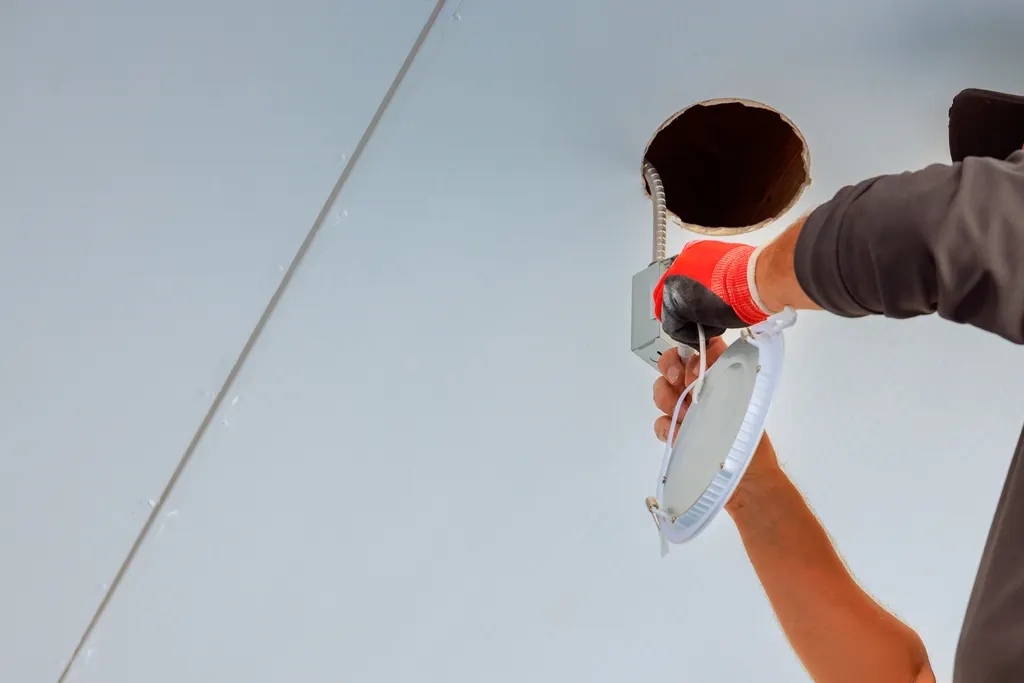
Replacing a motion flood on an existing box with the breaker off and a tester confirming the wires are dead is reasonable homeowner work. Call a licensed electrician for a new circuit or box, a circuit without GFCI protection, a sensor switch with no neutral, any water or scorching, and alarm or smart-home integration. The Local Electrician, licensed under TECL #34406, tests sensor coverage at night before leaving and quotes each job upfront.
Cost factors are fixture count, existing boxes, fixture type (plain flood, dual-technology, camera flood), controls, and any GFCI or circuit work with its permit. Larger projects can use our financing options, and for fixture selection across the whole property, see our outdoor lighting best practices.
Frequently Asked Questions
Why should I get motion sensor lights?
They light side yards, driveways and garages only when someone is there, which deters intruders, puts cameras into color mode at the right moment, and spares you hunting for a switch with your hands full. Because the fixture runs minutes a night instead of hours, it costs very little to operate. Keep always-on light at the front entry and use motion fixtures everywhere else.
Can I install motion sensor lights outside in Katy, TX?
Yes. Use a wet-location fixture with a gasketed sensor head on a weatherproof box, fed by a GFCI-protected circuit. Replacing an existing flood is a reasonable homeowner job with the breaker off; a new box or circuit is permitted and inspected work, which The Local Electrician handles from its Richmond office. Set sensitivity a little higher in summer, when heat reduces PIR range.
How do motion sensor lights help lower my electricity bill?
A dusk-to-dawn flood runs ten hours or more every night; a motion flood covering the same area runs only during its time delay after each trigger, often a few minutes total. The saving depends on what the fixture replaced and on keeping the delay short and false triggers few. Indoor vacancy sensors in garages, closets and laundry rooms save by ending lights left on.
Can I connect motion sensor lights to my smart home system?
Yes. Options include smart motion floods and camera floodlights that report to an app, smart switches that let a sensor trigger scenes such as turning on the patio and kitchen lights, and alarm systems that switch all exterior lighting on during an event. The fixture needs constant power and good Wi-Fi at its location, and smart switches need a neutral at the box.
Why do my motion sensor lights keep turning on and off?
The usual causes are foliage or a flag moving in the detection fan, a heat source such as an air-conditioning condenser or a hot driveway at sunset, cars on the street, pets, or the fixture's own heat reflecting off a nearby wall as it switches off. Re-aim the head, lower sensitivity, mask part of the lens, lengthen the delay, or switch to a dual-technology sensor.
How do I adjust the sensitivity of my motion sensor light?
Look under the sensor head for small dials marked sensitivity or range, time, and dusk or lux. Set sensitivity in the middle, walk the area at night and raise or lower it until the light catches a person at the far edge without firing on the street. Then set the delay to one to three minutes for security and the dusk dial so it arms at nightfall.
Do photocells and motion sensors conflict on dusk-to-dawn fixtures?
Not when they are part of the same fixture; the photocell arms the motion sensor after dark and the lux dial sets the threshold. Problems arise when a separate photocell or timer controls the circuit feeding a motion fixture, because the fixture loses power and resets, or when the fixture's own light reaches its photocell and makes it cycle. Keep motion fixtures on constant power.