





Quick answer
Rewiring an older home is warranted when the wiring itself is a hazard: aluminum branch circuits, ungrounded two-prong outlets throughout, brittle or heat-damaged cable, repeated breaker trips with no overload, or a Federal Pacific or Zinsco panel feeding it all. A full rewire replaces every branch circuit and usually the panel; most single-story Houston-area homes take one to three weeks, with power kept on each night.
Rewiring an older home is the one electrical project homeowners put off the longest, because nothing looks wrong until something is. The wiring in a 1972 Katy, TX ranch or a 1985 Pearland two-story has been cycling through 130°F attics every summer for decades, and the insulation, the connections and the panel that protect it all have an end of life.
This guide explains how to tell when a house has reached that point, what a full rewire involves versus a partial one, what the job looks like day by day, which wiring methods and conduit we use in slab-foundation homes, and what to add while the walls are open. It also covers cost factors honestly, without a number pulled from the air. Our rewiring service page describes the work itself; this is the homeowner's briefing before the first call.
Key Takeaways
- Homes built before the mid-1980s with aluminum wiring, two-prong outlets, cloth-insulated cable or a Federal Pacific panel are the usual rewire candidates.
- A partial rewire replaces the worst circuits and the panel; a full rewire replaces every branch circuit, box and device.
- In slab-foundation Houston homes, new circuits run through the attic and are fished down the walls, so drywall damage is limited to small openings.
- Rewiring is permitted and inspected at rough-in and final; most single-story homes take one to three weeks with power restored each evening.
- Add dedicated circuits, neutrals at switches, surge protection and low-voltage wiring during the rewire, when the walls are already open.
When does an older home need rewiring?
Age alone is not the trigger. Copper wiring in good cable, on a sound panel, can serve for many decades. The trigger is evidence that the wiring is failing or was never adequate, and the signs fall into two groups.
What you can see and feel:
- Outlets or switch plates that are warm, discolored or smell of hot plastic
- Lights that flicker or dim when the air conditioner or dryer starts
- Breakers that trip with no obvious overload, or fuses in a home that still has them
- Two-prong outlets in most rooms, or three-prong outlets that a plug-in tester reports as ungrounded
- Buzzing from the panel, a switch or an outlet
- Extension cords and power strips doing the job of circuits that do not exist
What an electrician finds on inspection:
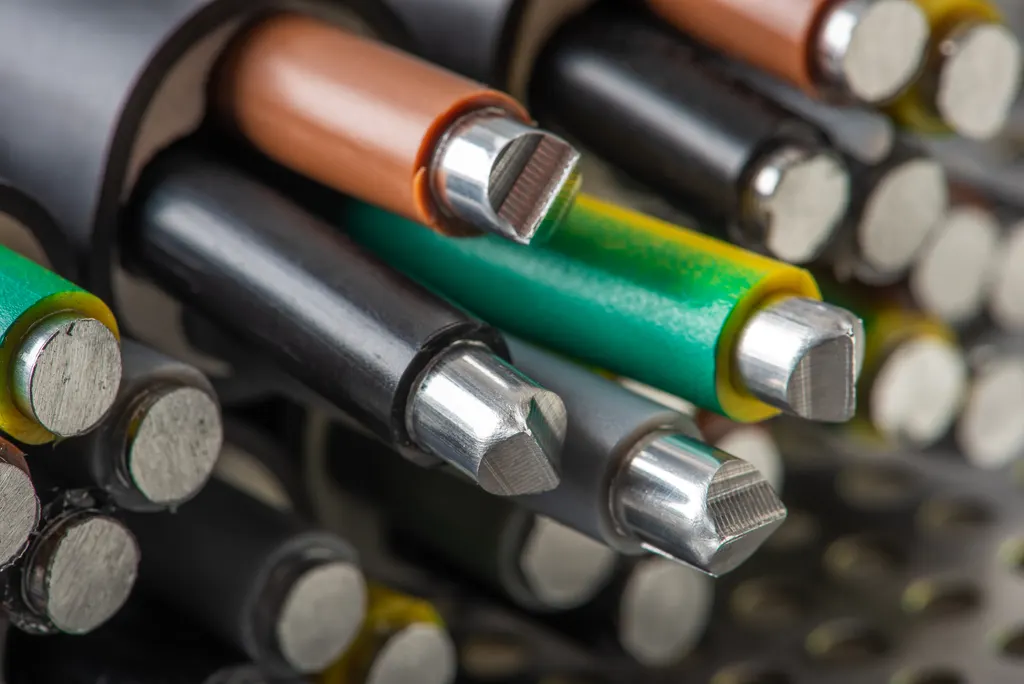
- Aluminum branch wiring, identified by silver conductors and AL markings on the cable jacket
- Cloth-covered or rubber-insulated cable from the 1950s and early 1960s, now brittle
- NM cable from before the mid-1980s, rated only 60°C, cracked where it bends into attic boxes
- Open splices in the attic, junction boxes with no covers, or splices buried behind drywall
- A Federal Pacific, Zinsco or early Challenger panel, which should be replaced regardless of the wiring behind it
Any one of the first group deserves a look. Any one of the second group, documented in a home electrical inspection, is a reason to plan a rewire rather than keep patching. Our guide to identifying faulty wiring expands on each warning sign.
What wiring is in Houston-area homes, decade by decade?
Knowing the build year of a house tells an electrician most of what to expect before opening a single box. The pattern across Fort Bend and Harris County:
- 1950s to early 1960s. Copper conductors in cloth-and-rubber or early plastic cable, usually with no ground wire. Two-prong outlets, small fuse panels or early breaker panels, few circuits. Knob-and-tube is rare here; most of these subdivisions were built after it fell out of use.
- Mid-1960s to mid-1970s. The aluminum wiring years. Copper prices spiked and builders switched to solid aluminum for 15-amp and 20-amp branch circuits. The metal is fine; the terminations on devices designed for copper are the fire risk. Our article on aluminum wiring safety covers the repair options.
- Mid-1970s to mid-1980s. Copper returns, grounded circuits become standard, but the NM cable of the era carries 60°C insulation that does not tolerate decades of attic heat. Federal Pacific and Zinsco panels are common.
- Mid-1980s to 1990s. NM-B cable rated 90°C, grounded throughout, GFCI in bathrooms. The wiring is usually sound; the weaknesses are back-stabbed devices, panels at capacity and no AFCI protection.
- 2000 onward. The master-planned communities such as Cinco Ranch, Sienna and Riverstone: 150-amp to 200-amp service, AFCI and GFCI protection, enough circuits. These homes do not need rewiring; they need the occasional dedicated circuit.
The first three groups are where whole-home rewiring lives. The fourth is partial-rewire territory. Repairs in all of them follow the 2023 NEC as adopted in Texas.
Full rewire or partial rewire: what is the difference?
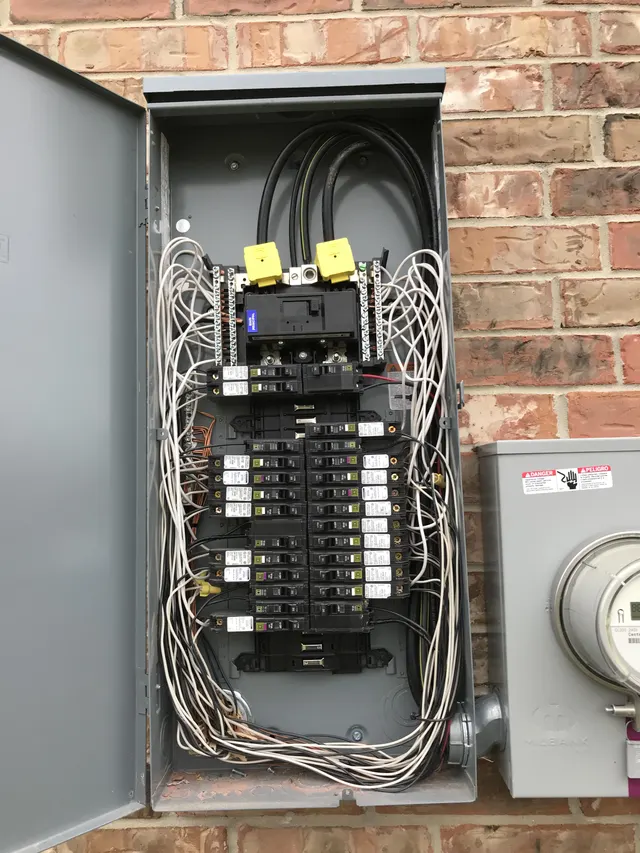
A full rewire replaces every branch circuit in the house: the cable, the boxes where they are undersized or damaged, every receptacle, switch and fixture connection, and almost always the panel. The old cable is abandoned in place where it cannot be pulled, with its ends cut back and removed from every box. When it is done, the house is electrically new, with grounded circuits, AFCI and GFCI protection where required, a 20-amp bathroom circuit, two 20-amp kitchen circuits and dedicated circuits for the major appliances.
A partial rewire targets what is unsafe or inadequate and leaves sound wiring alone. Typical scopes:
- Replace the panel and the service entrance, keep the branch circuits
- Rewire the kitchen and bathrooms to current code during a remodel
- Replace aluminum branch circuits in the bedrooms and leave the newer copper additions
- Add new dedicated circuits for HVAC, an EV charger, a workshop or a generator inlet
- Replace attic cable damaged by heat or rodents on specific runs
Which one fits is decided by inspection, not preference. A house with aluminum wiring on every circuit, or with cloth cable throughout, is a full-rewire house; piecemeal fixes there just move the next failure to a circuit that was not touched. A 1990s house with a full panel and two overloaded circuits is a partial job. Our guide on when a panel needs upgrading helps with the panel half of the decision, since the panel is nearly always replaced first in either scope.
What does rewiring an older home look like, step by step?
The sequence is the same in a small ranch and a large two-story; only the days change.
- Inspection and plan. We map every circuit, note the panel, service size and attic access, and draft a circuit plan that meets current code and your actual loads, with an upfront price for the whole job.
- Permit. A rewire is permitted and inspected by the city building department inside city limits (Richmond, Katy, Sugar Land, Pearland) or by the county outside them. We pull it.
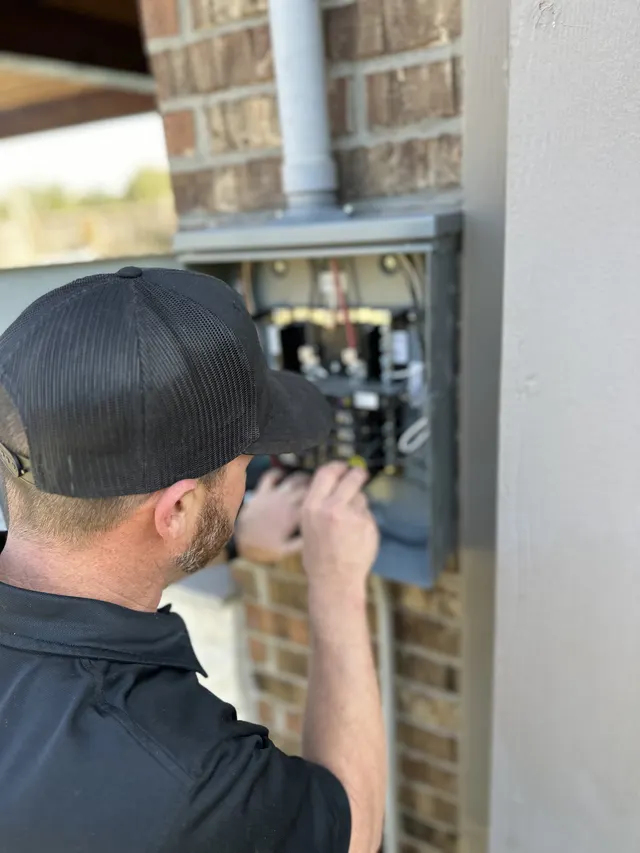
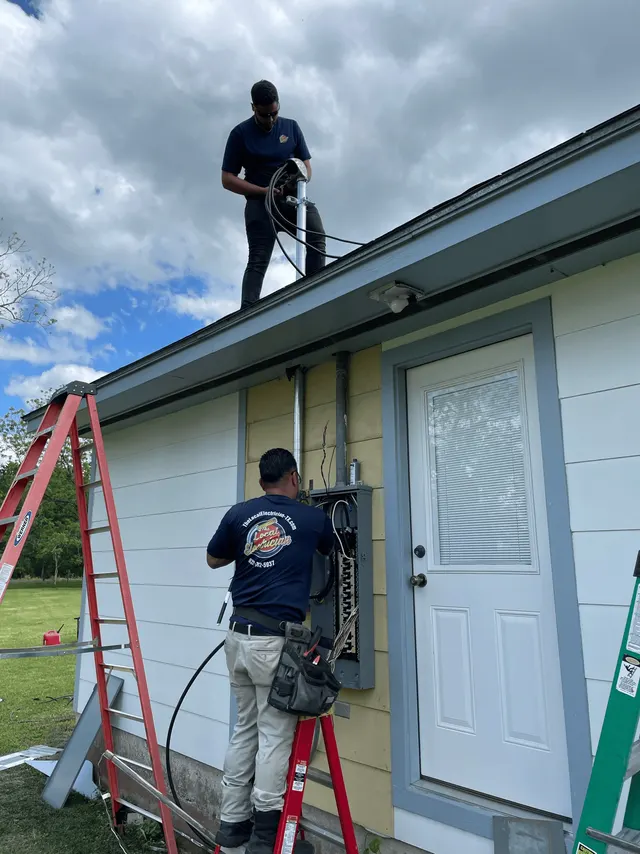
- Panel and service. The new panel, and often a new meter base and mast, go in first. CenterPoint Energy disconnects and reconnects at the meter; we coordinate that appointment.
- Rough-in. New home runs go from the panel through the attic and are fished down each wall cavity to new or existing boxes. Small openings are cut where a cable cannot pass fire blocking, then patched.
- Rough inspection. The inspector checks cable routing, box fill, support and grounding before any device goes on.
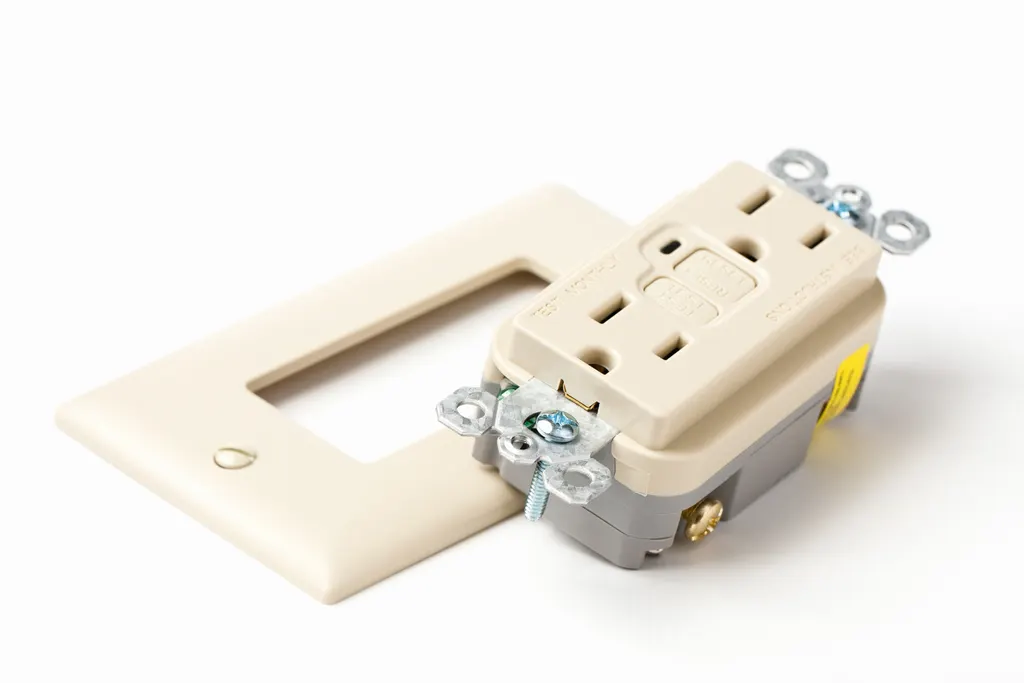
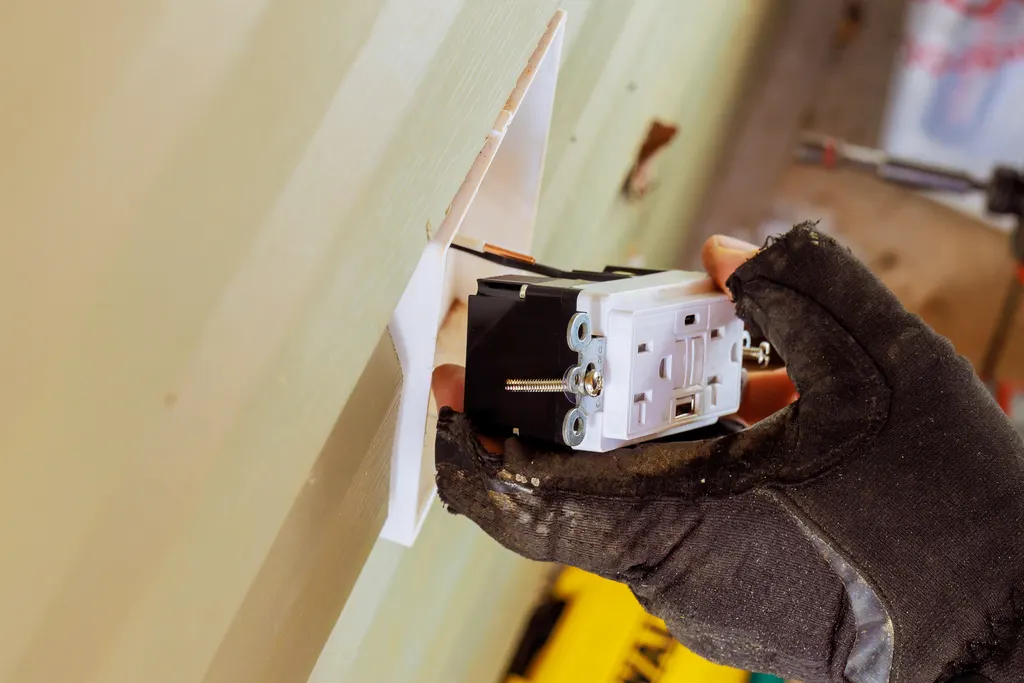
- Devices and trim. Receptacles, switches, fixtures, GFCI and AFCI protection, smoke and CO detectors, labels on the panel.
- Final inspection and cleanup. Every circuit is tested and the inspector signs off. Drywall patches are left ready for paint.
Most single-story homes take one to three weeks. Two-story homes with limited attic access take longer. You can usually stay in the house: we work room by room, restore power to the areas you live in each evening, and schedule the kitchen and bedrooms so you are never without both at once.
Which wiring methods and conduit are used in a rewire?
Residential rewiring in this area uses a short list of wiring methods, each chosen for where it runs:
- NM-B cable (the familiar yellow and white jacketed cable) for everything concealed in walls, ceilings and the attic. It is rated 90°C, which matters when the attic hits 130°F and the conductors are carrying load. Cable is kept off the attic floor near access hatches and protected where it crosses walkways.
- EMT or PVC conduit wherever cable would be exposed: the garage wall below the panel, a workshop, a utility room, and any run along the exterior. Exposed NM cable in a garage is a common inspection failure on handyman work.
- Schedule 40 and Schedule 80 PVC underground for detached structures, pool equipment, gate openers and landscape lighting transformers, buried at the depth the code requires for the circuit type.
- Liquidtight flexible conduit for the final connection to the air handler, condenser, pool pump and water heater, where equipment vibrates or must be moved for service.
- SER or MC cable for subpanel feeders and large appliance circuits.
Box selection matters as much as cable. We size every box for the conductors it holds, use metal boxes where conduit lands, and replace the shallow, overfilled boxes typical of older homes. Every splice ends up in an accessible covered box, the biggest single improvement over the buried junctions we find in 1970s attics.
What should you add while the walls are open?
A rewire is the most economical moment to add anything that needs a cable path, because the cost of fishing a wall is already paid. We go through this list with every homeowner before the plan is final:
- Dedicated circuits for the microwave, dishwasher, disposal, refrigerator, laundry, garage freezer, window units and the HVAC air handler, so a single appliance never trips a shared circuit.
- A neutral in every switch box. Required by current code and needed by nearly every smart dimmer, timer and occupancy sensor. Old switch loops without a neutral are why smart switches fail in older homes.
- A 240-volt circuit to the garage for a future EV charger, even if the car is years away; the empty conduit costs little now and a great deal later.
- Whole-home surge protection at the new panel, which protects every circuit against the lightning and grid-switching surges this area produces. See our surge protection guide.
- A generator inlet or transfer switch provision, given what Hurricane Beryl and the 2021 freeze did to the grid.
- Low-voltage wiring: Cat6 to the office, media wall and access points, speaker wire, and conduit to the attic for whatever comes next. A wired backbone is what makes a smart home reliable.
- Interconnected smoke and CO detectors, hardwired with battery backup.
Energy savings from a rewire come from these additions, not from new copper replacing old: LED-ready dimmers, a smart thermostat on a proper C-wire, and controls that turn things off.
Rewiring older homes in Katy, Pearland and Richmond
Our rewire work concentrates in the subdivisions built between the mid-1960s and the mid-1980s: the older sections of Katy inside the Grand Parkway, Quail Valley in Missouri City, Sugar Creek, Pecan Grove outside Richmond, and the original neighborhoods of Pearland along the Broadway corridor. Those homes share the same profile: single-story slab construction, aluminum or 60°C copper cable in an attic that has seen fifty summers, a Federal Pacific or Zinsco panel at the garage, and a kitchen that has been remodeled twice without a new circuit.
Local construction shapes how the job runs. With no basement and no crawl space, every circuit originates in the attic, so attic access, roof pitch and insulation depth drive the schedule more than square footage does. We do attic work early in the day through the summer. Brick veneer exteriors mean exterior receptacles and the service mast are planned carefully. And because most of these homes have 100-amp service, the rewire nearly always includes a service upgrade, which involves CenterPoint Energy at the meter and a permit from the city or Fort Bend County.
Storm history is the other local consideration. Houses that have taken on water, or lost roofing in Hurricane Beryl, often have corrosion in boxes low on the walls that only shows up as nuisance trips years later; a rewire after flood damage replaces those boxes outright. The Local Electrician has been doing this work from our Richmond office long enough to know which subdivisions have which wiring, and we bring that history to the first inspection.
What affects the cost of rewiring an older home?
Rewiring is priced on labor, and labor is driven by access and scope. No two houses come out the same, but these are the factors that move the number:
- Square footage and stories. More rooms mean more circuits and more fishing; a second floor roughly doubles the fishing difficulty.
- Attic access and insulation. A walkable attic with batt insulation is fast. A low-pitch roof with deep blown insulation is slow.
- Panel and service. Whether the service entrance, meter base and mast are replaced with the panel.
- Scope. Full rewire versus the circuits that need it; the number of dedicated circuits and 240-volt runs added.
- Finishes. Plaster, tile, brick and wood paneling take longer to open and patch than painted drywall.
- Devices and protection. AFCI and dual-function breakers, GFCI receptacles, smart switches and USB devices all cost more than standard devices.
- Extras. Surge protection, generator provisions, EV circuits and low-voltage wiring.
What a rewire does not include is DIY. A whole-home rewire is permitted work that must be done by a licensed electrical contractor in Texas, inspected at rough-in and final, and it involves live service conductors at the panel. We provide a written upfront price after the inspection, free estimates on installations, and financing for the full project. Some insurers ask about aluminum wiring, panel brand and the age of the wiring at renewal; a completed, inspected rewire answers all three. Call 832-271-1167 or schedule an inspection to start with the facts about your house.
Frequently Asked Questions
What is residential electrical rewiring?
It is the replacement of a home's branch circuit wiring, boxes and devices, usually along with the panel, so the electrical system meets current code and can carry modern loads safely. A full rewire replaces every circuit; a partial rewire replaces the hazardous or inadequate circuits and keeps sound ones. Both are permitted and inspected in Fort Bend and Harris County.
How often should electrical rewiring be done?
There is no fixed interval. Copper wiring in sound cable on a good panel can last many decades. Rewiring is driven by condition and type: aluminum branch wiring, cloth-insulated cable, heat-damaged 60°C cable, ungrounded circuits, buried splices or a Federal Pacific or Zinsco panel. An electrical inspection every few years in a home older than forty years is the way to know.
What are the signs you need electrical rewiring?
Warm or discolored outlets and switches, lights that dim when large appliances start, breakers that trip without an overload, two-prong outlets throughout, buzzing from devices or the panel, and a reliance on extension cords. On inspection: aluminum conductors, brittle cable, open attic splices, overfilled boxes and a panel brand known to fail.
How long does electrical rewiring take?
Most single-story Houston-area homes take one to three weeks for a full rewire, including the panel, rough inspection and final inspection. Two-story homes and houses with tight attic access take longer. Partial rewires and kitchen or bathroom circuit replacements usually take a few days. The Local Electrician gives a schedule with the written estimate.
Can I stay home during electrical rewiring?
Usually yes. The work proceeds room by room, power is restored to living areas at the end of each day, and the kitchen and bedrooms are scheduled so you are never without both at once. Expect dust, furniture moved from walls, and short daytime outages. The main exception is the service change day, when CenterPoint disconnects at the meter for several hours.
Will rewiring my home lower my electric bill or raise its value?
New copper does not use less electricity than old copper. Savings come from what you add during the rewire: smart controls, dimmers, a proper thermostat circuit and dedicated circuits that let appliances run efficiently. On value, a documented, inspected rewire removes aluminum wiring and hazardous panels from a buyer's inspection report, which matters at sale and at insurance renewal.
Do I need a permit to rewire a house in Katy or Richmond?
Yes. A rewire adds and replaces circuits and almost always replaces the panel, all of which is permitted and inspected by the city building department inside Katy, Richmond, Sugar Land or Pearland city limits and by the county outside them. Inspections happen at rough-in, before walls are closed, and at final. The Local Electrician pulls the permit and schedules both.