






Quick answer
LED dimmer buzzing comes from a mismatch between the dimmer and the LED driver: an incandescent-era dimmer, a non-dimmable lamp, a load below the dimmer's minimum, or mixed lamp brands on one circuit. Fix it in order: confirm the lamps are dimmable, use one lamp model, set the low-end trim, then install an LED-rated forward-phase or ELV dimmer. Buzzing with heat, or flicker on a plain switch, needs an electrician.
A dimmer that hums every evening, or a dining room chandelier that strobes at 20 percent, is one of the most common lighting complaints we hear from Katy, Pearland and Richmond homeowners. LED dimmer buzzing is rarely dangerous by itself, but it is a sign that the dimmer and the lamps were never designed to work together, and the same mismatch shortens lamp life and sometimes hides a wiring fault.
This post explains where the noise comes from, which dimmer technology each kind of LED needs, the fixes a homeowner can safely try, and the symptoms that mean stop and call. If the problem turns out to be the switch wiring rather than the dimmer, our electrical repair service handles that too.
Key Takeaways
- Buzzing comes from the dimmer's chopped waveform vibrating components in the LED driver or the dimmer itself.
- Incandescent dimmers need a minimum load, often 40 watts, that a few LED lamps do not provide.
- Most screw-in LED lamps want a forward-phase (leading-edge) LED dimmer; most integrated fixtures and electronic transformers want ELV (reverse-phase).
- Use one lamp brand and model per dimmer circuit, confirm every lamp is marked dimmable, and set the low-end trim.
- Flicker without a dimmer, a warm dimmer plate or a burning smell is a wiring problem for a licensed electrician.
- Dimming LEDs does cut power roughly in proportion to brightness, so a matched dimmer saves energy as well as noise.
What Causes LED Dimmer Buzzing?
A dimmer does not reduce voltage smoothly. A phase-cut dimmer switches the power on and off 120 times a second, trimming a slice out of each half of the AC waveform. Incandescent filaments do not care. An LED lamp has a driver, a small power supply with a transformer, capacitors and inductors, and when that driver receives a chopped waveform it was not designed for, its magnetic components vibrate at an audible frequency. That is the buzz. Sometimes the noise comes from the dimmer's own choke coil, which hums when the load is wrong.
The specific mismatches that cause it, roughly in order of how often we find them:
- Non-dimmable lamps on a dimmer. The driver has no dimming circuit and simply fights the dimmer.
- An incandescent-rated dimmer driving LEDs. Its minimum load, often 40 watts, is not met by four 9-watt lamps, and its waveform is not shaped for electronic loads.
- Wrong dimmer type for the driver: forward-phase on a fixture that needs reverse-phase, or vice versa.
- Mixed lamps. Different brands or even different production runs on one circuit respond to the dimmer differently, so some hum, some flicker, some drop out.
- Low-quality drivers. Bargain lamps use minimal filtering and buzz on almost any dimmer.
- Loose connections at the dimmer, the fixture or a splice. These cause arcing, which sounds like buzzing and is a fire risk.
The first five are compatibility problems. The last is a wiring problem and is treated differently, as covered later.
Forward-Phase or Reverse-Phase (ELV): Which Dimmer Do Your LEDs Need?
There are two families of residential phase-cut dimmer, and matching the family to the load ends most LED dimmer buzzing.
Forward-phase (leading-edge, TRIAC)
The classic dimmer. It cuts the beginning of each half-cycle. Designed for incandescent and magnetic low-voltage (MLV) transformers. Modern LED-rated forward-phase dimmers, often labeled CL or LED+, add a lower minimum load and an adjustable low-end trim, and they are the right choice for most screw-in LED lamps and many retrofit recessed trims. Check the lamp maker's compatibility list; good manufacturers publish one.
Reverse-phase (trailing-edge, ELV)
Cuts the end of each half-cycle. Developed for electronic low-voltage (ELV) transformers and now the preferred match for most integrated LED fixtures, LED tape drivers and premium recessed fixtures. ELV dimmers almost always require a neutral in the switch box. They are quieter with electronic loads because the abrupt switch-on of a forward-phase dimmer is what excites the driver's inductors.
Other controls you may meet
- 0-10V dimmers send a separate low-voltage control signal and are common on commercial fixtures and some high-end residential cans.
- Smart dimmers are still forward- or reverse-phase underneath; buy the version that matches the load.
Two ratings matter beyond type. Minimum load must be at or below your total LED wattage. Maximum load is derated when dimmers share a multi-gang box, because they shed heat through their metal yokes. For dimmers tied into automation, see smart lighting controls and Wi-Fi dimmers.
Why Do LED Lights Flicker on a Dimmer?
Flicker and buzzing share causes but not always. Separate them this way.
Flicker only at the low end of the dimmer range: the dimmer is below the driver's stable operating point. Most LED-rated dimmers have a low-end trim adjustment, a small dial or a programming sequence, that sets the minimum brightness above the point where the lamps become unstable. Setting it correctly fixes a large share of flicker complaints with no new parts.
Flicker across the whole range: the lamp is non-dimmable, or the dimmer type is wrong for the driver. Replace one or the other.
Some lamps flicker and others do not on the same circuit: mixed brands or a failing lamp. Swap in a single matched set.
Flicker that tracks the air conditioner, dryer or pool pump: voltage dips when a large motor starts. The LED driver follows the dip more visibly than an incandescent filament would. A small dip is normal; a large one, or one that happens on circuits with no dimmer, points to a loose neutral, a corroded service connection or an overloaded circuit. That is a diagnostic job, described in our guide to flicker, trips and voltage drop.
Flicker on a plain on-off switch is never a dimmer problem. Treat it as a wiring fault.
How Do You Fix LED Dimmer Buzzing Step by Step?
Work through these in order; most households stop at step three.
- Check every lamp on the circuit. Read the package or the lamp base. Any lamp not marked dimmable gets replaced. This needs no tools.
- Make the lamps identical. One brand, one model, one lumen rating, bought together. Mixed sets are the most common cause of a single buzzing lamp in a chandelier.
- Set the low-end trim. If your dimmer has an adjustment, raise the minimum until the lamps are steady and quiet at the lowest setting.
- Confirm the load is above the dimmer's minimum. Add up the lamp wattages. If an old dimmer wants 40 watts and you have 27, the dimmer is the problem.
- Replace the dimmer with an LED-rated model of the right family, forward-phase for most screw-in lamps and ELV for integrated fixtures, per the manufacturer's compatibility list. Turn off the breaker, not just the switch, and verify with a non-contact tester. If the box has no neutral, more than two cables, or a three-way or four-way setup, stop and have an electrician install it.
- Inspect connections only with the breaker off. Backstabbed wires loosen over time; a loose or scorched connection means the circuit stays off until repaired.
What not to do: tape over a hot dimmer, add an incandescent bulb as a dummy load, or leave a buzzing dimmer in service for months. Dimmers that buzz under load run hot, and heat wears them out. Our guide to light switch wiring covers the box-side errors we see most.
Do Dimmers Actually Save Energy With LED Lights?
Yes, and more directly than with incandescent bulbs. A phase-cut dimmer reduces the energy delivered to the lamp roughly in proportion to the brightness you choose, so a kitchen run at half brightness during dinner is drawing far less than at full output. With incandescent lamps part of that saving was lost because a dimmed filament becomes less efficient; an LED's efficiency stays roughly constant as it dims.
Three further effects are worth knowing:
- Lamp life. LED drivers run cooler at reduced output, and heat is the main thing that ages a driver. A matched dimmer tends to extend lamp life rather than shorten it; a mismatched one does the opposite.
- Standby draw. Smart dimmers consume a small amount of power around the clock for their radio. It is minor, but a house with thirty smart dimmers adds it up.
- Behavior. The largest saving from dimmers is that people use them. A family room set at 60 percent every evening uses less than one at 100 percent, which is the whole point.
Dimming is not a substitute for choosing the right lumens in the first place. A room that is over-lit and then dimmed every night would have been cheaper with fewer or smaller fixtures. If you are converting lamps and controls at the same time, our guide to LED lighting upgrades covers how to match lumens to the room before choosing the dimmer.
LED Dimmer Problems in Katy, Pearland and Richmond Homes
The houses we service shape the dimmer problems we find. In Katy, TX and Pearland, TX subdivisions built from the late 1990s through the 2000s, builders installed incandescent dimmers in dining rooms, family rooms and primary bedrooms. Homeowners later swapped the lamps for LEDs and the buzzing began. The fix is almost always an LED-rated dimmer, and because these homes usually have a neutral in the switch box, we can install an ELV or smart dimmer without running wire.
Older Richmond, TX homes near downtown and in Pecan Grove, and 1970s west Houston homes, are different. Switch boxes are often switch loops with no neutral, which limits the choice to forward-phase dimmers that work without one, or means running a neutral. We also find aluminum branch wiring in late-1960s and 1970s homes, where a dimmer must be connected with listed connectors rather than its bare terminals. A buzzing dimmer in one of these homes gets a closer look because loose aluminum terminations hum and heat before they fail.
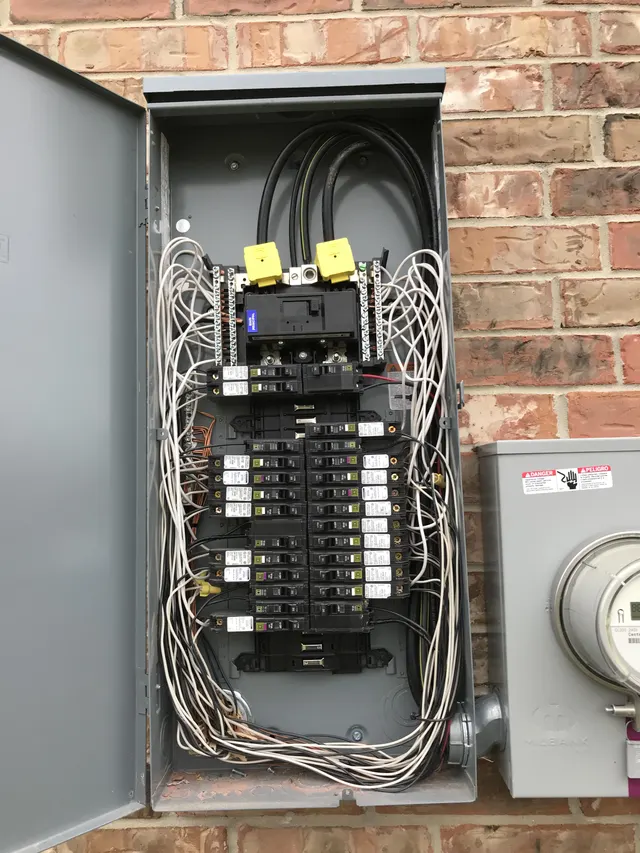
Climate adds a layer. Air-conditioning compressors start all evening from May through September, and LED drivers show those voltage dips as flicker. Lights that flicker every time the outdoor unit kicks on usually trace to a loose neutral at the panel or at CenterPoint's meter connection rather than the dimmer. We test at the panel first and coordinate with the utility if the fault is on their side. Local details are on our Pearland electrician and Katy electrician pages.
When Should You Call a Licensed Electrician for Dimmer Buzzing?
Compatibility fixes are homeowner work. These are not:
- The dimmer plate or the wall around it is warm to the touch, discolored, or smells of hot plastic. Turn the circuit off at the breaker and leave it off.
- Buzzing continues after the lamps are matched, dimmable and above the minimum load, and after an LED-rated dimmer of the right family is installed.
- Lights flicker on circuits with no dimmer, or whole rooms dip when a motor starts.
- The switch box has aluminum wiring, no neutral, more than two cables, or a three-way or four-way setup you do not understand.
- A breaker trips when the dimmer is turned on or off.
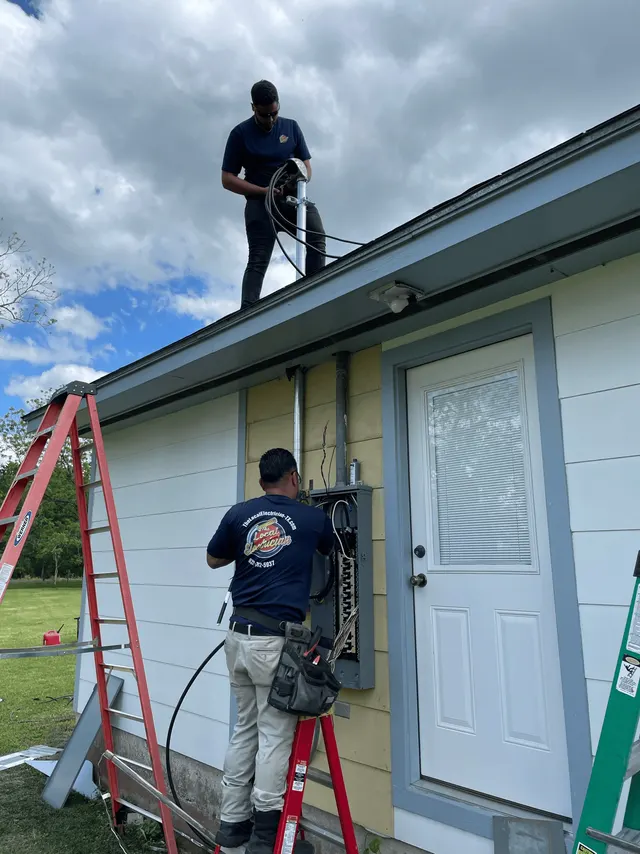
On a dimmer call, our electricians measure voltage at the switch and fixture under load, check for voltage drop across connections with a meter rather than by feel, inspect terminations with the breaker off, and, where flicker is house-wide, look at the neutral and service connections at the panel with a clamp meter and a thermal camera. We carry LED-rated forward-phase and ELV dimmers on the truck so the right one goes in the first visit. Some dimmer calls turn into wiring repairs; those are quoted upfront before any work beyond the diagnosis, and larger repairs can use our financing options.
The Local Electrician is licensed under TECL #34406, and every dimmer we install is tested through its full range with the actual lamps before we close the box. If your LED dimmer buzzing has outlasted the simple fixes, it is time to call.
Frequently Asked Questions
What causes LED dimmer buzzing in light fixtures?
The dimmer chops the AC waveform, and components inside the LED lamp's driver vibrate when they receive a waveform they were not designed for. The usual triggers are non-dimmable lamps, an incandescent-era dimmer whose minimum load is not met, the wrong dimmer family for the driver, mixed lamp brands, or a loose connection arcing inside the box.
How can I fix LED dimmer buzzing in my home?
Confirm every lamp on the circuit is marked dimmable, replace them with one matched brand and model, set the dimmer's low-end trim if it has one, and check that the total wattage is above the dimmer's minimum. If the noise continues, replace the dimmer with an LED-rated model matched to the lamp type. Turn the breaker off before opening the box.
Are certain dimmer switches better for LED bulbs?
Yes. LED-rated forward-phase dimmers, often labeled CL or LED+, suit most screw-in LED lamps and retrofit trims. ELV (reverse-phase) dimmers suit integrated LED fixtures, LED tape drivers and electronic transformers and are generally quieter with them. Both have lower minimum loads and an adjustable low end. Check the lamp manufacturer's compatibility list before buying.
When should I call an electrician for dimmer buzzing?
Call when the dimmer or wall is warm or discolored, when buzzing persists after matching lamps and installing an LED-rated dimmer, when lights flicker on circuits with no dimmer, when the box has aluminum wiring or no neutral, or when a breaker trips. The Local Electrician diagnoses these with meters and a thermal camera rather than guesswork.
What tools do electricians use to stop buzzing sounds?
A multimeter to check voltage at the switch and fixture under load, a clamp meter to measure current and spot a loaded neutral, a non-contact tester for safety, a thermal camera to find hot connections behind plates, and a stock of LED-rated forward-phase and ELV dimmers so the correct replacement can be installed and tested in one visit.
Can I put in a dimmer switch myself, or should I call a pro?
A single-pole dimmer in a box with a neutral and two cables is a reasonable homeowner job with the breaker off and a tester confirming the wires are dead. Three-way or four-way circuits, boxes without a neutral, aluminum wiring, or any scorching are electrician work. Smart dimmers that need a neutral should never be powered from the ground wire.
Why do my LED lights buzz but my old bulbs did not?
Incandescent bulbs are simple resistive loads and tolerate any phase-cut dimmer silently. LED lamps contain an electronic driver with inductors and capacitors that vibrate when fed a chopped waveform they were not designed for, and the old dimmer's minimum load is no longer met. Matching dimmable lamps to an LED-rated dimmer restores quiet operation.