




Quick answer
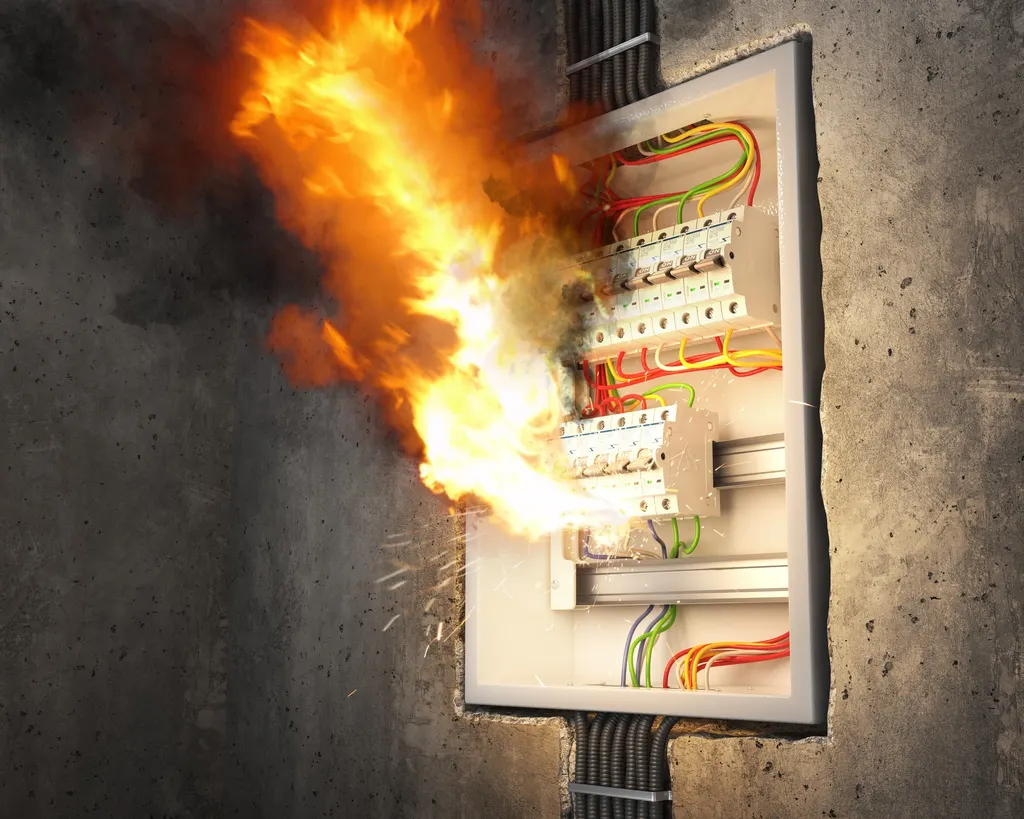
Most electrical panel failures trace back to loose or under-torqued connections, sustained overload, moisture and corrosion, worn breakers that no longer trip, lightning and grid surges, or defective panel designs such as Federal Pacific and Zinsco. Each one raises resistance or lets current flow where it should not, and the result is heat at a lug, bus bar or breaker, the common thread behind nearly every panel that fails.
Most electrical panel failures do not announce themselves. A lug loosens a fraction of a turn over a few hundred summer heat cycles, a breaker's internal spring weakens, a little condensation runs down the inside of a garage enclosure. The first thing the homeowner notices is a breaker that trips for no reason, a flicker when the dryer starts, or a faint hot-plastic smell in the garage.
This article explains what actually fails inside a panel, why loose connections and torque matter so much, how the Gulf Coast climate works against equipment in Katy, Pearland and Friendswood, how an electrician finds a hot spot before it becomes a failure, and what maintenance a homeowner can safely do. If your panel is already showing symptoms, the electrical panel and breaker service page explains how we repair or replace it.
Key Takeaways
- Heat is the common factor in nearly every electrical panel failure; loose connections, overload, corrosion and bad breakers all produce it.
- Under-torqued lugs are the leading preventable cause; the NEC requires terminations to be tightened to the manufacturer's torque value.
- Houston-area humidity, attached-garage heat and flooding corrode bus bars and breaker clips faster than in drier climates.
- A breaker that trips too often is a nuisance; a breaker that never trips when it should is the dangerous failure.
- Thermal imaging and voltage-drop testing under load find hot spots months before a panel fails.
- Homeowners can inspect the outside of a panel and test GFCI and AFCI buttons, but never remove the dead-front cover.
What counts as an electrical panel failure?
An electrical panel failure is any condition where the panel can no longer safely distribute power or protect the wiring: a breaker that will not open under an overload or fault, a bus bar or main lug that is overheating or arcing, a main breaker that has welded closed or will not reset, or a loss of one of the two incoming 120-volt legs inside the panel.
That is different from a nuisance trip. A breaker that trips when the space heater and hair dryer run together is doing its job. The panel is failing when the opposite happens, when a circuit draws more than its rating and nothing opens, or when the panel itself becomes the heat source.
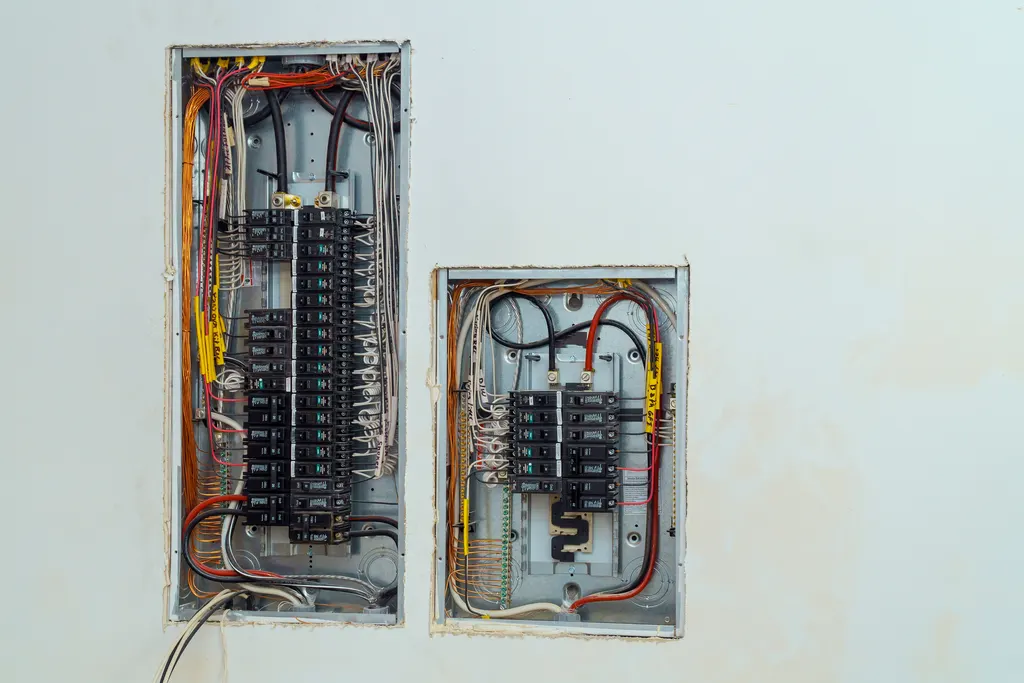
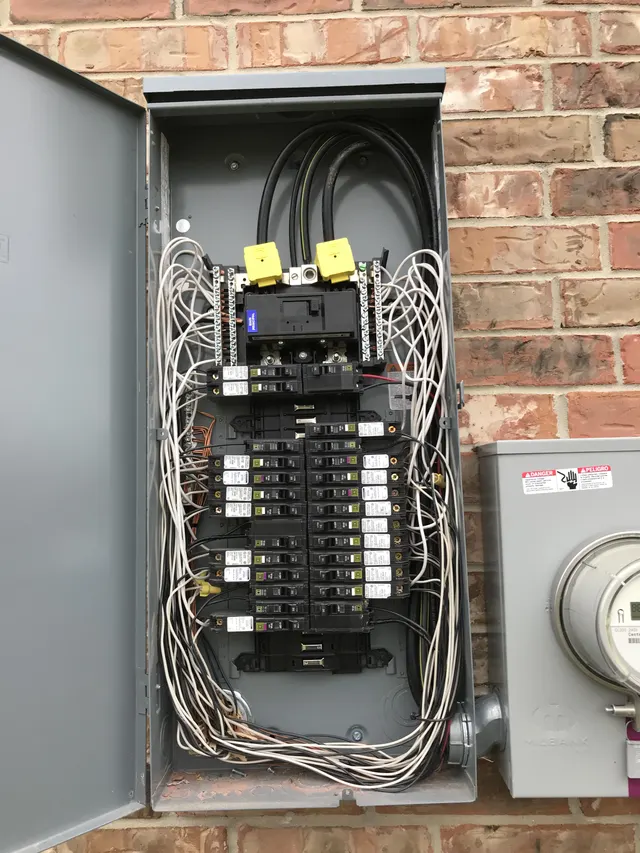
Residential panels are simple devices: two hot bus bars fed by the main breaker, a neutral bar, a ground bar and a row of breakers clipped onto the bus. Every one of those connections is a potential failure point, and almost every failure comes down to one mechanism. Resistance rises at a connection, current through that resistance makes heat, heat loosens or oxidizes the connection further, and the cycle accelerates until insulation melts, a breaker face discolors or an arc starts. Understanding that loop makes the causes below easier to spot.
What causes electrical panel failures most often?
In order of how often we find them in Fort Bend and Harris County homes:
- Loose or under-torqued connections. Main lugs, neutral bar screws and breaker terminals that were never tightened to specification, or that loosened over years of thermal cycling.
- Sustained overload. A 100-amp service carrying two air conditioners, an electric range and a dryer runs its bus and main breaker hot every afternoon from June through September.
- Moisture and corrosion. Condensation, wind-driven rain through an unsealed conduit, or floodwater leaves oxidation on the bus and breaker clips.
- Worn or defective breakers. Breakers are mechanical devices with springs and bimetal elements; they wear, and Federal Pacific, Zinsco and some Challenger designs were unreliable from the start.
- Lightning and grid-switching surges. The Houston area has frequent lightning, and a surge can pit breaker contacts or damage electronics inside AFCI and GFCI breakers.
- Improper work. Double-tapped breakers, breakers from a different manufacturer forced onto the bus, neutrals and grounds on the wrong bars, and oversized breakers on undersized wire.
- Pests. Wasps, ants and rodents inside an enclosure chew insulation and bridge connections.
Several of these usually combine. A panel that was slightly under-torqued, slightly overloaded and slightly corroded fails faster than any one of those would predict. The upgrade decision that follows is covered in signs you need an electrical panel upgrade.
Why do loose connections and wrong torque cause so many failures?
Every current-carrying termination in a panel has a torque value published by the manufacturer, usually printed on the label inside the door in inch-pounds. The 2023 NEC as adopted in Texas requires that terminations be tightened to that value with a calibrated tool, and for good reason: a lug that is too loose has high contact resistance and heats; a lug that is too tight crushes the conductor strands, which also raises resistance over time.
Three things make this worse in Houston-area homes:
- Aluminum service conductors. Most 100-amp and 200-amp services here are fed with aluminum. Aluminum expands and contracts more than copper with each heat cycle, so an under-torqued aluminum lug walks loose, and the oxide that forms on the exposed surface is a poor conductor.
- Garage and exterior panels. A panel that goes from a cool morning to a hot afternoon every day is being torque-tested by the weather.
- Piecemeal additions. Each new circuit added by a different hand over forty years is another chance for a terminal to be snugged by feel instead of by spec.
What a loose lug looks like in practice: a breaker face that is darker than its neighbors, a faint buzz under load, lights on one side of the house that flicker while the other side is steady, and eventually a melted conductor jacket at the lug. When The Local Electrician replaces a panel or adds a circuit, every termination is torqued with a calibrated screwdriver or wrench and the values are checked again before the cover goes on.
How do heat, humidity and storms damage panels in Pearland and Friendswood homes?
The Gulf Coast climate is hard on electrical equipment, and the closer a home sits to the bay, the harder it is. In Friendswood, TX, League City and the Clear Lake communities, humid, slightly salty air corrodes breaker clips and the aluminum bus faster than it does west of Houston. In Pearland, TX and Katy, the bigger problem is the attached garage, where panels sit in still air well over 100°F on summer afternoons while the circuits inside carry their heaviest load of the year.
The failure patterns we see most:
- Condensation inside exterior panels. A panel on a west-facing wall heats in the sun, cools overnight and sweats inside. Rust streaks at the bottom of the enclosure give it away.
- Water entry through the mast or conduit. A missing drip loop at the weatherhead or an unsealed top knockout lets rain run down the service conductors into the main lugs.
- Flood damage. A panel that was under water for even an hour has corrosion inside every breaker and should be replaced, not dried out. We replaced many after Hurricane Beryl in July 2024.
- Surge damage. Lightning and post-storm grid switching can damage the electronics inside AFCI and GFCI breakers and pit the contacts in standard ones. A whole-home surge protector at the panel is the practical defense.
- Insects. Tawny crazy ants and wasps are drawn into warm enclosures, and ant bodies across a bus can start an arc.
Outdoor panels here should be NEMA 3R rated, with the hub sealed and the bottom drain open.
What are the warning signs of a failing electrical panel?
Panels give notice before they fail outright. The signs below are ordered from early to urgent.
- Breakers that feel warm to the touch at the handle, or a cover that is warmer than the wall around it.
- Lights that flicker or dim on one side of the house only, which often means a loose connection on one leg.
- A breaker that trips and then trips again sooner after each reset, which can be a failing breaker rather than an overloaded circuit.
- Rust, water stains or green or white powder on the bus or breaker clips.
- A persistent buzz, hum or crackle from the panel, especially when a large load such as the air conditioner starts.
- Discolored or melted breaker faces, or a sweet, hot-plastic smell in the garage or utility room.
- A main breaker that is hard to switch, will not reset, or trips with no obvious cause.
- Partial power, where some rooms are dead or lights are unusually bright while others are dim, which points to a lost neutral or leg and is an emergency.
If you notice buzzing, crackling, melting or smell, switch off the main breaker if its handle is cool and you can reach it without touching anything else, then call for emergency electrical repair. Do not reset a breaker that is hot or discolored. For trips that are not accompanied by heat or smell, start with why does my breaker keep tripping.
How do electricians find hot spots before a panel fails?
A licensed electrician does not rely on feel. Three tests, done with the panel under normal household load, show the condition of connections that look fine from the outside.
Thermal imaging
An infrared camera pointed at the energized bus, lugs and breaker terminals shows each connection's temperature relative to its neighbors. A healthy panel is nearly uniform. A lug running noticeably hotter than the one beside it, carrying similar current, is loose, corroded or undersized and is the first thing to fix. Imaging takes minutes and is the most useful preventive test for an older panel.
Voltage drop under load
Measuring voltage at the main lugs and then at a breaker terminal while a large load runs shows resistance in the path between them. A loose or oxidized connection shows up as a voltage drop that rises with current.
Clamp-meter current readings
Reading the current on each incoming leg and on the busiest circuits confirms whether the service is actually overloaded or merely unbalanced, and whether any branch circuit is running near its breaker rating for long periods.
Along with those readings, an electrical inspection checks torque at accessible terminals, bonding and grounding, breaker type against wire size, and the physical condition of the enclosure. For a panel over twenty years old, or one in a garage that sees daily temperature swings, this is worth doing every few years and before any large load is added.
What electrical panel maintenance can a homeowner safely do?
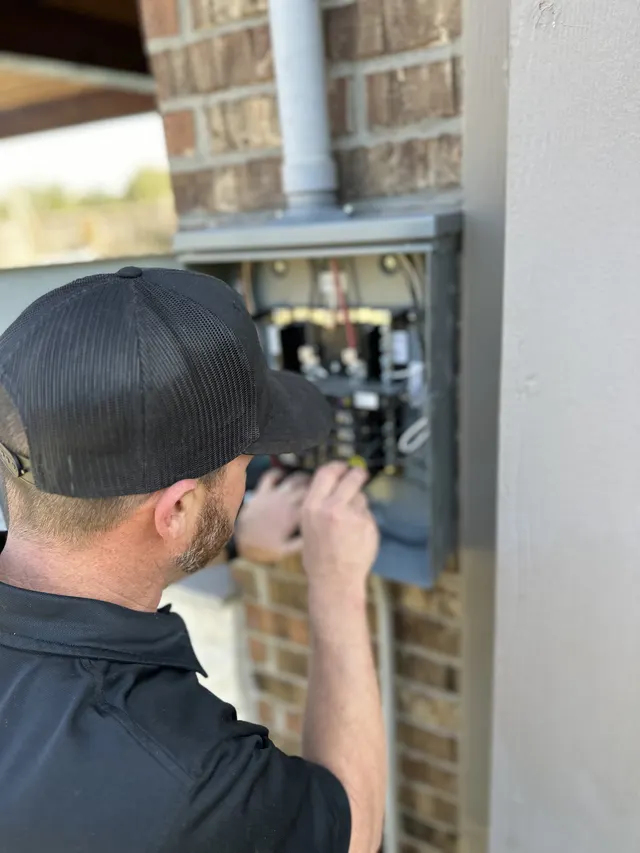
Everything on this list stays outside the dead-front cover. The cover is the metal plate with the breaker handles poking through; behind it are the live bus bars and the always-energized line side of the main breaker, which stays live even when the main is switched off.
- Keep the working space clear. The code calls for a clear area about three feet deep and thirty inches wide in front of the panel. Shelving, water heaters and stored boxes in that space are a common problem in garages.
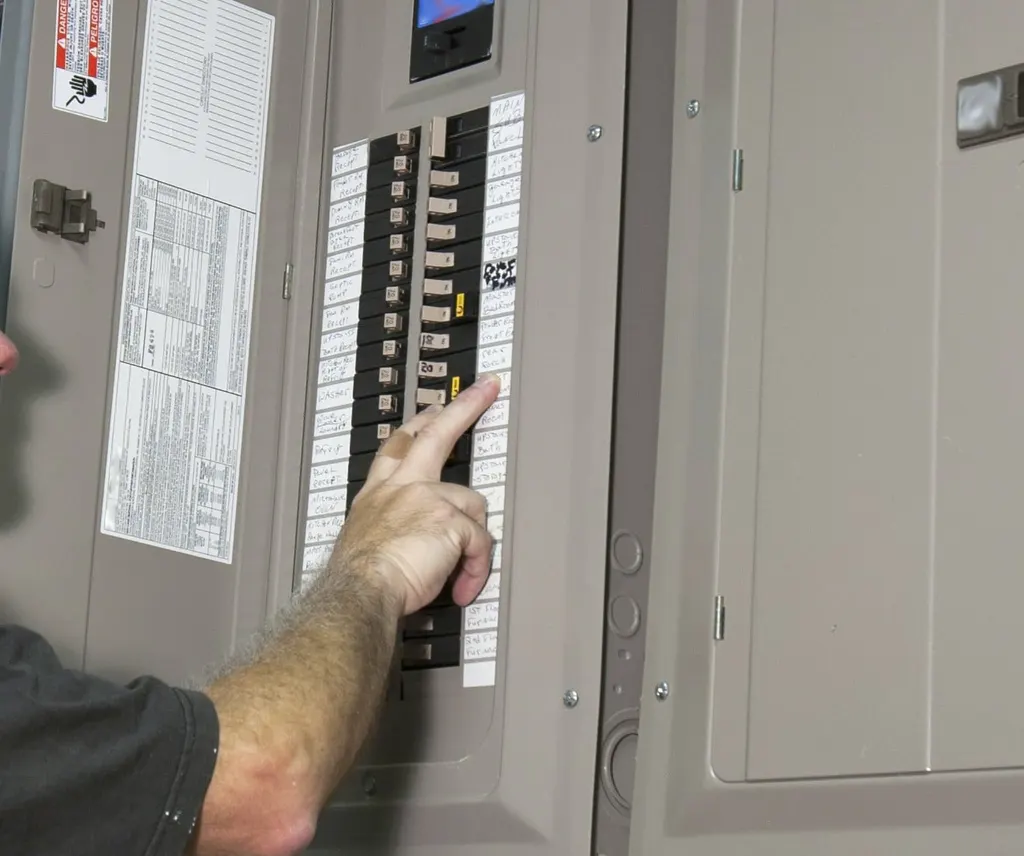
- Look and listen once a season. Open the door, not the cover. Check for rust, water marks, insects, discolored breaker faces and any buzz or smell.
- Press the test buttons. GFCI and AFCI breakers have a test button; pressing it should trip the breaker. Do this monthly and after any storm.
- Keep the directory current. A labeled panel lets anyone in the house shut off the right circuit in an emergency.
- Keep water away. Make sure sprinklers do not hit an exterior panel and that the garage wall behind it stays dry.
Leave these to a licensed electrician: removing the cover, re-torquing lugs, cleaning or treating corrosion, replacing a breaker, and anything involving the main lugs or meter. Panel repairs and replacements are permitted and inspected work in every Houston-area city and county, and the line side of the main cannot be de-energized without CenterPoint Energy pulling the meter.
What affects the cost of fixing an electrical panel failure?
The repair ranges from re-torquing and replacing a single breaker to a full panel and service replacement, and several factors decide where a given panel lands.
- How far the damage spread. One overheated breaker terminal is a breaker swap. A pitted or melted bus bar means the panel is done, because bus bars are not a serviceable part.
- Panel brand and age. Replacement breakers for discontinued panels are expensive or unavailable, and known-hazard brands should be replaced rather than repaired.
- Whether the service is involved. Damage at the main lugs or meter base requires a CenterPoint Energy disconnect and often a new meter base and service conductors.
- Moisture or flood exposure. A wet panel is replaced, and the inspector will want to see why the water got in fixed too.
- Code items found during the repair. Missing ground rods, an unbonded water line, or circuits that now require AFCI or GFCI protection are usually corrected at the same time.
- Emergency timing. A nighttime or weekend failure costs more than a scheduled repair, which is one argument for the inspection described above.
The Local Electrician prices the full scope up front after seeing the panel, and financing is available when a failure turns into a full replacement.
When should you call a licensed electrician about your panel?
Call immediately, any hour, if the panel is buzzing, crackling, smoking, hot to the touch or smells of burning plastic, if part of the house has lost power while other lights are unusually bright, or if the panel has been under water. Those are failures in progress, not maintenance items. The Local Electrician runs 24/7 emergency service from Richmond, TX across Fort Bend County, west Houston and the Clear Lake area, and 832-271-1167 is answered around the clock.
Schedule a visit within the week if a breaker trips repeatedly without an obvious cause, lights flicker on one side of the house, you have found rust or water stains inside the door, or the panel is a Federal Pacific, Zinsco or Challenger model that has never been evaluated.
Schedule an inspection within the season if the panel is more than twenty years old, lives in an attached garage or on an exterior wall, has never been thermally imaged, or you are about to add an EV charger, pool or new air-conditioning system. We see panels in 1980s subdivisions across Katy and Pearland that are structurally fine and simply need every termination torqued and two or three tired breakers replaced. Catching that stage is the whole point of understanding how panels fail.
Frequently Asked Questions
What causes electrical panel failures?
Loose or under-torqued connections, long-term overload, moisture and corrosion, worn or defective breakers, lightning and grid surges, and improper past work such as double-tapped breakers or mismatched brands. All of them produce heat at a lug, bus bar or breaker, and heat is what eventually melts insulation, pits contacts or starts an arc. Several causes usually combine in the panels that fail.
How often should an electrical panel be inspected?
A panel under twenty years old in a conditioned space can go several years between professional inspections. A panel in an attached garage or on an exterior wall, a panel over twenty years old, or any Federal Pacific, Zinsco or Challenger panel should be inspected every few years, and always before a large load such as an EV charger or new air conditioner is added. Homeowners should look and listen once a season.
Can weather affect electrical panels?
Yes. Houston-area humidity causes condensation inside exterior and garage panels, which corrodes bus bars and breaker clips. Summer heat raises the temperature of every connection and loosens aluminum lugs through expansion and contraction. Lightning and the grid switching after storms can damage breaker contacts and the electronics inside AFCI and GFCI breakers. Floodwater, as in Hurricane Beryl, means the panel must be replaced.
What are the signs of an electrical panel failure?
Warm breaker handles or a warm cover, flickering on one side of the house, breakers that trip sooner after each reset, rust or powdery corrosion inside, buzzing or crackling, discolored or melted breaker faces, a burning smell, a main breaker that will not reset, and partial power with some lights unusually bright. Buzzing, smell, heat or partial power are emergencies; shut off the main if it is cool and call a licensed electrician.
Is it expensive to fix an electrical panel failure?
It depends on how far the damage went. A single worn breaker or a set of loose lugs is a short repair. A damaged bus bar, a flooded panel or a known-hazard brand means replacement, and damage at the main lugs can involve the meter base and a CenterPoint Energy disconnect. The Local Electrician gives an upfront price after seeing the panel, and financing is available for full replacements.
Can I tighten the connections in my own electrical panel?
No. The main lugs are live whenever the meter is in, even with the main breaker off, and the terminals must be tightened to the manufacturer's torque value with a calibrated tool, not by feel. Over-tightening damages aluminum conductors as surely as under-tightening does. Re-torquing is a short job for a licensed electrician and is included in a panel inspection.
Does a flooded electrical panel have to be replaced?
Yes. Water leaves corrosion inside breakers, on the bus bars and inside the main breaker where it cannot be cleaned, and failures can appear weeks later. Any panel that was submerged, even briefly, should be replaced along with any breakers, receptacles and switches that were under water. Do not re-energize a flooded panel; have the meter pulled and the system inspected first.