






Quick answer
A portable generator plug connects the generator's 120/240-volt outlet to a weatherproof inlet box on the outside of the house, which feeds a manual transfer switch or interlock kit inside. The common connectors are the 30-amp L14-30 twist-lock and the 50-amp CS6375. The cord has one male and one female end; a male-to-male dryer cord is illegal and can kill a lineworker.
After Hurricane Beryl, thousands of Houston-area families ran a portable generator for the first time, and most of them ran extension cords through a cracked window. A proper portable generator plug and inlet box replaces that mess with one heavy cord, one outdoor connection, and the ability to power the refrigerator, lights and a window unit from the breaker panel. This post covers which connector your generator has, how the inlet and cord match it, what you can safely run through it, and why the shortcut everyone has heard about is the one thing you must never do.
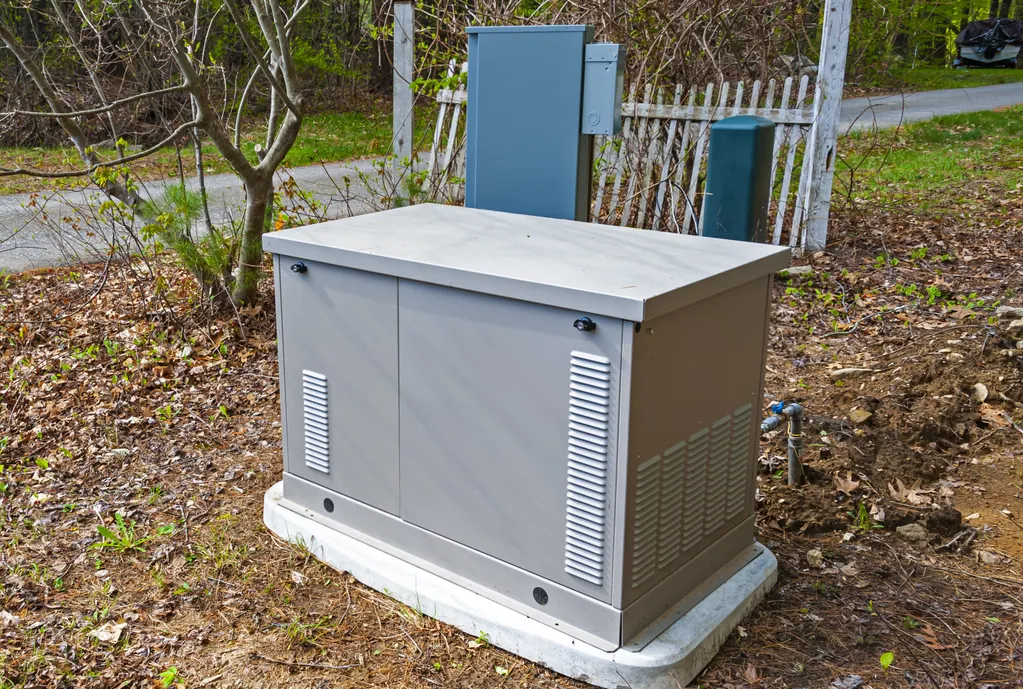
It applies to gasoline portable units in Richmond, Katy, Missouri City and the rest of Fort Bend and Harris County. Permanent units are covered in our standby generator guide.
Key Takeaways
- Most portable generators above 5 kW have an L14-30 (30-amp, 120/240-volt) or a 50-amp CS6375 outlet.
- The inlet box on the house must match the generator's connector and amperage, and must be weatherproof.
- A generator cord has one male and one female end; a male-to-male cord backfeeds the grid and exposes live prongs.
- A 30-amp inlet carries about 7,200 watts at 240 volts; a 50-amp inlet about 12,000 watts.
- The inlet only works with a manual transfer switch or a listed interlock kit, installed under permit.
- Portable generators run outdoors, at least 20 feet from the house, never in a garage.
What is a portable generator plug, and which connector does your generator have?
Look at the outlet panel on your generator. Besides the ordinary household receptacles, most units above about 5,000 watts have one or two larger round outlets. These are the portable generator plugs that matter for a house hookup, and they follow NEMA connector standards:
- NEMA 5-20: the ordinary three-prong 120-volt, 20-amp outlet. Fine for a cord to a single appliance, not for feeding a house.
- NEMA L5-30: a three-prong twist-lock, 120 volts only, 30 amps. It cannot feed a 240-volt panel.
- NEMA L14-30: a four-prong twist-lock delivering 120/240 volts at 30 amps. This is the most common house-hookup connector on 5,000 to 9,000-watt generators and the one most inlet boxes are built for.
- NEMA 14-50: a straight-blade 50-amp outlet, the same pattern as an RV pedestal or an electric range. Found on some larger inverter units.
- CS6375 (often paired with a CS6365 cord end): a round 50-amp locking connector found on 9,000-watt and larger generators and on tri-fuel units popular here since 2021.
The four-wire connectors carry two hot legs, a neutral and a ground. That is what a residential panel needs: 240 volts across the hots for a well pump or window unit, and 120 volts from either hot to neutral for everything else. A three-wire connector cannot do that safely, which is why L5-30 units are limited to cords.
What is a generator inlet box, and why is it the only safe hookup?
A generator inlet box is the mirror image of the outlet on your generator. It is a recessed male connector in a weatherproof housing, mounted on the exterior wall near the panel, and wired inside to a manual transfer switch or an interlock-protected backfeed breaker. Because the inlet has pins rather than slots, it is dead until a generator is plugged in and running, and the only live part is sealed inside the connector.
The cord that joins them has a female end for the inlet and a male end for the generator, so no energized prong is ever exposed. Cords for this purpose are heavy: 10-gauge for a 30-amp L14-30 run, 6-gauge for a 50-amp CS6375 run, in a jacketed outdoor-rated type, and usually 20 to 50 feet long so the generator can sit well away from the house.
Three matching rules apply:
- The inlet's connector pattern and amperage must match the generator outlet and the cord. An L14-30 generator gets an L14-30 inlet.
- The inlet's amperage must not exceed the breaker feeding it inside. A 30-amp inlet is fed by a 30-amp two-pole breaker.
- The inlet is listed for outdoor use with a gasketed, self-closing cover, because it will be used in the rain.
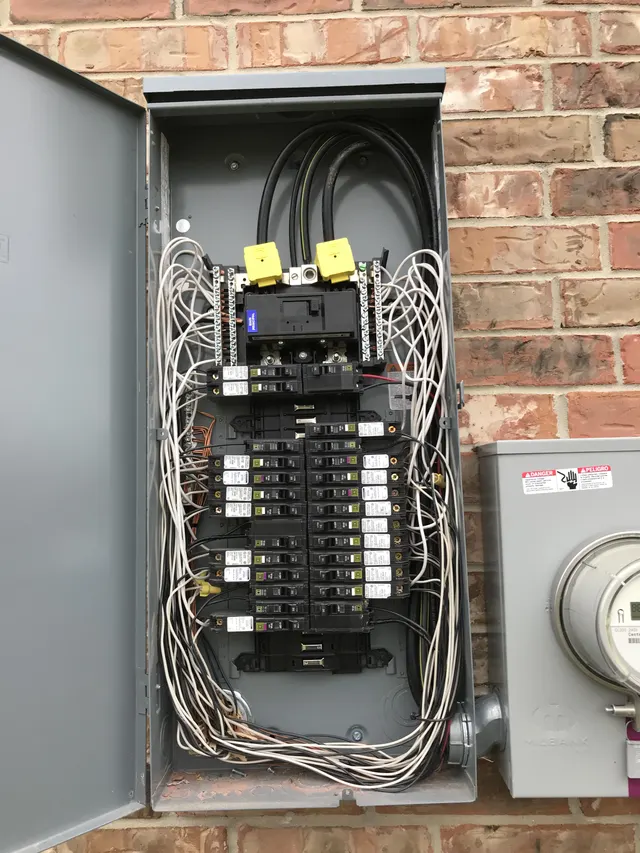
Inside the house, the inlet circuit lands on the equipment described in our post on transfer switches vs interlock kits. The inlet alone does nothing; it is one half of a system.
Why is backfeeding through a dryer cord illegal and deadly?
The shortcut goes like this: make or buy a cord with a male plug on both ends, plug one end into the generator and the other into the 240-volt dryer or range outlet, and the generator feeds the panel through that circuit. People in every neighborhood from Stafford to Katy have done it. Here is what is wrong with it.
- Exposed live prongs. The moment the generator runs, the free end of the cord has 240 volts on bare metal. Drop it on wet concrete, or let a child pick it up, and the result is a shock or a fire.
- Grid backfeed. Unless someone remembers to open the main breaker first, every time, generator power flows out through the meter and onto CenterPoint Energy's lines. The transformer on the pole steps 240 volts up to distribution voltage. A lineworker restoring your neighborhood can be killed by your generator.
- No overcurrent protection in the right place. The dryer circuit's 30-amp breaker is now carrying the whole house, in the wrong direction.
- Equipment destruction. When utility power returns while the generator is connected, the two sources collide out of phase. The generator usually loses.
- It is illegal. The 2023 NEC as adopted in Texas requires transfer equipment that prevents interconnection of sources. A dryer-cord hookup is a code violation, and insurers routinely deny claims for the resulting damage.
There is no safe version of this. The inlet and interlock that make it legal cost a fraction of a generator and are a permitted, inspected installation.
How much can you run through a 30-amp or 50-amp portable generator plug?
The connector sets a hard ceiling, and the generator usually sets a lower one.
L14-30 at 30 amps: 30 amps times 240 volts is 7,200 watts across both legs, or 3,600 watts per 120-volt leg. A 7,500-watt generator fits this connector neatly. Anything larger is choked by the plug.
CS6375 or 14-50 at 50 amps: 50 amps times 240 volts is 12,000 watts, 6,000 per leg. This is why 9,000 to 12,000-watt units carry the larger connector.
The per-leg limit is the one homeowners trip over. A panel splits its 120-volt circuits between the two legs. If the refrigerator, the kitchen outlets, the microwave and the living room all happen to sit on the same leg, you can overload that leg while the other sits idle. A manual transfer switch with two wattmeters shows the imbalance; with an interlock kit you have to know your panel. Our guide to labeling a breaker panel explains how to map which circuits share a leg.
Motor loads matter too. A 3-ton central air conditioner will not start on a 7,500-watt portable unit without a soft starter, and often not even then; a window unit or a portable AC will. Refrigerators, freezers, the furnace blower, lighting, the router and phone chargers are the realistic load for a 30-amp hookup. For what a larger, permanent unit can carry, see our standby generator sizing guide.
Portable generator hookups in Richmond, Missouri City and Katy homes
We install inlet boxes and interlocks across Fort Bend County, and a few local realities shape every job.
Permits. The inlet, the backfeed breaker and the interlock or manual switch are permitted and inspected: by the city inside Richmond, Missouri City, Katy, Stafford or Houston, and by Fort Bend or Harris County outside city limits. The inspector checks the listing on the interlock, the hold-down on the breaker, the conductor size to the inlet and the labeling.
Where the inlet goes. On a slab home the panel is usually in the garage or on the garage exterior wall, so the inlet lands on that wall, a short conduit run from the panel. The generator then sits in the driveway or side yard, 20 feet or more from the house, which on narrow lots in Cinco Ranch or Sienna sometimes means the front corner. Detached garages are rare here, so the garage itself is never the answer.
Panel age. Older sections of Missouri City, Stafford and Quail Valley have 1970s and 1980s panels for which no listed interlock exists, and some are Federal Pacific or Zinsco units that should be replaced regardless. In those homes we recommend a panel replacement or a separate manual transfer switch.
Carbon monoxide. Every major Houston outage, including Beryl and the February 2021 freeze, brings carbon monoxide poisonings from generators run in garages and breezeways. Newer portable units have CO shutoff sensors; older ones do not. The inlet is what makes it practical to keep the generator far from the house.
What are the safe-operation rules for a portable generator plugged into the house?
Once the inlet is installed, operation is simple, and the habits below keep it that way.
- Placement. Outdoors only, at least 20 feet from the house, exhaust pointed away from windows, doors and the neighbor's windows. Never in a garage, even with the door open, and never under an open window.
- Order of operations. Connect the cord to the generator, then to the inlet. Start the generator. Then open the main breaker and close the backfeed breaker, or flip the transfer switch. Reverse the order when utility power returns, and unplug at the inlet before the generator.
- Load management. Turn on loads one at a time, largest motor first. If the engine bogs, shed something.
- Refueling. Shut down and let the engine cool before adding gasoline. Store fuel in approved containers away from the house.
- Fuel age. Ethanol gasoline degrades within months. Use stabilizer, rotate fuel, and run the carburetor dry before storage. A generator that will not start after a year in the garage usually has a varnished carburetor.
- Grounding and bonding. Most portable units have a bonded neutral. Connected through an inlet, the house grounding system does the grounding; follow the generator manual on whether the bond stays, and ask the electrician at installation.
Make sure carbon monoxide detectors are working before storm season; they are the last line of defense if someone moves the generator closer in the rain.
Can you install a generator inlet yourself, and what affects the cost?
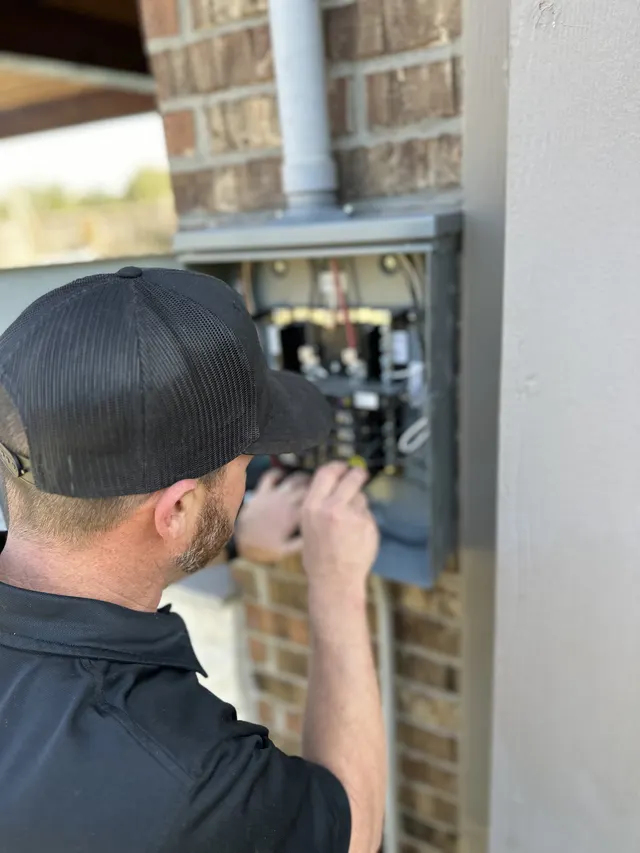
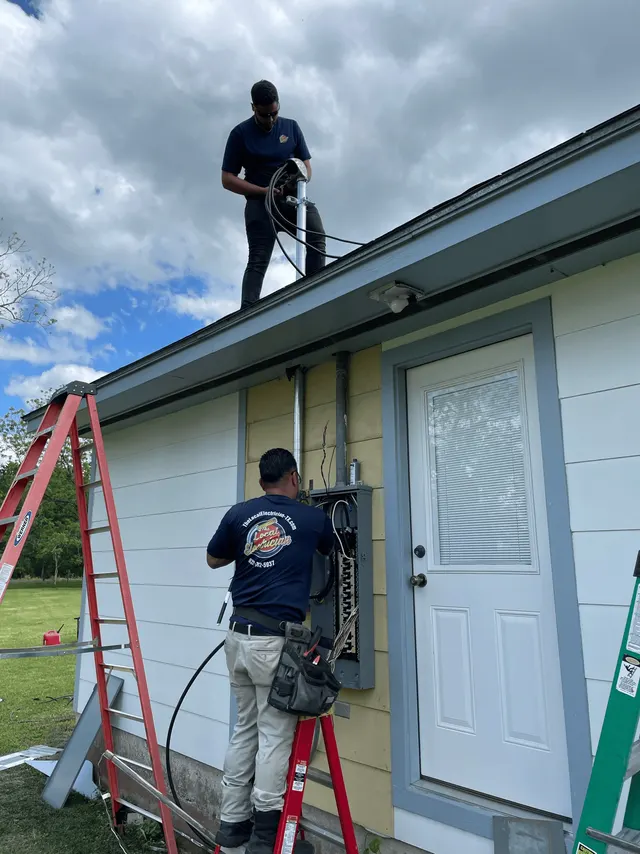
The inlet box itself is a simple device, but installing it means adding a two-pole breaker to a live panel, running conductors through the wall, and fitting a listed interlock or transfer switch. That work is permitted and inspected in every jurisdiction we serve, and in Texas it is done under a licensed electrical contractor. The Local Electrician holds TECL #34406 and handles the permit and inspection on every inlet installation.
What you can decide in advance:
- which generator connector you have, and therefore which inlet and cord,
- where the generator will sit, which sets the cord length and inlet location,
- which circuits you need powered, which sets interlock versus manual switch, and
- whether you want to future-proof with a 50-amp inlet even if today's generator is 30-amp.
Cost factors, without dollar figures: inlet amperage and brand, interlock kit versus a six or ten-circuit manual transfer switch, the distance and wall type between the panel and the inlet, whether the panel needs repair or replacement first, the cord if you want it supplied, and the permit fee for your city or county.
The Local Electrician provides free estimates on inlet, interlock and generator installations throughout Fort Bend and Harris County. Call 832-271-1167, and if you are on the fence about portable versus permanent, we will walk through both honestly.
Frequently Asked Questions
What plug does a portable generator use to connect to a house?
Most portable generators from about 5,000 to 9,000 watts use a four-prong NEMA L14-30 twist-lock outlet, which delivers 120/240 volts at 30 amps. Larger units use a 50-amp CS6375 locking connector or a 14-50 straight-blade outlet. The inlet box on the house and the cord must match that connector exactly; three-prong 120-volt-only outlets cannot feed a residential panel.
Is it legal to plug a generator into a dryer outlet?
No. A male-to-male cord into a dryer or range outlet exposes live prongs, bypasses overcurrent protection, and backfeeds the utility lines unless the main breaker is opened every time, which can electrocute a lineworker. It violates the electrical code as adopted in Texas and typically voids insurance coverage. The legal route is an inlet box with a listed interlock kit or manual transfer switch.
How far from the house should a portable generator run?
At least 20 feet, outdoors, with the exhaust pointed away from windows, doors and vents, including the neighbors'. Never in a garage, carport or breezeway, even with doors open. A 25 to 50-foot generator cord to the inlet box makes that distance practical. Working carbon monoxide detectors inside the house are the backstop, not the plan.
Do I need a permit for a generator inlet box in Fort Bend County?
Yes. The inlet, the backfeed breaker and the interlock kit or transfer switch are permitted and inspected electrical work, handled by the city building department inside city limits and by the county outside them. The inspector verifies the interlock listing, the breaker hold-down, conductor sizing and labeling. The Local Electrician pulls the permit as part of the installation.
How many watts can a 30-amp generator inlet handle?
A 30-amp, 240-volt inlet carries up to 7,200 watts total, split as 3,600 watts on each 120-volt leg. A 50-amp inlet carries up to 12,000 watts, 6,000 per leg. The generator's own rating is usually the lower limit, and the per-leg split means you must balance which circuits you turn on, not just the total.
Can a portable generator run my central air conditioner through the inlet?
Usually not. A 3-ton central system has a starting surge that overwhelms most portable units, and a 30-amp inlet cannot pass enough current for it anyway. A window unit or portable air conditioner on a 120-volt circuit is the realistic cooling option. Homes that want central air during outages need a standby generator sized for the compressor.