





Quick answer
Home battery backup vs generator comes down to hours. A battery stores a fixed amount of energy, usually 10 to 15 kWh per unit, and delivers it silently with no fuel, which suits short outages and pairs well with solar. A standby generator runs indefinitely on natural gas or propane and carries whole-home air conditioning for days. For a week-long Houston outage the generator wins on endurance.
The question of home battery backup vs generator comes up in every outage conversation we have in Katy, Richmond and Tomball, and the honest answer depends on one number: how many hours you need to cover. Hurricane Beryl in July 2024 left parts of the area dark for more than a week in midsummer. The February 2021 freeze lasted days with no sun to recharge anything. This post compares the two on capacity, runtime, air conditioning, noise, maintenance, permits and cost factors, and explains how a licensed electrician combines them.
For the generator side in depth, see our complete guide to standby generators. This post focuses on where a battery fits.
Key Takeaways
- A home battery stores energy in kWh; its inverter delivers power in kW, and both limits matter.
- One 13 kWh battery can run a refrigerator, lights and electronics for a day, or one air conditioner for a few hours.
- A natural gas standby generator runs as long as the gas flows, which is the deciding factor for week-long outages.
- Batteries switch over in milliseconds and silently; generators take about 10 seconds and make noise.
- A battery paired with a generator covers short blips silently and lets the generator rest during long outages.
- Both battery and generator installations are permitted and inspected in Fort Bend and Harris County.
What is home battery backup, and how does it compare to a standby generator?
A home battery backup system is a wall or floor-mounted lithium battery pack, an inverter that converts stored direct current into 120/240-volt household power, and a gateway that isolates the house from the grid during an outage. Modern residential units are mostly lithium iron phosphate (LFP) chemistry, which tolerates Houston garage heat better than older lithium types and has largely replaced lead-acid. The battery charges from the grid, solar panels or a generator, and discharges when the grid fails or when you choose to use stored power.
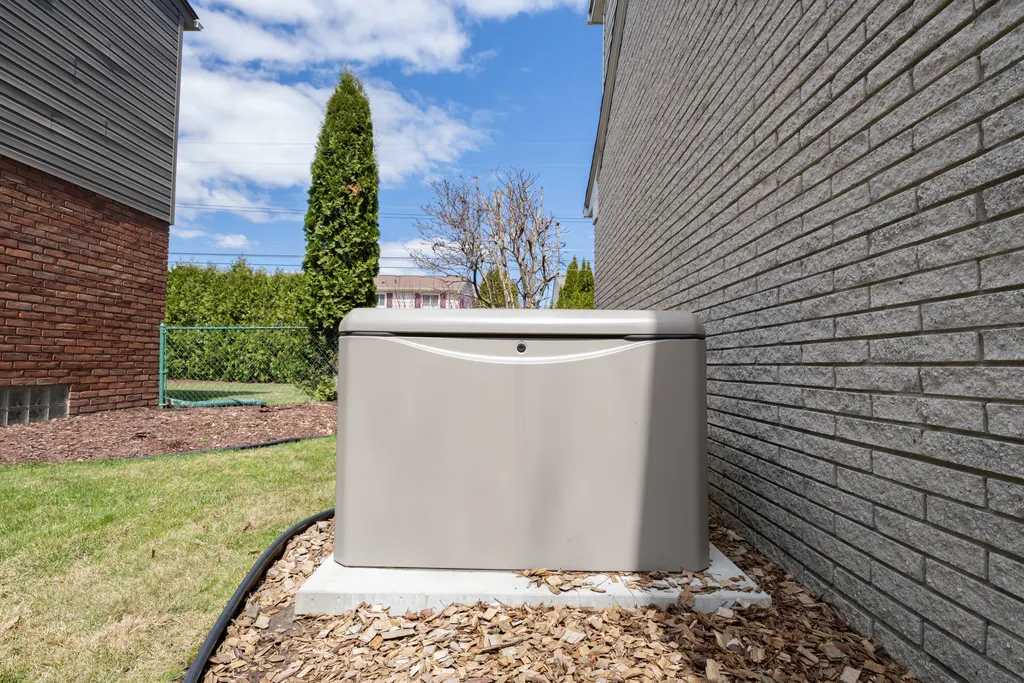
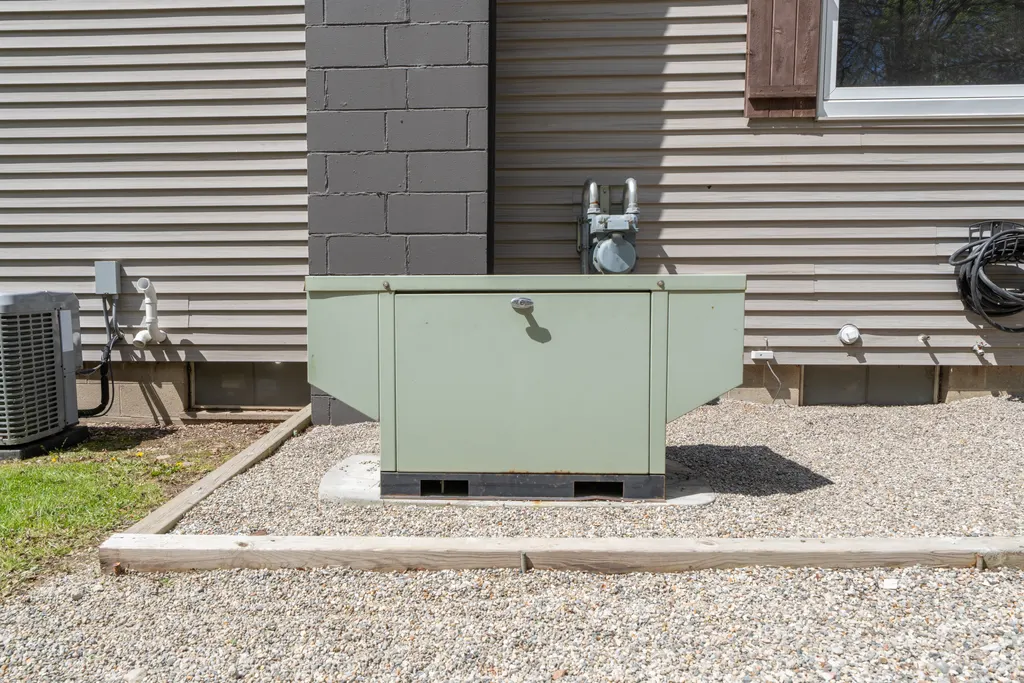
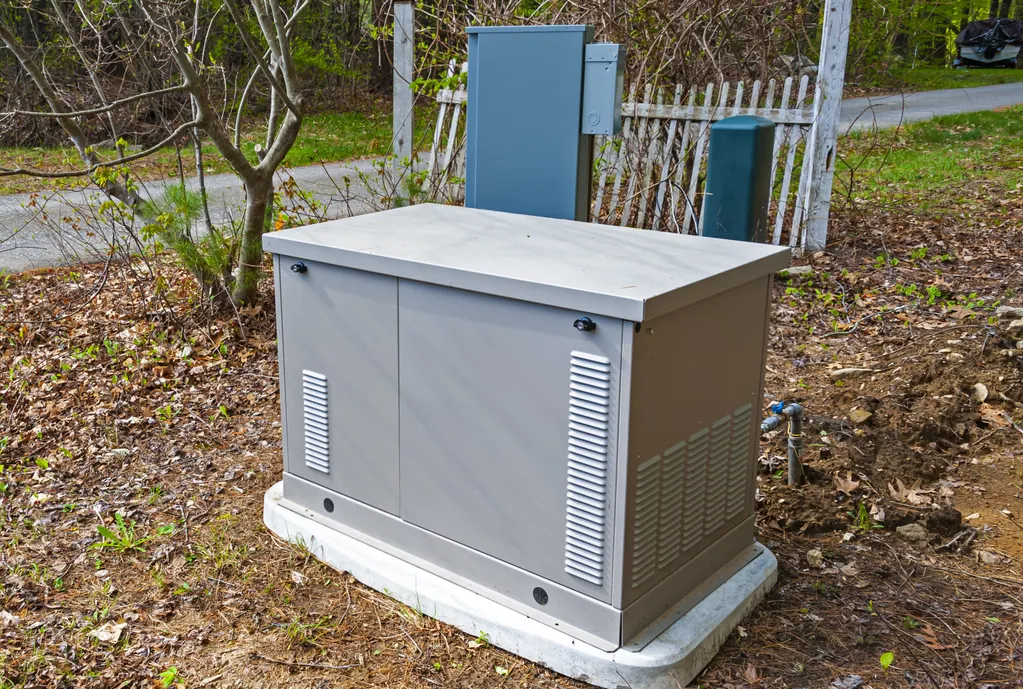
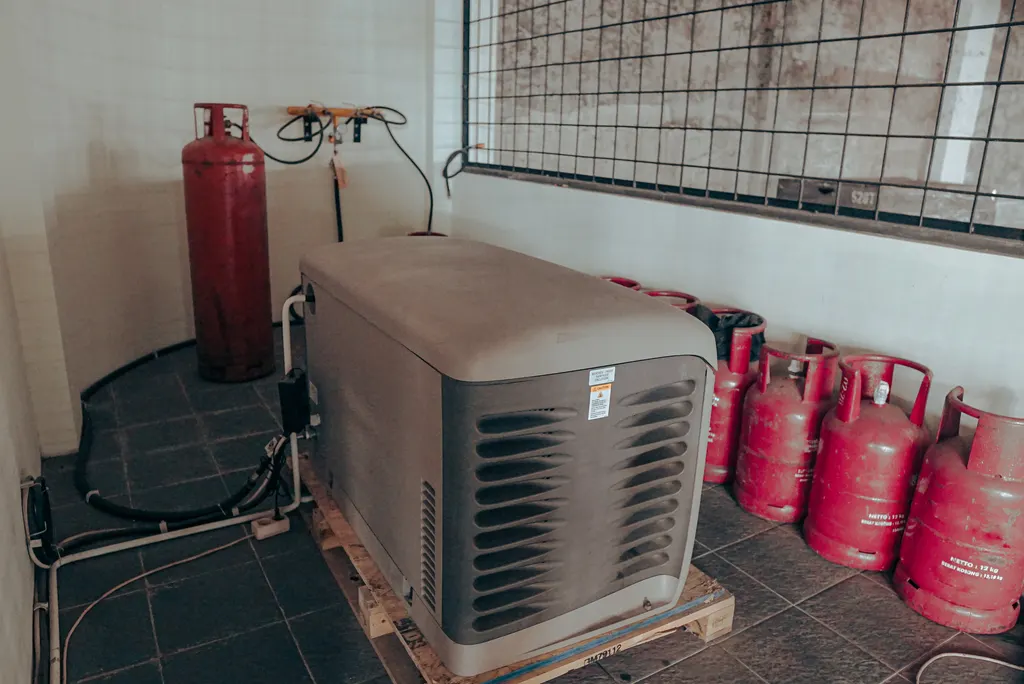
A standby generator is a natural gas or propane engine that spins an alternator. It makes power rather than storing it, which is the entire difference.
- Energy source: battery stores a fixed amount; generator makes unlimited power while fuel lasts.
- Switchover: battery in milliseconds; generator in roughly 10 seconds through an automatic transfer switch.
- Noise and exhaust: battery silent; generator audible, exhaust kept clear of openings.
- Maintenance: battery minimal; generator needs oil, filters, battery and annual service.
- Daily use: battery can shift grid use to cheaper hours; generator sits idle until an outage.
Neither is better in the abstract. The outage you are planning for decides.
kWh vs kW: what do the battery numbers actually mean?
Every battery spec sheet has two numbers that homeowners mix up, and both set hard limits.
Capacity in kilowatt-hours (kWh) is how much energy is stored. A typical residential unit is in the 10 to 15 kWh range, and units can be stacked. If your home draws an average of 1 kW overnight, a 13 kWh battery lasts roughly 13 hours. Draw 4 kW with an air conditioner running and it lasts a little over 3 hours.
Power in kilowatts (kW) is how fast the inverter can deliver energy. Residential inverters commonly provide 5 to 10 kW continuous per unit, with a higher short peak rating for motor starting. This decides whether the air conditioner starts at all; a 3-ton compressor with a hard start can exceed a single inverter's peak, and a soft-start kit or second unit is the usual fix.
A generator is rated only in kW because its energy is in the gas line. A 22 kW generator delivers 22 kW for as long as fuel flows, so the only question is power, never capacity.
For either system the load list is the one in our standby generator sizing guide: running watts of everything you need, plus the starting surge of the largest motor. A battery design adds a third question the generator never asks: for how many hours.
How long does a home battery last in a Houston outage?
Run the outages this area has actually had through a 13 kWh battery with a 7 kW inverter, and the picture gets clear.
A two-hour thunderstorm outage
The battery carries the whole house, air conditioning included, without anyone noticing the switch. This is the case batteries handle most gracefully, and the most common outage here.
The May 2024 derecho: a day or two
Running the refrigerator, lights, internet, fans and phones, the battery lasts through the first night comfortably. Add central air and it is gone by midnight. With rooftop solar and a sunny day it recharges and the pattern repeats, with the air conditioner used sparingly.
Hurricane Beryl: a week in July
Without solar, the battery is empty on day one and stays empty. With solar, the house gets daytime power and a partial overnight charge, but air conditioning through the night every night is not realistic on one unit. Two or three stacked units and a large array change the math, at considerable cost.
The February 2021 freeze
Overcast, cold and multi-day. Solar produces little, and electric heat strips draw far more than a battery can supply for long. A gas furnace with its small blower load is the exception.
A single battery covers nuisance outages completely and the first night of anything larger. Endurance beyond that comes from solar, stacked units, or a generator.
Home battery backup vs generator: where does the generator win, and where does it fall short?
A natural gas standby generator was the equipment that kept homes livable through Beryl, and its strengths are exactly the battery's weaknesses.
Endurance. It runs for as long as CenterPoint Energy's gas distribution system delivers, which is normally throughout an electrical outage. Propane units run until the tank is empty.
Air conditioning. A properly sized unit starts and runs central air for days, which no residential battery does alone.
Whole-home capacity. Larger liquid-cooled units carry everything on a 200-amp service at once.
Its shortcomings are real too:
- The gap. The house goes dark for about 10 seconds while the engine starts. Computers reboot; clocks reset.
- Noise and placement. Clearances from windows and doors are mandatory, and the engine is audible, as our generator noise reduction post explains.
- Maintenance. Weekly exercise, annual service, battery replacements and oil changes after long runs.
- Fuel dependence. Rare, but during mass outages some neighborhoods have seen gas pressure sag.
- Gas availability. Properties outside the gas lines need propane and a tank.
For a household whose outage fear is a hurricane week, these are tolerable. For one whose outages are mostly short and whose priorities are silence and no fuel, they are the reason to look at a battery.
Can you pair a home battery with a generator or solar?
Yes, and the combination is increasingly what we design for homeowners who want both endurance and seamless switching.
Battery plus generator
The battery handles every outage instantly and silently. If the outage runs long and the battery drops to a set level, the system starts the generator, which carries the house and recharges the battery at the same time. Once the battery is full the generator can shut down, so the engine runs in blocks instead of continuously: less noise, less fuel, fewer run hours and no 10-second gap. The generator can often be sized smaller because the battery covers starting surges. The integration needs a gateway or transfer equipment designed for both sources, chosen at the design stage; it is not a bolt-on.
Battery plus solar
Solar panels alone shut down during an outage for lineworker safety. A battery with an islanding gateway lets the array keep producing with the grid disconnected, recharging the battery by day. In a sunny Houston summer this extends a single battery from one night to indefinite, at reduced load. How solar is credited on your bill when the grid is up is covered in our post on Texas net metering and home solar.
All three
Solar by day, battery through the evening, generator as the backstop for a cloudy week: the most resilient residential design available.
How do batteries and generators manage big loads with load shedding?
Both systems hit the same wall: the house can ask for more than the source can give. Load shedding is how a licensed electrician keeps that from tripping the system.
Critical loads subpanel. The traditional approach for a battery or a smaller generator. Chosen circuits, typically refrigeration, lighting, kitchen, internet, a bedroom and one air handler, move into a separate panel the backup source feeds. Everything else goes dark. Simple and predictable.
Whole-home with managed loads. The backup source feeds the whole panel, and the big circuits, air conditioners, range, dryer, pool pump, EV charger and electric water heater, are controlled by shedding relays or smart breakers. A controller sheds the lowest-priority load when the source nears its limit and restores it when there is headroom. The second air conditioner waits for the first to finish starting; the dryer waits for the air conditioner.
Priority is set with the homeowner. In most Houston homes it runs: refrigeration and medical equipment, internet and lighting, one air conditioner, the second, then the conveniences. Soft-start kits on compressors help both systems.
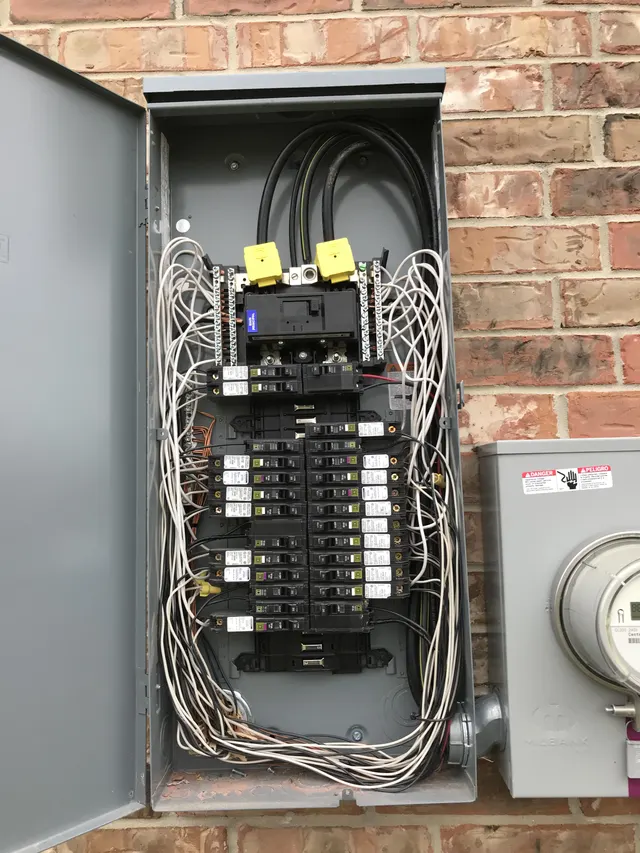
This equipment ties into the panel, and a full, undersized or known-hazard panel is replaced first; a panel upgrade is routine in 1970s and 1980s homes.
Home battery backup vs generator for Katy, Richmond and Tomball homes
A few local facts tilt the decision one way or the other.
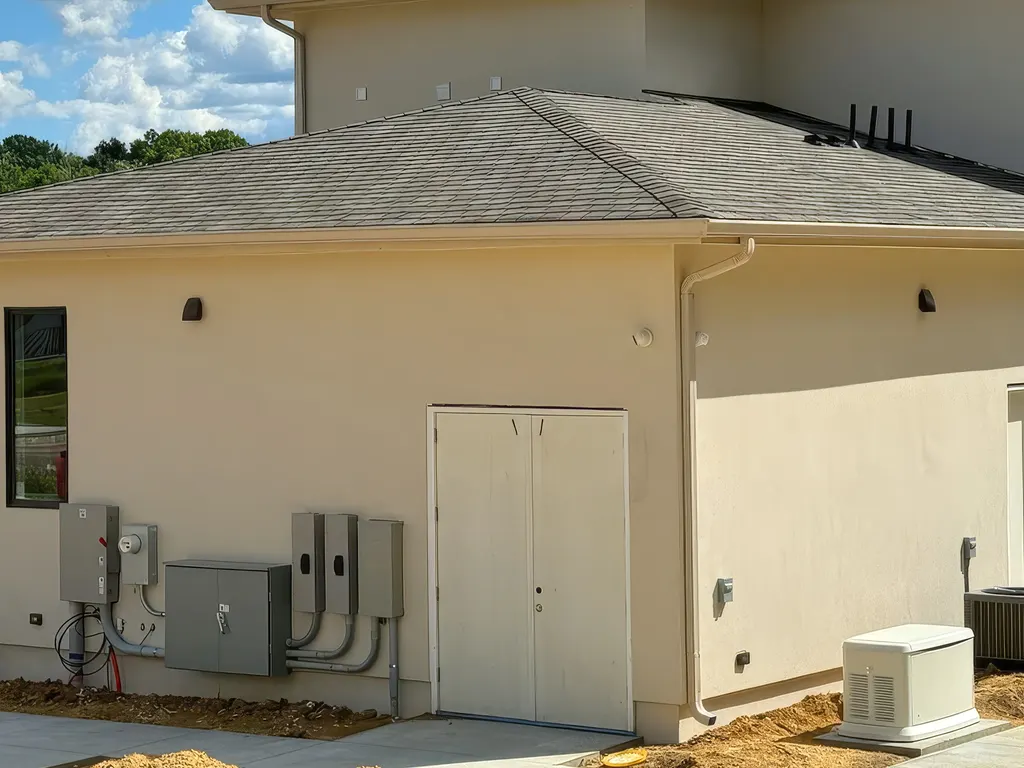
Gas service. Most of Katy, Richmond, Sugar Land and Tomball has natural gas at the meter, which makes a generator straightforward. Acreage properties around Fulshear and rural Richmond without gas lines face propane tanks and deliveries, and a battery-plus-solar design becomes more attractive there.
Garage heat. Batteries usually mount in the garage on a slab home, and Houston garages get very hot in summer. Battery warranties and output ratings assume a temperature range, so a shaded or north-facing wall or conditioned space is better, and we check the manufacturer's limits at the site visit.
Roof and solar. Homes built since 2000 in Cinco Ranch, Aliana, Harvest Green and the newer Tomball subdivisions often have roof areas and orientations that suit solar, which turns a battery from a one-night device into a multi-day one.
Permits and inspection. Battery energy storage installations are permitted and inspected like generators, by the city inside Katy, Houston, Richmond or Tomball and by Fort Bend or Harris County outside city limits. The 2023 NEC as adopted in Texas has a dedicated article for energy storage systems; inspectors check listing, location, clearances, disconnects and labeling. Grid-interactive batteries also need CenterPoint Energy interconnection approval before they can export.
HOA review. Most master-planned communities require approval of exterior equipment placement for either system.
Which costs more, and what drives the price of each?
The range for either system is wide and site-dependent. What we can say is how the pieces stack up.
Battery cost factors:
- number of battery units, which sets kWh and usually kW,
- inverter and gateway equipment, and whether the design is whole-home or critical-loads,
- solar integration, now or pre-wired for later,
- panel condition and any upgrade needed,
- mounting location and conduit runs, and
- permit, inspection and interconnection paperwork.
Generator cost factors:
- kW rating and air-cooled versus liquid-cooled,
- transfer switch type and load-shedding modules,
- gas meter upsizing, pipe run or propane tank,
- pad, clearances and distance from the meter, and
- permit fees.
On incentives, a federal tax credit has applied to home battery storage in recent years, and retail electric providers in the deregulated ERCOT market periodically offer storage and time-of-use programs; both change, so confirm current eligibility with a tax professional and your provider. Texas has no statewide battery rebate we can point to, and generators do not qualify for the storage credit.
Neither system is a do-it-yourself project; both involve service-voltage equipment and inspection. The Local Electrician provides free estimates on standby generator and battery backup installations across Fort Bend and Harris County, with financing available. Call 832-271-1167 and The Local Electrician will model your actual loads against both options before recommending either.
Frequently Asked Questions
What are the main benefits of a home battery backup compared with a generator?
A battery switches over in milliseconds so nothing in the house notices, runs silently with no exhaust or fuel, needs almost no maintenance, and can shift everyday grid use to cheaper hours or store solar. A generator's advantage is endurance: it runs for days on natural gas and carries central air conditioning, which a single battery cannot do for long.
Can a home battery power my whole house during an outage?
For a short outage, yes, if the inverter's kW rating covers your loads and the air conditioning can start on it. For a multi-day outage like Hurricane Beryl, a single 10 to 15 kWh unit is drained in hours with air conditioning running. Multiple units, rooftop solar to recharge, or a generator backstop are what extend a battery through a long outage.
What types of batteries are used in home energy storage?
Most current residential systems use lithium iron phosphate (LFP) cells, chosen for long cycle life and better tolerance of heat than earlier lithium chemistries. Some older or lower-cost systems use other lithium types, and lead-acid batteries, once common, are now rare for whole-home backup because of their weight, maintenance and short cycle life. Ask for the chemistry and the warranty's temperature limits.
Are there incentives for home energy storage in Katy, TX?
A federal tax credit has applied to home battery storage in recent years, and retail electric providers in the Texas market occasionally offer storage or time-of-use programs. Texas has no statewide battery rebate we can point to. Because these programs change, confirm current eligibility with a tax professional and your electric provider before counting on them. Standby generators do not qualify for the storage credit.
How do time-of-use plans work with a home battery?
Some retail electric providers in the ERCOT market sell plans with cheaper electricity at night or on weekends and more expensive power during afternoon peaks. A battery can charge during the cheap hours and discharge during the expensive ones, lowering the bill even when there is no outage. The savings depend entirely on the plan and your usage pattern, so run the numbers with your provider's actual rates.
Can I add a battery to an existing standby generator?
Often, yes. The battery system needs a gateway or transfer equipment that can coordinate both sources, so the generator covers short outages silently from the battery and starts only when the battery runs low. Whether your existing transfer switch can be integrated or must be replaced depends on the equipment. The Local Electrician evaluates the existing installation before quoting a hybrid design.
Do I need a permit for a home battery in Fort Bend County?
Yes. Battery energy storage installations are permitted and inspected by the city building department inside city limits and by the county outside them, under the energy storage provisions of the 2023 NEC as adopted in Texas. Inspectors check listing, location, clearances, disconnects and labeling. Grid-interactive systems also need CenterPoint Energy interconnection approval before they can export power.