





Key Takeaways About Multiwire Branch Circuits
Multiwire branch circuits use two hot conductors that share one neutral to reduce wiring. This guide is for homeowners and property managers when older shared neutral wiring shows symptoms or before renovations.
- Identify paired hot breakers and shared neutral cables during inspection.
- Prevent unexpected energizing by using handle ties or two pole breakers.
- Avoid double lugging by installing neutral pigtails at devices and junctions.
- Spot neutral heating or flicker with visual checks and clamp meter readings.
- Reduce nuisance AFCI GFCI trips by grouping conductors through one device.
- Plan post repair testing including voltage and neutral current balance checks.
Introduction
Old wiring that uses a single neutral for two hot circuits can hide serious safety and nuisance problems. Multiwire branch circuits with shared neutrals can overload the neutral conductor when modified incorrectly. Homeowners often notice flickering lights, tripped breakers, or warm outlet covers before they call for help. Those symptoms matter because they point to wiring that may not meet modern breaker and device requirements.
When two separate breakers feed a shared-neutral pair without a handle tie or two-pole breaker, disconnects can leave conductors energized unexpectedly. That creates hazards for anyone working on the circuit and increases arc risk inside the panel. Upgrading to a common-trip two-pole breaker or adding handle ties reduces that risk and brings the panel into safer practice. Professionals also consider neutral pigtailing to keep terminations correct and accessible.
AFCI and GFCI protection now appears in more rooms than before, and older multiwire branch circuits complicate those retrofits. Shared neutrals can confuse ground-fault and arc-fault devices unless the circuit is grouped or handled with a two-pole device. Electricians must evaluate whether combined AFCI-GFCI breakers or grouped wiring will give reliable protection. Proper testing after the upgrade confirms the devices respond as intended under real fault conditions.
Diagnosing these issues starts with observable clues at outlets and the panel followed by measured checks on the neutral and hot conductors. A professional will inspect the panel for tied handles, check for neutral pigtails, and measure voltage and current balance. For owners in Pearland and Richmond, TX older homes often need this kind of assessment during renovations or service panel work. If you see signs like persistent tripping or warmth, contact a licensed electrician for a safe inspection and testing plan.
What Multiwire Branch Circuits Are And How They Work
Multiwire branch circuits are electrical runs where two hot conductors share a single neutral conductor in a cable assembly. These circuits work by using two hot legs from opposite phases so the neutral carries the difference in current rather than the sum. This arrangement reduces conductor count but requires correct breaker pairing to avoid dangerous backfeed. Homeowners often ask whether their outlet circuits can be rewired without replacing the panel, the answer depends on breaker layout and available space. A professional will inspect the panel to confirm the two hot legs are on different phases and properly tied.
- Two hot conductors in one cable.
- One shared neutral conductor carries return current variation.
- Breaker handles must be linked or common-trip.
- AFCI/GFCI protection must see the full circuit to work.
When functioning correctly, the neutral stays near neutral current because opposite-phase hot currents cancel each other. If the breakers are separate and not handle-tied, the neutral can become unexpectedly energized during maintenance. A common homeowner sign is outlets that dim when heavy appliances start, which suggests imbalance or poor connections. A pro uses a multimeter and clamp meter to measure voltage between hots and the neutral and to verify current balance.
Proper wiring requires either a two-pole common-trip breaker or matched single-pole breakers with an approved handle tie. That requirement ensures both hot conductors disconnect together for safe servicing of the circuit. For retrofit AFCI/GFCI devices, grouping the two hot conductors and neutral on a single combination breaker often gives dependable protection. See this deeper explanation on dual circuit systems for a practical comparison used by electricians.
Homes with older panels frequently show wiring that needs updating to match modern device requirements. A professional diagnosis will include visual inspection of cable markings, continuity checks on the neutral, and load tests under normal appliance use. If you notice flicker, warmth at outlets, or repeated tripping, arrange for an electrician to perform these checks and recommend safe corrective steps.

Why Shared Neutrals Create Wiring Hazards
Shared neutrals create wiring hazards because a single disconnected neutral can interrupt return paths for two circuits, causing unexpected voltages. That floating neutral can produce overvoltage at downstream devices when loads are uneven. Homeowners might see lights that are brighter or dimmer than normal, or electronics that behave oddly without visible damage. A professional inspects for loose neutral terminations and measures voltage between each hot and the neutral under load to confirm instability.
Another hazard arises when overcurrent paths change during maintenance and cause a neutral to carry more current than it was sized for. This can heat splices, outlet terminals, or cable sheathing and raise fire risk over time. Electricians check neutral conductor ampacity and look for discolored insulation, warm outlet covers, and brittle wiring insulation during a visual inspection. If signs of heating appear, they will document readings and recommend corrective repairs that restore proper current-sharing.
Shared neutrals also interfere with AFCI and GFCI devices that rely on sensing complete circuit currents to detect faults. If an AFCI sees unbalanced currents because the neutral is shared improperly, it may nuisance-trip or fail to trip when needed. Proper diagnosis includes swapping loads and using an arc-fault tester to verify device response while monitoring neutral current with a clamp meter. For detailed neutral tracing methods technicians use while diagnosing these faults, see neutral fault tracing.
Finally, separations in the panel increase risk when breakers feeding a shared neutral are not tied. A single open hot can leave the neutral energized and create shock hazards during work. Professionals will verify handle ties or common-trip breakers and perform continuity and load balance tests before and after any modifications. In Pearland and Richmond, TX older homes often show these wiring patterns and benefit from a careful neutral inspection during upgrades.
Identifying Common Faults In Older Multiwire Branch Circuits
Look for signs of poor connections that are different from simple neutral swaps, such as intermittent power loss at multiwire branch circuits receptacles. Testable clues include outlets that work only when a plug is wiggled, or lights that change brightness with appliance use. A technician will open the outlet box to inspect splices, check torque on device screws, and look for discolored insulation or melted sheathing. They also verify that neutrals are correctly separated or properly joined at device terminals under load conditions.
Panel-side issues often appear as overheated lugs, loose neutral terminations, or incorrect neutral routing that bypasses the intended neutral bar. An electrician will visually check the neutral bar and may perform a voltage drop test across the neutral under controlled load. For more complex panels they may isolate the neutral bar and confirm correct bus isolation using continuity testing and visual inspection procedures. The blog post on neutral bar isolation describes how pros verify neutral separation safely during diagnosis.
Shared-neutral circuits can hide multi-circuit faults like a backfeed caused by a switched neutral or mixed neutrals tied together in a junction box. A pro diagnoses this by tracing conductors, using a non-contact voltage tester, and performing continuity checks with breakers off. They also measure current on each hot and on the neutral with a clamp meter to confirm that neutral current equals the vector difference of the two hots. When readings mismatch or change with load, the technician documents findings and identifies the junction or device causing the imbalance.
Loose handle ties, missing common-trip breakers, and incorrect breaker placement create service and safety faults that show during panel testing. The electrician will check breaker phase placement, confirm handle tie integrity, and verify simultaneous disconnection using a simple load-transfer test. If an AFCI or GFCI retrofit is planned, they will test device response with an arc-fault or ground-fault tester while monitoring neutral continuity. Homeowners in Pearland and Richmond, TX should note visible heat or persistent tripping as signals to schedule a professional inspection promptly.
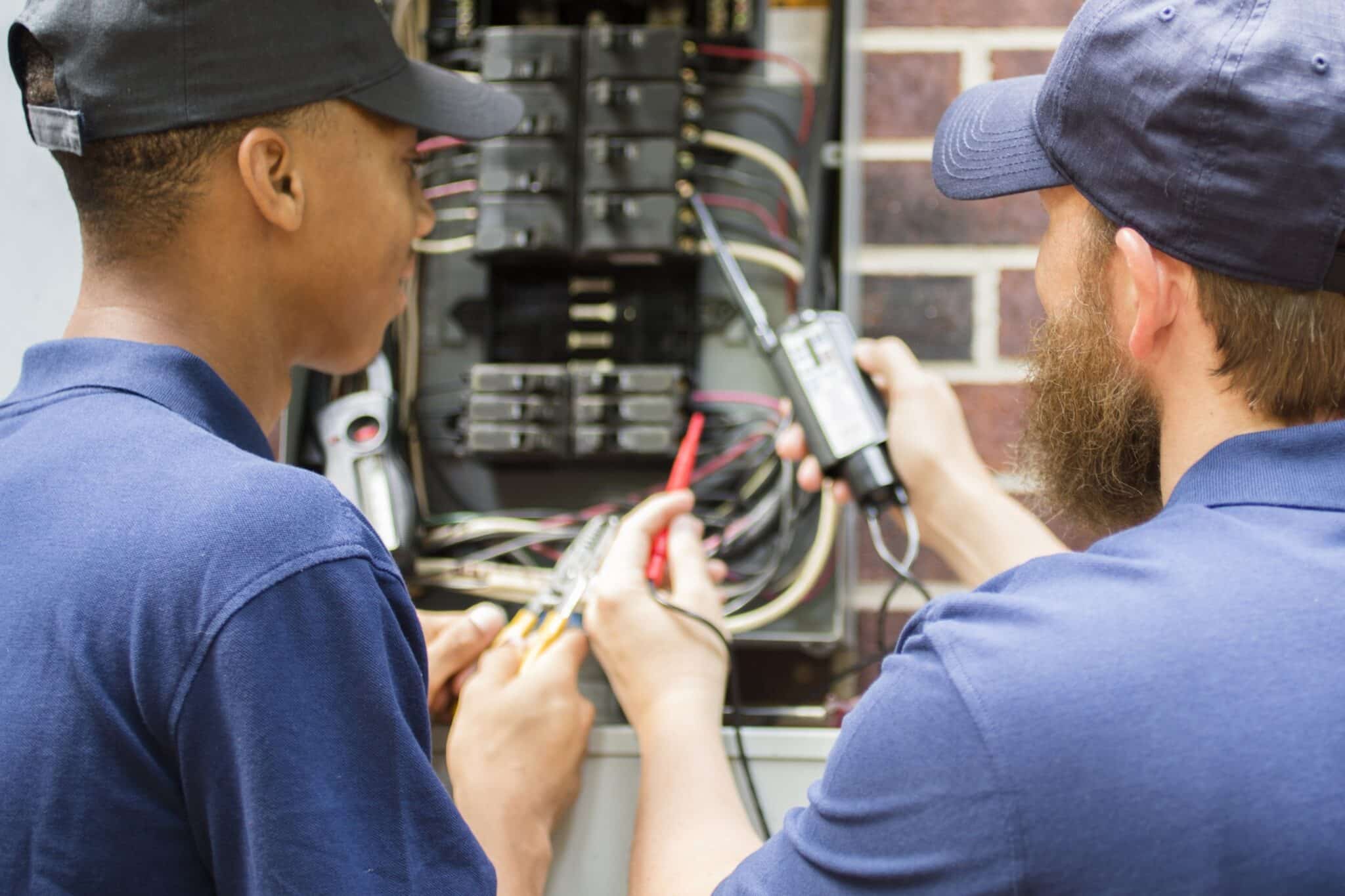
Handle Ties And Two Pole Breakers Replacement Guidance
When replacing separate single-pole breakers that feed a shared neutral, ensure the new solution provides simultaneous disconnection of both hot legs. A common two-pole breaker or factory-approved handle tie prevents one hot from remaining energized when the other is turned off. Electricians verify the breaker positions are on opposite phases before installing the paired device to keep neutral currents predictable. If the existing panel lacks space for a two-pole breaker, professionals discuss safe alternatives rather than leaving mismatched breakers in place.
- Confirm breaker two-pole common-trip capability.
- Verify breakers are on opposite phases.
- Use listed handle ties when allowed.
- Document breaker labeling after change.
Fitment checks include confirming physical clearance and bus configuration inside the panel before purchasing a replacement breaker. Technicians also inspect bus stab orientation and available adjacent slots to make sure the two-pole unit will seat correctly. If a handle tie is used, they confirm it matches the breaker model and is listed for that panel. Work proceeds only after the installer verifies the replacement meets manufacturer and UL compatibility guidance.
When converting to a two-pole or tied setup, professionals record which neutrals serve which cable and test continuity for each neutral conductor. They perform a no-load continuity check with breakers off, then re-energize and measure hot-to-hot and hot-to-neutral voltages under light load. A clamp meter checks neutral current balance once heavy loads are cycled to confirm proper cancellation. These steps help catch swapped neutrals or shared neutral splices that would defeat the paired breaker protection.
Upgrades also consider AFCI and GFCI compatibility because shared neutrals can confuse those protective devices if not grouped correctly. Sometimes electricians recommend combination AFCI-GFCI breakers that monitor both hots and the neutral together for reliable sensing. Homeowners in Pearland and Richmond, TX often ask about this when panels are older or space is limited. For homeowners considering outlet-level AFCI work, see the guidance on AFCI outlet upgrades to understand device placement and testing implications.
Neutral Pigtailing Methods And Safe Connection Practices
When joining neutrals in a shared-neutral setup, use pigtails so each device has a single conductor under its terminal, avoiding double-lugging. A professional uses appropriately sized short jumpers and a dedicated neutral screw or lug for each branch to keep terminations clear. They select wire gauge matching the circuit ampacity and use solderless crimp connectors rated for the number of conductors and the environment. Homeowners should notice clean, tight splices and no paint or corrosion at outlet boxes after work.
Inside junction boxes, crews make splices fully accessible and leave no buried wirenuts behind devices, which reduces future inspection difficulty. Technicians typically strip insulation to the manufacturer length, twist conductors neatly, and use torque tools when tightening device screws to spec. For multiwire branch circuits, they label the neutral pigtail so it remains associated with the paired hots and prevents accidental re-routing later. A clear label helps during future renovations and when verifying breaker grouping in the panel.
When bonding neutrals and grounds, electricians never tie neutrals to grounding conductors on subcircuits, which would nullify protective devices and create shock paths. They confirm grounding continuity with a continuity tester and verify separation at the service equipment using a clamp meter and visual inspection. For AFCI or GFCI upgrades, pros route the neutral pigtail so the protective device senses the complete circuit current and avoids nuisance trips. Testing of outlet devices follows tighter procedures such as those described in the GFCI outlet testing guidance to confirm correct operation.
To diagnose a questionable pigtail, a technician will observe outlet behavior under load, measure voltage at the device, and perform a continuity check with breakers off. They may remove the device to inspect the splice, take photos, and record torque and continuity readings for the written report. If multiple shared neutrals exist they trace each neutral back to the panel and confirm which breakers control the paired hots during an inspection procedure similar to those outlined in the electrical inspections overview. Homeowners in Pearland and Richmond, TX benefit from this documented approach when planning panel or circuit work.
AFCI GFCI Solutions For Shared Neutral Installations
For shared-neutral retrofits, combination AFCI-GFCI breakers are often the simplest way to ensure both arc and ground-fault sensing see the entire multiwire branch circuits conductors. A properly installed two-pole combination breaker monitors both hot legs and the neutral together, reducing nuisance trips from current imbalance that a single-pole device might cause. Electricians confirm breaker compatibility with the panel before purchase and installation to avoid fit or listing issues. For guidance on selecting the right breaker model and fit, professionals consult resources like choosing circuit breakers.
When a combination breaker is not feasible, grouped AFCI or GFCI device arrangements can work if the installer routes all conductors through a common sensing assembly. This means the neutral for both hot legs must not be separated from the protective device sensing window, or the device cannot accurately detect faults. A technician will verify continuity of the grouped neutral path and re-route any pigtails so the protective device reads the full circuit. If routing cannot be corrected, the electrician will propose an alternate protective strategy rather than leaving unreliable protection in place.
To confirm correct function after installing AFCI-GFCI solutions, professionals run both simulated arc tests and ground-fault tests using approved test equipment. They observe trip behavior while monitoring neutral current with a clamp meter to ensure the neutral carries expected vector differences and the device trips on intentional faults. Technicians also inspect panel labeling and device wiring visually, then document test results in a written report for the homeowner. Homeowners in Pearland should receive a clear explanation of which panels and circuits now have combined protection.
In more complex panels with multiple multiwire branch circuits, electricians may separate circuits onto dedicated two-pole protected breakers to avoid cross-circuit sensing errors. They diagnose interactions by temporarily isolating adjacent circuits and repeating AFCI and GFCI tests while watching neutral balance and voltage under load. For homes with older panels in Richmond, TX this step prevents false trips after retrofit and confirms the upgrade will be durable during real appliance use. If testing shows persistent nuisance trips, the professional documents causes and recommends targeted rewiring or breaker changes for reliable protection.
Testing Procedures And When To Reinspect After Repairs
After completing repairs on a multiwire branch circuits run, a technician follows a stepwise test sequence to confirm safety and functionality. They first verify proper breaker operation by exercising both poles together and observing correct simultaneous trip behavior. Next, a professional measures hot-to-hot and hot-to-neutral voltages under typical load to confirm phase relationship and expected voltages. Finally, they record neutral current with a clamp meter while cycling normal appliances to ensure neutral carries the vector difference only.
- Exercise both breaker handles together.
- Measure hot-to-hot and hot-to-neutral voltages.
- Clamp neutral and measure under load.
- Run AFCI and GFCI trip tests.
When AFCI or GFCI protection was installed, the electrician runs manufacturer-approved trip tests and watches neutral behavior simultaneously. They simulate fault conditions with proper test equipment and confirm the device trips without nuisance behavior on adjacent circuits. If a combined device is used, tests ensure both hots and neutral pass through the sensing window and respond together during a simulated fault. Written test results and photos are often left with the homeowner for future reference.
Reinspection timing depends on observed issues and the scope of repairs, not an arbitrary schedule set by the homeowner. If tests show borderline neutral heating, intermittent trips, or door-panel warmth, a follow-up within weeks is typical to confirm stability under varied loads. For straightforward replacements with clean test results, a single documented inspection often suffices unless new symptoms appear. Homeowners in Pearland should report any return of flicker, warmth, or tripping so the installer can re-evaluate circuits promptly.
For complex panels or when space forced creative breaker arrangements, a post-repair reinspect can include a panel upgrade evaluation and bus layout check. The electrician may recommend a formal breaker box upgrade if recurring interactions or limited breaker spacing compromise reliable two-pole solutions. During a reinspect the technician also reconfirms labeling accuracy and documents any remaining mixed neutrals or shared paths that could cause future trouble. If persistent problems remain, the professional will outline targeted rewiring steps and schedule follow-up work to close the issue.
When Homeowners Should Call A Professional Electrician
If you notice persistent trips, burning smells, or outlets that stay warm even after fixes, contact a licensed electrician promptly. These signs may indicate hidden neutral overheating or incorrect breaker pairing that requires expert diagnosis. A professional will use visual inspection, clamp-meter readings, and voltage checks to confirm whether the neutral carries unexpected current. Do not attempt panel repairs yourself, improper work can leave conductors energized and create shock risks.
When a homeowner schedules service, the electrician will trace conductors and verify breaker phase placement using a multimeter and continuity checks. They also inspect for correct pigtail installation and confirm that any AFCI or GFCI devices see the full multiwire branch circuits conductors. Technicians may photograph wiring and record test results in a written report to support future work decisions. If labeling is missing or incorrect, the pro will update panel markings for safer maintenance later.
Call a professional if tripping persists after installing combination breakers or grouped protection, since nuisance trips can signal cross-circuit interactions needing rewiring. An electrician can temporarily isolate adjacent circuits and repeat AFCI/GFCI tests while monitoring neutral balance under load. They will recommend targeted rewiring or a panel change when tests show repeated imbalance or inaccessible conductors. Homeowners in Pearland should keep records of symptoms and times to help the technician reproduce the issue during testing.
Arrange professional help before remodeling or adding major appliances that increase load on shared neutrals, because improper changes can destabilize neutral currents. During the visit the electrician evaluates whether two-pole breakers, handle ties, or neutral pigtails will achieve safe operation and code guidance. For work that may affect compliance, the technician references applicable standards and can explain the practical steps toward meeting electrical code compliance. If the panel is old or space-constrained, the pro may recommend a prioritized plan for upgrades in Richmond, TX to improve long-term safety.
Frequently Asked Questions
What are multiwire branch circuits and how do they work?
Multiwire branch circuits carry two hot conductors that share a single neutral to reduce wiring and balance loads. Each hot connects to a separate circuit with opposite phase so the neutral carries the difference current. When updating these circuits, tie handles or a two-pole breaker must be used to ensure simultaneous disconnection for safety. If you suspect an unsafe shared-neutral or unfamiliar wiring, stop and hire a licensed electrician to inspect and correct the installation.
How do I know if my panel needs handle ties or a two-pole breaker?
Check whether two hot wires share one neutral in the same cable or knockout, a sign of a multiwire branch circuits setup. If breakers feeding those hots are not tied or not a common-trip two-pole breaker, the panel likely needs an upgrade. A licensed electrician will inspect the panel, verify shared neutral wiring, and confirm handle ties or a two-pole breaker requirement with testing. If you notice loose neutrals, flickering lights, or odd breaker behavior, stop work and call a professional for safety.
When should a neutral be pigtail‑connected at outlets or junctions?
You should pigtail the neutral at outlets or junctions when multiple devices or branch circuits share a neutral conductor. Pigtails keep terminations independent, allow separate device replacement, and maintain a continuous neutral path. In Multiwire branch circuits, pigtails prevent opening the neutral when one hot-tripped device is removed and reduce nuisance tripping. Working on shared neutrals carries shock risk, so if unsure, stop and hire a licensed electrician to inspect and correct the wiring.
Can AFCI/GFCI combination breakers solve shared neutral issues?
Combination AFCI/GFCI two-pole breakers can resolve shared-neutral problems when the breaker monitors both hot conductors and the neutral together. They ensure proper trip coordination and prevent nuisance trips that single-pole breakers often cause on Multiwire branch circuits. However, they do not fix wiring errors like neutrals tied across unrelated circuits or improper neutral pigtails, so a visual inspection is still required. If you suspect incorrect wiring or experience repeated trips, stop work and call a licensed electrician for diagnosis and repair.
What tests will a pro perform to confirm a safe upgrade?
A technician will verify correct breaker wiring and that the two hot legs are on opposite phases using a voltage reading between them. They will confirm the neutral is continuous and properly pigtailed with a continuity test and visual inspection of the junction box. AFCI and GFCI devices receive trip tests with approved testers and functional verification under load to ensure coordination. If any irregular readings or loose connections appear, stop work and call a licensed electrician because shared-neutral issues can be dangerous.