




Quick answer
The residential electrical code in Texas is the National Electrical Code, adopted statewide through the Texas Department of Licensing and Regulation; the 2023 edition took effect September 1, 2023. Cities such as Houston, Katy, Sugar Land and Pearland adopt it with local amendments and enforce it through permits and inspections. It applies to new work and alterations; existing installations generally need not be upgraded unless they are changed.
Homeowners usually meet the residential electrical code in Texas at one of three moments: when a contractor says "that needs a permit," when a home inspector's report lists a page of electrical findings, or when a city inspector fails a remodel at rough-in. None of those is a good time to learn how the code works.
This guide explains what the code is and who enforces it, which rules affect a typical house most, the violations we find most often in Katy, Richmond and Pearland homes, when an older house must be brought to current standards, and how permits work in Fort Bend and Harris County. If you would rather have the house checked than read about it, our electrical inspection service does that room by room.
Key Takeaways
- Texas adopts the National Electrical Code statewide through TDLR; the 2023 NEC has been in effect since September 1, 2023.
- Cities adopt the NEC with local amendments and enforce it through permits and inspections; counties cover unincorporated areas.
- The code applies to new installations and alterations; existing wiring is not required to be upgraded unless it is changed.
- The rules homeowners meet most are GFCI and AFCI protection, outlet spacing, dedicated circuits, panel working space and smoke alarms.
- Common violations include panels blocked by storage, extension cords used as permanent wiring, missing GFCI protection and open junction boxes.
- Panel changes, service upgrades, new circuits, generators, EV chargers and pool wiring are permitted and inspected in every local jurisdiction.
What Is the Residential Electrical Code in Texas?
Texas does not write its own electrical code. It adopts the National Electrical Code, published by the National Fire Protection Association as NFPA 70, as the minimum standard for all electrical work in the state through the Texas Department of Licensing and Regulation. TDLR also licenses electricians and electrical contractors under the Texas Electrical Safety and Licensing Act, which is why every legitimate contractor can show a TECL number.
The NEC is revised every three years. Texas adopted the 2023 edition effective September 1, 2023, so new work across the state is inspected against the 2023 NEC as adopted in Texas. Cities may adopt it with local amendments that tighten or clarify specific sections, and the residential chapters of the International Residential Code that cities also adopt are written to match the NEC.
In practice the code touches four things a homeowner cares about:
- Protection: where GFCI, AFCI, surge and tamper-resistant devices are required.
- Capacity: how circuits are sized, how many outlets go in each room, and which appliances need their own circuit.
- Installation quality: boxes, covers, cable support, conductor sizing, working space at the panel, grounding and bonding.
- Life safety: smoke and carbon monoxide alarm placement and interconnection, emergency disconnects.
The code is a minimum. A licensed electrician can exceed it, and often should.
Who Enforces the Electrical Code and When Does It Apply?
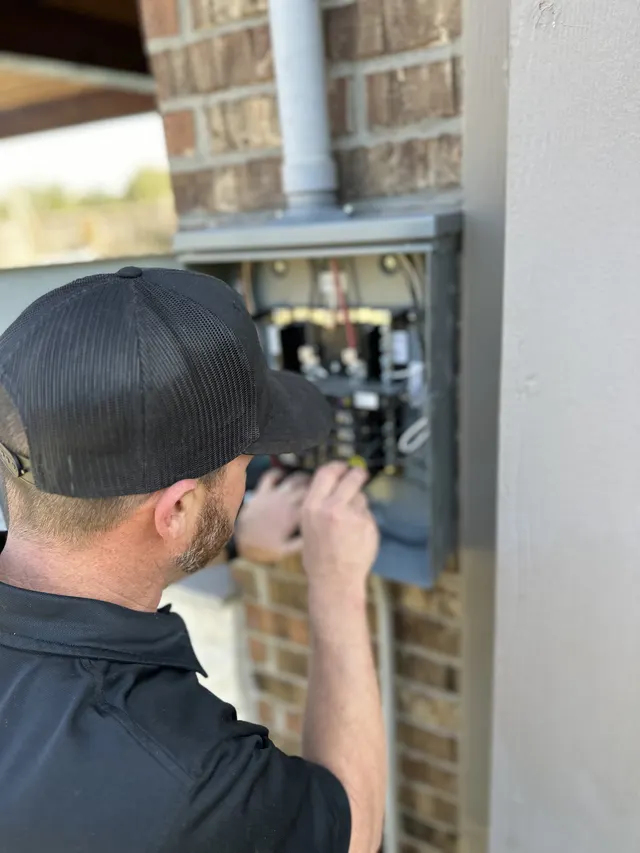
Enforcement of the residential electrical code is local. Inside city limits, the city's building department issues electrical permits and sends an inspector; outside city limits, the county does. Each is the authority having jurisdiction for that address, and its inspector has the final say.
The code is triggered by work, not by time. It applies when you:
- Add, extend or relocate a circuit.
- Replace a panel, upgrade the service, or change the meter base.
- Install a standby generator, a transfer switch, an EV charger or a pool and spa electrical system.
- Remodel a kitchen, bathroom or addition in a way that adds outlets or lighting.
It does not apply retroactively. A house wired to the 1984 code can keep its 1984 wiring as long as it is not altered, which is why a home can be legal and still fall short of current protection. The exceptions are life-safety items in some circumstances, such as smoke alarms when a permitted remodel occurs, and rental housing, where Texas law requires working smoke alarms.
Selling a house does not trigger an upgrade either, but a buyer's home inspector will flag anything that does not meet current practice, and that becomes a negotiation. Insurers sometimes require specific items on older homes, such as replacing a Federal Pacific panel, before writing a policy. Our guide to home electrical inspections explains the difference between a code inspection and a safety inspection.
Which Residential Electrical Code Rules Affect Homeowners Most?
Most of the NEC is for electricians. These are the sections a homeowner meets on a remodel, an inspection report or a permit.
- GFCI protection for receptacles in bathrooms, kitchens, garages, laundry areas, outdoors, crawl spaces and within six feet of any sink, tub or shower. The GFCI requirements guide covers each location.
- AFCI protection on circuits serving bedrooms, living rooms, hallways, closets and most other living areas in new work and on circuits that are extended.
- Tamper-resistant receptacles throughout the house in new installations.
- Receptacle spacing: no point along a wall more than six feet from an outlet, kitchen counter outlets within two feet of any point, and at least one outlet in each bathroom, outdoors, the garage and the laundry. See outlet spacing rules for every room.
- Required circuits: two 20-amp small-appliance circuits for the kitchen, a 20-amp bathroom circuit, a 20-amp laundry circuit, and dedicated circuits for the range, dryer, water heater, air handler, dishwasher, disposal and microwave.
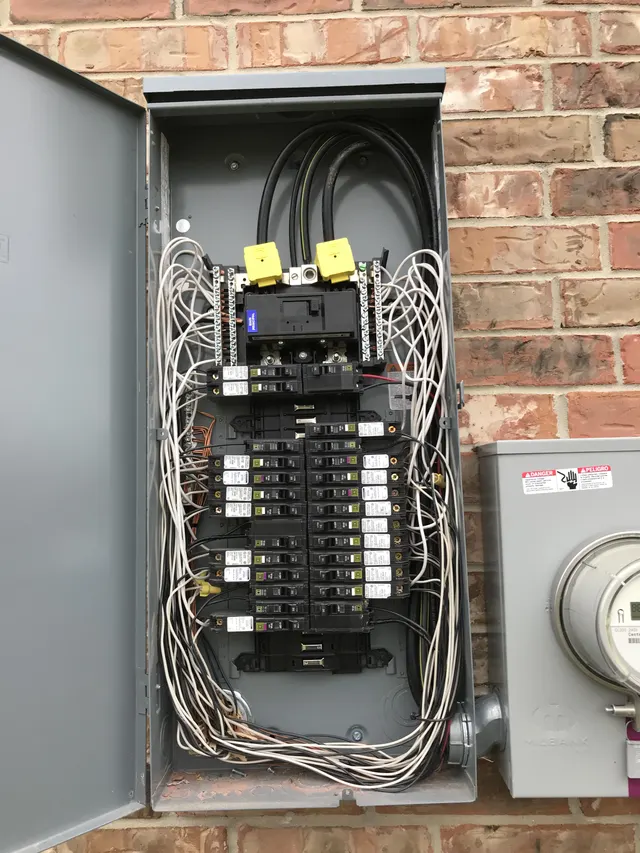
- Panel working space: 30 inches wide, 36 inches deep and about six and a half feet high, kept clear. No panels in bathrooms or clothes closets.
- Grounding and bonding: a grounding electrode system at the service, bonding of metal water and gas piping, and bonding of pool and spa equipment.
- Recent service requirements: a surge protective device at the service and an outdoor emergency disconnect for new and replaced services on one- and two-family homes.
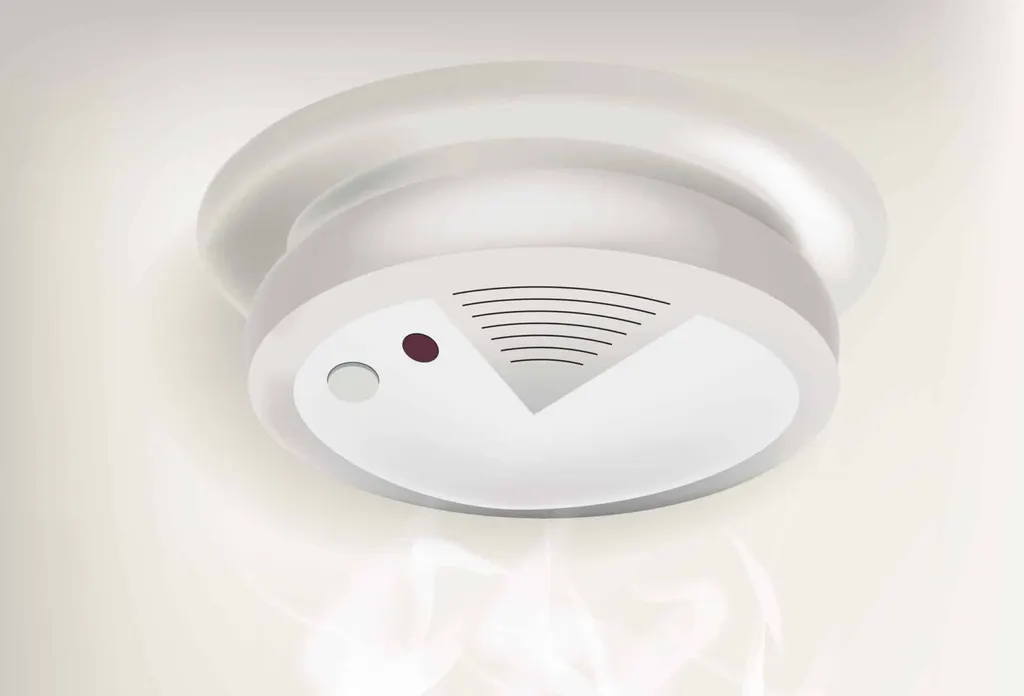
- Smoke and CO alarms: in every bedroom, outside sleeping areas and on every level, interconnected, in new construction and permitted remodels.
What Are the Most Common Code Violations in Texas Homes?
Inspectors and electricians see the same violations over and over, and most are cheap to fix.
- Blocked panels. Shelving, water heaters, freezers and boxes stacked in front of the panel. The working-space rule exists so a person can open the panel and step back from it in an emergency.
- Extension cords as permanent wiring. A cord stapled along a baseboard or feeding a garage freezer for years. Cords are for temporary use; the fix is a receptacle where the load is.
- Missing GFCI protection in garages, outdoors, kitchens and baths of homes built before the requirement reached each location.
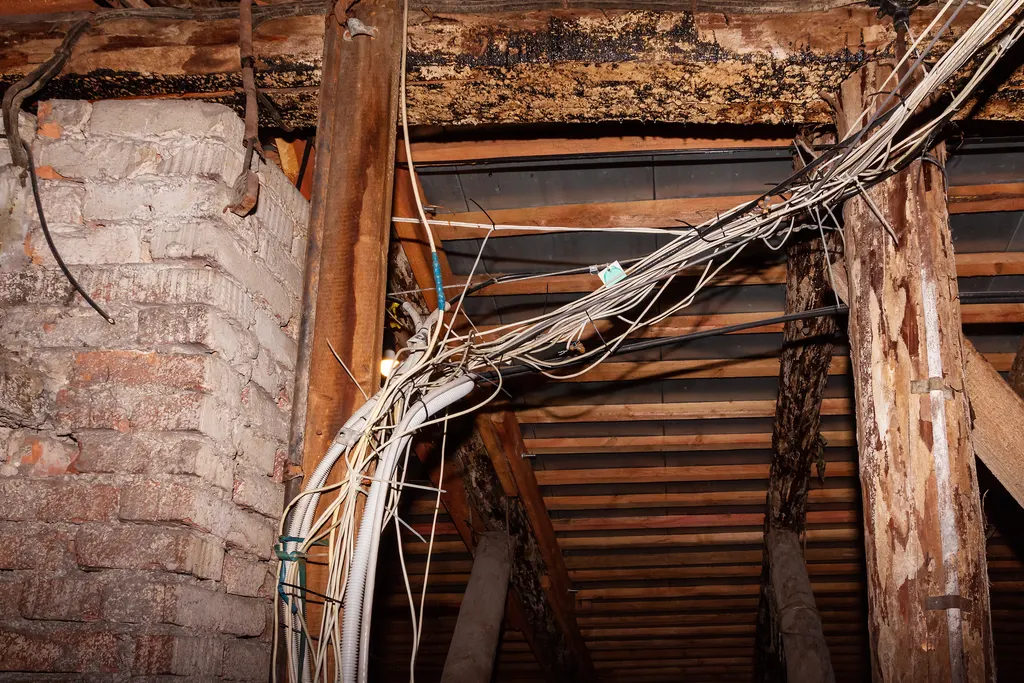
- Open junction boxes and splices outside boxes, usually in the attic.
- Double-tapped breakers and oversized breakers protecting undersized wire, both common in panels that have been "added to" without a permit.
- Ungrounded three-prong outlets, where a two-prong receptacle was swapped for a three-prong with no ground conductor and no GFCI. Our grounding and bonding guide explains the compliant options.
- Unpermitted additions: garage conversions, patio circuits, workshop subpanels and EV chargers installed without inspection.
- Generator backfeeding through a dryer outlet instead of a transfer switch or interlock, which can energize CenterPoint Energy's lines and injure a lineman.
- Missing pool and spa bonding, or pool pumps and lights without GFCI protection.
- Non-weatherproof outdoor boxes and covers, which corrode quickly in Gulf Coast humidity.
Items one through three are homeowner-correctable or inexpensive. The rest need a licensed electrician and, in most cases, a permit.
Electrical Code and Permits in Katy, Richmond and Pearland
Each city in our service area has adopted the 2023 NEC as adopted in Texas with its own amendments, and each runs its own permit office. Katy straddles three counties, so a home on one side of a street may be inside city limits and the house behind it in unincorporated Harris, Fort Bend or Waller County, which changes who issues the permit. Richmond homes are inspected by the city inside its limits and by Fort Bend County in the surrounding subdivisions, including most of the newer master-planned communities. Pearland spans Brazoria, Harris and Fort Bend counties and enforces its own amended code within the city.
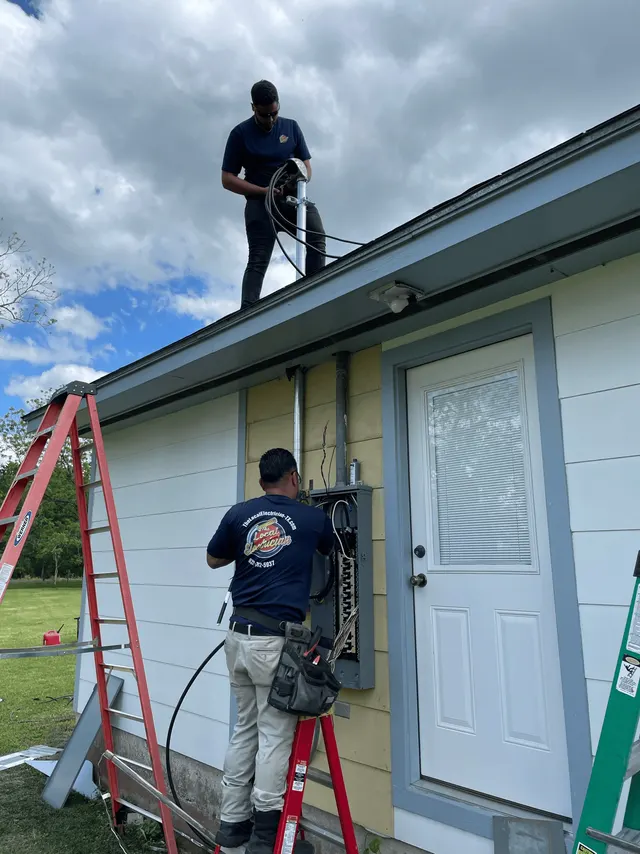
The permitted work is consistent everywhere: panel replacements, service upgrades, new or extended circuits, standby generators and transfer switches, EV charger circuits, pool and spa electrical, and remodels that add outlets or lighting. The licensed contractor pulls the permit, the inspector visits at rough-in and final, and for service work CenterPoint Energy does not reconnect the meter until the inspector has released it.
What we see locally follows housing age. The 1970s and 1980s neighborhoods in older Katy and Richmond carry the grandfathered conditions: aluminum branch wiring, Federal Pacific and Zinsco panels, no GFCI or AFCI protection. Communities such as Cinco Ranch, Aliana and Shadow Creek Ranch were built to later editions and are mostly compliant, with violations concentrated in unpermitted additions. Since Hurricane Beryl and the 2021 freeze, the most common permit we pull is for a standby generator, and the most common violation we correct is a portable generator backfeeding the panel.
Does an Older Home Have to Be Brought Up to Current Code?
Not on its own. A house is held to the residential electrical code in effect when each part of it was built or last altered, so a 1979 kitchen with one counter outlet is legal until someone remodels it. The questions homeowners actually face are narrower.
What triggers an upgrade
- Altering a circuit brings the altered portion to current code, and extending a living-area circuit generally requires adding AFCI protection to it.
- Replacing a panel brings the panel, service and grounding electrode system to current code. Whether existing circuits must also gain AFCI or GFCI protection varies by jurisdiction; the inspector decides.
- A permitted remodel in many jurisdictions requires smoke alarms throughout the home to be brought to current placement and interconnection.
- Replacing a receptacle in a location that now requires GFCI protection generally requires a GFCI device, and replacing an ungrounded receptacle requires a GFCI or a ground.
What does not
- Selling the house, although buyers will negotiate over findings.
- Time alone, even in a house wired fifty years ago.
- Like-for-like replacement of a light fixture or switch.
The practical advice is to upgrade on safety grounds rather than wait for a trigger. A Federal Pacific panel, aluminum wiring and missing GFCI protection are legal in an untouched house and still hazardous. The Local Electrician recommends replacing hazard-brand panels and adding GFCI and AFCI protection to older circuits whether or not a permit requires it.
How to Make Sure Your Home Meets Code: DIY vs Licensed Electrician
Texas law requires electrical work performed for others to be done by licensed electricians under a licensed contractor, and local jurisdictions issue electrical permits to those contractors. Some allow a homeowner to pull a permit for their own primary residence; the work is inspected to the same standard either way.
What a homeowner can do
- Clear the working space in front of the panel and remove extension cords from permanent duty.
- Test GFCIs monthly and use a plug-in tester to find ungrounded or miswired outlets.
- Replace a light fixture, switch or receptacle like-for-like on a copper circuit with the breaker off and verified.
- Check that any contractor's TECL number is active through TDLR before signing.
What requires a licensed electrician and a permit
- Everything in the permitted-work list above, plus any work inside the panel and any connection to aluminum wiring.
The consequences of skipping the permit are practical: a stop-work order or tear-out if the city finds it, failed inspections at resale, and insurance claims that are harder to pursue after a fire traced to unpermitted work. The inspection itself is the benefit; a second set of trained eyes costs little and catches a lot.
Bringing an older home to current standards is priced by scope: panel replacement, the number of circuits needing AFCI or GFCI protection, aluminum remediation, smoke alarm upgrades and attic access. The Local Electrician provides upfront pricing, free estimates on installations and financing for larger code-compliance projects, and pulls the permit for every job that needs one.
Frequently Asked Questions
What are residential electrical codes?
They are the minimum safety rules for wiring, devices and equipment in homes. In Texas the residential electrical code is the National Electrical Code, adopted statewide through TDLR and enforced by city and county building departments through permits and inspections. Cities adopt it with local amendments. The code sets where protective devices go, how circuits are sized and how installations must be made.
How often do electrical codes change?
The National Electrical Code is revised every three years. Texas adopted the 2023 edition effective September 1, 2023, and will consider the 2026 edition when it is published. Cities update their local adoption on their own schedule, sometimes a year or more after the state. New work is inspected to whichever edition the local jurisdiction has adopted at the time the permit is issued.
Why are electrical codes important?
Each requirement traces back to fires, shocks and electrocutions that happened before it existed. GFCI protection, AFCI breakers, tamper-resistant receptacles, panel working space and interconnected smoke alarms all exist because of documented injuries. Following the code is the simplest way to get the benefit of that history without learning each lesson in your own home.
How can I make sure my home meets residential electrical code in Texas?
Have a licensed electrician perform a safety inspection that checks the panel, grounding, GFCI and AFCI protection, outlet layout, attic wiring and smoke alarms against the 2023 NEC as adopted in Texas, then correct hazards first and grandfathered shortfalls as budget allows. For new work, hire a TDLR-licensed contractor who pulls the permit and schedules the inspections.
What is the penalty for not following electrical codes?
Unpermitted work can bring a stop-work order, a requirement to open walls for inspection or remove the work, and permit fees after the fact. At resale, a home inspector will flag it and buyers will negotiate or walk. After a fire or shock, an insurer may dispute a claim traced to unpermitted or non-compliant work. The specific fines vary by city.
Do I need a permit to replace my electrical panel in Katy or Richmond?
Yes. Panel replacement is permitted and inspected in every jurisdiction in the Houston area, including the cities of Katy and Richmond and the unincorporated parts of Fort Bend, Harris and Waller counties. The licensed contractor pulls the permit, the inspector verifies the installation and grounding, and CenterPoint Energy reconnects the service after the inspector releases it. The Local Electrician handles the permit on every panel job.
Who enforces electrical code in Pearland?
Inside Pearland city limits, the city's building department issues electrical permits and performs inspections under its adopted and amended edition of the National Electrical Code. Outside the city, the county for that address, which may be Brazoria, Harris or Fort Bend, is the authority. TDLR licenses the electricians and contractors but does not inspect individual homes.