





Key Takeaways About Short Circuit Tracing
Short circuit tracing finds where unintended current bypasses normal wiring and creates a fault. This guide helps homeowners and property managers act when breakers trip repeatedly or you notice burning smells or flickering.
- Identify visible damage like scorch marks or warm outlets quickly.
- Prevent repeated trips by isolating circuits and removing loads first.
- Avoid risky live testing and call a licensed electrician when needed.
- Spot intermittent faults by noting timing and which devices run.
- Reduce repair scope with targeted tests and documented readings.
- Plan maintenance checks and thermal scans to catch problems early.
Introduction
Short circuit tracing matters when breakers trip repeatedly and outlets or fixtures stop working. A persistent short can cause heat, damage wiring, and increase fire risk. Homeowners often notice buzzing, scorch marks, or breakers that trip at certain times of day. In Katy, TX properties, recurring trips can interrupt daily life and hide dangerous faults.
Finding the exact location of a short saves time and prevents unnecessary replacements. Technicians use visual checks and measured readings to separate nuisance trips from true faults. Visible signs like burn marks or discolored receptacles often point to problem areas. For a homeowner in Pearland, spotting those cues early reduces the chance of further damage.
Shorts can originate from damaged insulation, loose connections, or degraded devices inside junction boxes. The problem might show only when a certain load is on the circuit or after moisture enters an outlet. That makes tracing a short more than flipping breakers and guessing. Professional tracing identifies whether the fault lies in a fixture, a length of cable, or the breaker itself.
Ignoring recurring breaker trips can raise safety risks and lead to appliance failure or electrical fires. A confident diagnosis relies on both observations and targeted testing by a qualified electrician. Prompt tracing limits repair scope and protects other parts of the electrical system. Call a licensed professional if you see smoke, persistent burning smells, or repeated trips that you cannot explain.
How Short Circuit Tracing Works And Why It Happens
Short circuit tracing locates the path where unintended current bypasses normal wiring and creates a fault. Technicians start by isolating the affected circuit and removing all loads to prevent confusion during testing. They use visual inspection for loose connections, burn marks, or moisture inside junction boxes and at receptacles. Homeowners often ask how professionals pinpoint the fault; the answer is a mix of measured readings and methodical isolation steps.
- Turn off the breaker and remove connected devices.
- Use a multimeter to check for continuity and voltage.
- Test GFCI and AFCI devices for proper operation.
- Inspect junction boxes for loose or discolored wiring.
Common tools include a multimeter, tone generator, and insulation resistance tester to confirm where conductors short together. A professional may also use an infrared camera to find hotspots in panels or along runs without invasive work. For certain neutral-related faults, electricians follow specialized checks; learn more about that approach at neutral fault tracing. These tests separate device failures from wiring faults so repairs target the true cause.
Diagnosis proceeds from simple to complex to avoid unnecessary repairs and to protect other circuits during testing. A technician will measure resistance between conductors, then divide the circuit into sections using a process of disconnection and re-testing. Observable homeowner clues like buzzing, trips under specific loads, or outlets that only work intermittently guide the order of inspections. If testing shows near-zero resistance between hot and neutral, the team will trace along the cable path or open junctions to find the damaged spot.
Understanding why shorts happen helps prevent repeats after repair work finishes and safety is restored. Mechanical damage, rodent chew marks, or degraded insulation from heat are common causes that show up during tracing. Loose screws at receptacles and backstabbed wire terminations often reveal themselves under inspection and testing. Homeowners in Pearland and properties in Katy, TX should act quickly when they notice persistent tripping to reduce heat damage and fire risk.
Common Causes Of Recurring Breaker Trips At Home
Worn or damaged insulation on a cable run often causes recurring trips when conductors touch. Rodent damage or nail punctures let hot and neutral meet and create a hard short. A technician will note chewed sheathing or visible cuts during a targeted inspection. Homeowners might notice outlets that work intermittently before full trips start happening.
Loose terminations at the panel, switches, or receptacles can heat and then short under load. A poor connection raises resistance and causes localized heating that degrades insulation over time. Professionals check the service panel connections and tighten or replace lugs when required as part of a breaker tripping diagnosis. You can read more about that inspection process in this breaker tripping diagnosis resource.
Faulty devices such as dryers, ovens, or old lighting fixtures can develop internal shorts that only appear under certain conditions. Motor-start currents or worn internal components sometimes short to ground when the appliance runs. Technicians isolate appliances from the circuit to confirm whether the device or the wiring causes trips. In Pearland, homeowners often report trips that correlate with using specific appliances during busy hours.
Moisture intrusion into junction boxes, outdoor outlets, or basement wiring creates intermittent shorts that are hard to trace visually. Corrosion or water bridging conductors lowers insulation resistance and triggers trips when humidity or storms occur. An electrician will use insulation resistance testing and visual checks to confirm moisture-related faults. Properties in Katy, TX with older outdoor boxes may need improved weatherproofing to stop repeat issues.
Warning Signs To Spot Electrical Shorts Early
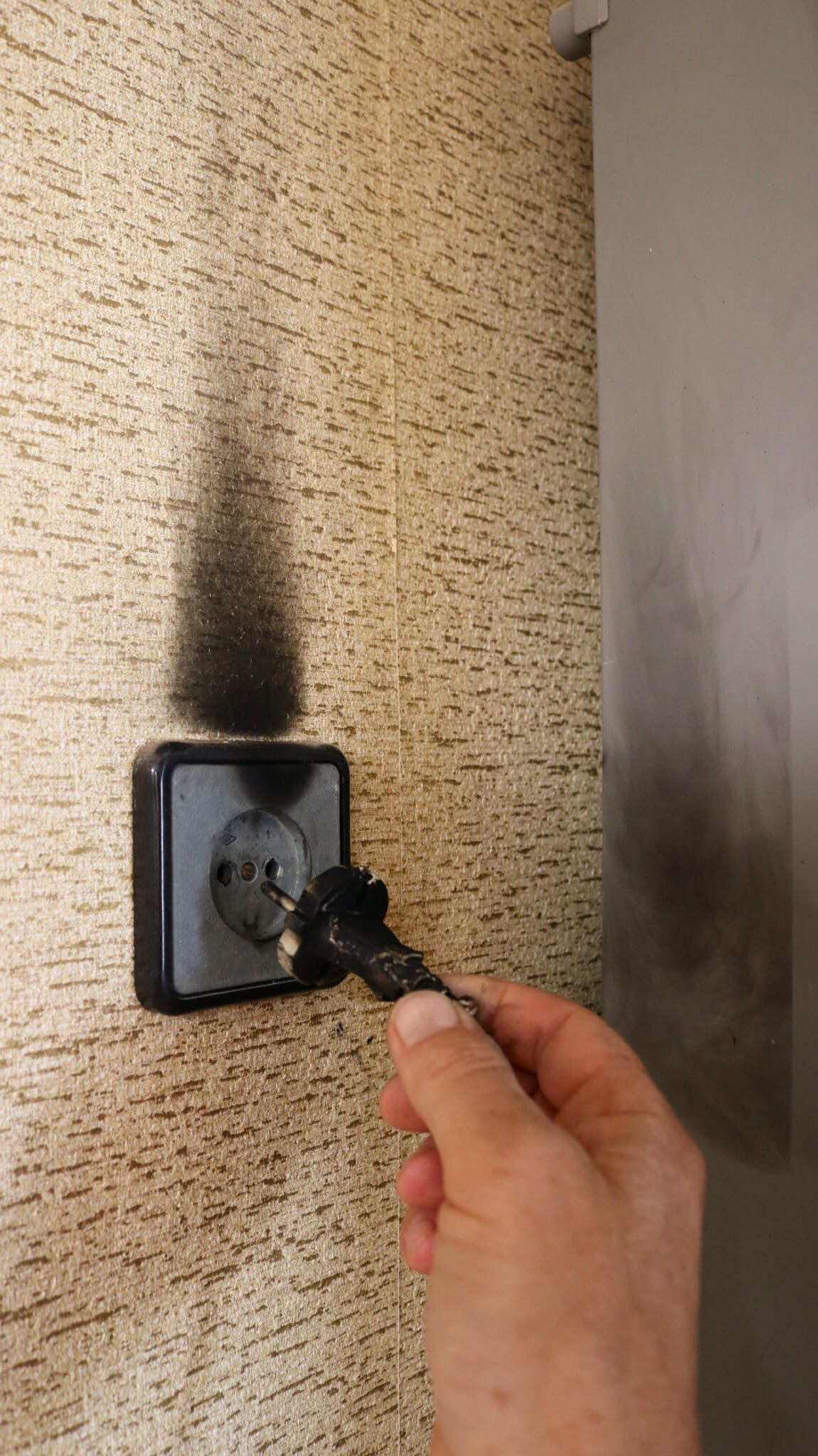
Frequent but brief trips during specific tasks often precede a full short and deserve attention right away. Smells like warmth or faint burning near switches or outlets can indicate insulation breakdown inside a box. Flickering lights that happen when a particular device runs suggest a load-related fault along that circuit. Homeowners should note exact timing and which devices are on when the symptom appears.
Visible surface signs differ from internal faults but still warn of trouble before a hard short develops. Look for cracked receptacle faces, loose mounting plates, or darkening around screws that show heat stress. Hissing or buzzing at the panel or from a switch points to loose connections heating under load and needs testing. Record which breaker trips and whether resetting it temporarily restores power for diagnostics later.
Intermittent outlet function is a frequent early indicator of a failing termination or backstabbed connection inside the box. A technician will check receptacle screws, grounding conductor continuity, and use a voltage reading to confirm unstable contact. Moisture-related symptoms include trips after rain or basement dampness and often accompany corrosion at terminals. For arc-related signs and specialized testing methods, professionals follow arc-fault diagnostic procedures described at arc-fault diagnostics.
Warm faceplates or discolored wiring that appear during use mean heat buildup and increasing risk of insulation failure. If you notice these cues, avoid heavy loads on that circuit and unplug suspicious appliances immediately. A professional diagnosis will include insulation resistance testing, continuity checks, and targeted inspections of junction boxes. In Pearland and around Katy, TX properties, acting on these signs early reduces repair scope and improves safety.
Tools And Equipment For Accurate Short Circuit Tracing
For accurate short circuit tracing, technicians rely on specific meters and testers that evaluate insulation and continuity without guessing. A true-rms multimeter gives voltage and resistance readings to confirm energized conductors and near-zero resistance faults. Insulation resistance testers measure megohms between conductors to reveal moisture-damaged or degraded insulation before a hard short occurs. Professionals often pair these readings with visual inspection inside junction boxes and at terminations for a complete picture.
- Multimeter for voltage and resistance checks.
- Insulation resistance tester for megohm readings.
- Tone generator to locate concealed cables.
- Clamp meter for load and fault current observation.
- Infrared camera to spot hot connections.
Cable locators and tone generators help when shorts occur behind walls or in long runs of cable and speed the search. A tone sent along the conductor lets a probe identify the cable path without opening every wall cavity. Clamp meters measure current without disconnecting conductors and reveal unexpected neutral or ground currents during testing. Infrared cameras detect hotspots at receptacles or panels that suggest failing connections before insulation fails.
Diagnostic steps often include isolating the circuit, removing devices, and using an insulation tester to compare readings across conductors. A professional will record voltage and resistance values, noting any drift under applied load or after moisture exposure. They may also perform simulated loads while monitoring current to see if a fault appears only under operating conditions. These methods reduce destructive opening of walls and target repairs more precisely.
For homeowners tracking down repeated trips, ask for test reports with measured readings and photos showing problem locations and failed components. If fault current estimation is relevant, technicians reference calculation methods rather than guessing values; see a technical discussion on fault current calculation for context. A clear report helps decide whether a simple device replacement or a run of cable needs repair or replacement. In Pearland and around Katy, TX properties, documented diagnostics speed repairs and support safe outcomes.
Step By Step Short Tracing Methods For Homeowners
Start by turning off the circuit at the panel and labeling the breaker to avoid accidental re-energizing during testing. Remove all plug-in devices and fixtures from the circuit to eliminate load variables before measurements. Use a multimeter to confirm zero voltage between hot and neutral, then between hot and ground, before proceeding. If any voltage remains, stop and call a licensed electrician because safe isolation failed.
Next, disconnect the first device or fixture on the run and test continuity between conductors at that point to see if the fault is downstream. Work progressively, opening the next junction box and repeating continuity and insulation resistance checks until readings change. When resistance jumps from near-zero to high megohms, you likely isolated the segment containing the short. Record readings and take a photo of any damaged insulation or terminal for later reference.
If tests still indicate a short along a concealed run, use a tone generator or cable locator on the isolated conductors to follow the cable path without drywall removal. Probe accessible junctions while listening for the tone to map the run and find likely damage zones behind walls or ceilings. An infrared camera can also reveal a warm spot at a connection or splice under load testing, guiding a targeted opening. For ground-related trips, review ground-fault protection practices before extra testing and reference ground-fault protection guidance for safety measures.
When a device replacement eliminates the fault, re-test the circuit with insulation resistance and continuity checks before restoring normal loads. If a panel connection or breaker appears involved, inspect visible lug tightness and bus condition as part of electrical panel maintenance steps and log any loose hardware. If repeated isolation points to buried or inaccessible cable damage, consult a professional for trenching or conduit access to repair safely. In Pearland and for properties in Katy, TX, document findings and photos to help a technician finish repairs quickly and safely.
When To Call A Professional For Short Circuit Tracing
Call a professional when your isolation tests and basic tracing fail to locate the fault despite consistent trips. A licensed electrician will perform advanced diagnostics safely, including insulation resistance under controlled test voltages. Professionals watch for hidden hazards like shared neutrals or unsafe panel conditions that need trained assessment. If you smell burning or see charring during testing, stop and call for help immediately.
If breaker noise or buzzing accompanies trips, an electrician can inspect the panel for loose connections and worn breakers using proper PPE. Request a thorough inspection that documents observations and measured readings so you understand the issue and repair needs. Technicians may use staged load testing and temporary monitoring to confirm intermittent faults that do not show during a quick visit. For more on breaker sounds and what they mean, review material about breaker noise causes.
Call professional help when your tracing points to concealed wiring damage behind walls or ceilings that require invasive access. An electrician can safely open walls, follow cable runs, and repair or replace damaged conductors while preserving circuit integrity. They also handle panel work like replacing breakers, tightening lugs, or installing AFCI/GFCI protection when code or safety dictates. For homeowners in Pearland, documented testing speeds any necessary remediation and reduces repeat visits.
Hire a pro if repairs involve service disconnects, meter work, or altering grounding and bonding arrangements that affect overall safety. A trained technician will verify system grounding continuity and confirm proper neutrals and grounds after repairs to prevent future trips. Expect a clear report with photos, test values, and recommendations so you can decide on targeted repairs. In Katy, TX properties, using a licensed electrician keeps work compliant and focused on long-term safety.
Fixes And Repairs After Short Circuit Tracing Findings
After locating the fault, repairs usually target the damaged component or section of cable and restore safe continuity. Professionals replace burned or nicked conductors, rebuild splices in junction boxes, and renew insulation where allowed. They often test grounding conductor continuity and device grounding to confirm safe fault paths after repairs. Homeowners should expect a final insulation resistance test before the circuit returns to service.
- Replace damaged cable sections when insulation is compromised.
- Re-terminate loose or corroded connections securely.
- Install new receptacles or switches when devices fail.
- Apply proper moisture-proofing for outdoor or damp boxes.
- Label the repaired circuit at the panel for future reference.
If a breaker or load center component caused the short, the technician may swap the breaker and inspect the bus for damage. They verify breaker trip characteristics match the circuit load and install AFCI or GFCI protection when safety dictates. For complex panels, ask for a documented load-center map so you understand circuit locations and future work. A clear map speeds future troubleshooting and supports safe maintenance practices.
When repairs require opening walls, electricians aim for the smallest targeted access to reach the cable run and limit drywall replacement. They take photos and record test readings before and after repairs to show owners the issue and confirm remediation. After repair, technicians perform staged load tests to ensure the fault no longer appears under typical appliance use. In Pearland and in Katy, TX homes, keeping those records helps track recurring problems and supports long-term safety decisions.
Preventive Maintenance To Stop Future Breaker Trips
Develop a simple maintenance schedule that checks circuits most likely to trip under load, focusing on inspection frequency and measurable actions. Include visual checks of receptacle faces, tightening of accessible terminations, and testing of GFCI and AFCI devices monthly. Keep a written log of when tests occurred and the readings or observations made for future reference. This record helps spot trends before trips become frequent and supports informed repair decisions.
Thermal checks of the load center and visible connections should occur at least twice a year to catch overheating early. A handheld infrared scan identifies rising temperatures at lugs or breakers before insulation breaks down; technicians often use this as part of preventive visits. For a homeowner wanting context, see a discussion of using thermal imaging in panel inspections at panel thermal imaging. Document any hot spots and schedule follow-up tightening or component replacement promptly to prevent failure.
Protect circuits with appropriate overcurrent devices and consider replacing aging breakers that show wear or inconsistent trip behavior during routine checks. Ensure AFCI protection on bedroom and living-area circuits where code intends arc protection, and GFCI where water exposure exists near outlets or fixtures. Verify grounding conductor continuity and tightness at accessible points during maintenance, since poor grounding can mask or worsen faults. If you see corrosion or damp junction boxes, arrange professional remediation without delay to avoid recurrent shorts.
Train household members to report smells, flicker timing, or device-specific trips so you catch problems early and describe symptoms accurately to a technician. When trips correlate with appliance use, label those times in the log and limit use until a professional confirms safety. For properties in Katy, TX, schedule periodic professional inspections to complement homeowner checks and maintain system reliability. If maintenance steps raise safety concerns or tests show persistent low resistance, contact a licensed electrician immediately.

Frequently Asked Questions
How does short circuit tracing work in a home panel?
Technicians begin short circuit tracing by isolating the affected circuit at the panel and visually checking breakers and wiring for obvious damage. They use tools like a multimeter, continuity tester, and clamp meter to locate abnormal current flow or a direct short. Infrared scans and insulation resistance tests help pinpoint hidden faults without touching energized conductors, but these tests can still be hazardous. If you suspect a short, exercise caution and hire a licensed electrician to perform tracing and repairs safely.
What signs mean I need short circuit tracing now?
Repeated breaker trips, burning smells near outlets, or visible scorch marks mean you should schedule short circuit tracing promptly. Flickering lights that follow appliance use or trips tied to a single circuit also point to a hidden short. If outlets feel warm or you hear buzzing, stop using affected circuits and turn off the breaker to reduce fire risk. Call a licensed electrician to diagnose and perform short circuit tracing safely using proper tools and tests.
Which tools reveal hidden shorts behind walls?
Technicians use a clamp meter to measure current and find live leakage without opening walls. A circuit tracer pairs a transmitter on the circuit with a handheld receiver to follow wiring paths. Infrared cameras reveal hot spots near shorts, while insulation resistance testers confirm conductor faults. If you suspect a hidden short, exercise caution and contact a licensed electrician to avoid shock or fire risk.
Can a faulty appliance cause recurring breaker trips?
Yes, a faulty appliance can cause recurring breaker trips by drawing excessive current or creating a short inside its wiring or motor. Symptoms include trips when the appliance turns on, burning smells, buzzing sounds, or visible scorch marks at the plug or outlet. Avoid repeated resets because they can worsen damage and increase fire risk; shut off the circuit and unplug the appliance if safe. For persistent trips or if you detect heat or smoke, contact a licensed electrician for short circuit tracing and repair.
When should I call a licensed electrician for tracing?
Call a licensed electrician when breaker trips happen repeatedly or you smell burning or see charred outlets. If circuit breakers trip after resetting, a professional can perform short circuit tracing safely. Do not attempt live troubleshooting if you lack training because electrical faults can cause fire or shock. An electrician will use proper tools to locate the fault, secure the circuit, and recommend repairs.