





Key Takeaways About Electrical Troubleshooting
Electrical troubleshooting means the step-by-step process professionals use to find recurring outlet and circuit faults. This summary is for homeowners and property managers who need quick guidance when repeated electrical problems threaten safety or daily use.
- Identify loose connections and damaged receptacles quickly during inspection.
- Prevent fires by noting warmth scorch marks or burning odors early.
- Avoid DIY live tests and power on circuits without proper tools.
- Spot shared neutrals overloaded circuits and faulty protective devices promptly.
- Reduce repeat calls by documenting tests readings and appliance usage.
- Plan professional diagnostics with photos notes and recorded measurements.
Introduction
Persistent outlet and circuit problems are more than a nuisance. They can cause flickering lights, intermittent power, tripped breakers, and even burning smells. Homeowners often notice the issue in one room then find it spreads or returns after a reset. When problems recur, the hidden cause is often behind walls or inside the service panel.
Electrical troubleshooting by a professional focuses on safety and accurate diagnosis. A trained technician looks for loose connections, overloaded circuits, failing breakers, and damaged wiring. They use tools like a voltage meter and continuity tester to confirm observations without guesswork. Quick fixes that ignore root causes can leave a real hazard behind the outlet faceplate.
Knowing why an outlet keeps failing helps prioritize repairs for safety and longevity. In some cases a single bad GFCI or a shared neutral causes multiple outlets to act up. Professionals also check the panel, junction boxes, and grounding conductor to find systemic issues. Addressing the source reduces repeat visits and unexpected outages for homeowners.
For properties in Katy, TX and nearby areas like Pearland, resolving recurring electrical faults protects daily routines and property value. A proper diagnosis creates a clear next step whether that is repair, replacement, or a written report for further work. If you smell burning or see scorch marks, stop using the circuit and call a professional. Timely attention prevents small problems from becoming safety hazards.
How Electrical Troubleshooting Works In Outlets
Electrical troubleshooting for outlets is the systematic process professionals use to find the root cause of recurring outlet and circuit problems. A pro begins by observing symptoms like intermittent power, heat at the receptacle, or frequent breaker trips. They ask when the problem started and what appliances were running when the fault appeared. This initial interview helps narrow whether the issue is local to one outlet or affects a whole circuit.
- Visual inspection of the outlet and faceplate.
- Voltage measurement at the receptacle.
- Continuity checks on wiring and connections.
- Testing the breaker and GFCI/AFCI devices.
Next, the technician performs targeted tests beginning with a visual inspection of the device and wallplate for scorch marks or loose screws. They use a multimeter to record hot-to-neutral and hot-to-ground voltages and a receptacle tester for common wiring faults. If a GFCI protects the circuit, a pro will test and trip it to confirm proper operation. These checks answer the common homeowner question: “Why does power cut out only sometimes?” by showing intermittent readings or failing self-tests.
If readings look normal at the outlet, the pro traces the circuit back to junction boxes and the service panel to locate hidden faults. They check for shared neutrals, loose connections at a wire nut, or a failing breaker that trips under moderate load. Professionals may follow wiring through accessible cavities, using non-invasive tools like a continuity tester and sometimes an infrared camera for hot spots. Written test records help decide whether repair, replacement, or panel work will stop the problem for good.
When the pattern shows tripping under specific loads, the electrician inspects the breaker and load distribution and may consult a breaker tripping diagnostic guide. They verify load with simple measurements and compare against expected circuit capacity before recommending changes. For homeowners in Pearland or Katy, TX, this method reduces repeat visits by addressing the underlying wiring or protection device issues. If a burning smell or visible damage appears, stop using that circuit and call a professional immediately.
Common Causes Of Persistent Outlet Failures
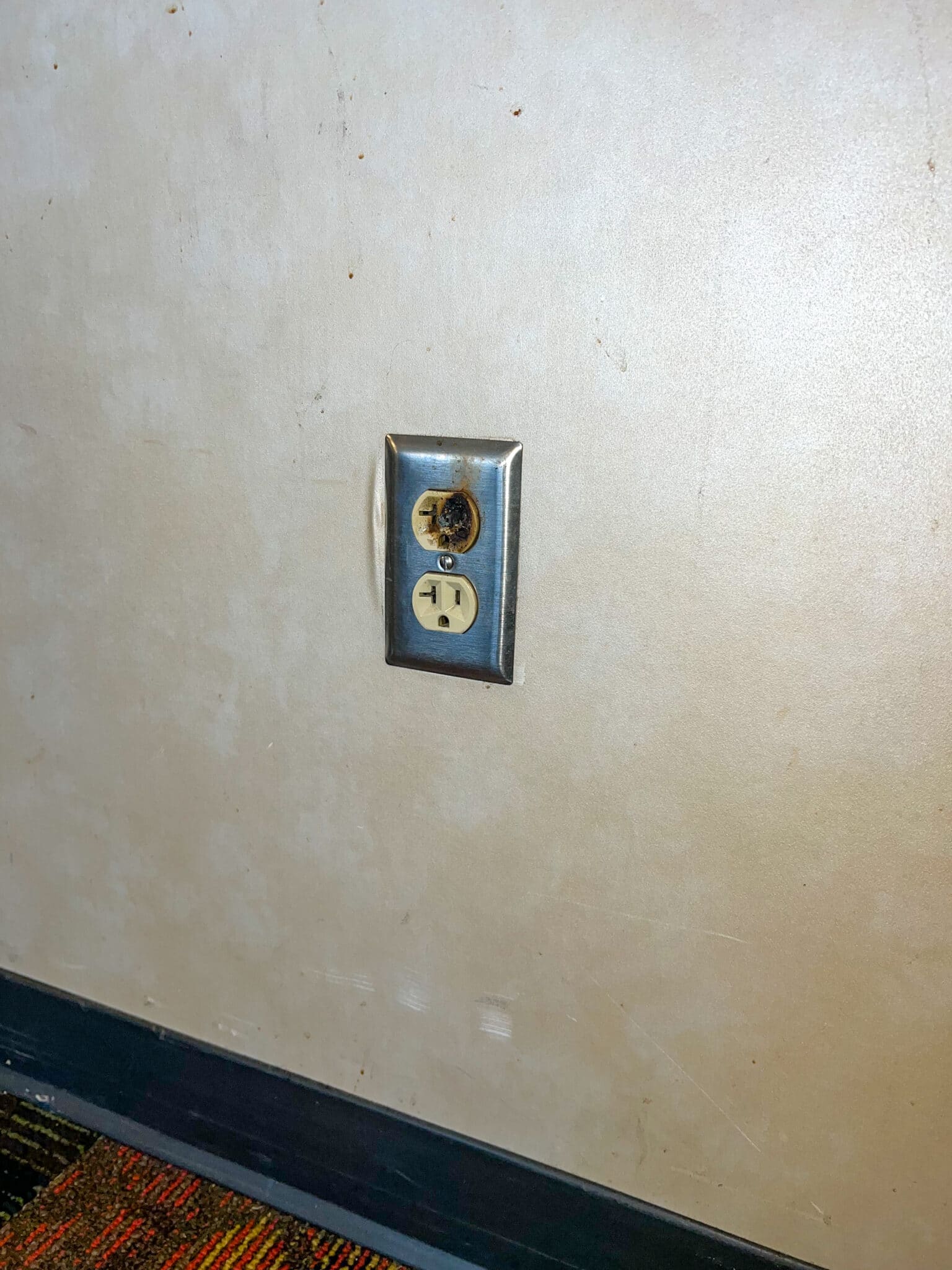
Loose terminal screws and backstabbed wires are common causes of outlets that stop working intermittently. A technician often finds wires that worked free from vibration or movement over time. They look for darkened contacts or melted plastic at the receptacle where heat indicates a poor connection. When found, the fix may require re-terminating the conductors to the device or replacing the outlet.
Overloaded circuits and circuits with shared neutrals can make several outlets behave strangely under load. An electrician traces the circuit and measures voltage drop while appliances run to confirm this condition. If a breaker trips only when certain appliances run, load distribution or circuit capacity is often the issue. Professionals may recommend moving heavy loads to different circuits to reduce repeated stress.
Faulty protective devices like GFCIs or AFCIs can cause persistent nuisance trips or loss of power downstream. Pros inspect the device, test its trip function, and swap it if test results are inconsistent. Where GFCI protection is included, they also search for upstream devices that could affect downstream outlets. For homeowners wondering why a single outlet fails repeatedly, see the article on why an outlet might not work for other common scenarios.
Damaged wiring inside junction boxes or at the service panel can create hard-to-find faults that recur after simple repairs. Electricians open accessible junction boxes and check wire nuts, splices, and the grounding conductor for corrosion or looseness. They record voltage and continuity readings before and after repairs so results prove the issue is resolved. For repairs and replacements of receptacles, homeowners can review general electrical outlet services offered for context on typical repairs and upgrades.
Recognizing Warning Signs Of Wiring Problems
Early warning signs include intermittent warmth at the receptacle, a faint burning odor near an outlet, or small scorch marks around screws. Professionals treat these signs as potential thermal faults and schedule a careful inspection to avoid fire risk. A technician will isolate the circuit before testing to prevent shock hazards and to get accurate readings. Homeowners smelling burning should stop using that circuit and call for help immediately.
Another warning is outlets that work only when a plug is wiggled or when pressure is applied to the faceplate, suggesting a loose connection inside the device or junction box. An electrician will remove the receptacle and inspect terminal screws, wire terminations, and any wire nuts for looseness or corrosion. They may also check the grounding conductor and confirm continuity to the panel to rule out a floating ground. Temporary fixes like pushing a plug firmly in can hide the real hazard and allow heat to build over time.
Repeated nuisance trips of GFCI or AFCI devices, especially in bathrooms or kitchens, point to ground faults or arcing that require targeted testing and sometimes replacement of the protective device. Pros use test routines to compare trip behavior and may trace downstream wiring to find a shared load or faulty appliance. For homeowners wanting to test a protected outlet themselves, see proper procedures for GFCI outlet testing before attempting any DIY checks. If trips persist despite proper device function, the wiring itself often needs professional evaluation.
Unusual electrical noises like buzzing or crackling from a receptacle or switch deserve immediate attention because they often mean loose connections or overheating contacts. An electrician will use a voltage meter and sometimes an infrared camera to detect hot spots along the circuit during inspection. For properties in Pearland and surrounding areas, quick diagnosis prevents escalation to panel-level damage or appliance failures. Documented readings and photos during diagnostics help homeowners decide on repairs without guesswork.
Step By Step Safe Diagnostic Checks At Home
Start with safe, non-invasive checks homeowners can do without opening devices to reduce risk and gather useful information. Turn off the breaker for the circuit before touching anything beyond the faceplate and write down which breaker controls the outlet. Use a plug-in receptacle tester to reveal open ground, reversed polarity, or missing neutral conditions quickly. If the tester shows intermittent results, note when and what appliances were running during those readings.
- Check for tightness of the device mounting screws.
- Observe whether the outlet feels warm when in use.
- Test the circuit with a plug-in tester under load.
- Try the same appliance on a different circuit to compare.
If the outlet still acts up, visually inspect the faceplate and device for small scorch marks or deformation while the breaker is off. Photograph any damage and keep those images with your notes for a professional to review later. Professionals make similar observations and then perform live measurements at the receptacle and panel with a multimeter to confirm voltage and load. These homeowner observations speed up later professional electrical troubleshooting steps.
When a GFCI or AFCI device is on the circuit, test its trip function according to the manufacturer instructions and record the result. Persistent nuisance trips may indicate arcing, which professionals investigate further using arc fault diagnostics and further circuit tracing. For background reading on professional arc tests, consult the resource on arc fault diagnostics before sharing observations with an electrician. Keeping clear test notes helps the technician replicate conditions quickly.
If you smell burning or see sparks, shut off the breaker and stop using the circuit immediately, then call for professional help. A licensed electrician will perform safe live tests, check the service panel, and inspect junction boxes for loose connections causing heat. Homeowners in Pearland or Katy, TX should include appliance usage patterns when describing the problem to the electrician. Good notes and photos reduce on-site diagnostic time and help professionals identify root causes faster.
When Homeowners Should Call A Professional Electrician
If your home shows repeated breaker trips tied to specific appliances, call a professional instead of guessing at fixes. A licensed electrician will perform systematic load checks at the panel and inspect the breaker and wiring under load. They will also evaluate shared neutral paths and may run targeted neutral tracing to confirm hidden faults. Providing your written notes and photos speeds their assessment and reduces on-site time.
Call for help immediately if you detect burning smells, visible scorch marks, or arcing sounds from an outlet or junction box. These signs suggest overheating or loose connections that can escalate quickly without proper tools and safety protocols. A pro will isolate the circuit, take voltage and thermal readings, and document findings to recommend safe repairs. Avoid further use of the circuit until the electrician confirms it is safe.
When problems return after simple fixes, such as replacing a receptacle or resetting a breaker, bring in a professional for deeper tracing and diagnosis. The technician will inspect junction boxes, test continuity, and use methods like neutral fault tracing to find intermittent or multi-location faults. They may also check the grounding conductor and panel terminations for corrosion or looseness that cause recurring symptoms. Accurate identification prevents repeated disruption and unnecessary component replacements.
Call an electrician when AFCI or GFCI devices trip repeatedly without an identifiable appliance cause, since those trips can indicate arcing or ground faults. A professional will run controlled tests, inspect cabling, and trace the protected circuit to find intermittent connections or faulty devices. They will provide a written report of test results and recommended repairs so you can make informed decisions. For homeowners in Katy, TX, a timely service call prevents small wiring faults from becoming larger safety issues.
Tools Pros Use For Advanced Electrical Troubleshooting
Pros bring handheld multimeters and clamp meters to measure voltage, current, and voltage drop without guessing at the source. They use a continuity tester to confirm conductor integrity and to find open or shared neutral paths. Infrared cameras help detect hot spots at breakers, terminals, and junction boxes before visible damage appears. Recording these readings creates a paper trail for repair decisions and homeowner transparency.
Technicians often use a circuit tracer and tone generator to follow wiring runs behind walls and locate hidden junctions without destructive opening. A receptacle impedance tester can reveal loose contacts that only show under load conditions and guide targeted repairs. When grounding is a question, pros perform specific grounding checks and consult resources for proper rod assessment like ground rod testing. These tools speed diagnosis while keeping insulation and finishes intact.
For suspected arcing issues, electricians bring an arc-fault detector and an oscilloscope-style waveform logger to capture transient events that a simple meter misses. They use a thermal gun for spot checks when an infrared camera is not needed or practical. Professionals also carry non-contact voltage detectors for safe verification before touching terminals or opening panels. Test results often determine whether a device, wire splice, or breaker needs replacement.
Field technicians use wire inspection cameras to view inside conduit or junction boxes where access is limited, reducing trial-and-error openings. They document findings with photos and written test logs to explain required repairs to homeowners and to support further work estimates. For properties in Pearland and Katy, TX, these combined tools let pros confirm hidden faults quickly and plan repairs that stop repeat failures. Clear diagnostic output reduces guesswork and avoids unnecessary part swaps.
Fixes Professionals Try And What They Check Next
When a simple replacement doesn’t stop the fault, professionals try targeted fixes that address likely hidden causes. They often start by tightening and reterminating connections at the outlet and nearby junction box to remove intermittent contact. If the breaker shows signs of wear under test, a technician may replace the breaker and recheck load distribution for stability. After each change they record voltage and continuity readings to confirm the fix.
- Reterminate loose wires at the receptacle.
- Replace scorched or damaged outlets.
- Swap a suspect breaker and retest under load.
- Repair or replace damaged splices in junction boxes.
If problems persist after those steps, the next fixes target circuit-level issues such as shared neutrals or hidden junctions. A pro will trace the circuit with a tone generator to locate unlisted junction boxes and correct shared neutral connections. They may install new dedicated runs when load demands exceed existing circuit capacity to prevent recurring trips. Documentation of test results guides whether rewiring or a panel upgrade is necessary.
For arcing or overheating concerns, electricians replace affected devices and inspect surrounding wiring insulation for heat damage before closing the box. They use an infrared scan during a controlled load test to confirm hot spots no longer appear after repairs. When grounding problems are suspected, grounding conductor continuity and panel terminations are verified and corrected as needed. Homeowners in Pearland should expect professionals to provide clear test logs and photos showing repairs and post-repair readings.
When breaker-related noise or intermittent trips point to the panel, pros balance loads and tighten terminations before recommending replacement breakers or panel work. They also consult diagnostic notes and may refer to resources like breaker noise causes for further investigation steps. If repeated fixes fail, technicians discuss longer-term remedies such as additional circuits or a panel capacity increase. For properties in Katy, TX, these options help prevent recurring outlet failures and improve overall circuit reliability.

Preventative Maintenance To Avoid Future Outlet Issues
Schedule periodic inspections that include tightening terminations and checking for discoloration in accessible junction boxes to prevent future outlet issues. A professional will torque terminal screws and inspect wire insulation for small cracks that worsen over time. Regular inspections catch gradual failures before they show as heat, noise, or intermittent power. Homeowners benefit from keeping a simple log of appliance additions and changes to circuit loading.
Have a technician perform load checks and circuit mapping so you know which outlets share circuits and loads during peak use. Accurate mapping reduces accidental overloads and helps plan relocating heavy appliances onto separate circuits. Professionals create labeled maps during diagnostics, which you can reference when changing devices or adding outlets. Consider requesting a formal load-center mapping document for future reference and safe changes.
Replace receptacles and protective devices at first sign of wear rather than waiting for failure to avoid repeat troubleshooting visits. GFCI and AFCI devices degrade with age and can start nuisance tripping or fail to protect properly. When replacements happen, pros verify grounding conductor continuity and panel terminations afterward to confirm a complete repair. These verification steps reduce the chance of the same issue returning after a part swap.
Maintain clear access and labeling at the service panel so future diagnostics go faster and safer for the technician and homeowner. Well-labeled breakers and tidy conductor routing speed isolation of problem circuits during tests and controlled load runs. For a professional mapping service, ask about having your panel and circuits documented as a permanent reference for repair decisions. Keeping this documentation helps when troubleshooting persists despite routine maintenance.
Frequently Asked Questions
Why does this outlet keep losing power intermittently?
Intermittent power usually comes from a loose connection, failing outlet, or an overloaded circuit causing heat and noise. A tripped GFCI or AFCI can reset sporadically when a device draws surges or a fault appears. A professional uses electrical troubleshooting with voltage and continuity tests, panel inspection, and outlet removal to confirm the cause. If you notice burning smells, scorch marks, or frequent trips, stop using the outlet and call a licensed electrician for safety.
How do electricians perform electrical troubleshooting safely?
Electricians start by cutting power at the main or circuit breaker and verifying de-energized circuits with a voltage tester. They inspect the outlet, grounding conductor, and nearby junction boxes for loose connections, burn marks, or moisture. Technicians run continuity and load tests, check GFCI/AFCI devices, and record voltage readings to isolate the fault. If you suspect hidden wiring damage or if tests show live hazards, stop work and hire a licensed professional for safe repair.
Could a shared neutral cause multiple outlets to fail?
Yes. A shared neutral that becomes loose or damaged can make multiple outlets on different circuits lose power or behave oddly. During electrical troubleshooting a pro will check the neutral at outlets, junction boxes, and the panel to confirm continuity and proper connections. If you suspect a shared neutral problem, avoid touch-and-test and call a licensed electrician because it can create shock and fire hazards.
What signs mean an outlet needs immediate professional repair?
Repeated arcing sounds, burning smells, or scorch marks around an outlet signal dangerous wiring or a failing receptacle.
If outlets feel warm to the touch or breakers trip repeatedly under normal loads, call a professional quickly.
Loose outlets that move when plugs are inserted or produce intermittent power deserve immediate inspection to prevent fire risk.
For safety, avoid further use and contact a licensed electrician for electrical troubleshooting and repair without delay.
When should I suspect the breaker or panel is the problem?
If multiple outlets and lights on different circuits lose power or reset repeatedly, suspect the breaker or service panel as the source. Burn marks, a burning smell, buzzing, or warm panel cover indicate an electrical hazard and require immediate attention. During electrical troubleshooting, a professional will check breaker trip history, inspect for loose connections, and measure voltage at the panel. Do not open the panel yourself, call a licensed electrician to diagnose and repair safely.