





Key Takeaways About Attic Junction Box
An attic junction box holds splices where circuits join and can overheat if faulty. This summary helps homeowners and property managers decide when to inspect or call a pro.
- Identify warm boxes discoloration or melted insulation as warning signs.
- Prevent movement by installing proper clamps covers and secure mounts.
- Avoid improper connectors overloaded boxes and mixed conductor types.
- Spot buzzing intermittent trips or burning smells tied to one circuit.
- Reduce risk with correct cable support routing and protective plates.
- Plan for documented diagnosis thermal imaging and targeted repair or rewire.
Introduction
Hidden faults in attic junction box splices often start small and grow into serious fire risks if left unchecked. Homeowners notice burnt smells, flickering lights, or warm insulation above ceilings. These signs point to overheated connections, loose wires, or unsupported cable runs tucked in attic spaces. Addressing them reduces risk to wiring, insulation, and the whole home’s safety.
Improperly covered or unsupported splices can arc without visible sparks, slowly charring surrounding material. A compromised junction box lid or missing clamp allows movement that stresses connections over time. Overheating can trip breakers intermittently and cause nuisance outages when circuits fail. That unpredictable behavior makes fault finding harder for homeowners and inspectors alike.
Safe rewiring and proper cable support stop concealed faults from returning after a quick fix. Professionals look for overheated terminals, correct box fill, and secure cable straps during inspections. For properties in The Woodlands occasional attic work reveals shortcuts that need permanent correction. Correct repairs protect circuits and restore predictable electrical performance.
Homeowners near Richmond, TX often delay attic checks because access is awkward and issues are out of sight. Moisture, rodent damage, and attic traffic all increase the chance of loose or damaged splices. If you detect burning odors or repeated breaker trips an inspection is warranted. A thorough diagnosis clarifies whether simple repairs or safe rewiring will eliminate the concealed fault.
How Attic Junction Box Overheating Happens And Detection
An attic junction box overheating occurs when a splice or connection runs hotter than safe limits and damages surrounding materials. During an inspection, a homeowner might ask whether a warm junction box is normal, and the clear answer is no. Professionals use infrared cameras and surface temperature checks to compare suspect boxes to nearby ambient temperatures. Detecting heat early prevents insulation charring and reduces fire risk.
- Look for discolored insulation near the box.
- Listen for buzzing or intermittent arcing sounds.
- Check for scorch marks on cable sheathing.
- Note any repeated breaker trips on related circuits.
Visual cues matter: melted wire insulation, darkened box edges, or brittle conductors point to overheating. A common homeowner question asks whether smell alone justifies a call, and yes, a persistent burned odor warrants immediate inspection. Inspectors open the box to look for loose wirenuts, poor crimps, and overloaded splices during diagnosis. They also verify box fill to ensure no overcrowding contributes to heat buildup.
Simple diagnostic checks include a continuity test, a voltage reading under load, and a thermal scan of the splice area. For example, an inspector might load a lighting circuit while measuring voltage drop across a splice to reveal a reactive connection. They will also verify that cable clamps secure conductors and that strain on entries does not tug terminations. If attic access is awkward, follow an attic wiring safety checklist before entering to reduce risk.
Where rodent damage, moisture, or prior roof work exists, wiring injury can mimic overheating signs and complicate diagnosis. In Richmond, TX properties, attic traffic patterns sometimes expose unsupported cable runs that later fail under movement. A proper diagnosis produces measurable readings, photos, and a written report outlining repair options. Homeowners can use those outputs to decide between targeted splice repair or a safer partial rewire.
Common Causes Of Concealed Splice Failures
Poor connections often start with the wrong connector type or a loose wire that warms under load and degrades insulation. Corroded conductors from occasional attic moisture increase resistance and concentrate heat at the splice over time. Mechanical damage from attic work or rodents can nick insulation and expose conductors that later arc when movement occurs.
Overloaded splices occur when multiple branch circuits share a box that is too small, raising local temperature during peak use. Excessive wire count also makes it hard to seat wirenuts fully, producing intermittent contact and arcing. Poorly made crimp connections or mixed connector styles lead to uneven contact surfaces that oxidize faster than clean metal-on-metal joints. Inspectors look for brittle insulation, loose clamps, and mismatched wire sizes to spot these problems.
Movement and strain on cables is a frequent hidden cause when wires are unsecured and pull against a splice during attic entry or settling. Without proper cable support, weight and vibration loosen terminations and chip away at wirenut threads until arcing begins. Heat cycles from HVAC equipment nearby also flex cable sheathing and weaken joint integrity over years. For a deeper look at arc behavior and diagnostics, see the article on arc fault diagnostics.
Improper box fill and missing covers prevent heat from dissipating and expose splices to insulation contact that fuels smoldering. Grounding or neutral mistakes, like shared neutrals without proper breakers, can create imbalanced loading and hidden overheating. During diagnosis a professional will record voltage under load, inspect clamp placement, and test continuity to confirm where the fault concentrates.
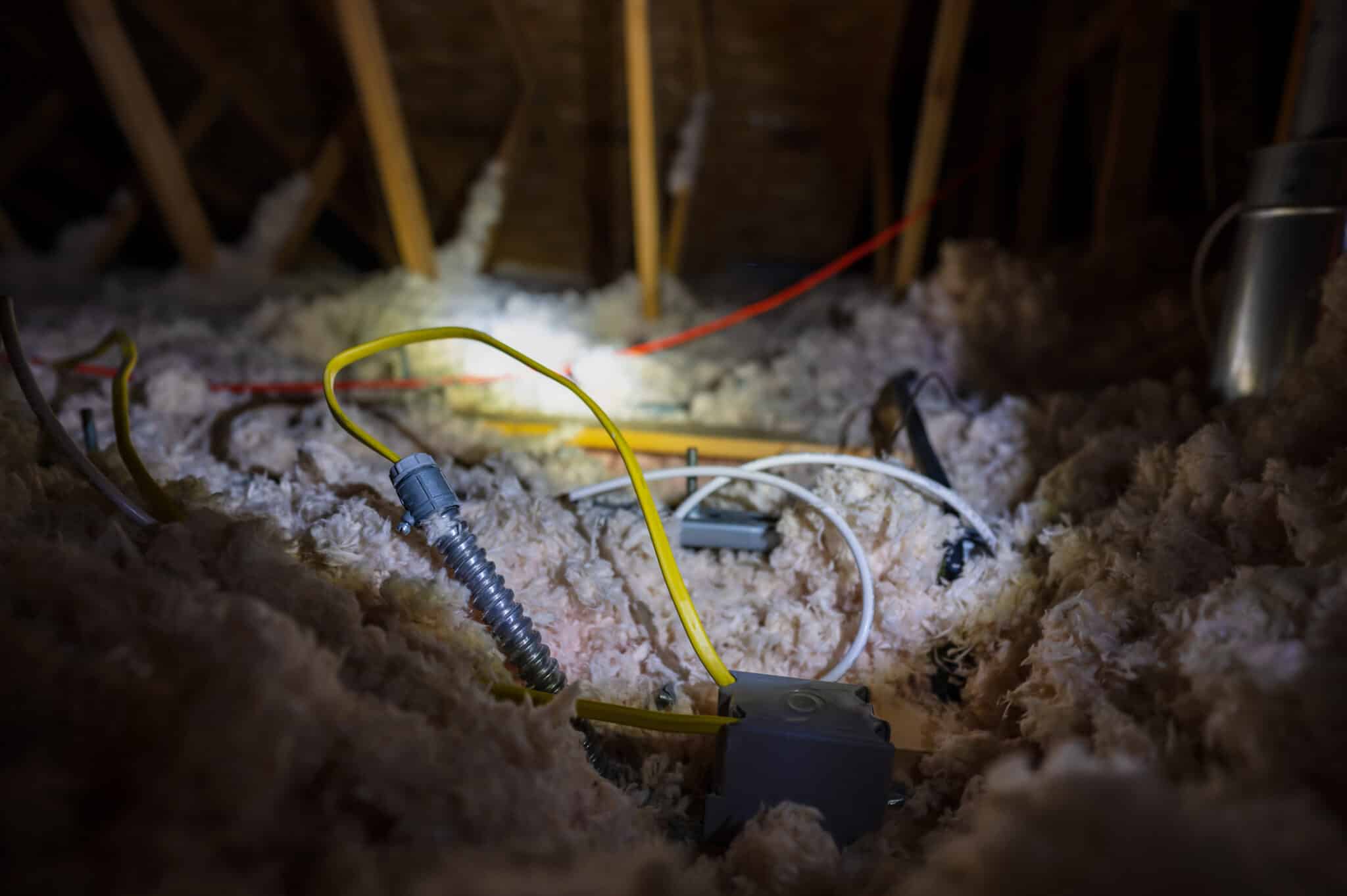
Warning Signs Homeowners Should Never Ignore
A sudden burning odor that appears only when specific lights or outlets run signals a problem you should not ignore. Look for warm spots on ceiling drywall above fixture locations or localized heat in attic insulation. Repeated breaker trips tied to one area of the house often point to a single failing splice or shared neutral issue. If you detect these cues, prepare to document when the smell or trips occur for a professional technician.
Visible charring or melted insulation around a conduit entry or cable sheath requires immediate attention and limits safe handling by homeowners. A professional will visually inspect the junction box, then perform a voltage drop test and continuity checks to confirm a poor connection. They may also compare surface temperatures of suspect boxes under load using non-contact thermometers or infrared imaging. These steps reveal whether a splice runs hotter than the surrounding wiring and needs repair.
Unusual buzzing, intermittent arcing noises, or appliances that dim when other circuits run indicate a loose or overloaded splice causing unstable contact. Technicians check for loose wirenuts, improper crimping, or incorrect conductor pairings while observing for signs of oxidation or corrosion. During diagnosis, they will also verify cable support and clamp condition because movement often worsens marginal splices into active faults. For related protection strategies, homeowners can read further about outlet arc protection options.
New scorch marks on attic framing or small holes in insulation near wiring are early visual warnings that smoldering may be present and spreading slowly. If you find these, restrict attic access and avoid storing combustibles nearby until a professional inspects the area. The inspector documents findings with photos and measurements and then recommends targeted splice repair or a safer reroute based on box fill and strain relief conditions. Homeowners in The Woodlands and Richmond, TX should treat these signs as reasons to act promptly to reduce fire risk.
Assessing Safety And When To Act Immediately
When a homeowner finds a suspect attic junction box, first evaluate immediate danger before touching anything. If you smell burning or see active smoke, evacuate people and call emergency services right away. Shut off the circuit at the main panel only if you can do so without entering the attic. A professional inspection should follow any shutoff to confirm safe re-energizing and to document findings.
- Turn off power to the affected circuit at the main breaker.
- Keep family members and pets away from the attic entry.
- Do not remove insulation around a hot box.
- Record the time and conditions when the odor or trips occurred.
If the box is warm but there is no smoke or strong odor, reduce load on that circuit immediately. Unplug devices and move high-draw appliances to other circuits temporarily. Then schedule a diagnostic visit so a technician can perform voltage drop and continuity tests safely. These tests confirm whether heat stems from high resistance at a splice or from upstream panel issues.
A professional diagnosis also includes an inspection for hidden damage to surrounding materials and a short-circuit trace when evidence suggests intermittent faults. Technicians may use thermal imaging and load testing to pinpoint failing splices and run a methodical short-circuit tracing process afterward. Photographs, temperature readings, and written findings help homeowners decide between targeted repairs or controlled rewiring. For homeowners in The Woodlands and Richmond, TX this documentation supports safe, timely repairs without unnecessary replacements.
Installing Covers And Securing Junction Boxes Properly
Start by choosing a metal or non-metallic cover rated for the box size and listed by a recognized safety lab. Fit the cover so it sits flush and does not press wiring against the lid. Ensure any knockout entries are sealed with appropriate clamps that prevent conductor movement at the entry point. A properly installed cover helps prevent insulation contact and limits mechanical disturbance of splices over time.
Secure the box to structural framing using screws or mounting straps that keep it from shifting during attic work. When boxes are mounted on truss members, use a bracket that resists rotation and keeps the face plane stable. Confirm the box remains accessible and that the cover can be removed without disturbing conductors. Accessibility preserves safety and allows future inspection without creating new stress on splices.
Inside the box, arrange conductors so wirenuts and crimps do not press against the cover and so each splice has room to cool. Replace damaged wirenuts with the correct size and style for the conductor combinations to maintain solid metal-to-metal contact. Add pigtails where multiple conductors crowd a single terminal to reduce box fill and improve connection reliability. Proper internal layout reduces the chance of localized heating from concentrated resistance points.
Use listed cable clamps at each entry and anchor cable within 8 inches of the box to relieve strain on terminations as required by common practice. If existing sheathing is cut back too far, install new strain reliefs or extend the cable sheath to protect conductors. For attic-specific guidance on safe inspection and handling, consult the article on electrical safety. Proper clamping and support stop movement that commonly leads to recurring splice faults.
If a box shows heat damage, remove the cover only after de-energizing the circuit and verify with a voltage tester before touching conductors. During repair, document condition with photos, measure temperatures if available, and retest continuity after reassembly to confirm the fix. A professional performing diagnostic steps will follow systematic checks and may record test results for homeowner review. Homeowners in The Woodlands and Richmond, TX benefit from documented repairs when deciding on further remediation or monitoring.
Proper Cable Support Methods For Attic Wiring
Run cables along joists or rafters rather than across the attic floor to reduce foot-traffic damage and repeated flexing. Secure NM cable with listed straps within 8 inches of each box and at intervals no more than 4.5 feet apart where applicable to prevent sagging and abrasion. Always avoid stapling through the sheath, place staples or straps flat against the sheath without crushing conductors. These supports lower mechanical strain that commonly breaks down splice integrity over time.
Use conduit or protective raceway where wires pass near HVAC equipment or sharp framing edges to prevent chafing during temperature cycles. When routing through insulation, lift and secure cables so heat dissipation remains effective and wiring does not sit directly on high-density batt. Maintain separation from flue pipes and recessed fixtures to reduce heat transfer to conductors and splices. Adding local protection reduces the chance that environmental heat accelerates a hidden fault.
Where multiple cables run together, bundle them neatly and fasten at regular intervals to minimize movement that tugs on junctions. Avoid tightly cinching bundles that trap heat, allow small gaps for airflow between conductors. If a cable run includes bends, keep bend radii gentle to avoid conductor stress and insulation deformation. Proper routing and fastening reduce micro-movements that can loosen wirenuts or crimps over years.
When passing through structural members, protect cable with grommets or nail plates to stop nail or screw penetration during later work. Replace any damaged or abraded sheathing sections before making new terminations to ensure full insulation integrity. For known recurring wiring problems, see the diagnostic guidance on faulty wiring and consider targeted rerouting to remove high-risk runs. Homeowners in The Woodlands and Richmond, TX often find these fixes prevent future concealed splice failures.
Safe Rewiring Techniques To Eliminate Hidden Faults
Start rewiring by de-energizing the circuit and verifying absence of voltage with a meter before removing old splices or conductors. Mark conductors and photograph connections to preserve routing and to aid reconnection during the job. Replace damaged NM sheathing and remove any charred conductor sections until clean copper or aluminum remains for reliable terminations. Use correct conductor sizes and match insulation types when installing new runs to prevent future overheating under load.
- Plan the new route before cutting or pulling cable.
- Use proper-length pigtails for crowded terminations.
- Install listed junction boxes and lids at all splice locations.
- Anchor cables within eight inches of each box.
- Retest continuity and insulation resistance after finishing.
Choose connectors rated for the conductor material and the combined conductor count to ensure low-resistance joints. For aluminum conductors use connectors listed for aluminum or copper-aluminum combinations to avoid galvanic issues. Securely torque screw terminals or make quality crimped connections and back them with listed wirenuts sized for the bundle. After each splice, arrange conductors so heat can escape and nothing bears against the box cover.
When a full circuit replacement is needed, run cable along structural members and avoid routes that require future disturbance during attic work. Add protective plates where the run passes close to potential nail or screw paths to prevent later penetration. Label both ends of the new run at the panel and at devices to simplify future maintenance and troubleshooting. Document test results and take photos to show that the concealed fault was removed and that connections meet safe practice.
If a homeowner prefers a professional, a licensed electrician performs safe rewiring, verifies grounding, and conducts load testing after completion. Technicians will also check for correct box fill and inspect for shared neutrals or other circuit design problems. For larger rewires or uncertain conditions, consider scheduling a detailed rewiring assessment through the company’s rewiring service page to plan a compliant upgrade. Homeowners in The Woodlands and Richmond, TX often use those assessments to decide between targeted repairs and controlled rewire work.
When To Call A Professional For Attic Junction Box
If you notice signs that point toward an attic junction box problem but lack tools or confidence, schedule a professional inspection. A qualified electrician can perform on-site voltage drop checks, continuity testing, and thermal imaging to confirm whether a splice runs hot. They will also verify box fill and clamp condition before recommending targeted repair or controlled rewiring. Requesting documented test results helps you compare options and prioritize safety.
Call for help when repairs require cutting, replacing, or reconfiguring conductors that remain energized during work. Professionals follow safe de-energizing procedures, isolate the circuit at the panel, and recheck with a meter before touching conductors. They also handle aluminum-to-copper transitions and select listed connectors to avoid compatibility issues. Attempting these tasks without training increases the risk of shock and hidden damage.
Consider a professional when attic access is cramped, insulation hides components, or previous repairs look amateurish and undocumented. Technicians can remove insulation carefully, locate adjacent damage, and inspect structural framing for heat-affected areas safely. They will record photos and readings, then advise whether a splice-only fix or partial reroute best eliminates concealed faults. Homeowners in The Woodlands often use that documentation to plan repairs with confidence.
Call immediately if you detect active burning smells, visible scorching near the box, or repeated breaker trips tied to the same circuit. These signs suggest an active or worsening fault that requires prompt professional attention to reduce fire risk. Electricians can temporarily de-energize, make safe repairs, and schedule follow-up testing to confirm stability. For a formal inspection service and scheduling, see the company’s electrical inspection options.

Frequently Asked Questions
How do I tell if my attic junction box is overheating?
Look for discoloration, melted insulation, burn marks, or a charred smell near the attic junction box as clear signs of overheating.
What causes hidden arcing inside an attic junction box?
Hidden arcing in an attic junction box usually starts from loose or backstabbed splices that develop high resistance heating. Corrosion, nicked insulation, or rodent damage can expose conductors and create intermittent contact points. Overloaded circuits and poor cable support allow movement and rubbing that eventually produce sparks and burning smells. This is a fire risk—stop power to the circuit and call a licensed electrician for diagnosis and repair.
When should I replace a damaged junction box cover?
Replace a damaged junction box cover as soon as you see cracks, missing screws, burn marks, or loose fit that exposes splices. A warped or brittle cover no longer protects wires from insulation contact, rodents, or falling debris in the attic. If you notice scorch marks, melting, or a burning smell, stop using that circuit and call a professional electrician because fire risk is real. A licensed electrician will inspect the attic junction box, confirm safe splices, and install a proper cover and support if needed.
How should cables be supported near an attic junction box?
Secure cables within 8 inches of the attic junction box using approved cable staples or straps to prevent strain on splices. Keep cables supported at regular intervals along their run to avoid sagging and chafing on framing members. Maintain a small service loop inside the box for future access but do not crowd or overfill the box. If you see damaged insulation, burning smell, or loose conductors, stop work and call a licensed electrician for safe repair.
What steps does a pro take to confirm a splice fault?
A pro first cuts power at the breaker and verifies de-energized conductors with a voltage tester to reduce risk. They inspect the attic junction box visually for darkened insulation, melted sheathing, or loose wire nuts and note locations. Then they use a continuity or clamp meter and gentle tug tests to confirm high resistance or intermittent contact at the splice. If arcing or heat damage appears, the pro recommends replacing the splice and warns homeowners not to attempt repairs without licensed help.